
What Is the Difference Between a Miter Saw and a Table Saw?
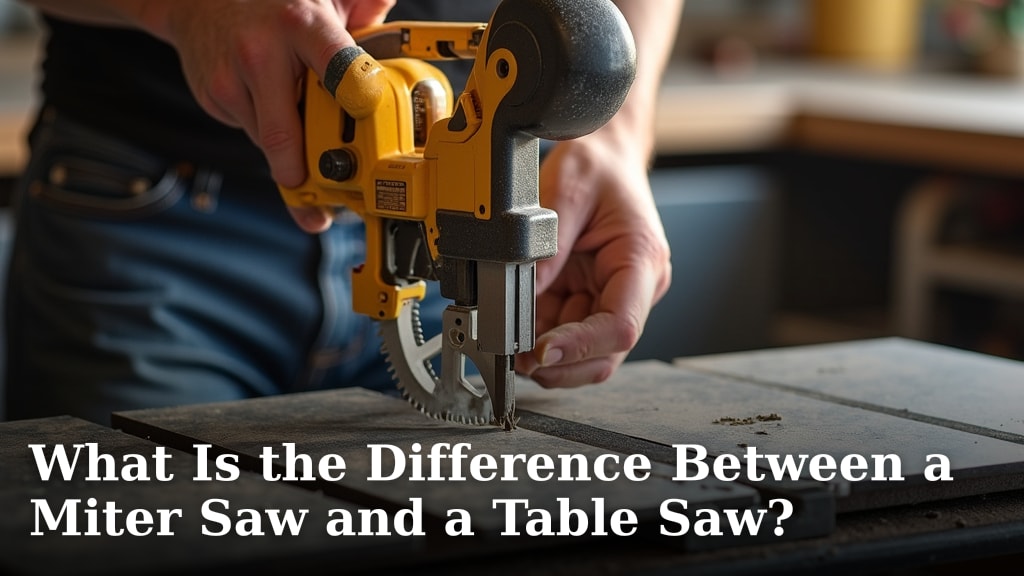
The primary difference between a miter saw and a table saw is their main function. A miter saw excels at making precise crosscuts and angled cuts on longer pieces of wood, while a table saw is designed for making accurate rip cuts (cutting wood along its grain) and processing larger sheets.
You might be wondering which one is right for your workshop, right? We’ve found that each saw has its own specialized role in woodworking. Choosing between them really depends on the types of cuts you’ll be making most often for your projects.
- Miter saws are for accurate crosscuts and angles.
- Table saws are best for long rip cuts and sheet goods.
- Each saw has distinct strengths for different tasks.
- Your project needs dictate which saw you should use.
Let’s dive deeper into what makes each saw unique, helping you decide which one will best serve your crafting needs.
Understanding Miter Saws vs. Table Saws
You’re looking to make different types of cuts, and each saw brings something special to the workshop. Let’s break down their core attributes so you can see which one truly fits your workflow.
Miter Saw Deep Dive: Precision for Crosscuts
When you need to cut across the grain of a board, making it shorter or giving it an angle, a miter saw is often your go-to tool. Think of baseboards, crown molding, or picture frames. We found these tasks are where it truly shines.
What Exactly is a Miter Saw?
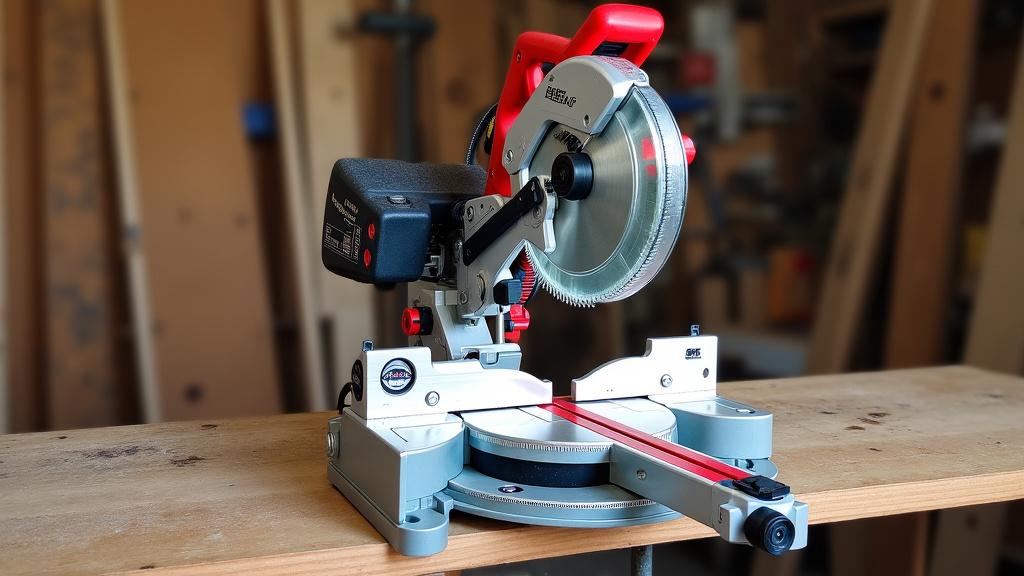
A miter saw has a circular blade mounted on a pivoting arm that swings down onto your workpiece. The arm can be adjusted to cut at various angles, known as miter cuts. You’ll place your material on a fence, then pull the blade down through it.
Many models also allow the blade to tilt, creating bevel cuts. This combination of miter and bevel adjustments gives you incredible flexibility for intricate trim work. It’s like having a protractor built right into your saw.
Types of Miter Saws
You’ll encounter a few different types as you research. Each offers slightly different capabilities:
- Standard Miter Saw: This is the basic model, capable of making just miter cuts. It’s great for simple tasks.
- Compound Miter Saw: This saw adds the ability to make bevel cuts, tilting the blade to one side. This is super handy for crown molding.
- Dual Compound Miter Saw: With this one, the blade tilts both left and right for bevel cuts. No need to flip your workpiece, which saves time and effort.
- Sliding Compound Miter Saw: This type has rails that allow the saw head to move forward and back, increasing the cutting capacity for wider boards. We often see these used for decking or larger shelving projects.
Best Uses for a Miter Saw
We’ve seen that miter saws are ideal for tasks where precision and repetitive angled cuts are key. Think about:
- Cutting trim and molding with perfect angles.
- Sizing lumber for framing small projects.
- Making consistent crosscuts for furniture parts.
- Deck building and fence repairs where accurate angles matter.
Its portability is a big plus too. Many people can easily move a miter saw to different job sites or across their workshop.
Table Saw Deep Dive: The Heart of the Workshop
A table saw is fundamentally different. It’s designed for stability and handling larger materials. If you’re breaking down full sheets of plywood or cutting long, straight boards, this is your champion.
What Exactly is a Table Saw?
A table saw features a circular blade that protrudes through a slot in a flat tabletop. You’ll push your material across the table and past the spinning blade. A fence runs parallel to the blade, guiding your cuts with remarkable accuracy.
The blade height and angle are adjustable. This means you can cut thin grooves (dados) or even make bevel cuts on longer pieces. Its strength lies in its ability to make long, straight, consistent cuts.
Types of Table Saws
Just like miter saws, table saws come in various forms:
- Benchtop/Portable Table Saws: These are smaller and lighter, great for job sites or workshops with limited space. They often have less power but are very convenient.
- Jobsite Table Saws: A step up from benchtop, offering more power and a sturdier build, often with rolling stands. They’re built for daily use by professionals.
- Contractor Table Saws: These are heavier and more powerful than jobsite saws, typically found in home workshops. They can handle most common woodworking tasks.
- Cabinet Table Saws: These are the heaviest, most powerful, and most accurate table saws. They are the workhorses of professional cabinet shops. If you’re building fine furniture, you’ll likely want one of these.
Best Uses for a Table Saw
We consistently see table saws being used for projects involving:
- Making long rip cuts (cutting wood along its grain).
- Breaking down large sheets of plywood or MDF into smaller, usable pieces.
- Creating accurate dados and rabbets for joinery.
- Sizing solid wood panels for tabletops or cabinet doors.
- Repeatable cuts for building jigs and fixtures.
Many experts say that a good table saw forms the backbone of a productive woodworking shop (Wood Magazine).
Key Differences: Miter Saw vs. Table Saw at a Glance
Let’s summarize the main distinctions. Thinking about these points can clarify which tool is right for your next project.
You can quickly see that these tools have different missions. One specializes in precise angular cuts, while the other excels at long, straight ones.
| Feature | Miter Saw | Table Saw |
|---|---|---|
| Primary Function | Crosscuts, Miter Cuts, Bevel Cuts | Rip Cuts, Sheet Good Processing, Dadoes |
| Blade Position | Moves down onto stationary wood | Stationary blade, wood moves across |
| Portability | Generally more portable | Generally less portable (except benchtop) |
| Safety Concerns | Blade guard, kickback less common | Kickback risk, blade guards, push sticks essential |
| Typical Workpiece Size | Long, narrow boards (trim, studs) | Wide panels, sheet goods, long boards |
| Space Required | Less bench space, often on stand | Dedicated bench/floor space, outfeed support |
Choosing the Right Saw for Your Needs
So, how do you decide? It really comes down to the kind of work you plan to do most often. Don’t worry, many woodworkers eventually own both because they truly are complementary tools.
When to Lean Towards a Miter Saw
You’ll find yourself reaching for a miter saw if your projects frequently involve:
- Installing flooring or intricate trim work.
- Building small frames or shadow boxes.
- Cutting many pieces to the exact same length.
- Working with long pieces that would be cumbersome on a table saw.
- Needing to make repetitive, precise angle cuts quickly.
It’s your best friend for anything that needs a careful, controlled crosscut, especially those with angles.
When a Table Saw is Indispensable
Conversely, a table saw becomes the star when your projects call for:
- Breaking down large sheets of plywood for cabinets or shelving.
- Making long, consistent rips in solid wood.
- Creating grooves or rebates for joining wood pieces.
- Building custom furniture or interior doors.
- Achieving perfectly straight edges on rough lumber.
If you’re buying lumber from a big box store, a table saw helps you turn those raw materials into ready-to-use project pieces.
Safety First: A Quick Overview for Both Saws
No matter which saw you’re using, safety is paramount. These are powerful tools that demand respect.
- Always wear eye protection.
- Use hearing protection.
- Keep hands clear of the blade path.
- Read your saw’s manual thoroughly.
- Ensure your workpiece is stable and supported.
- Use push sticks and featherboards on a table saw.
Many woodworking experts stress the importance of understanding your tool’s specific safety features before making any cuts (National Safety Council).
Making Your Decision: A Checklist
Still on the fence? Ask yourself these questions. Your answers should guide you to the saw that best suits your initial needs.
- Will I primarily be making crosscuts and angled cuts for trim or small projects?
- Do I need a tool that can cut long, accurate rips in larger boards or sheets?
- Is portability a major factor for my work?
- How much shop space do I have available for a stationary tool?
- What types of materials will I be cutting most often (dimensional lumber or sheet goods)?
- What is my budget for this important tool purchase?
Thinking through these points will help clarify your best first step. Remember, you might eventually want both, but starting with the right one for your immediate projects is key!
Conclusion
You’ve now explored the unique strengths of both miter saws and table saws. We’ve discovered that while both make cuts, their primary purposes are quite different. A miter saw excels at precise crosscuts and angles, perfect for trim work. A table saw, on the other hand, is your workhorse for long rip cuts and processing sheet goods.
The best choice for you depends entirely on your project needs and available space. Don’t feel pressured to get both immediately. Consider what types of cuts you’ll be making most often. Start with the saw that aligns best with your current woodworking goals, and remember, safety always comes first!
Frequently Asked Questions
Can a miter saw replace a table saw for basic projects?
Not entirely. While a miter saw can handle crosscuts very well, it cannot make long, accurate rip cuts on wide boards or break down large sheets of plywood. These tasks are where a table saw is essential and far more efficient.
Is one saw inherently safer than the other?
Both saws are powerful tools that require strict safety protocols. Many users might find miter saws slightly less intimidating due to the blade moving down, but table saws introduce concerns like kickback hazards. Proper training and consistently following safety guidelines are crucial for both.
What’s the minimum space needed for each saw in a workshop?
A miter saw often requires less dedicated bench space and can be used on a portable stand. A table saw, especially larger models, needs significant floor space for the saw itself, plus ample room for infeed and outfeed support for long or wide materials.
If I can only afford one saw to start, which one should I choose?
If your projects focus on framing, trim, crown molding, or smaller furniture pieces requiring precise crosscuts, a miter saw is often the better starting point. If you plan to build cabinets, large furniture, or frequently work with sheet goods, a table saw is the more practical first purchase.
Can I cut dados with a miter saw?
No, a standard miter saw is not designed to cut dados (grooves). Dado blades are specifically used on table saws where the material is fed horizontally across the blade. Trying to cut a dado with a miter saw would be unsafe and produce inaccurate results.
