What Is a Good Miter Saw for a Homeowner?

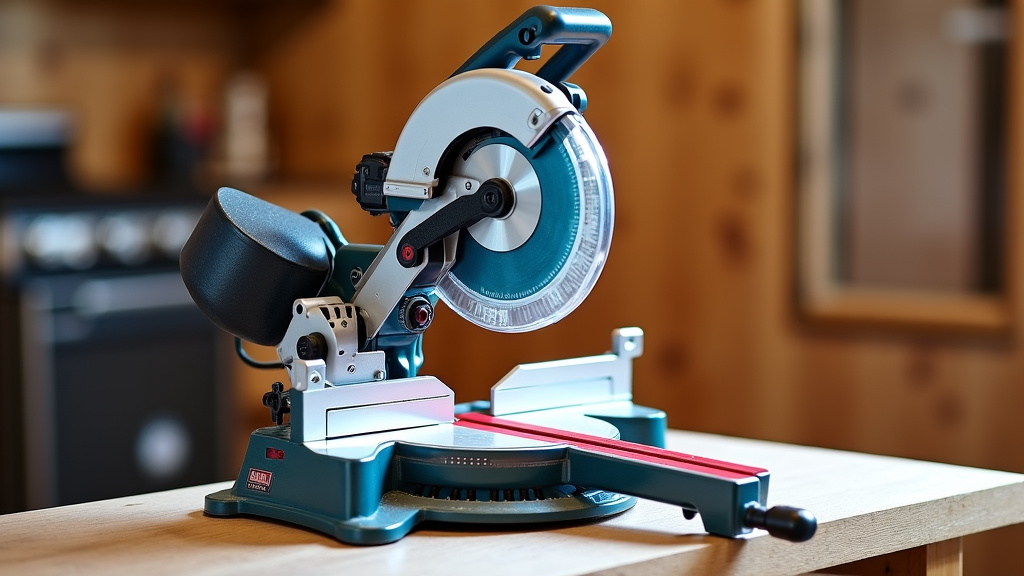
<p>For a homeowner, a good miter saw is often a 10-inch sliding compound miter saw. This type offers a great balance of power, versatility, and cutting capacity for typical home projects. It lets you make precise angle cuts for trim, flooring, and DIY furniture without needing a huge, expensive machine.</p>
<p>Finding the right miter saw means looking at your projects and your budget. You want enough cutting power but also something easy to use and store. We found that most homeowners benefit from a saw that handles common board sizes, like 2x4s and decorative molding, with ease and good accuracy.</p>
<ul>
<li>10-inch sliding compound miter saws are ideal for most homeowners.</li>
<li>They offer versatility for various home projects.</li>
<li>Consider your project needs and budget when choosing.</li>
<li>Look for ease of use and good cutting accuracy.</li>
</ul>
<p>Ready to pick out your next workshop hero? Let’s walk through everything you need to know to find that perfect miter saw for your home projects.</p>
Choosing the Right Miter Saw for Your Home Projects
For most homeowners, a 10-inch sliding compound miter saw hits the sweet spot. It offers a great mix of power, versatility, and cutting capacity for typical home improvement tasks.
When you’re trying to pick the perfect miter saw, it’s not just about getting the biggest or most expensive one. It’s about finding a tool that fits your projects, your budget, and your comfort level. Think about what you’ll actually be cutting. Will it be baseboards, crown molding, deck boards, or perhaps some DIY furniture pieces?
Understanding Miter Saw Types and What They Offer
Before diving into specific recommendations, let’s quickly clarify the main types of miter saws you’ll encounter. Each has its strengths and weaknesses, especially for a homeowner’s typical needs.
Standard Miter Saw (Chop Saw)
A standard miter saw, sometimes called a chop saw, is the most basic type. It can make straight crosscuts and angled cuts (miters). Imagine cutting a 2×4 straight across or at a 45-degree angle. That’s its primary job.
- These are often the most affordable.
- They are compact and lightweight, useful if you have limited space.
- The main downside is their limited cutting width. You can only cut pieces as wide as the blade’s diameter allows when it pivots down.
Compound Miter Saw
A compound miter saw adds more flexibility. Besides making miter cuts, the blade assembly can also tilt (or “bevel”). This lets you make angled cuts on two planes at once. Think about cutting crown molding where you need both a miter and a bevel to fit properly.
- Single-bevel saws tilt in one direction (usually left). You might have to flip your workpiece for some cuts.
- Dual-bevel saws tilt both left and right. This saves time and effort because you don’t need to re-position your material as often. We found that dual-bevel saws offer much more convenience for various projects.
Sliding Compound Miter Saw
This is where things get really interesting for homeowners! A sliding compound miter saw has all the features of a compound saw, but the blade can also slide forward and backward on rails. This sliding feature dramatically increases your crosscutting capacity.
- You can cut much wider boards. For example, a 10-inch sliding saw can often cut a 12-inch wide board.
- This type is highly versatile for a wide range of projects, from flooring to shelving units.
- The trade-off is often a larger footprint and a slightly higher price point. But the added capability is usually worth it. We often recommend this type as the best all-around choice for homeowners.
Cordless Miter Saws
Cordless miter saws offer the ultimate in portability. They run on rechargeable batteries, freeing you from power outlets. If your projects involve working in different parts of your yard or a new construction site without power, these are fantastic.
- Convenience and portability are the big advantages.
- They can be less powerful than corded versions, especially for heavy-duty tasks.
- Battery life and the cost of batteries and chargers are factors to consider.
Key Features to Look For in a Homeowner Miter Saw
Once you’ve decided on the type of miter saw, what specific features should you prioritize? We’ve researched and found a few things that truly make a difference for someone doing projects around the house.
Blade Size and Cutting Capacity
Common blade sizes are 8 ¼-inch, 10-inch, and 12-inch. For most homeowners, a 10-inch blade is excellent. It’s big enough to handle standard lumber like 2x4s and 2x6s, even 2x8s in some sliding models, but not so large that the saw becomes unwieldy or overpriced.
- A 10-inch sliding compound miter saw can often handle crosscuts up to 12 inches wide.
- A 12-inch saw offers more capacity but can be overkill and more expensive for many home tasks.
- We don’t typically recommend 8 ¼-inch saws for general home use as their capacity is quite limited (Consumer Reports).
Motor Power (Amperage)
Motor power is usually measured in amps for corded saws. For home use, a saw with a 15-amp motor provides plenty of power to cut through most woods, even hardwoods, without bogging down. Having enough power means cleaner cuts and less strain on the motor.
Ease of Use and Safety Features
You want a saw that feels comfortable and safe to operate.
- Blade Guard: A clear, automatic retracting blade guard is essential for safety.
- Dust Collection: Look for an effective dust collection bag or, better yet, a port to connect a shop vac. Keeping your workspace clean is important for both health and safety.
- Clamping System: A good clamping system helps hold your work piece steady, making cuts more accurate and safer.
- Laser Guide: While not essential, a laser guide can be very helpful for lining up your cuts precisely. Many users find this feature speeds up their workflow.
- Positive Stops: These are pre-set detents for common miter and bevel angles (e.g., 0°, 15°, 22.5°, 30°, 45°). They allow for quick, accurate adjustments without fiddling with the settings.
Portability and Storage
Unless you have a dedicated workshop, you’ll likely need to move and store your miter saw. Consider the saw’s weight and overall size. A 10-inch sliding compound miter saw can be a bit bulky, but many models are designed with integrated carrying handles for easier transport.
- Will it fit on your workbench?
- Does it fold up for easier storage in your garage or shed?
Budget Considerations for Your New Miter Saw
Miter saws vary widely in price. As a homeowner, you’re probably looking for a good balance of features and value. You don’t necessarily need a professional-grade saw that costs hundreds of dollars, but avoiding the cheapest options is wise.
For a reliable 10-inch sliding compound miter saw, expect to spend anywhere from $200 to $400. You can find basic chop saws for under $100, but they will be quite limited in their capabilities.
A Checklist for Choosing Your Miter Saw
Keep these points in mind when you’re browsing for your new tool. This quick checklist should help narrow down your options quickly.
- Is it a sliding compound miter saw (preferably dual-bevel)?
- Does it have a 10-inch blade for good cutting capacity?
- Is the motor at least 15 amps for consistent power?
- Does it have good safety features and an effective dust collection system?
- Is it a reasonable weight and size for your workspace and storage?
| Feature | Why It Matters for Homeowners | Recommended for Homeowners |
|---|---|---|
| Type of Saw | Versatility for diverse projects (trim, decking, DIY). | Sliding Compound Miter Saw |
| Blade Size | Balances cutting capacity with portability and cost. | 10-inch |
| Motor Power | Ensures smooth, consistent cuts without bogging down. | 15 Amps |
| Bevel Capability | Allows for complex angle cuts (e.g., crown molding). | Dual-bevel |
| Dust Collection | Keeps workspace cleaner and safer. | Good bag or vac port |
| Portability | Important if you plan to move the saw frequently. | Moderate weight (under 40 lbs) |
Essential Accessories for Your Miter Saw
Once you have your miter saw, a few accessories will make your experience even better. You don’t need everything at once, but these items definitely improve safety and accuracy.
Quality Blades
The blade that comes with your saw is usually just for general purpose cuts. For finer work, like trim or cabinetry, invest in a higher tooth count blade. A blade with 60-80 teeth will give you much cleaner, smoother cuts on wood. For rough cutting tasks, a 40-tooth blade is often sufficient.
Miter Saw Stand
Unless you have a dedicated sturdy workbench at the perfect height, a miter saw stand is invaluable. It provides a stable, ergonomic work platform and often includes extensions to support longer workpieces. This greatly improves accuracy and safety, especially when cutting long boards.
Safety Gear
Always prioritize safety! A good pair of safety glasses that wrap around your eyes is mandatory. We also recommend hearing protection, as miter saws can be quite loud. A dust mask is also a good idea, especially when cutting treated lumber or MDF (American Lung Association).
Measuring and Marking Tools
Accurate cuts start with accurate measurements. A good quality tape measure, a carpenter’s pencil, and a speed square or combination square are all foundational tools you’ll use constantly with your miter saw. Remember the old adage: measure twice, cut once!
<h2><b>Conclusion</b></h2>
<p>Choosing the right miter saw doesn’t have to be overwhelming. For most homeowners, a <strong>10-inch sliding compound miter saw</strong> offers the perfect blend of power, precision, and versatility. You’ll handle everything from intricate trim work to larger framing projects with confidence. Focus on features like a 15-amp motor, dual-bevel capability, and essential safety features.</p>
<p>Equip yourself with good blades and a sturdy stand, and you’re ready to tackle countless home improvement tasks. Take your time, weigh your options, and soon you’ll have the ideal tool to bring your DIY visions to life.</p>
<h2><b>Frequently Asked Questions</b></h2>
<h3><b>Can a 10-inch miter saw cut a 4×4 post?</b></h3>
<p>Generally, yes, a 10-inch sliding compound miter saw can cut a 4×4. You’ll likely need to make two cuts, flipping the post between them, to get through the entire thickness.</p>
<h3><b>Is a laser guide a necessary feature on a miter saw?</b></h3>
<p>A laser guide is not strictly necessary, but many homeowners find it very helpful. It provides a visual line for your cut, which can speed up your workflow and improve initial accuracy, especially for repetitive cuts.</p>
<h3><b>How often should I change my miter saw blade?</b></h3>
<p>The frequency depends on what you’re cutting and how often you use the saw. You should change or sharpen your blade when cuts become rough, splintery, or the saw struggles to cut through material. A dull blade can also be a safety hazard.</p>
<h3><b>What’s the difference between a miter saw and a circular saw for home projects?</b></h3>
<p>A miter saw is fixed and excels at precise crosscuts and angle cuts on boards. A circular saw is handheld and best for long rip cuts (along the grain) or breaking down large sheets of plywood. They often complement each other for diverse home projects.</p>
<h3><b>Do I need a special outlet for a miter saw?</b></h3>
<p>Most miter saws (especially 10-inch 15-amp models) can run safely on a standard 15-amp household outlet. Just be sure not to overload the circuit by running other high-amperage tools simultaneously on the same circuit.</p>