
What Is the Difference Between a Miter Saw and a Circular Saw?

The key difference between a miter saw and a circular saw is their primary use. A miter saw excels at precise, angled cross-cuts in stationary workpieces, perfect for trim and framing. A circular saw is a versatile, handheld tool designed for making straight, rip, or cross-cuts on larger sheets of material.
You might be wondering which one is right for your projects, and that’s a common question. We found that choosing between these two depends heavily on the type of cuts you need to make and the portability you require. While both use a spinning blade to cut wood, their designs lend them to very different tasks around your workshop or job site.
- Miter saws are stationary for accuracy.
- Circular saws are handheld and portable.
- Miter saws make precise angle cuts.
- Circular saws cut straight lines on large materials.
- Each tool shines in different project types.
Let’s dive deeper and help you understand which saw will be your best friend for your next DIY adventure or professional project.
Understanding the Core Differences Between Miter Saws and Circular Saws
When you’re standing in the hardware store aisle, trying to decide between a miter saw and a circular saw, it can feel a bit overwhelming. Both tools have blades that spin and cut wood, but they’re built for very different jobs. Think of it like this: one is a specialized chef’s knife for intricate tasks, and the other is a versatile utility knife for broader needs. We found that understanding their fundamental design and what they excel at is key to making the right choice for your workshop.
Miter Saw: Precision for Angled Cuts
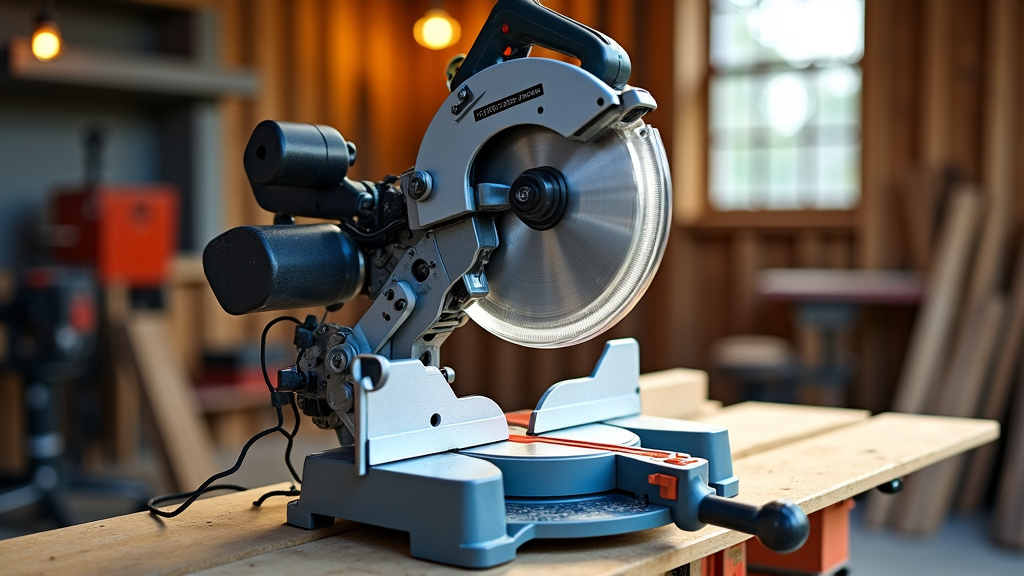
A miter saw is a stationary power tool. It’s usually mounted on a stand or workbench, and you bring the material to the saw. This design allows for incredible accuracy, especially when making angled cuts. You’ll often hear them called “chop saws” because they’re designed to chop across a board with precision.
What a Miter Saw Does Best
Imagine you’re installing trim around a room or framing a door. You need consistently perfect angles so pieces fit together without gaps. That’s where a miter saw shines. We found it’s the go-to tool for cross-cutting lumber, meaning cutting across the grain of the wood. It also excels at miter cuts (angled cuts across the face of the board) and bevel cuts (angled cuts through the thickness of the board).
- Picture frame corners: Miter saws create the perfect 45-degree angles needed for tight, clean corners.
- Crown molding: The ability to make compound cuts (both miter and bevel at the same time) makes them essential for complex trim work.
- Deck railing balusters: You can quickly and accurately cut many pieces to the exact same length.
Types of Miter Saws
There are a few variations of miter saws, each offering slightly different capabilities. The basic miter saw pivots left and right for miter cuts. A compound miter saw also tilts for bevel cuts. The most versatile is the sliding compound miter saw. This type allows the blade to slide forward and backward, greatly increasing the width of the material you can cut (Woodworking Network). This means you can cut wider boards that wouldn’t fit on a standard miter saw.
Circular Saw: The Portable Workhorse
Now, let’s talk about the circular saw. This is typically a handheld tool that you move across your material. It’s built for power and portability. If you’ve ever watched someone cut a large sheet of plywood, chances are they were using a circular saw.
What a Circular Saw Does Best
A circular saw is your best friend for cutting large pieces of sheet goods like plywood, OSB, or MDF. It’s excellent for making long, straight cuts quickly. Need to cut a door down to size? A circular saw. Building a shed and need to cut siding? A circular saw. It’s designed for situations where you bring the saw to the material, rather than the other way around. We found its versatility makes it a staple in almost any toolkit, from DIYers to professional contractors.
- Cutting large panels: Perfect for breaking down 4×8 foot sheets of plywood.
- Rough framing: Quickly cuts dimensional lumber (2x4s, 2x6s) for wall studs or joists.
- Demolition: Can power through old wood or even some plastics.
Types of Circular Saws
The most common types are sidewinder (blade on the right or left) and worm drive (blade usually on the left, motor in the back). Worm drive saws are often preferred for heavy-duty tasks because of their increased torque and durability (Fine Homebuilding). However, sidewinder saws are generally lighter and more compact. Another type is a hypoid saw, which is similar to a worm drive but uses different gears and often runs cooler.
Key Differences in Operation and Safety
Using these two tools feels very different. With a miter saw, your material is clamped or held securely, and you bring the blade down to it. This stationary setup often feels more controlled for precise cuts. With a circular saw, you’re guiding the tool. This requires a steady hand and often the use of a straight edge or guide to keep your cuts straight. Always wear appropriate safety gear, like eye protection, regardless of which saw you’re using (Occupational Safety and Health Administration).
Comparing Miter Saws and Circular Saws at a Glance
To help you visualize the differences, we’ve put together a quick comparison table:
| Feature | Miter Saw | Circular Saw |
|---|---|---|
| Primary Use | Precise, angled cross-cuts | Straight cuts on large materials |
| Portability | Less portable (stationary) | Highly portable (handheld) |
| Accuracy | Very high for repetitive angles | Good, but requires user skill/guides |
| Material Size | Limited by blade size and slide rail | Accommodates very large sheets |
| Cut Types | Cross-cuts, miter, bevel, compound | Cross-cuts, rip cuts, plunge cuts |
| Setup | Typically requires a workbench/stand | Used freehand or with guides |
When to Choose Which Saw: Making Your Decision
So, how do you decide which one to buy first, or which one is right for your next project? We found it boils down to the types of projects you tackle most often. If your passion is furniture making, fine carpentry, or home renovations involving trim, a miter saw will quickly become indispensable. If you’re building decks, fences, or working with large sheets of lumber, a circular saw will be your workhorse.
Projects Best Suited for a Miter Saw
If you’re focused on interior finishing, custom shelving, or anything that demands consistent angles, lean towards the miter saw. Think about projects where precision in cutting repeatable lengths and angles is non-negotiable. It’s often seen as a specialist tool for achieving a polished, professional look.
Projects Best Suited for a Circular Saw
For rough carpentry, breaking down lumber on a job site, or tackling projects that involve large, flat materials, the circular saw is the champion. It’s the general-purpose cutter that can handle a wide range of tasks and materials. Its versatility often makes it the first power saw many DIYers purchase.
Can You Get By With Just One?
It’s a common question: “Can a circular saw do what a miter saw does, or vice versa?” While there’s some overlap, neither can truly replace the other. You can make angled cuts with a circular saw using a protractor and guide, but it won’t be as fast or consistently accurate as a miter saw. Similarly, you can make a cross-cut with a miter saw, but you can’t break down a 4×8 sheet of plywood with it. Many experienced woodworkers will tell you that eventually, you’ll want both. They really do complement each other well.
Factors to Consider Before Buying
Before you make a purchase, take a moment to think about a few key things. This will help you select the best tool for your specific needs.
- Type of projects: Are you mostly doing small, precise cuts or large, rough cuts?
- Workspace: Do you have room for a stationary tool, or do you need something easily stored and moved?
- Budget: Prices vary greatly, so set a realistic budget for yourself.
- Power source: Do you need cordless convenience or is a corded model acceptable?
- Future needs: Are there other projects on your horizon that might require a different saw type?
Remember, the “best” saw isn’t always the most expensive one; it’s the one that best fits your projects and your way of working.
Conclusion
You’ve now got a clear understanding of what makes a miter saw different from a circular saw. We found that choosing between them really comes down to your project needs and desired precision. While the miter saw is your best friend for accurate, angled cuts on stationary pieces, the circular saw is the versatile workhorse for larger, straight cuts on the go.
Remember, these tools aren’t rivals but complementary partners in a well-equipped workshop. Consider your most frequent tasks and future projects, then confidently choose the saw that will help you build, create, or repair with the most efficiency and ease.
Frequently Asked Questions
Can a miter saw cut plywood?
A miter saw is generally not ideal for cutting large sheets of plywood. Its design limits the width of material it can cross-cut. While it can cut smaller pieces, a circular saw with a guide is far more efficient and safer for breaking down full sheets.
Is one saw more dangerous than the other?
Both power saws can be dangerous if not used correctly. A miter saw’s stationary nature can sometimes feel more controlled. However, a circular saw requires more user control and a steady hand, which can increase risk if you’re not careful. Always prioritize safety, wear eye protection, and follow manufacturer guidelines for both tools.
Can I use a miter saw to rip lumber (cut along the grain)?
No, a miter saw is not designed for ripping lumber. Its purpose is to make cross-cuts and angled cuts across the width of a board. For rip cuts, you’ll need a circular saw with a rip fence, or ideally, a table saw, which excels at this task.
What is a good first saw for a new DIYer?
For many new DIYers, a circular saw is often the more versatile first purchase. It handles a wider range of general cutting tasks, from breaking down sheet goods to cutting dimensional lumber for framing. You can also achieve decent accuracy with guides. A miter saw is great when you need consistent, precise angles for trim or fine carpentry.
Do I need different blades for different materials with these saws?
Yes, blade choice is very important for both miter and circular saws. You’ll need different blades for cutting wood, metal, or masonry, and even different types of wood (e.g., fine-finish blades for trim, aggressive blades for rough framing). Always match the blade to the material and the cut type for safety and best results.
