
Why Is My Miter Saw Blade Wobbling?
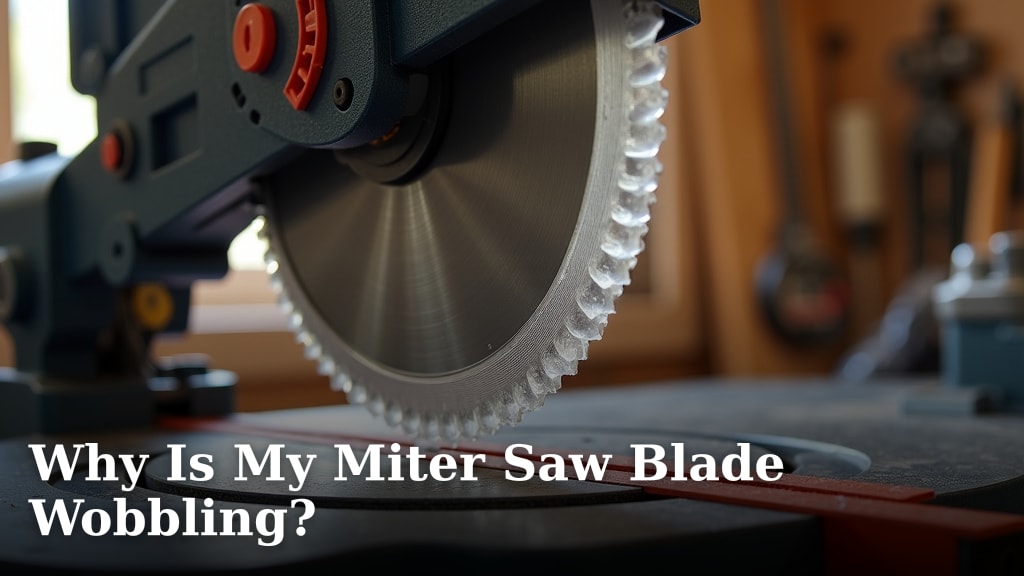
Your miter saw blade is likely wobbling because of a loose arbor nut or a bent blade. We found that these are the two most common reasons for this frustrating issue. It can also be caused by dirty blade stabilizers or worn-out bearings.
A wobbling blade isn’t just annoying; it’s a safety hazard and messes up your cuts. You’ll notice inaccurate angles and rough edges on your material. We understand how frustrating it can be when your saw isn’t performing its best.
- Loose arbor nut
- Bent blade
- Dirty blade stabilizers
- Worn arbor bearings
- Damaged blade flanges
Let’s walk through exactly why your miter saw blade might be wobbling and how you can fix it to get back to making perfect cuts.
Understanding Your Miter Saw Blade’s Instability
When your miter saw blade starts to wobble, it’s more than just an annoyance. It can throw off your measurements and even pose a safety risk. Let’s break down the primary reasons this might be happening.
We’ve found that addressing these issues early can prevent bigger problems down the line. Think of it like a car tire out of alignment; ignored, it causes wear and tear.
The Usual Suspects: Common Causes of Blade Wobble
Most blade wobbles stem from a few key areas. It’s often something straightforward that you can fix yourself.
We’ll guide you through checking each one, from the simplest to the more complex. You’ll be making precise cuts again in no time.
Loose Arbor Nut
This is probably the most common culprit. The arbor nut is what holds your saw blade securely in place on the arbor shaft.
If it’s not tightened properly, the blade can shift or vibrate. We’ve seen this happen after blade changes, where the nut wasn’t fully torqued down.
Always ensure it’s snug, but don’t overtighten it. You don’t want to strip the threads or damage the blade.
Bent or Damaged Blade
Your saw blade is designed to be perfectly flat and rigid. If it gets bent, even slightly, it will cause a noticeable wobble.
How does a blade get bent? Sometimes it’s from hitting a knot in wood, dropping the blade, or even improper storage. A damaged blade can also have missing teeth, which throws off its balance.
If you suspect a bent blade, the easiest way to confirm is to remove it and lay it on a perfectly flat surface. You’ll quickly see if it’s no longer true.
Less Obvious Contributors to Blade Instability
Sometimes, the problem isn’t as straightforward as a loose nut or a bent blade. Other components play a vital role in keeping your blade steady.
These issues might require a bit more investigation but are still manageable for most DIYers.
Dirty or Damaged Blade Stabilizers
Miter saws use inner and outer blade stabilizers, also called flanges or washers, to sandwich the blade. These parts ensure the blade runs true and prevent lateral movement.
If these stabilizers are dirty, rusty, or have wood dust buildup, they can’t provide proper support. Imagine trying to hold something steady with a greasy hand.
We recommend regularly cleaning these parts. Use a wire brush or fine sandpaper to remove any grime or burrs that could interfere with their flat contact against the blade.
If the stabilizers themselves are bent or warped, they need to be replaced. They are crucial for blade integrity.
Worn Arbor Bearings
Inside your saw’s motor, the arbor shaft spins on bearings. These tiny components allow the shaft to rotate smoothly and without play.
Over time, especially with heavy use, bearings can wear out. When this happens, the arbor shaft, and consequently your blade, can develop excessive side-to-side movement.
A tell-tale sign of worn bearings is often an unusual noise, like grinding or humming, coming from the motor housing. You might also feel some play if you try to wiggle the blade (with the saw unplugged, of course).
Replacing bearings can be a bit more involved, often requiring disassembly of the motor housing. If you’re not comfortable with this, a qualified technician might be your best bet (National Institute for Occupational Safety and Health).
Misaligned Miter Saw Components
It’s not just the blade and its immediate parts that can cause a wobble. Sometimes, the issue lies with the saw’s overall structure.
A saw that isn’t perfectly calibrated or has loose parts can indirectly affect blade stability. We found this is less common but still worth checking.
- Loose motor mount: If the motor itself isn’t securely attached, its vibrations can translate to blade wobble.
- Bent arbor shaft: This is a more serious issue. If the main shaft that the blade mounts onto is bent, no amount of tightening will fix the wobble. This usually requires professional repair or replacement of the saw.
Safety First: Your Checklist Before Troubleshooting
Before you even think about touching your miter saw, remember safety is paramount. You’re working with sharp objects and powerful machinery.
Always take these precautions to protect yourself:
- Unplug the saw: This is non-negotiable. Always remove the power cord from the outlet.
- Wear gloves: Protect your hands from sharp blade teeth.
- Use eye protection: Just in case something unexpected happens.
- Work in a well-lit area: You need to clearly see what you’re doing.
- Secure the saw: Ensure it’s stable on your workbench and won’t tip over.
Diagnosing the Wobble: A Step-by-Step Guide
Now that you know the potential causes, let’s walk through how to pinpoint the exact problem. This systematic approach will save you time and frustration.
Think of yourself as a detective, ruling out suspects one by one.
Visual Inspection
Start with a simple look. Often, you can spot the issue just by observing.
With the saw unplugged, carefully inspect the blade. Are any teeth missing? Is there visible damage or a bend? Look at the stabilizers; do they appear clean and flat?
The “Wiggle Test”
This is a hands-on way to feel for play. Again, ensure the saw is unplugged!
- Gently try to wiggle the blade side-to-side. Does it move independently of the arbor shaft? If so, the arbor nut might be loose, or the stabilizers aren’t clamping effectively.
- Next, grasp the blade firmly and try to wiggle it along with the arbor shaft. Is there any play within the motor housing? If yes, it could point to worn arbor bearings.
Blade Removal and Examination
If the wiggle test isn’t conclusive, it’s time to remove the blade for a closer look. This also allows you to inspect the stabilizers directly.
Remember to loosen the arbor nut in the correct direction (often it’s reverse threaded, so “righty-loosey”). Once the blade is off, clean the stabilizers thoroughly and check them for any damage or warping.
Fixing the Wobble: Solutions for Each Cause
Once you’ve identified the problem, applying the right solution is usually straightforward. You’re almost ready to get back to cutting!
| Problem | Solution | Notes |
|---|---|---|
| Loose Arbor Nut | Tighten securely with a wrench. | Do not overtighten; follow manufacturer’s torque specs if available. |
| Bent/Damaged Blade | Replace with a new, high-quality blade. | Never try to straighten a bent blade; it’s unsafe. |
| Dirty Blade Stabilizers | Clean thoroughly with a wire brush or fine sandpaper. | Ensure surfaces are completely flat and free of debris. |
| Damaged Blade Stabilizers | Replace inner and/or outer flanges. | Use OEM parts for best fit and safety. |
| Worn Arbor Bearings | Replace bearings (DIY or professional). | Requires motor disassembly; consider professional help. |
| Loose Motor Mount | Tighten all motor mounting bolts. | Consult your saw’s manual for locations. |
| Bent Arbor Shaft | Professional repair or saw replacement. | Usually a sign of significant impact; difficult DIY fix. |
Preventative Maintenance: Keeping Your Blade True
An ounce of prevention is worth a pound of cure, right? Taking a few simple steps can prevent future wobbles and extend the life of your saw.
We found that regular maintenance keeps your tools performing at their best (U.S. Consumer Product Safety Commission).
Regular Cleaning Habits
After each use, take a moment to clean your saw. Pay particular attention to the blade and the area around the arbor.
Wood dust and resin buildup can cause issues. Use a brush or compressed air to remove debris. You’ll thank yourself later.
Proper Blade Storage
Don’t just toss your spare blades in a drawer. Store them properly in their original packaging or a dedicated blade case.
This protects them from accidental bending or damage. A bent blade is a useless blade.
Using the Right Blade for the Job
Always match your blade to the material you’re cutting. Using a general-purpose blade for heavy-duty tasks can put undue stress on the blade and saw.
Different tooth counts and blade types are designed for specific materials. This helps maintain blade integrity and prevents premature wear.
Conclusion
Dealing with a wobbling miter saw blade can be frustrating, but you now have the tools to diagnose and fix it. We’ve seen that issues range from a simple loose nut to more involved bearing problems. Prioritizing safety by unplugging your saw is always the first step.
By systematically checking your arbor nut, blade, and stabilizers, you can quickly pinpoint the cause. Remember that regular cleaning and proper blade storage go a long way in preventing future wobbles. Get your saw back to making precise, safe cuts by applying these solutions today.
Frequently Asked Questions
Can a dirty blade cause a miter saw to wobble?
Yes, a dirty blade can indirectly cause wobble. Buildup on the blade itself, or more commonly on the blade stabilizers (flanges), can prevent the blade from seating properly. This uneven contact can lead to instability and wobble during operation.
How often should I check my miter saw for blade wobble?
You should perform a quick check for wobble every time you change a blade or if you notice any changes in cut quality. A thorough inspection of components like stabilizers and bearings should be part of your routine maintenance, perhaps every few months or after heavy use.
Is it safe to use a miter saw with a slightly wobbling blade?
No, it is not safe to use a miter saw with any blade wobble. Even a slight wobble can cause inaccurate cuts, kickback, or put undue stress on the saw’s components, leading to premature wear or even catastrophic failure. Always fix the wobble before using your saw.
Can a worn-out motor cause blade wobble?
While less common, a severely worn-out motor, especially if its mounting bolts are loose, can contribute to blade wobble. More directly, worn bearings within the motor housing (which support the arbor shaft) are a common motor-related cause of blade instability.
What’s the best way to clean miter saw blade stabilizers?
The best way to clean blade stabilizers is to remove them from the saw. Use a wire brush or fine sandpaper to scrub off any accumulated sawdust, pitch, or rust. Ensure the surfaces are completely smooth and flat before reassembling them with your blade.
