
What Is the Best 10 Inch Miter Saw?
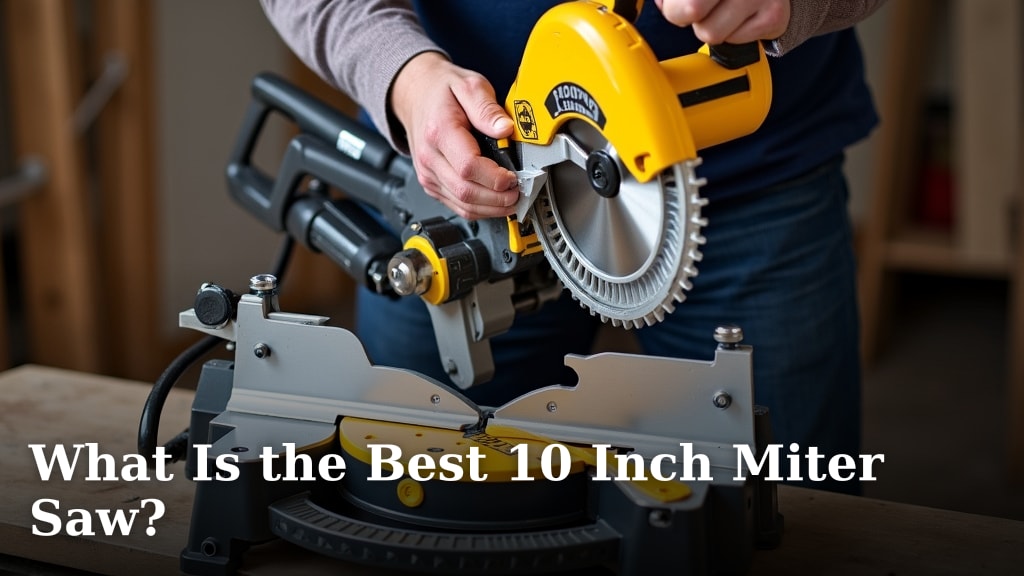
The best 10-inch miter saw for most DIYers and pros looking for a great balance of power, precision, and portability is often the Dewalt DWS779. We found this model consistently offers reliable performance for various woodworking tasks.
Choosing the right miter saw can feel like a big decision. You want something that cuts cleanly and accurately, every time. A 10-inch blade size is popular because it handles most common lumber sizes without being too bulky or heavy. It’s truly a workshop staple.
- The Dewalt DWS779 is often recommended for its value and performance.
- 10-inch miter saws are great for versatility in your workshop.
- Look for accuracy, power, and ease of use in your choice.
- Consider your typical projects when picking a saw.
Let’s dive into what makes a 10-inch miter saw stand out and help you pick the perfect one for your needs.
Finding the Right 10-Inch Miter Saw for Your Projects
Picking the right 10-inch miter saw means looking for a tool that balances power, precision, and ease of use. It should handle your typical cutting tasks with confidence and accuracy.
Why a 10-Inch Miter Saw? The Sweet Spot for Most Users
You might wonder, why specifically a 10-inch blade? It’s a great question! We’ve found that this size hits a sweet spot for many woodworkers, from weekend warriors to seasoned pros.
- Versatility: A 10-inch saw can cut through most standard lumber sizes, including 2x4s, 4x4s, and common trim pieces. It’s perfect for deck boards, crown molding, and even some flooring projects.
- Portability: Generally, 10-inch miter saws are lighter and more compact than their 12-inch counterparts. This makes them easier to move around your workshop or take to a job site.
- Cost-Effective: Blades for 10-inch saws are typically less expensive and more widely available. This can save you money over the life of the saw.
- Plenty of Power: Don’t mistake smaller size for less power. Most 10-inch models pack enough punch to tackle tough hardwoods without bogging down.
Think of it like choosing a multi-tool for your everyday tasks. A 10-inch miter saw is often the most practical choice for a wide variety of jobs.
Key Features to Look for in Your 10-Inch Miter Saw
When you’re shopping for a new miter saw, it’s easy to get overwhelmed by all the options. Let’s break down the most important features you should pay attention to.
Power and Motor (Amps)
The motor’s power is measured in amps. For a 10-inch miter saw, you’ll typically see motors ranging from 12 to 15 amps. We found that 15 amps is ideal for consistent performance, especially if you’re cutting dense materials or thicker wood.
A higher amp motor means less bogging down during cuts, leading to smoother results and less strain on the tool. You want a saw that feels powerful and confident when you push wood through it.
Blade Speed (RPM)
Revolutions Per Minute (RPM) tells you how fast the blade spins. Higher RPMs generally lead to cleaner, smoother cuts. Look for saws with RPMs in the range of 4,000 to 5,000 no-load speed. This ensures quick and efficient material removal.
Accuracy and Precision
This is where the rubber meets the road for any saw. What’s the point of cutting if it’s not straight? Look for features that help ensure accuracy:
- Positive Miter Stops: These are preset detents that lock the saw at common angles (like 0, 15, 22.5, 30, and 45 degrees). They make it super easy to quickly set common angles with confidence.
- Miter and Bevel Scales: Clear, easy-to-read scales are a must. Some saws even have digital readouts, which can be a nice bonus for precise adjustments.
- Laser Guides: A laser guide projects a line onto your workpiece, showing you exactly where the blade will cut. While not always perfectly accurate out of the box, they can be calibrated and are a great visual aid.
- Smooth Glide System: If you’re looking at a sliding miter saw, a smooth, wobble-free slide mechanism is crucial for consistent depth and accuracy across wider boards.
We found that saws with solid construction and minimal blade deflection tend to offer the best long-term accuracy.
Dust Collection
Sawdust can be a real nuisance, not to mention a health hazard. A good dust collection system is often overlooked but incredibly important. Look for a saw with a well-designed dust port and consider connecting it to a shop vac.
While no miter saw captures 100% of dust, some are much better than others. A cleaner workspace is a safer and more enjoyable workspace.
Types of 10-Inch Miter Saws: Which One Do You Need?
Not all miter saws are created equal. There are a few main types, each with its own strengths. Understanding these will help you narrow down your choices.
Standard (Chop) Miter Saw
This is the most basic type. It cuts straight down at various angles. Think of it as a fancy chop saw. They are usually the most affordable and lightest option.
- Best for: Simple crosscuts, trim work, and framing where you don’t need to cut very wide boards.
- Limitation: Can only cut as wide as the blade diameter allows in a single chop.
Sliding Compound Miter Saw
This is probably the most popular choice for versatility. The blade can slide forward and backward on rails, allowing you to cut much wider boards than a standard miter saw. It also “compounds” the cut, meaning it can bevel (tilt the blade) and miter (pivot the table) at the same time.
- Best for: Cutting wide planks, decking, crown molding, and any project requiring both angle and bevel cuts.
- Consideration: They tend to be heavier and take up more space due to the sliding rails.
Dual-Bevel Miter Saw
A dual-bevel saw allows the blade to tilt both left and right. This is a huge convenience, as you don’t have to flip your workpiece over to make opposite-angle bevel cuts. It saves time and reduces errors.
- Best for: Complex trim work, cabinet making, and projects where you need to make many bevel cuts from different directions.
- Note: Most sliding compound miter saws are also dual-bevel.
Comparing Top 10-Inch Miter Saws (General Features)
While we highlighted the Dewalt DWS779 early on, it’s helpful to see how general features stack up across popular models. This table shows common characteristics you’ll find when comparing saws.
| Feature | Entry-Level Models | Mid-Range Models | High-End Models |
|---|---|---|---|
| Motor (Amps) | 12-14 Amps | 15 Amps | 15 Amps (High Torque) |
| Blade Speed (RPM) | 3,800-4,500 | 4,000-5,000 | 4,800-5,500+ |
| Dust Collection | Basic Bag | Improved Bag/Port | Efficient Port (Connects to Vac) |
| Max Crosscut @ 90° | 6-8 inches | 8-12 inches (Sliding) | 10-16 inches (Sliding) |
| Bevel Capability | Single Bevel (L) | Dual Bevel | Dual Bevel |
| Laser Guide | Rarely | Often Included | Standard, High Quality |
| Build Quality | Stamped Metal/Plastic | Cast Aluminum/Steel | Heavy-Duty, Durable |
Checklist: What to Consider Before Buying
Before you commit to a purchase, take a moment to run through this quick checklist. It will help ensure you’re getting the best 10-inch miter saw for your specific situation.
- What types of materials will you be cutting most often? (Softwood, hardwood, composite?)
- How wide are the boards you typically work with? (This determines if you need a sliding saw.)
- Do you need to make bevel cuts? (Single or dual bevel?)
- How much space do you have in your workshop? (Consider the footprint of sliding models.)
- Is portability important to you? (Will you move it often?)
- What’s your budget? (This helps narrow down brands and features.)
Answering these questions honestly will guide you to a saw that feels just right. You want a tool that makes your work easier, not harder!
Conclusion
Choosing the best 10-inch miter saw boils down to understanding your specific needs. While the Dewalt DWS779 frequently stands out for its balanced performance and value, your ideal saw will align with your projects and workspace. Prioritize power, accuracy features, and the right saw type—standard, sliding, or dual-bevel—for your tasks.
By using the checklist and considering the key features we discussed, you’re well-equipped to make a smart purchase. Invest in a tool that will make your woodworking more efficient and enjoyable for years to come. Your perfect cut awaits!
Frequently Asked Questions
Is a 10-inch miter saw powerful enough for hardwoods?
Yes, most 10-inch miter saws, especially those with a 15-amp motor, provide ample power for cutting hardwoods. The key is to use a sharp, appropriate blade for the material you’re cutting.
Can a 10-inch sliding miter saw cut a 4×4 post?
Many 10-inch sliding compound miter saws can indeed cut a 4×4 post in a single pass. Always check the specific saw’s crosscut capacity at 90 degrees to confirm it can handle this dimension.
What’s the main benefit of a dual-bevel 10-inch miter saw?
The primary benefit of a dual-bevel saw is convenience and efficiency. You don’t need to flip your workpiece to make opposing bevel cuts, saving time and reducing the chance of errors, especially with long or awkward pieces.
How often should I replace the blade on my 10-inch miter saw?
Blade replacement depends on usage and material. If you notice tear-out, burning, or increased effort during cuts, it’s likely time for a new, sharp blade. Using the correct blade for your material also extends its life.
Do I really need a laser guide on my 10-inch miter saw?
A laser guide can be a helpful visual aid for aligning cuts quickly. While not strictly necessary for accuracy (you should always double-check with the actual blade), it speeds up workflow and can be a nice feature for many users.
