
What Is the Best Sliding Miter Saw?
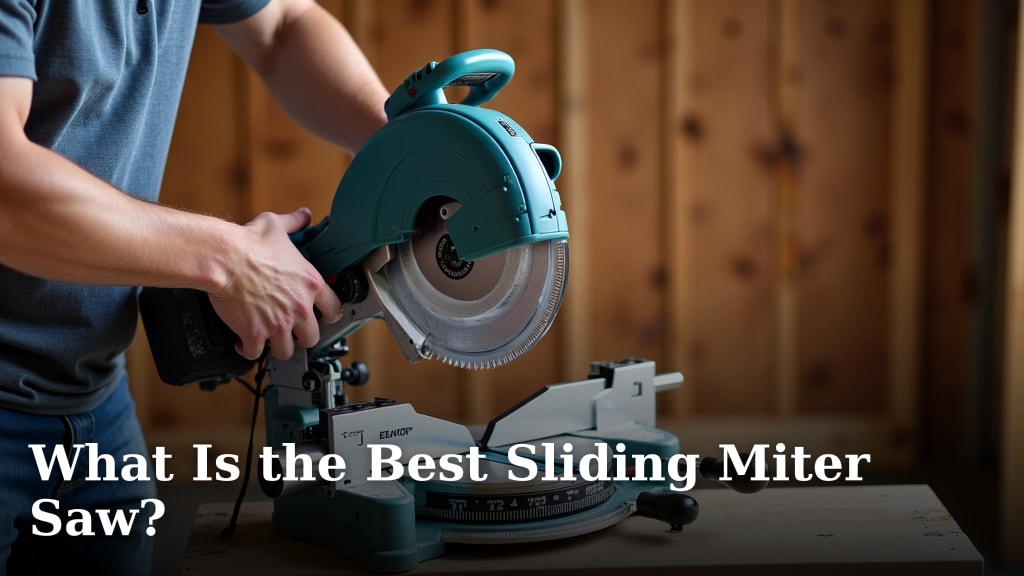
When searching for the best sliding miter saw, we found that the DeWalt DWS779 is often considered the top choice for its power, accuracy, and versatility. It offers a great balance of features for both DIY enthusiasts and professional users.
Choosing the right miter saw can feel overwhelming, right? You want something reliable that makes clean cuts every time. We researched and found that several factors make a sliding miter saw stand out. Things like blade size, motor power, and portability all play a role in its overall performance and how well it fits your projects.
TL;DR
- The DeWalt DWS779 is a top contender.
- Consider blade size and motor power.
- Accuracy and smooth slides are key features.
- Think about portability for your workspace.
Let’s dive into the details and help you understand what makes a sliding miter saw truly great for your workshop.
Choosing the Best Sliding Miter Saw
Finding the right sliding miter saw for your workshop comes down to understanding your specific needs and the features that matter most. We found that the best saw for you might not be the best for someone else, depending on their projects.
Think about what you’ll be cutting. Will it be wide boards for shelving, trim for a house, or small craft pieces? The saw’s capabilities should match your ambitions. It’s like picking the right tool for a specific job; a hammer isn’t always what you need.
Understanding Sliding Miter Saw Basics
A sliding miter saw is a powerhouse for cutting various angles and wide materials. Unlike a standard miter saw, its blade slides along rails, allowing for a much longer cut capacity. This feature is especially useful for wider boards that traditional miter saws can’t handle.
You’ll notice that most sliding miter saws come in 10-inch or 12-inch blade sizes. This is a primary factor in determining the saw’s cutting depth and width. A larger blade generally means more versatility for bigger projects.
What Does “Sliding” Really Mean?
The “sliding” part refers to the saw head’s ability to move forward and backward on rails. This movement extends the cut length, letting you slice through boards up to 16 inches wide or even more, depending on the model. It’s a game-changer for many woodworking tasks.
Imagine trying to cut a wide piece of plywood with a regular miter saw – you’d have to flip it or make multiple passes. With a sliding feature, one smooth pass often does the trick, saving you time and ensuring a cleaner cut.
Key Features to Look For in a Top Sliding Miter Saw
When you’re comparing models, several features stand out as crucial for performance and user experience. We researched and found that focusing on these aspects will guide you to a reliable and accurate tool.
Don’t just look at the price tag. A slightly more expensive saw might offer features that save you headaches later on. Think of it as an investment in your projects and your peace of mind.
Motor Power and Blade Size
The motor power, usually measured in amps (for corded saws) or volts (for cordless), dictates how easily the saw cuts through different materials. We found that a 15-amp motor is standard and generally sufficient for most woodworking tasks.
As for blade size, 10-inch saws are more compact and great for smaller workshops or frequent transport. 12-inch saws, however, provide a deeper and wider cutting capacity, making them ideal for larger lumber and demanding projects (American Woodworker Magazine).
Accuracy and Cut Quality
What’s a saw if it isn’t accurate? We found that a saw’s ability to make precise, repeatable cuts is paramount. Look for models with clear, easy-to-read miter and bevel scales, and positive stops at common angles.
A good fence system is also vital. The fence supports your material against the blade, ensuring straight and square cuts. Any wobble or inaccuracy in the fence can lead to frustrating mistakes.
Dust Collection Efficiency
Cutting wood creates a lot of sawdust. A good dust collection system helps keep your workspace cleaner and improves visibility during cuts. Many saws come with a dust bag, but connecting to a shop vacuum often provides superior dust extraction.
Think about your health too. Fine wood dust can be a respiratory irritant. An effective dust collection system isn’t just about tidiness; it’s about a safer working environment (Occupational Safety and Health Administration).
Portability vs. Stationary Use
Are you moving your saw around often, or will it stay in one spot? This question greatly influences which model will suit you best. We found that portability is a trade-off with features and power.
If you’re a DIYer working on different projects at various locations, a lighter, more compact saw might be your best friend. For a dedicated workshop, a heavier, more feature-rich model could be ideal.
Weight and Footprint Considerations
The weight of a sliding miter saw can range significantly. Some models are designed to be easily carried from job site to job site, while others are built for stability and power in a fixed location. Consider how much lifting you’ll be doing.
Footprint refers to the amount of space the saw takes up on your workbench or stand. Sliding saws, because of their rails, often require more depth than non-sliding models. Measure your available space before buying!
Sliding Miter Saw Comparison Table
To help you visualize the differences, we put together a simple comparison. Remember, these are general guidelines, and specific models will vary. It’s like comparing different car types – each has its strengths.
| Feature | 10-inch Sliding Miter Saw | 12-inch Sliding Miter Saw |
|---|---|---|
| Typical Motor Power | 15 Amps | 15 Amps |
| Max Cross Cut (approx.) | 10-12 inches | 12-16+ inches |
| Weight (average) | 35-50 lbs | 50-70+ lbs |
| Portability | Easier to transport | More stationary |
| Best For | Trim, smaller projects, tight spaces | Decking, framing, wide boards |
As you can see, both have their place. Your project scope is the biggest determinant here.
Must-Have Accessories for Your Sliding Miter Saw
A great saw performs even better with the right accessories. These aren’t just add-ons; they can significantly improve safety, accuracy, and overall workflow. Don’t overlook these simple additions.
- High-Quality Blades: The blade makes the cut. A better blade means a cleaner, smoother finish.
- Miter Saw Stand: Provides stable support and often offers convenient extensions.
- Material Clamps: Keeps your workpiece secure for safer and more accurate cuts.
- Measuring Tape and Pencil: Basic, but essential for precise markings.
- Safety Glasses and Hearing Protection: Non-negotiable for personal safety.
These items will make your saw experience much more enjoyable and productive. It’s like having the right ingredients for a recipe – you can’t get a great result without them.
A Checklist for Your Ideal Sliding Miter Saw
Before you make your final decision, run through this quick checklist. It will help ensure you’ve considered all the important aspects that contribute to a satisfying and effective purchase.
We found that thinking through these points helps many people narrow down their choices and feel more confident in their selection. It’s about being prepared and knowing what you really need.
- Does it have enough power (15 amps is a good benchmark)?
- Is the blade size appropriate for your typical projects (10-inch vs. 12-inch)?
- Are the miter and bevel adjustments smooth and accurate?
- Is the dust collection adequate, or can it connect to a shop vac?
- Is its weight and size suitable for your workspace and portability needs?
- Does it fit within your budget while still offering essential features?
By answering these questions, you’ll be well on your way to selecting a sliding miter saw that serves you well for years to come. Happy cutting!
Conclusion
Choosing the best sliding miter saw truly depends on your individual projects and workshop needs. You’ve seen that factors like motor power, blade size, and portability all play a significant role. By evaluating your typical cuts and available space, you can narrow down the options.
Remember that accuracy and good dust collection are vital for both quality results and a safer work environment. Don’t forget those essential accessories to complete your setup. Now, take what you’ve learned and confidently select the perfect saw to make your woodworking projects a success!
Frequently Asked Questions
What’s the main difference between a compound miter saw and a sliding miter saw?
A compound miter saw can tilt (bevel) and pivot (miter) for angled cuts, but its cut capacity is limited to the blade’s diameter. A sliding miter saw adds rails, allowing the blade to move forward and backward. This significantly increases its cross-cutting width for wider boards.
Do I really need a 12-inch blade, or is a 10-inch sufficient?
It depends on your projects. A 10-inch saw is often lighter and more compact, great for trim, smaller stock, and lighter tasks. A 12-inch saw provides a greater depth and width of cut, making it better suited for framing, decking, and cutting wider lumber like 2x12s or even 4x4s.
How much space does a sliding miter saw actually need?
Sliding miter saws generally require more depth on your workbench or stand than non-sliding models. This is because the rails extend out the back for the sliding action. We recommend measuring the saw’s full depth when extended to ensure it fits comfortably in your workspace.
Are cordless sliding miter saws as powerful as corded ones?
Cordless technology has advanced significantly, with many models offering comparable power for most tasks. However, corded saws typically provide consistent, continuous power without battery limitations, which can be an advantage for heavy, all-day use. Cordless offers greater portability and convenience.
What’s a common mistake people make when buying a sliding miter saw?
A common mistake is underestimating the importance of a quality blade. The saw itself is only as good as the blade it uses. Investing in a high-quality, sharp blade designed for your specific material will yield much cleaner and more accurate cuts than the stock blade that often comes with the saw.
