
What Is the Difference Between Corded and Cordless Miter Saws?
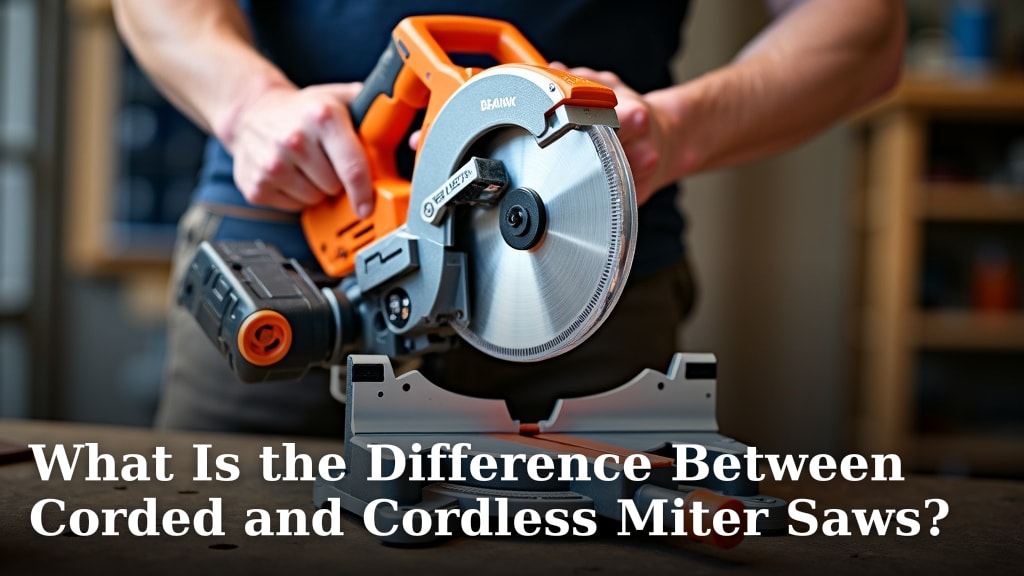
The main difference between corded and cordless miter saws is their power source and portability. Corded saws offer consistent, unlimited power from an outlet, while cordless saws run on batteries, giving you freedom from cords but with limited runtime.
When you’re choosing a miter saw, thinking about where you’ll use it most helps a lot. Do you need to move around a lot, or will you mostly work in one spot? Your answer will often point you toward either the unlimited power of a corded saw or the flexible convenience of a cordless model.
- Corded saws give you constant power.
- Cordless saws offer greater portability.
- Corded models are usually more powerful.
- Cordless versions are great for job sites without outlets.
- Battery life is a key factor for cordless saws.
We’ll walk you through the pros and cons of each type, helping you decide which miter saw is the best fit for your projects.
Understanding Corded vs. Cordless Miter Saws
The primary distinction between these two types of miter saws boils down to their power delivery and how that impacts where and how you can use them. One plugs in, the other runs on batteries.
What Powers a Corded Miter Saw?
Corded miter saws get their energy directly from an electrical outlet. Think of it like your toaster or your TV. You plug it in, and as long as there’s power from the wall, it keeps running. This direct connection means a steady, uninterrupted flow of power to the motor.
Advantages of Corded Power
When you plug in a corded miter saw, you get consistent performance. There’s no worry about a battery running low in the middle of a cut. This constant power often translates to higher overall wattage or amperage, which can be a big deal for tougher materials. We found that many professionals prefer corded models for tasks requiring a lot of repetitive cuts, like framing a house or trimming out multiple rooms. For professionals engaged in such demanding tasks, our guide on the best miter saw for framers provides excellent recommendations.
- Unlimited Runtime: As long as you have electricity, your saw will run.
- Consistent Power: No power dips, even during demanding cuts.
- Often More Powerful: Generally, corded saws have higher torque and RPMs.
- Lighter Weight (Sometimes): No heavy battery pack to factor in.
Limitations of Corded Power
The biggest catch with corded saws is the cord itself. You’re always tied to an outlet. This means you need to be near a power source, or you’ll need extension cords. And let’s be honest, extension cords can be a tripping hazard and a hassle to manage, especially on a busy job site. Long cords can also lead to voltage drop, which might affect saw performance if the cord isn’t adequately gauged for the distance and power draw.
- Tied to an Outlet: Mobility is restricted.
- Extension Cord Management: Can be a trip hazard and inconvenient.
- No Power, No Work: Useless in areas without electricity.
- Potential for Voltage Drop: Longer, thinner cords can reduce power.
How Cordless Miter Saws Get Their Energy
Cordless miter saws operate on rechargeable battery packs, typically lithium-ion. These batteries store energy, allowing you to use the saw without being tethered to a wall outlet. It’s the same idea as your cordless drill or smartphone.
The Freedom of Cordless
The main selling point here is freedom. Imagine needing to cut a few pieces of trim on a second story deck where there are no outlets. With a cordless saw, you just grab it and go. This makes them incredibly useful for job sites that don’t have power yet, or for quick tasks around your yard or garage. Many users find the ability to move freely around a project site to be a huge time-saver. For contractors who prioritize this freedom, our guide to the best cordless miter saw for contractors offers top recommendations.
- Ultimate Portability: Take it anywhere, even remote locations.
- No Cords to Manage: Safer and less clutter.
- Quick Setup: Just attach the battery and you’re ready to cut.
- Ideal for Small Jobs: Perfect for a few quick cuts without a big setup.
Cordless Limitations: Battery Life and Power
While freedom is great, it comes with a trade-off: battery life. Batteries run out. This means you’ll need to keep an eye on your battery charge and have spares ready if you have a lot of cutting to do. Also, while cordless technology has come a long way, corded saws often still have an edge in raw, sustained power, especially for very tough materials or prolonged use. A heavy-duty cut might drain a battery faster and some cordless saws might bog down more easily than their corded counterparts (ToolGuyd).
- Limited Runtime: Batteries need recharging or swapping.
- Battery Cost: Spare batteries can be expensive.
- Potentially Less Sustained Power: Can lose power as the battery drains.
- Heavier: The battery pack adds significant weight.
Key Differences at a Glance
To help you see the distinctions clearly, we’ve put together a quick comparison table. This can help you visualize where each type of saw shines and where it might fall short for your specific needs.
| Feature | Corded Miter Saw | Cordless Miter Saw |
|---|---|---|
| Power Source | Electrical Outlet | Rechargeable Battery |
| Runtime | Unlimited (with power) | Limited (battery life) |
| Portability | Limited by cord/outlet | Excellent, go anywhere |
| Power Output | Consistent, often higher | Variable, can dip |
| Weight | Generally lighter (no battery) | Heavier (due to battery) |
| Cost | Often lower initial cost | Higher initial cost (batteries/charger) |
Making Your Choice: What to Consider
Choosing between a corded and cordless miter saw isn’t about one being inherently “better” than the other. It’s about finding the best fit for your unique projects and working style. Think about how and where you’ll use the saw most often.
Your Project Types and Locations
Are you a homeowner tackling weekend DIY projects in your garage? Or are you a professional carpenter moving between different job sites daily? Your typical work environment plays a huge role. If you’re always near an outlet and need to make hundreds of cuts, corded might be your friend. If you’re often working on new construction without power, or doing punch-list items around a large house, cordless could save you a lot of hassle.
Power Needs and Material Hardness
What kinds of materials will you be cutting? Soft pine trim is one thing; thick hardwood or engineered lumber is another. If you frequently cut dense materials, the sustained power of a corded saw might be more beneficial. While many cordless saws can handle tough cuts, consistent heavy use can drain batteries quickly and potentially strain the motor more.
Budget and Battery Ecosystems
Initial cost is always a factor. Corded saws often have a lower upfront price. For cordless, you’re not just buying the saw; you’re investing in batteries and a charger. If you already own other cordless tools from a specific brand, you might already have compatible batteries, which can make the cordless miter saw a more attractive option. This is called a “battery ecosystem,” and it can save you money in the long run if you stick with one brand.
A Quick Checklist for Your Decision
To help solidify your thoughts, ask yourself these questions:
- Will I always have access to a power outlet where I work?
- How many cuts do I typically need to make in one session?
- What types of materials will I mostly be cutting?
- How important is the ability to move freely without cords?
- Do I already own other battery-powered tools from a brand?
- Is the weight of the saw a major concern for me?
Conclusion
Choosing between a corded and cordless miter saw ultimately comes down to your personal workflow and project needs. If you prioritize unlimited, consistent power for heavy-duty, stationary work, a corded miter saw is likely your best bet. For those needing maximum flexibility, portability, and working in various locations, a cordless model offers unmatched convenience. Consider your typical job site, materials, and budget carefully. By asking yourself the right questions, you can confidently select the miter saw that will serve your projects best for years to come.
Frequently Asked Questions
Is a cordless miter saw powerful enough for framing?
Yes, many modern cordless miter saws are powerful enough for framing, especially 10-inch and 12-inch models running on 18V or 20V (or higher) battery platforms. They can handle repetitive cuts through dimensional lumber. However, for continuous, all-day framing, you might find yourself swapping batteries frequently.
How long does a cordless miter saw battery typically last?
Battery life varies greatly depending on the battery’s amp-hour (Ah) rating, the material being cut, and the intensity of the cuts. For light trim work, a single battery might last several hours. For heavy-duty cross-cuts in hardwoods, you might get 30-60 minutes of continuous cutting before needing a recharge or swap.
Can I use an extension cord with a cordless miter saw?
No, you cannot use an extension cord to power a cordless miter saw directly, as it runs on DC battery power. However, you can use an extension cord to power the saw’s battery charger. This lets you recharge batteries in locations where outlets are further away.
Are cordless miter saws heavier than corded ones?
Generally, yes, cordless miter saws tend to be heavier than their corded counterparts. This added weight comes from the rechargeable battery pack, which can be substantial, especially for higher voltage or larger amp-hour batteries. This extra weight affects portability when carrying the saw around.
What’s the main advantage of a corded miter saw for a professional?
For many professionals, the main advantage of a corded miter saw is its uninterrupted, consistent power output. This means no downtime waiting for batteries to charge, and often higher sustained torque for cutting tough, dense materials all day long. It’s ideal for shop work or job sites with reliable power access.
