
Can You Use Any Blade on a Miter Saw?
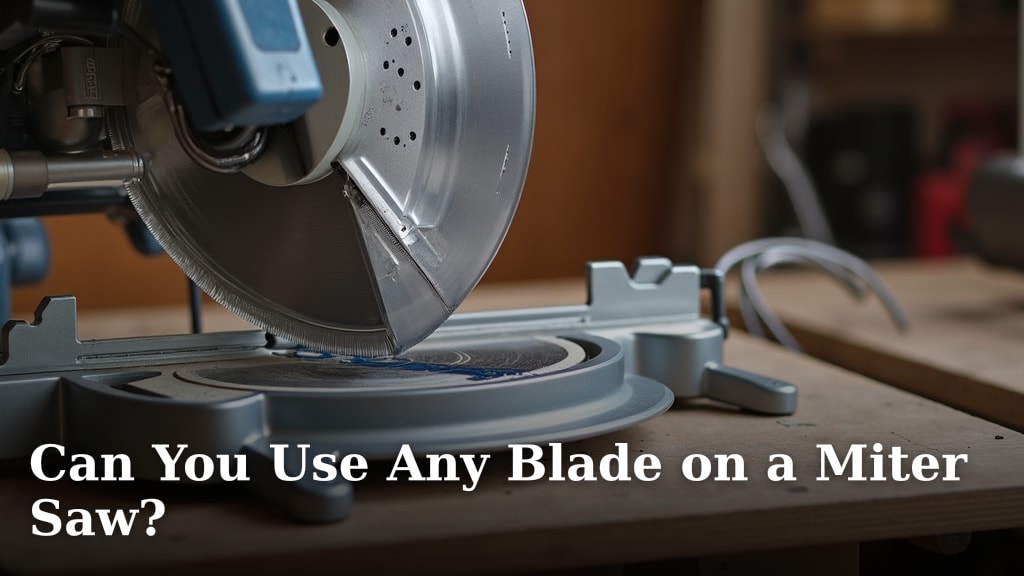
No, you cannot use any blade on a miter saw. Miter saw blades are not universal and must match your saw’s specific arbor type and maximum size. Using the wrong blade can be dangerous and will give you poor, inaccurate cuts.
We found that safety and perfect fit are the most important factors when choosing a blade. This isn’t about just any circular blade fitting onto the machine. It’s about matching the tool’s design with the right accessory for the job you’re doing.
- Always check your saw’s manual for the correct blade diameter and arbor hole size.
- Using an ill-fitting blade can cause vibration, kickback, or damage to your saw.
- The number of teeth on a blade matters for the type of cut, like framing vs. finish work.
- Proper blade selection ensures your cuts are clean, safe, and efficient.
Below, we’ll walk you through exactly what to look for so you can pick the perfect blade every time. Let’s get you set up for safer and better cuts.
Choosing the Right Blade for Your Miter Saw
The short, safe answer is no. Your miter saw requires a specific type of blade. Think of it like shoes. You wouldn’t put a size 10 shoe on a size 5 foot. It won’t fit, and it will cause pain and problems. The same is true for your saw. The blade must match the tool’s engineering to work correctly and keep you safe.
Your miter saw was designed with a specific blade size and arbor (the center hole) in mind. Using the wrong one isn’t a minor issue. It can lead to dangerous kickback, inaccurate cuts, and permanent damage to your expensive tool. Let’s break down exactly what you need to check.
The Two Critical Numbers: Diameter and Arbor Size
Before you even think about teeth or material, two measurements are non-negotiable. Getting these wrong means the blade physically won’t fit or will be dangerously unstable. Always check your saw’s manual or the label on the tool itself.
Blade Diameter: The Overall Size
This is the first number to look for. Common sizes for miter saws are 10 inches and 12 inches. Some larger, sliding compound miter saws use 10-inch or 12-inch blades as well. Some newer, compact models might use smaller 7-1/4-inch blades. The maximum diameter your saw can accept is a firm limit. Never try to force a larger blade on. It will bind and could shatter.
Why the Maximum Size is a Hard Rule
Your saw’s guard, arm, and base are built around a specific blade circle. A larger blade has no place to go. It will hit the body of the saw. Attempting this is a serious safety hazard. The blade can catch on the material or the saw, causing it to stop instantly and violently. This is a primary cause of dangerous kickback.
Arbor Size: The Center Hole
The arbor is the shaft the blade mounts on. The hole in the center of the blade must fit this shaft perfectly. A common arbor size for 10-inch saws is 5/8 inches. For 12-inch saws, it’s often 1 inch. If the blade hole is too small, it simply won’t go on. If it’s too big, you must use a reducing ring (a washer) to center it. A wobbly blade is never safe. Many experts say an ill-fitting blade is a top cause of vibration and poor cuts (CDC Safety Guidelines for Machinery).
Understanding Tooth Count and Blade Purpose
Once you have the correct diameter and arbor, you can choose the right blade for your project. This is where tooth count comes in. It’s not about more teeth being “better,” but about matching the blade to the material and the finish you want.
| Tooth Count | Best For | Cut Quality | Speed of Cut |
|---|---|---|---|
| 24 Teeth | Framing, rough cuts | Rough, may splinter | Fast |
| 40-60 Teeth | General purpose, trim | Smooth, clean cuts | Moderate |
| 80+ Teeth | Fine finish, hardwoods | Very smooth, like glass | Slower |
Lower tooth count blades have deep gullets (the spaces between teeth). They clear sawdust quickly, which is great for fast, rough cuts. Think framing a wall. Higher tooth count blades have shallow gullets and more cutting edges. They remove less material per tooth, resulting in a smoother, cleaner finish. This is perfect for cutting baseboards or crown molding you’ll be painting.
Blade Material: Carbide is King
For most DIYers and pros, the best choice is a blade with carbide-tipped teeth. Plain steel blades dull very quickly. Carbide is an extremely hard material that stays sharp much longer. We found that carbide-tipped blades are the industry standard for both durability and performance (Woodworking Council Reports). They cost a bit more upfront but save you time and frustration by making cleaner cuts for longer.
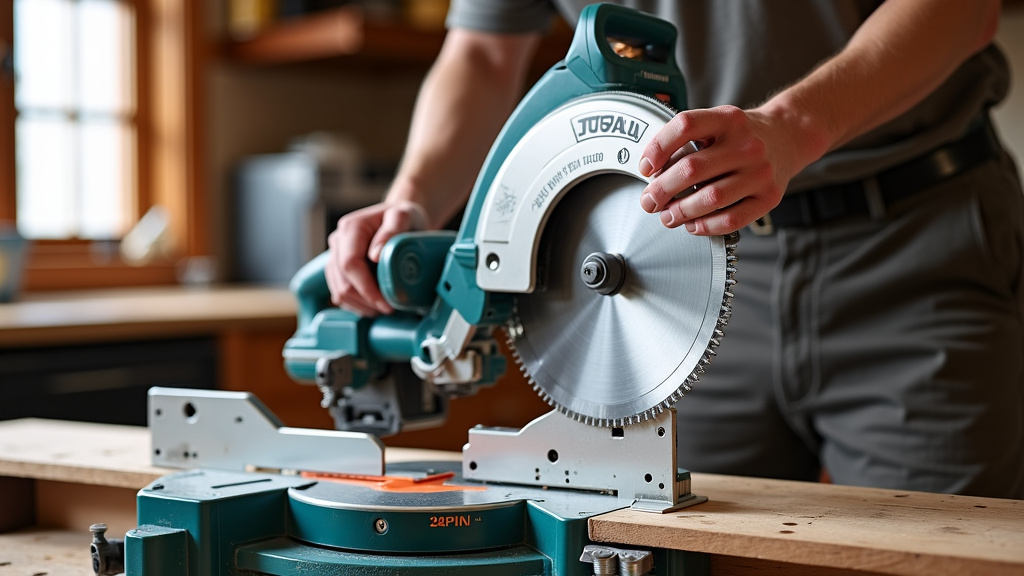
Safety First: What Happens with the Wrong Blade?
Using an incorrect blade isn’t just about bad results. It’s a significant safety risk. The main dangers are:
- Kickback: This is the most dangerous scenario. If a blade binds because it’s too large, not centered, or wrong for the material, the wood can be thrown back at you with tremendous force. Proper blade fit and sharp teeth are your best defense.
- Vibration and Wobble: A blade with an oversized arbor hole, even with a reducer, may not be perfectly centered. This causes severe vibration. It leads to inaccurate cuts, damages the saw’s bearings, and is exhausting to use.
- Damage to the Saw: Forcing the wrong blade can strip the arbor nut, bend the blade guard, or burn out the motor. Your miter saw is a precision tool. Treat it with the right accessories.
When Might You Need an Adapter?
Reducing rings or adapters can be used if you have a blade with a slightly larger arbor hole than your saw requires. For example, using a 1-inch arbor blade on a saw with a 5/8-inch arbor using the proper reducer. However, this is only for minor size differences. Never use an adapter for a major size change. The blade must still be the correct overall diameter. When in doubt, buy a blade made specifically for your saw model.
Your Pre-Use Blade Checklist
Make this a habit before every project. Spending two minutes here prevents hours of trouble and potential injury.
- Check the manual or saw label. Confirm the exact maximum blade diameter and arbor size.
- Hold the new blade up to the old one. Visually confirm they are the same diameter.
- Test the center hole fit. The blade should slide onto the arbor without any play or force.
- Inspect the new blade. Ensure no teeth are damaged or missing from shipping.
- Use the right wrench. Always tighten the arbor nut with the saw’s provided wrench. Ensure it’s snug, but don’t overtighten.
Choosing the right blade transforms your miter saw from a frustrating tool into a precision machine. It makes your work safer, faster, and far more satisfying. You’ve got this. Just match those key numbers, think about the job at hand, and cut with confidence.
Conclusion
You’ve learned that a miter saw blade isn’t a one-size-fits-all accessory. Safety and a perfect fit come down to matching the exact diameter and arbor size from your manual. Tooth count then tailors the blade to your project, ensuring clean cuts. Using the wrong blade risks kickback, vibration, and tool damage. Your simple next step: always verify those two key numbers before buying or installing a blade. Take a moment to check the label or your manual today. This small habit ensures every cut you make is safe, accurate, and satisfying.
Frequently Asked Questions
Can I use a blade from another power tool on my miter saw?
Generally, no. Blades from tools like circular saws or table saws often have different arbor sizes or diameters. For safety and performance, always use a blade specifically designed for your miter saw model.
What is the most common arbor size for a miter saw?
For 10-inch miter saws, a 5/8-inch arbor is very common. Many 12-inch saws use a 1-inch arbor. However, you must check your specific tool’s manual or label to confirm the exact size.
How do I reduce vibration from my miter saw blade?
Vibration often means the blade isn’t centered properly. First, ensure the blade’s arbor hole fits snugly on your saw’s shaft without any wobble. If using a reducer ring, confirm it’s the correct size and seated evenly.
Is it okay to use a blade with fewer teeth for finish work?
No, using a low-tooth-count blade for finish work will leave rough, splintered edges. For smooth cuts on trim, molding, or hardwoods, we recommend a blade with 40 teeth or more for a cleaner result.
Can I use a blade that’s slightly smaller than the maximum diameter?
While it might physically fit, it’s not ideal. A smaller blade won’t reach the full cutting capacity of your saw and can affect accuracy and cut depth. Always use the maximum diameter your saw is designed to handle.
