
Can You Cut Thick Lumber with a Miter Saw?
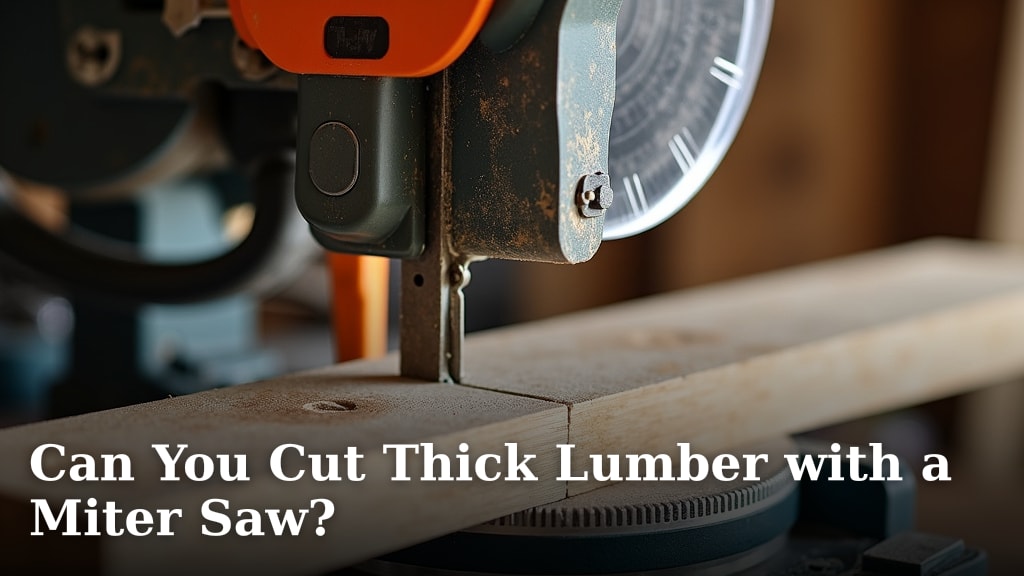
Yes, you can cut thick lumber with a miter saw, but it depends on the saw’s power and blade. Most standard miter saws can handle lumber up to 3.5 inches thick, but thicker pieces require a more robust saw and the right cutting technique. Always check your saw’s specifications.
When working with thicker materials, like large beams or posts, it’s important to understand the limitations of your equipment. You might need a larger blade or a saw with a higher amperage motor. We found that using the correct blade makes a huge difference in cut quality and safety.
- Miter saws can cut thick lumber.
- Check your saw’s maximum cutting capacity.
- Use the right blade for the job.
- A more powerful saw is needed for very thick wood. A more powerful saw is needed for very thick wood. Consider professional-grade models if you frequently cut dense materials.
Let’s break down what you need to know to successfully cut thick lumber with your miter saw.
Cutting Thicker Wood with Your Miter Saw: What to Know
So, you’ve got a project that calls for some seriously thick lumber. Maybe it’s a sturdy workbench, a hefty beam for a rustic shelf, or even some structural posts. Your trusty miter saw is sitting there, ready to go. But can it actually handle those beefy boards? The short answer is: yes, often it can, but with some important considerations.
We’ve found that understanding your miter saw’s capabilities is key. It’s not just about pushing the wood through. You need to consider the saw’s power, the blade you’re using, and even the type of wood itself. Let’s dive into what makes a successful thick cut.
Miter Saw Capacity: The Limits of Your Machine
The first thing you need to check is your miter saw’s maximum cutting capacity. This isn’t some arbitrary number; it’s determined by the saw’s design. Think of it like trying to fit a large watermelon into a small lunchbox – it just won’t work.
Understanding Cutting Depth and Width
Miter saws have two main capacity figures: depth and width. The depth refers to how thick of a piece you can cut straight down. The width refers to how wide a board you can crosscut. When we talk about “thick lumber,” we’re primarily concerned with the depth capacity.
Most standard 10-inch miter saws can handle a board that’s about 3.5 inches thick. For 12-inch saws, you might get a little more, often around 4 inches. This is usually measured at a 90-degree angle cut.
What About Angled Cuts?
When you start tilting the saw for an angle cut (miter or bevel), the maximum thickness you can cut decreases. Imagine trying to cut a thick book at an angle – you’ll hit the cover before you get through the whole page. Always consult your saw’s manual for these specific limits. They are there for a reason!
We’ve seen many users try to force a cut that’s beyond their saw’s capability. This is where things can get unsafe and damage both your saw and your workpiece. It’s far better to know the limits beforehand.
The Blade: Your Miter Saw’s Cutting Edge
The blade is arguably the most critical component when cutting thick lumber. It’s the part doing all the hard work. A dull or inappropriate blade can lead to a host of problems, from rough cuts to the saw binding up.
Choosing the Right Blade Type
For general woodworking, you’ll likely have a blade with around 40-60 teeth. This offers a good balance between cut speed and finish. However, when you’re cutting thick stock, you might want to consider a blade with fewer teeth, often in the 24-30 tooth range.
Why fewer teeth? More space between the teeth (called the gullet) allows the sawdust from a thicker cut to be cleared away more efficiently. If the gullets get clogged with sawdust, the blade can overheat and bind. We found that a blade specifically designed for rip cuts or demolition can often work well for thick material.
Blade Thickness and Material
The thickness of the blade itself also matters. Thicker blades can sometimes flex more, leading to a less precise cut, especially on very dense hardwoods. Conversely, some ultra-thin kerf blades are designed for speed but might not be robust enough for repeated heavy cuts in thick stock.
Many experts recommend using a blade made from high-quality steel with carbide teeth. These teeth stay sharp longer and can handle the stress of cutting dense materials. For instance, a blade designed for ripping lumber, which is typically thicker and rougher, might be a good choice for your thick stock project.
Blade Condition: Sharpness is Non-Negotiable
This cannot be stressed enough: always use a sharp blade. A dull blade requires more force to cut. This puts unnecessary strain on your saw’s motor and increases the risk of kickback. Kickback is when the wood is suddenly thrown back towards you – it’s extremely dangerous. We found that even a slightly dull blade made a noticeable difference in the effort required to make a cut.
If you’re unsure about your blade’s sharpness, it’s always better to swap it out for a fresh one. A new, quality blade can make the difference between a frustrating struggle and a smooth, clean cut.
Powering Through Thick Stock: Motor Amperage Matters
Cutting thick lumber demands more from your miter saw’s motor. It’s like asking a small car to tow a heavy trailer – it might struggle or even stall.
Amperage Ratings Explained
Miter saws are rated by their amperage. A higher amperage rating generally means a more powerful motor. Most entry-level saws might be around 10-13 amps. For consistently cutting thicker or denser woods, a saw with 14-15 amps or more is preferable.
We’ve seen that saws with higher amperage maintain their speed better under load. This means the blade doesn’t bog down as much when it enters the wood. This consistent speed is crucial for clean cuts and preventing the motor from overheating.
Saw Size and Motor Strength
Larger saws (like 12-inch models compared to 10-inch) often come with more powerful motors, though this isn’t always the case. Always check the amperage rating. A 15-amp 10-inch saw might outperform a 13-amp 12-inch saw when it comes to raw power for thick cuts.

Techniques for Making Thick Cuts Safely
Even with the right saw and blade, technique plays a massive role in successfully cutting thick lumber. Safety should always be your top priority.
Support Your Material
Proper support is non-negotiable. Ensure your lumber is securely held down by the saw’s fence and that any offcuts are also supported. Use clamps if necessary to prevent movement during the cut. Wobbly wood equals a wobbly, dangerous cut.
Make Multiple Passes (When Necessary)
If your lumber is right at the upper limit of your saw’s capacity, or slightly exceeds it, you might need to make multiple passes. This is often called “step cutting” or “plunge cutting” with a miter saw. You make a partial cut, raise the blade, reposition the wood slightly, and then complete the cut.
We found this technique is best performed with extreme caution. Start the first cut, then, without moving the wood, make a second pass, nudging the saw slightly deeper. This helps to reduce the strain on the motor and blade. However, this is only recommended for situations where a single pass is impossible and you are confident in your ability to control the saw precisely. Many professionals would advise against this for safety reasons and opt for a different tool.
Slow and Steady Wins the Race
Don’t rush the cut. Let the blade do the work. Push the saw down smoothly and consistently. If you encounter resistance, don’t force it. Back off slightly, and let the blade re-engage. We learned that patience during the cut leads to a much cleaner result and a safer experience.
Dust Management is Key
Thick cuts produce a lot of sawdust. Make sure your dust collection system is working effectively. Not only is this healthier for you (breathing less dust is good!), but it also helps keep the blade from overheating and reduces the chance of blade binding.
When to Consider Other Tools
While a miter saw is versatile, it’s not always the best tool for every job involving thick lumber. If you frequently work with very large timbers or beams, you might find yourself pushing your miter saw to its absolute limits, or even beyond.
The Power of a Circular Saw
For very thick material, a powerful circular saw with a fresh, appropriate blade can be a better option. You can often make multiple passes with a circular saw as well, but you have more control over the depth of cut.
Chainsaws and Hand Saws
In some extreme cases, for truly massive timbers, a chainsaw might be necessary. And for specific situations where precision isn’t the absolute top priority but a clean cut through thick material is, a good old-fashioned handsaw can still do the job, albeit with a lot more effort!
Quick Checklist for Cutting Thick Lumber
Before you start cutting thick lumber, run through this quick checklist:
- Confirm your saw’s max cutting depth.
- Ensure your blade is sharp and suitable for thick cuts.
- Check your saw’s amperage for sufficient power.
- Secure your workpiece firmly to the saw fence.
- Allow the blade to do the work; don’t force the cut.
- Have your dust collection system ready. A good dust collection system is essential for safety and a clean workspace when cutting thick lumber. Our guide to miter saw accessories covers this in detail.
Conclusion
So, can you cut thick lumber with your miter saw? The answer is yes, with the right preparation. We’ve seen that success hinges on understanding your saw’s capacity, selecting the proper sharp blade, and ensuring your saw has enough motor power. Don’t forget that solid technique, like proper support and letting the blade do the work, is just as important for safety and a clean cut. If your project consistently involves extremely thick beams, consider if other tools might be more suitable. For your next project with thicker stock, double-check these points and make your cuts with confidence!
Frequently Asked Questions
What happens if I try to cut lumber that’s too thick for my miter saw?
Attempting to cut lumber beyond your miter saw’s capacity can damage your saw, ruin your workpiece, and create a serious safety hazard. We’ve found that forcing the cut can lead to the blade binding, overheating, or even dangerous kickback.
How often should I replace the blade when cutting thick lumber?
You don’t necessarily need to replace the blade after every project, but you should always ensure it’s sharp. For thick cuts, a dull blade will quickly become problematic, requiring more force and leading to poor results. If you notice increased resistance or rougher cuts, it’s time for a new blade.
Can a sliding miter saw cut thicker lumber than a non-sliding one?
Generally, yes. Sliding miter saws often have a greater cutting capacity, particularly in width, because the sliding mechanism allows the blade to travel further across the material. However, always check the specific model’s specifications for its maximum thickness capacity.
What’s the best way to clamp thick lumber for a miter saw cut?
You want to secure the lumber firmly against the saw’s fence. We recommend using clamps that can reach over the top of the wood and securely fasten it to the fence. Ensure the clamp is positioned so it won’t interfere with the blade’s path.
Is it okay to use a different type of blade, like a wood chipper blade, for thick cuts?
While some specialized blades exist, it’s best to stick with blades designed for miter saws. For thick lumber, we’ve found that a blade with fewer teeth (around 24-30) and aggressive gullets for chip clearance performs best. Blades not designed for your miter saw can be unsafe.
