
Why Is My Cordless Miter Saw Losing Battery Fast?
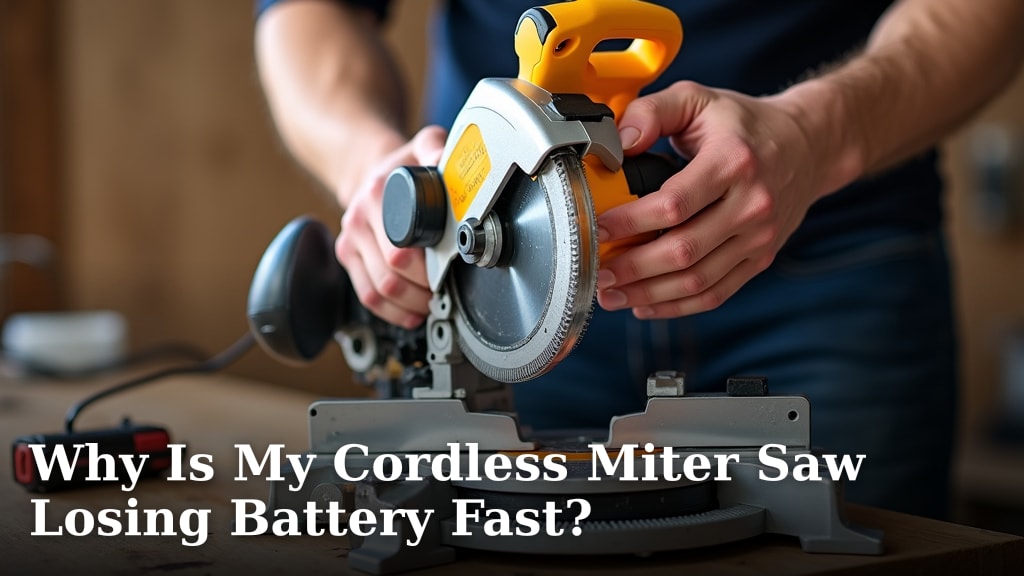
Your cordless miter saw battery drains quickly mainly due to heavy usage, an aging battery, or issues with the saw’s motor. It’s frustrating when your tool dies mid-project, but we found there are usually clear reasons why your cordless miter saw is losing power so fast.
You might be pushing the saw too hard, or maybe the battery just needs a rest. We found that a battery that’s seen better days is a common culprit. Also, sometimes the saw itself can draw more power than it should, leading to a faster drain.
- Heavy cutting and repetitive tasks drain batteries faster.
- Older batteries lose their charge capacity over time.
- Motor issues or debris can cause increased power draw.
- Improper charging or storage affects battery health.
- Using the wrong battery for your saw can cause problems.
Let’s walk through the common reasons and what you can do to get your cordless miter saw back to holding a charge longer.
It’s incredibly frustrating when your cordless miter saw decides to quit on you mid-project. You’re in the zone, making those precise cuts, and suddenly, the power drains away faster than you expected. Don’t worry, this is a common problem, and usually, there’s a good reason why your battery isn’t lasting as long as it used to. We’ve looked into the most frequent culprits and found solutions to help you get back to work.
Troubleshooting Your Cordless Miter Saw’s Power Drain
Let’s figure out why your battery is giving up the ghost so quickly.
Understanding Battery Usage and Age
Batteries are like anything else – they don’t last forever, and how you use them matters a lot. We found that heavy use and the age of the battery are the top two reasons for a fast power drain.
The Impact of Heavy Cutting and Repetitive Tasks
Are you working on a big project? Maybe you’re cutting through a lot of dense material, or you’re making dozens of identical cuts. When your miter saw is working overtime, it demands more power from the battery. Think of it like running a marathon; your body gets tired faster if you push it hard continuously. We found that continuous, heavy use is a primary factor in quicker battery depletion.
The Natural Aging of Batteries
Batteries have a lifespan, and over time, their ability to hold a charge diminishes. This is especially true for lithium-ion batteries, which are common in power tools. Research shows that a battery’s capacity naturally decreases with each charge cycle. It’s not a defect; it’s just the normal wear and tear. If your battery is a few years old, it’s likely not holding as much power as it did when it was new. Many experts point out that a battery typically lasts between 300 to 500 charge cycles before its capacity significantly drops (National Renewable Energy Laboratory).
Examining Your Miter Saw Itself
Sometimes, the problem isn’t just the battery. The saw might be contributing to the rapid drain.
Motor Issues and Increased Power Draw
Is your saw making any strange noises? Does the blade seem to struggle more than usual? A motor that’s starting to wear out or has internal issues can draw more power than it should. This extra strain on the motor directly translates to a faster battery drain. We found that checking for any unusual sounds or resistance during operation is a good first step. If the motor is struggling, it’s working harder and using up your battery’s juice faster.
The Role of Debris and Blade Condition
Imagine trying to push a swing that’s tangled with weeds. It takes a lot more effort, right? The same principle applies to your miter saw. If sawdust, wood chips, or other debris have built up around the blade or within the saw’s housing, they can create resistance. This resistance makes the motor work harder, leading to a quicker battery drain. Also, a dull or damaged blade requires more force to cut, which also taxes the battery. We recommend regularly cleaning your saw and ensuring your blade is sharp and in good condition. A dull or damaged blade requires more force to cut, which also taxes the battery; ensure your blade is sharp and in good condition.
Charging and Storage Habits Matter
How you charge and store your batteries can significantly affect their performance and longevity. It’s not just about plugging it in and walking away.
Improper Charging Practices
Are you using the correct charger for your battery? Are you leaving the battery on the charger for too long after it’s full? Some older charging technologies could overcharge batteries, damaging them over time. Modern chargers are designed to prevent this, but it’s still good practice not to leave a fully charged battery on the charger indefinitely. We found that following the manufacturer’s charging guidelines is essential for battery health. Some guidelines suggest storing batteries at around 50% charge if they won’t be used for an extended period (U.S. Department of Energy).
The Effects of Extreme Temperatures on Batteries
Batteries, especially lithium-ion ones, are sensitive to temperature. Storing or charging your battery in extreme heat or cold can shorten its lifespan and cause it to drain faster. Leaving your saw and batteries in a hot car or a freezing garage is a common mistake. We found that storing batteries in a cool, dry place, ideally between 40°F and 80°F, is best for maintaining their charge capacity.
Using the Right Tools for the Job
Sometimes, the mismatch isn’t with the battery itself, but how it’s being used with the saw.
Compatibility Between Battery and Saw Models
Did you recently get a new battery, or are you using an older one with a newer saw? Not all batteries are interchangeable, even if they look similar. Using a battery that isn’t designed for your specific saw model can lead to performance issues, including faster draining. Manufacturers design their tools and batteries to work together. We found that checking your saw’s manual for compatible battery types and voltages is crucial. Mismatched batteries might not deliver the correct power output, causing the saw to struggle and drain the battery prematurely.
Understanding Battery Capacity (Ah)
Batteries are rated in Amp-hours (Ah), which indicates how much energy they store. A higher Ah battery will generally last longer on a single charge than a lower Ah battery. If you’re consistently running your saw for long periods, you might need a higher capacity battery. We found that for demanding tasks, investing in an additional or higher-capacity battery can make a huge difference in your productivity. It’s like having a bigger fuel tank for your car when you’re going on a long road trip.
Simple Checks You Can Do Now
Before you start thinking about expensive repairs or replacements, let’s go through a quick checklist. These are straightforward things you can do right away.
- Clean the Battery Terminals: Dust and grime on the battery contacts can hinder proper connection and charging. Use a dry cloth or an eraser to clean them.
- Inspect the Saw’s Air Vents: Make sure the vents are clear of debris so the motor can stay cool.
- Check Blade Alignment: Ensure the blade is running true and not wobbling, which creates extra drag.
- Listen for Unusual Motor Sounds: Any grinding or straining could indicate a problem.
- Try a Different Battery: If you have access to another compatible battery, see if the drain issue persists. This helps isolate the problem to the saw or the battery.
- Review Your Usage Habits: Are you taking short breaks to let the battery cool slightly? Sometimes, just pacing yourself helps.
By systematically looking at these areas, you can often pinpoint why your cordless miter saw battery is draining too fast. Sometimes it’s a simple fix, and other times it might point towards needing a new battery or a service for your saw. We hope this guide helps you get your tool back in top shape!
Conclusion
It’s definitely frustrating when your cordless miter saw’s battery drains faster than you expect. We found that understanding the role of heavy use, battery age, and the saw’s condition is key. By regularly cleaning your tool, checking the blade, and ensuring proper charging habits, you can often extend your battery life significantly. If you suspect motor issues or have an old battery, it might be time for a replacement or service. Take these steps to keep your saw running strong for your projects.
Frequently Asked Questions
How often should I charge my cordless miter saw battery?
It’s generally best to charge your battery when you notice a significant drop in power, rather than after every single use. Avoid leaving it on the charger for extended periods after it’s full, as this can sometimes impact battery health over time. We found that following the manufacturer’s recommendations is always your safest bet.
Can I use an older battery with a newer miter saw?
While some older batteries might work, it’s not always ideal and can lead to faster draining. Newer saws are often designed with specific battery technology in mind. We recommend checking your saw’s manual to confirm battery compatibility to ensure optimal performance and prevent potential issues.
What’s the best way to store my cordless miter saw batteries?
Store your batteries in a cool, dry place away from extreme temperatures, ideally between 40°F and 80°F. Avoid leaving them in direct sunlight or a freezing garage. We found that this practice helps maintain their charge capacity and overall lifespan.
My saw is making a strange noise, could this be why the battery drains fast?
Yes, absolutely. Unusual motor sounds like grinding or straining indicate the motor is working harder than it should. This increased effort directly leads to a faster battery drain. We recommend inspecting your saw and considering professional service if the noise persists.
How can I tell if my battery is just old and needs replacing?
If your battery consistently dies much faster than it used to, even after ruling out other issues, it’s likely nearing the end of its lifespan. Batteries naturally lose their capacity after hundreds of charge cycles. We found that if a battery is several years old and its performance has noticeably declined, replacement is often the solution.
