
What Is a Good Miter Saw for Cabinet Making?
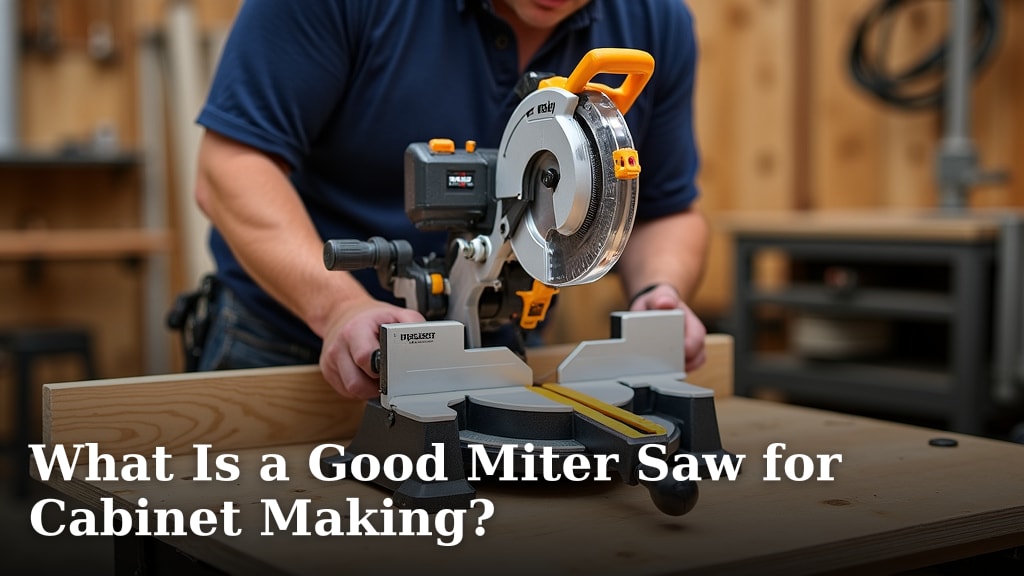
A good miter saw for cabinet making should offer precision cuts and the power to handle hardwoods. You’ll want a saw with a large cutting capacity for common cabinet materials and a smooth, reliable bevel and miter adjustment. Look for saws with good dust collection, as cabinet making can be dusty work!
Choosing the right miter saw makes all the difference in achieving professional-looking cabinets. It’s not just about the brand; it’s about features that directly impact your ability to create tight joints and accurate measurements. Many woodworkers find that a saw with a positive stop system greatly speeds up repeatable cuts.
- Look for precision and power.
- Ensure it has good cutting capacity.
- Prioritize smooth adjustments and dust collection.
- Consider positive stops for efficiency.
- A stable base is also important.
Let’s walk through exactly what makes a miter saw great for cabinet projects, so you can find the perfect fit for your workshop.
So, you’re ready to build some beautiful cabinets. That’s fantastic! Your miter saw is going to be your best friend in this project. It’s the tool that helps you get those perfectly angled cuts for strong, clean joints. But not all miter saws are created equal when it comes to cabinet work. You need something that’s precise, powerful, and easy to use, project after project.
Finding the Right Miter Saw for Cabinet Projects
Selecting a miter saw for cabinet making is all about prioritizing accuracy and repeatability. You’ll be making a lot of cuts, and they all need to be spot on. We’ve researched what woodworkers and cabinet makers look for, and the consensus is clear: focus on features that ensure tight-fitting joinery and a smooth workflow.
Blade Diameter Matters: What Size Do You Need?
Miter saws come in various blade sizes. The most common are 10-inch and 12-inch. For cabinet making, you might think bigger is always better, but it’s a bit more nuanced. A 10-inch saw is generally lighter and more portable. It can handle most common cabinet materials, like plywood and hardwoods, just fine. However, a 12-inch saw offers a bit more cutting capacity. This means it can slice through wider boards in a single pass.
If you’re working with thicker hardwoods or wider panels for your cabinet projects, a 12-inch saw might save you some time and effort. We found that for most standard cabinet face frames and boxes, a 10-inch saw is perfectly adequate. But if you anticipate working with a lot of wide material, or if you want that extra bit of depth for future projects, a 12-inch model could be a wise investment. Your choice here often comes down to the typical dimensions of the wood you’ll be using.
Power and Motor: Cutting Through Hardwoods with Ease
Cabinet making often involves working with hardwoods like oak, maple, or cherry. These woods are beautiful but can be tough on a saw. You need a motor that won’t bog down. Look for saws with a powerful motor, usually rated in amps. Higher amperage generally means more power.
We found that for hardwoods, a motor drawing 15 amps or more is ideal for a 10-inch or 12-inch saw. This ensures smooth, clean cuts without straining the motor. A struggling motor can lead to jagged edges and inaccurate cuts, which is the last thing you want when building cabinets. Think of it like this: you want a saw that powers through the wood like a hot knife through butter, not one that grinds its way through.
Accuracy and Adjustments: The Heart of Precise Cuts
This is where the real magic happens for cabinet making. You need a saw that allows for precise miter and bevel adjustments. These adjustments need to be easy to make and hold their position firmly.
Smooth Miter and Bevel Capabilities
Miter cuts angle across the width of the board, while bevel cuts angle down the thickness. Cabinet joints, like those on face frames or crown molding, often require precise miter and bevel angles. You’ll want a saw with clear, easy-to-read angle markings. Many saws offer positive stops at common angles like 0, 22.5, and 45 degrees. These positive stops are lifesavers for repeatable cuts. You don’t have to fiddle with finding the exact angle each time.
We found that saws with detents (the clicks you feel at common angles) are very helpful. The ability to easily adjust and lock in your angle is key. If the adjustment mechanism feels loose or wobbly, it’s a red flag. Your angles need to be as accurate as possible for tight-fitting drawers and doors. A slight error can compound quickly, leading to gaps you’ll have to shim or fill later.
The Fence: Supporting Your Workpiece
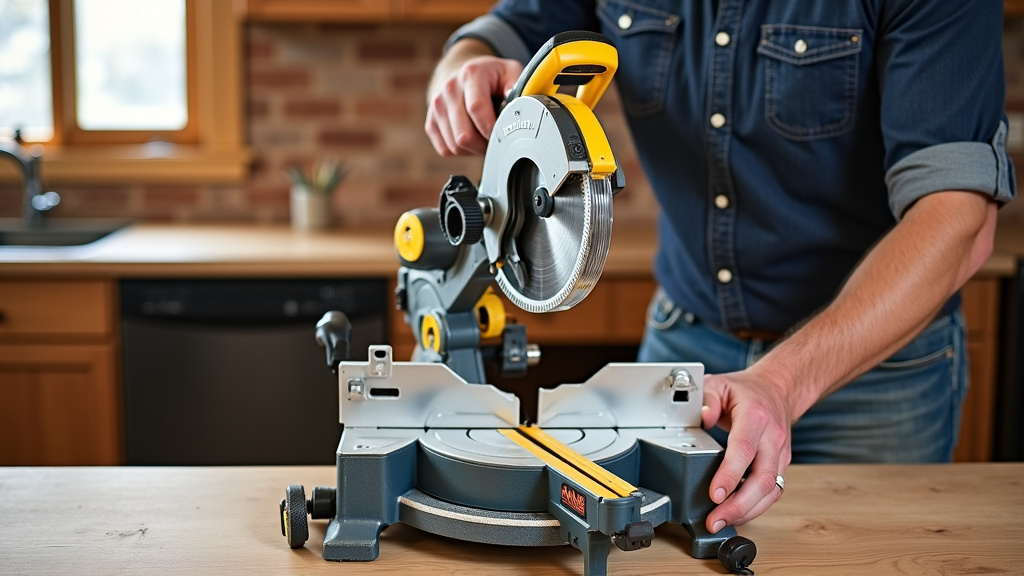
The fence is the part of the saw that supports your workpiece as it slides against the blade. For cabinet making, you need a tall, sturdy fence. This is especially important when cutting crown molding or thicker pieces of wood. A tall fence provides better support and stability, ensuring your cuts are straight and true.
Many modern miter saws feature sliding fences, which allow you to move the fence forward or backward. This is great for cutting larger workpieces or when you need to make cuts at an angle without the blade hitting the fence. We found that a fence that can be locked securely in place is essential for safety and accuracy.
Capacity and Reach: What Can Your Saw Handle?
When we talk about capacity, we’re referring to the maximum width and depth of material your saw can cut. For cabinet making, this is quite important.
A standard 10-inch miter saw typically has a crosscut capacity of around 5-1/2 inches at 90 degrees and about 3-1/2 inches at 45 degrees. A 12-inch saw will offer more, perhaps 7-1/4 inches at 90 degrees and 4-3/4 inches at 45 degrees. Many cabinet projects involve wider pieces, like drawer fronts or cabinet door panels. You’ll want to check the specifications for the specific model you’re considering to ensure it meets your needs.
Consider what kind of cabinets you plan to build. Are they small utility cabinets, or large built-in units? If you’re building 30-inch wide cabinet doors, you’ll need a saw with ample capacity. If your typical cuts are for smaller frames, a standard capacity saw will do. We found that many woodworkers wish they had opted for a saw with a larger capacity. It’s often better to have a little extra reach than to be limited by your tool.
Dust Collection: Keeping Your Workspace Clean
Let’s be honest, woodworking creates dust. Cabinet making, with all the cutting and sanding, can create a lot of fine dust. Most miter saws have a dust port, but their effectiveness varies wildly.
A good dust collection system is essential for your health and a cleaner workshop. You want a saw that directs dust efficiently into a collection bag or a shop vacuum. Some higher-end saws have better-designed dust chutes. We found that connecting your saw to a powerful shop vacuum often provides the best results. Always check reviews for how well a specific saw’s dust port performs.
Breathing in fine wood dust is a serious health concern. Many guidelines recommend dust control measures to protect respiratory health (CDC). A good miter saw with effective dust collection is a great first step. It helps keep your visibility clear as you cut, too!
Stability and Build Quality: A Solid Foundation
A miter saw needs to be stable. A wobbly saw means wobbly cuts. Look for a saw with a solid base. Many saws can be mounted to a workbench or a dedicated stand, which adds stability.
The overall build quality is also important. Are the parts made of sturdy metal or flimsy plastic? Does the saw feel well-balanced? We found that saws with heavier construction often feel more stable and durable. This can be a worthwhile investment for a tool you’ll use frequently. You want a saw that feels solid and reliable every time you use it.
Portability vs. Power: What’s Your Priority?
Some miter saws are designed to be lightweight and portable. Others are heavy-duty, stationary units. For cabinet making, if your workshop is a fixed location, a heavier, more powerful saw might be ideal. If you need to move your saw around frequently, a lighter model with good performance is better.
Consider where you’ll be using the saw most. If it’s in a garage or dedicated shop space, a larger, heavier saw often provides more stability and capacity. If you’re a contractor who moves between job sites, portability is key. For cabinet makers who work from a home shop, we found that prioritizing power and capacity over extreme portability is often the better choice.
So, when you’re out there looking for your perfect cabinet-making miter saw, keep these points in mind. You’re not just buying a tool; you’re investing in the quality and precision of your future cabinets.
Quick Checklist for Your Cabinet Miter Saw:
- Blade Size: 10-inch for versatility, 12-inch for wider capacity.
- Motor Power: 15 amps or higher for hardwoods.
- Adjustments: Smooth, accurate, and positive miter/bevel stops.
- Fence: Tall and sturdy for support, especially on thicker cuts.
- Capacity: Ensure it can handle the width of your common cabinet parts.
- Dust Collection: Look for an efficient port for connecting to a vacuum.
Conclusion
You’re now equipped to choose a miter saw that will truly enhance your cabinet-making projects. Remember, your ideal saw balances precision, power, and capacity. Focusing on smooth adjustments, a sturdy fence, and good dust collection will pay dividends in the accuracy and quality of your work. Don’t settle for a saw that struggles with hardwoods or limits your cuts. Now, go out there and find that perfect saw that feels like an extension of your own hands!
Frequently Asked Questions
What is the most important feature for a miter saw in cabinet making?
For cabinet making, accuracy and repeatability are paramount. You need a saw that allows for precise miter and bevel adjustments that hold firm. This ensures your joints are tight and your projects look professional every time.
Is a 10-inch or 12-inch miter saw better for cabinets?
It depends on your typical materials. A 10-inch saw is versatile and sufficient for most common cabinet materials. If you frequently work with wider hardwoods or panels, a 12-inch saw offers greater capacity and can save you time on those wider cuts.
How much motor power do I really need for cabinet wood?
Cabinet making often involves hardwoods. We found that a 15-amp motor or higher is ideal for 10-inch and 12-inch saws. This ensures the saw won’t bog down, providing smooth, clean cuts through tough woods without straining the motor.
Why is dust collection so important for cabinet makers?
Cabinet projects generate a lot of fine wood dust. Good dust collection is essential for your respiratory health and workshop cleanliness. It also improves visibility at the cut line, leading to safer and more accurate work.
Can I use a portable miter saw for cabinet making at home?
Yes, many portable miter saws offer excellent performance. If your workshop is stationary, prioritizing a saw with greater stability and capacity might be better than extreme portability. However, many lightweight models are perfectly capable of professional cabinet work.
