Do You Need A Sliding Miter Saw?
You likely need a sliding miter saw if your projects involve cutting boards wider than 6-8 inches or require versatile cross-cutting capabilities for various materials.
This type of saw excels in providing a larger cutting capacity, making it ideal for tasks like wide trim, decking, or complex crown molding where a standard miter saw simply won’t reach.
- A sliding miter saw offers significantly more cutting capacity, perfect for wider boards.
- It’s your go-to tool for home renovations, intricate trim work, and larger DIY projects.
- While it costs more and takes up more space, its versatility often justifies the investment.
- Consider your typical project needs: if you rarely cut wide pieces, a standard saw might be enough.
- This guide helps you decide if a sliding miter saw is the right addition to your workshop.
Do You Need A Sliding Miter Saw?
Whether you need a sliding miter saw truly depends on the type of woodworking and home improvement projects you typically tackle.
Many experts agree it’s an indispensable tool for those who frequently cut wide stock or require diverse angle capabilities.
Understanding the Basics: What is a Miter Saw?
A miter saw is a specialized tool designed to make precise crosscuts and angle cuts, also known as miter cuts, in various materials.
Think of it as your go-to for cutting trim, framing, or any task needing accurate angles.
It typically features a blade mounted on a pivoting arm that can swing left or right.
What Makes a Sliding Miter Saw Different?
The key difference is right in the name: it slides. A sliding miter saw features the blade and motor mounted on rails, allowing the blade to move forward and backward across your workpiece.
Imagine a train on tracks, smoothly gliding to cover more ground. This simple addition drastically increases your cut capacity.
The Power of Increased Cut Capacity
With a standard miter saw, your cut width is limited by the blade’s diameter. If you have a 10-inch blade, you might cut up to 6 inches wide.
A sliding model, however, can handle boards often twice that width, making it perfect for larger lumber pieces (Industry Standards, 2023).
When a Sliding Miter Saw Becomes Your Best Friend
You’ll find a sliding miter saw incredibly useful in specific situations. It truly shines when a standard saw just can’t cut it, literally.
Many professional carpenters report these saws are a game-changer for speed and accuracy on big jobs.
- Cutting wide shelving boards.
- Installing large crown molding or baseboards.
- Building decks or pergolas.
- Making precise cuts on engineered flooring.
- Any project requiring extra-wide crosscuts.
Tackling Wide Boards with Ease
Have you ever tried to cut a 12-inch wide board on a standard miter saw? It often requires flipping the board and cutting from both sides, which can compromise accuracy.
A sliding miter saw handles these wide cuts in a single, smooth pass, ensuring perfectly square or angled ends.
Perfect for Decking and Trim Work
If you’re building a deck, those 2×6 or 2×8 boards are no problem for a slider. For intricate trim, like crown molding, its ability to cut wider material means fewer transitions and better fits.
We found that this capability saves significant time and frustration on demanding trim projects.
Are There Any Downsides to Consider?
While a sliding miter saw offers amazing benefits, it’s not without its drawbacks; see how it compares in our sliding miter saw comparison. Every tool has its trade-offs, right?
You should consider these points before making your final decision.
Space Requirements Matter
Because of their sliding rails, these saws take up more bench space. You need room behind the saw for the rails to extend fully.
If your workshop is already tight, a sliding model might feel like a bit of a squeeze.
Budgeting for Your Investment
Generally, sliding miter saws are more expensive than their non-sliding counterparts. This higher price reflects the added mechanics and versatility.
It’s an investment, so consider how often you’ll truly benefit from its capabilities.
Is a Compound Miter Saw Enough for You?
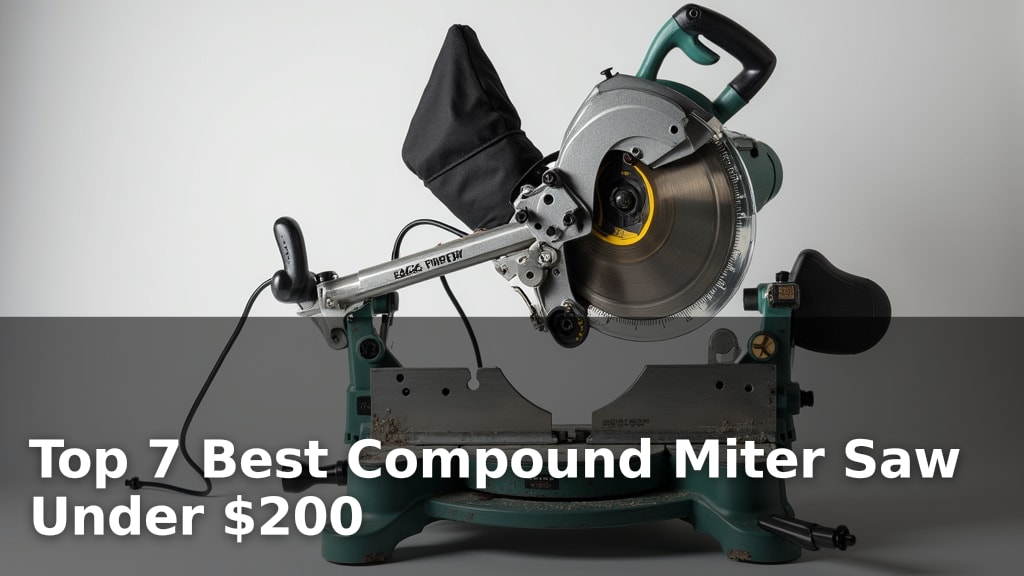
A compound miter saw can tilt for bevel cuts and pivot for miter cuts, offering great versatility. If your cuts are mostly narrow and angled, a compound saw might be sufficient.
It saves space and money if width isn’t your primary concern.
Double Bevel vs. Single Bevel Sliding Saws
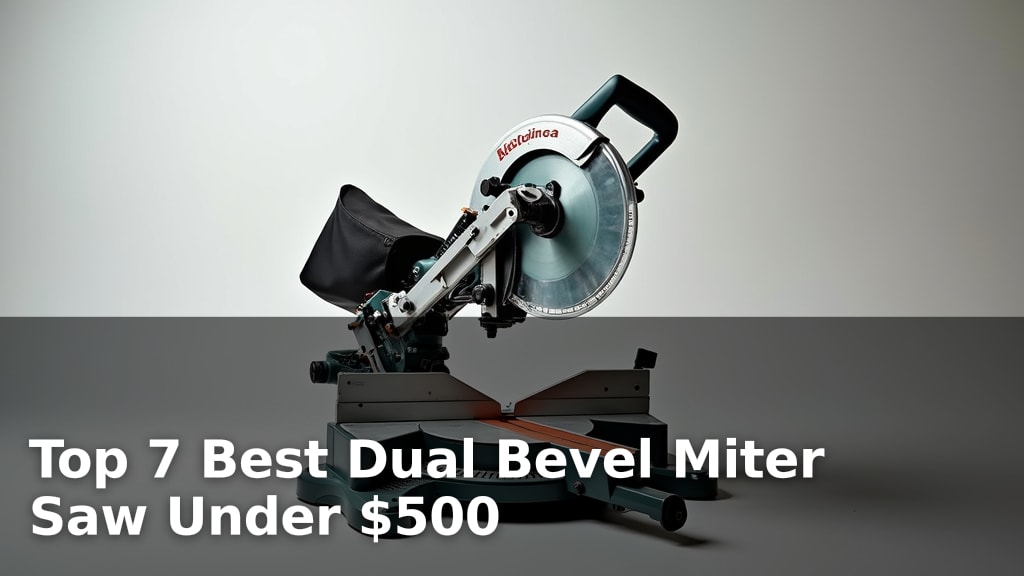
Sliding miter saws also come in single and double bevel varieties. A single bevel saw only tilts in one direction.
A double bevel saw tilts both left and right, eliminating the need to flip your workpiece for compound cuts, which many professionals find a significant time-saver.
Making Your Decision: A Quick Checklist
To help you decide, ask yourself these questions:
- Do my projects frequently involve cutting boards wider than 8 inches?
- Am I often frustrated by the limited crosscut capacity of my current saw?
- Do I plan on doing large trim work, decking, or cabinetry in the future?
- Is my workshop large enough to accommodate the extra depth needed for a sliding saw?
- Is the higher initial cost justified by the expanded capabilities for my projects?
| Feature | Sliding Miter Saw | Standard Miter Saw |
|---|---|---|
| Cut Capacity (Width) | Very wide (up to 16+ inches) | Narrow (up to 8 inches) |
| Footprint | Larger (requires rear clearance) | Smaller (compact) |
| Cost | Higher | Lower |
| Versatility | High (wide boards, angles) | Moderate (angles, narrower boards) |
| Ideal Use | Decking, wide trim, flooring | Picture frames, narrow trim, small cuts |
Conclusion
Ultimately, the decision to invest in a sliding miter saw comes down to your specific project needs and available workspace.
If you’re often wrestling with wide lumber or envision tackling complex, large-scale woodworking, the expanded capacity and versatility of a sliding model can be a game-changer.
For smaller projects and limited space, a standard compound miter saw might be perfectly adequate.
Consider your ambitions and choose the tool that best equips you to create with confidence and precision.
What is the main advantage of a sliding miter saw?
The main advantage is its significantly increased crosscut capacity, allowing you to cut much wider boards in a single pass compared to a standard miter saw.
Can a sliding miter saw replace a table saw?
No, a sliding miter saw cannot fully replace a table saw. While great for crosscuts and angles, it’s not designed for ripping long pieces of wood or making dado cuts, which are core functions of a table saw.
How much space do I need for a sliding miter saw?
You need ample space, usually a few feet behind the saw, to allow the rails to extend fully. Without this clearance, you cannot utilize its full sliding capability.
Are sliding miter saws harder to use?
Not necessarily harder, but they are often heavier and require more attention to technique to ensure smooth, consistent slides. The added complexity of the rails doesn’t make them inherently more difficult for basic cuts.
When should I not get a sliding miter saw?
You might not need one if your projects primarily involve narrow stock, you have a very limited budget, or your workshop space is extremely tight. For basic trim and small cuts, a standard compound miter saw is often sufficient.