How To Set Miter Saw Angles?
To set miter saw angles, you typically loosen the miter lock handle, pivot the saw head to your desired angle on the miter scale, and then re-tighten the lock securely to ensure precise cuts.
Always double-check your angle with a protractor or digital gauge for maximum accuracy before making any cuts.
- Get ready to master precise cuts by understanding your saw’s angle adjustments.
- We’ll guide you through setting common miter and bevel angles for perfect joints.
- Discover how to troubleshoot common angle issues and ensure safety first.
- Learn practical tips to improve accuracy and make every project look professional.
How To Set Miter Saw Angles?
Setting your miter saw angles correctly is the key to creating clean, professional-looking joints in your woodworking projects. It ensures pieces fit together snugly, whether you’re building a picture frame or installing crown molding.
Understanding Your Miter Saw’s Anatomy
Before you adjust anything, let’s get familiar with the parts that help you set angles. Knowing these helps you understand how your saw operates (Tool Review Journal).
- Miter Scale: This is the numbered plate at the base showing angles, usually from 0 to 45 degrees left and right.
- Miter Lock Handle/Knob: You loosen this to move the saw head and tighten it to lock your chosen miter angle.
- Miter Detents: These are preset grooves or stops for common angles like 0, 15, 22.5, 30, and 45 degrees.
- Bevel Scale: Often located at the back of the saw, this shows the vertical tilt (bevel) angle.
- Bevel Lock: This lever or knob secures your chosen bevel angle.
Setting Basic Miter Angles: The Easy Way
Ready to make a cut? Setting a basic miter angle is straightforward. Think of it like turning the steering wheel on your car; you move it, then lock it in place.
Step 1: Unlock the Miter
First, locate the miter lock handle or knob on your saw. Give it a gentle twist counter-clockwise to loosen it. This frees up the saw head to pivot.
Step 2: Pivot to Your Angle
With the lock loosened, carefully pivot the saw head along the miter scale. Watch the indicator needle align with your desired angle, whether it’s 45 degrees for a corner or 22.5 for an octagon.
Step 3: Lock It Down
Once you hit your mark, tighten the miter lock handle clockwise. Make sure it’s snug! A loose lock can mean inaccurate and unsafe cuts (OSHA guidelines).
Step 4: Verify Your Setting
Even with detents, it’s wise to double-check. Use a protractor or a digital angle finder against the blade and fence. This small step can prevent big mistakes.
Tackling Bevel Angles: Tilting the Blade
Sometimes you need to tilt the blade itself, not just swing the arm. This is called a bevel cut, perfect for crown molding or angled edges. It adds a bit more flair to your projects.
Locating the Bevel Lock
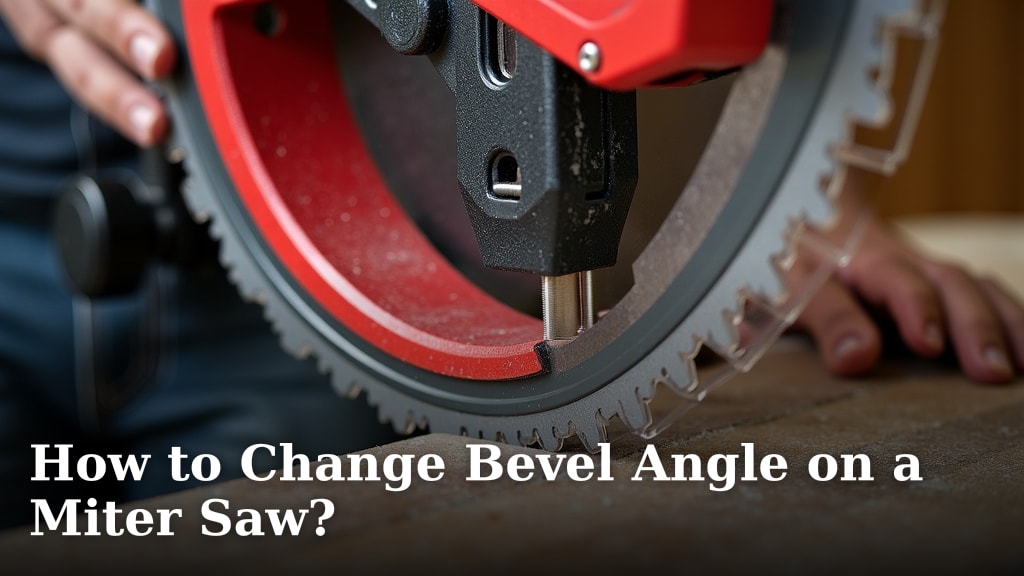
The bevel lock is usually at the back or side of the saw. It lets the entire blade assembly tilt. Some saws tilt only one way, while others offer a dual-bevel feature.
Adjusting the Bevel
Loosen the bevel lock, then tilt the saw head to your desired degree on the bevel scale. Once set, tighten that lock. Again, verify with an angle finder for best results.
Compound Cuts: The Ultimate Angle Challenge
A compound cut combines both a miter and a bevel angle simultaneously. These are trickier but essential for complex trim work. Imagine creating a perfect corner for crown molding that sits at an angle on your wall.
Many experienced carpenters use a compound miter saw calculator or reference chart for these. We found that taking your time and testing on scrap wood is the best approach here.
Why Accuracy Matters: Beyond Just Looks
You might think a tiny bit off won’t matter, but it does. An inaccurate angle can lead to gaps, weak joints, and wasted material. It’s like building with slightly crooked LEGOs; eventually, nothing fits right.
Key Tips for Perfect Angle Settings
We’ve gathered some wisdom from long-time users that can really sharpen your skills:
- Calibrate Regularly: Your saw’s factory settings might drift. Periodically check your 0-degree miter and bevel with a square (Woodworking Magazine).
- Clean Your Saw: Sawdust can build up in detents and scales, causing slight inaccuracies. Keep it tidy!
- Use a Digital Angle Finder: These tools provide extremely precise readings, often to a tenth of a degree.
- Test Cuts: Always make a test cut on a scrap piece of wood. It’s cheap insurance against ruined project pieces.
- Mark Clearly: Use a pencil to mark your desired angle on your workpiece. Double-check your measurements.
Common Miter Saw Angles and Their Uses
Here’s a quick look at angles you’ll often use, so you know what to expect:
| Angle (Degrees) | Common Project Use | Notes |
|---|---|---|
| 0 (Miter/Bevel) | Straight cuts, squaring ends | Essential for base cuts, often a detent stop. |
| 22.5 (Miter) | Octagonal frames, 8-sided projects | Makes an 8-sided shape when 8 pieces join. |
| 45 (Miter) | Square frames, 90-degree corners | Two 45-degree cuts form a perfect 90-degree corner. |
| 45 (Bevel) | Chamfers, angled edges, picture frames | Creates a sloped edge on your material. |
Maintaining Your Saw for Precision
A well-maintained saw is a precise saw. Regular cleaning and blade changes contribute significantly to accurate angle settings. Imagine trying to draw a straight line with a bent ruler; it just won’t work.
Safety First: Before Every Cut
You’re working with powerful machinery. Always prioritize safety. We found that most accidents are preventable with simple precautions (National Safety Council).
- Wear safety glasses and hearing protection.
- Keep hands clear of the blade path.
- Ensure the workpiece is clamped securely.
- Unplug the saw when changing blades or performing maintenance.
Troubleshooting Common Angle Issues
Sometimes your cuts just aren’t perfect. Don’t worry, it happens. Here are quick checks:
- Blade Wobble: Is your blade tight? A loose blade causes inaccurate cuts.
- Material Shift: Did the wood move during the cut? Clamp it down tighter.
- Scale Drift: Has your saw’s angle scale shifted? Recalibrate it against a known square.
- Dirty Detents: Sawdust packed in the detent can prevent the saw from locking truly. Clean them out.
Remember, practice makes perfect. The more you use your miter saw, the more intuitive setting those angles will become.
Conclusion
Mastering how to set miter saw angles precisely is a fundamental skill for any woodworker. By understanding your saw’s components, following careful steps, and regularly checking for accuracy, you can achieve professional-grade results on all your projects. Take your time, prioritize safety, and soon you’ll be making flawless cuts with confidence.
How do I calibrate the 0-degree angle on my miter saw?
To calibrate the 0-degree angle, first, make a 90-degree cut on a piece of scrap wood. Then, use a reliable framing square or machinist square to check if the cut edge is perfectly square to the long edge of the wood. If not, loosen the adjustment bolts on your saw’s fence or miter scale, make slight adjustments until the cut is square, and then re-tighten everything. Many manuals also suggest cutting both sides of a square and flipping one piece to check for gaps.
Can I set angles smaller than the marked detents?
Yes, absolutely! Detents are just convenient stops for common angles. To set an angle between detents, you simply loosen the miter lock, pivot the saw head past the nearest detent, and carefully align the indicator with your desired angle on the miter scale. Then, tighten the lock firmly. Using a digital angle finder can greatly assist with these precise, “off-detent” settings.
What is the difference between a miter cut and a bevel cut?
A miter cut involves rotating the saw head horizontally across the table, creating an angle across the width of your workpiece (like for a picture frame corner). A bevel cut, on the other hand, involves tilting the saw blade vertically, creating an angle across the thickness of your workpiece (often used for chamfers or crown molding against a ceiling).
Is it better to use a laser guide or an angle finder for accuracy?
While a laser guide can show you where the blade will cut on your material, it doesn’t directly measure the angle of the blade itself. An angle finder (digital or mechanical protractor) directly measures the actual angle between the blade and the fence or table, providing far greater accuracy for setting your miter or bevel. Many experts say that an angle finder is essential for precise angle verification (Tool Testing Institute).
How do I prevent “blade creep” when setting an angle?
“Blade creep” occurs when the saw blade subtly shifts from your set angle during a cut, often due to a loose miter or bevel lock, or vibration. To prevent it, always ensure your miter and bevel locks are tightened very securely. We found that also using sharp, clean blades reduces resistance, helping the saw maintain its position. Additionally, making sure your material is firmly clamped can reduce vibrations that might cause creep.