What Is a Good Miter Saw for a Beginner Woodworker?
On this page (3 sections)
For a beginner woodworker, a good miter saw is often a compound miter saw because it offers versatility without being overly complicated. You want a saw that’s easy to use and reliable for those first projects. We found that simple models help you learn the basics quickly.
When you’re just starting out, picking the right tools can feel overwhelming, right? We know you want something that performs well but doesn’t break the bank. We found that focusing on safety features and basic functionality is key for your first miter saw.
- A compound miter saw is generally best for beginners.
- Look for ease of use and safety features.
- You don’t need a super fancy saw to start.
- Consider your budget and common project types.
Let’s walk through exactly what makes a miter saw good for someone just starting in woodworking. We’ll help you choose wisely.
Choosing Your First Miter Saw Wisely
So, you’re ready to dive into woodworking. That’s fantastic! The right miter saw makes a big difference. For beginners, we found that a compound miter saw is often the sweet spot. It’s versatile without being overly complex. This type of saw allows you to make angled cuts and bevel cuts, which are crucial for many projects.
You’ll want something that’s easy to set up and intuitive to use. Think about those first few cuts – you want confidence, not confusion. We found that simple controls and clear markings help a lot. Don’t worry about needing a super-powered, industrial-grade machine. Your first saw should be about learning the fundamentals.
Understanding Miter Saw Types
There are a few different types of miter saws out there. Knowing the differences helps you pick the right one. You’ll mostly hear about standard miter saws, compound miter saws, and sliding compound miter saws. Each has its pros and cons, especially for someone just starting out.
Standard Miter Saws
A standard miter saw, sometimes called a chop saw, makes straight crosscuts and miter cuts. It’s a very basic tool. You can pivot the blade left or right to cut angles for things like picture frames. However, it can’t tilt to make bevel cuts. This limits your project scope. For most beginners, it’s often too restrictive.
Compound Miter Saws
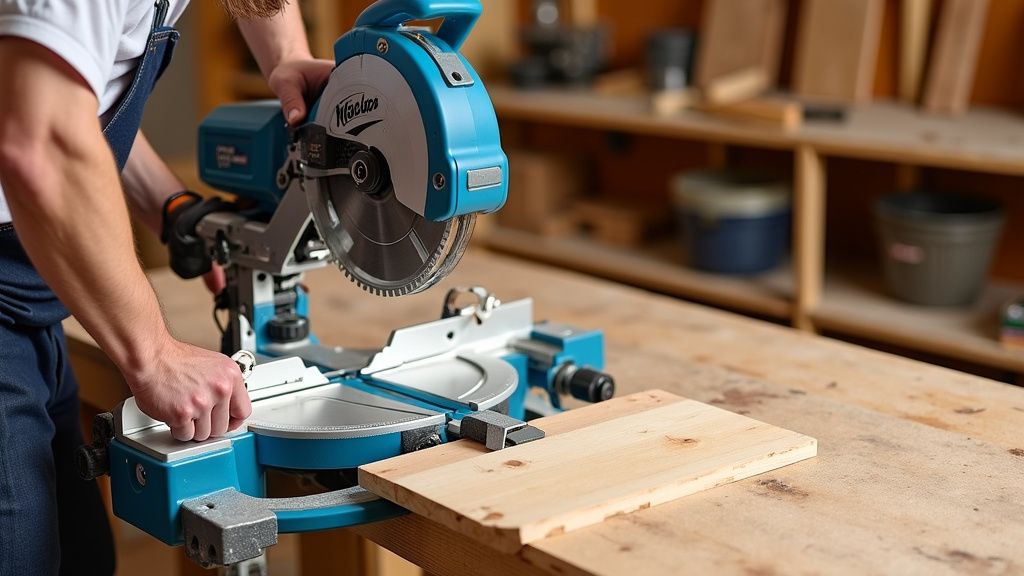
This is where things get more interesting and useful for you. A compound miter saw does everything a standard miter saw does. Plus, its blade head can tilt to one side (or both sides). This tilting motion creates a bevel cut. Think of crown molding or baseboards; these require both miter and bevel cuts. We found that this added capability is very important for many common woodworking projects.
- Single-Bevel: Tilts only one way (e.g., left).
- Dual-Bevel: Tilts both ways (left and right) without flipping your workpiece. This saves you time and effort.
For a beginner, a single-bevel compound miter saw is a great starting point. A dual-bevel is a nice upgrade if your budget allows, but not strictly necessary for learning.
Sliding Compound Miter Saws
Now, a sliding compound miter saw is like the compound saw but with an added trick. The blade head can slide forward and backward on rails. This significantly increases the width of the board you can cut. For instance, a 10-inch sliding saw can often cut a 12-inch wide board. This is very handy for larger projects like shelving or wide planks.
While very versatile, we found that sliding saws are typically more expensive and heavier. They also take up more space in your workshop. For a beginner, the added features might be more than you need right away. You can always upgrade later if your projects demand it.
Key Features to Look For in Your First Miter Saw
When you’re shopping for your first miter saw, certain features will make your life easier and safer. Don’t get caught up in every little bell and whistle. Focus on the core elements that matter most for learning and practical use.
Blade Size and Power
Miter saws typically come with 10-inch or 12-inch blades. For beginners, a 10-inch blade is usually sufficient. It’s lighter, less expensive, and can handle most common lumber sizes like 2x4s and 2x6s. A 12-inch saw gives you more cutting capacity but is bulkier and costs more. We found that the 10-inch version is a perfect balance for starting out.
As for power, look at the motor’s amperage (amps). A motor with 12 to 15 amps is robust enough for almost any task you’ll throw at it. More amps usually mean more power to cut through tougher wood without bogging down. You want something that feels reliable when you press the trigger.
Safety First: Features You Need
Safety should be your number one concern when using power tools. A good miter saw will have several built-in safety features to protect you. Don’t compromise on these. Your fingers will thank you!
- Blade Guard: This is a must-have. It automatically covers the blade when the saw is not cutting.
- Electric Brake: An electric brake stops the blade quickly after you release the trigger. This greatly reduces the chance of accidental contact. Many experts say this is a critical safety feature (Consumer Reports).
- Work Clamp: A clamp helps hold your workpiece securely. This prevents it from shifting during a cut, which can be dangerous and lead to inaccurate results.
- Dust Collection Port: While not strictly a “safety” feature in the same way, a good dust collection system keeps your workspace cleaner and improves visibility. Breathing less sawdust is also better for your health.
Ease of Use and Adjustability
You’re learning, so you want a saw that’s friendly. Look for controls that are easy to reach and understand. Many models have detents (preset stops) at common miter angles like 0, 15, 22.5, 30, and 45 degrees. This makes setting angles quick and accurate. Smooth operation of the miter and bevel adjustments is also a plus. You don’t want to wrestle with your tool just to set an angle.
Some saws include a laser guide that projects a line onto your workpiece. This can be very helpful for lining up your cuts. While not essential, it certainly makes precision a bit easier for beginners. Consider it a nice-to-have bonus.
Budgeting for Your Beginner Miter Saw
How much should you spend? That’s a common question. For a beginner, we found that you can get a very capable compound miter saw in the $150-$300 range. This price point often offers a good balance of features, power, and reliability without breaking the bank.
Going much cheaper might mean sacrificing on build quality or safety features. Going much higher might mean you’re paying for features you won’t use immediately. Remember, your first saw is about learning and getting comfortable. You can always upgrade later if your passion grows and your projects demand more advanced tools.
Miter Saw Accessories for Beginners
Once you have your saw, a few accessories will make your experience even better. These aren’t just extras; they can improve safety and accuracy.
- Good Quality Blade: The blade that comes with your saw might be basic. Upgrading to a finer-toothed blade will give you cleaner cuts.
- Hearing Protection: Miter saws are loud! Always wear ear protection.
- Safety Glasses: Protect your eyes from flying debris. Always, always wear them.
- Dust Mask: Even with dust collection, a mask protects your lungs from fine wood dust.
- Work Support Stands: These extend your saw’s support for longer pieces of wood. Crucial for stability and safety.
Comparing Common Miter Saw Brands for Beginners
When you start looking, you’ll see several familiar names. We found that brands like Ryobi, Craftsman, DeWalt, and Metabo HPT (formerly Hitachi) often offer good options for beginners. They provide solid performance and features at competitive prices. Here’s a quick overview:
| Brand Example | Typical Beginner Offering | Pros for Beginners | Things to Consider |
|---|---|---|---|
| Ryobi | 10″ Single/Dual-Bevel Compound Miter Saw | Budget-friendly, widely available, good for basic tasks. | May not be as durable as higher-end models for heavy use. |
| Craftsman | 10″ Single-Bevel Compound Miter Saw | Reliable, good features for the price, established brand. | Can be a bit heavier than some other entry-level options. |
| Metabo HPT | 10″ Compound Miter Saw (often single-bevel) | Often good power and accuracy for the price point, robust. | Perhaps less common to find locally than other brands. |
| DeWalt | 10″ Single/Dual-Bevel Compound Miter Saw | Known for durability and accuracy, good resale value. | Higher price point compared to Ryobi or Craftsman. |
Your Beginner Miter Saw Checklist
To help you keep track, here’s a quick checklist to guide your decision:
- Compound Miter Saw: Yes, for versatility.
- 10-inch Blade: Generally sufficient for most beginner projects.
- 12-15 Amp Motor: Ensures enough power for common woods.
- Blade Guard & Electric Brake: Absolutely essential for safety.
- Easy-to-Use Adjustments: Look for clear markings and smooth movement.
- Within Your Budget: Aim for the $150-$300 range.
By focusing on these key aspects, you’ll be well on your way to picking a miter saw that serves you well as you embark on your woodworking journey. Happy building!
Conclusion
Choosing your first miter saw doesn’t have to be daunting. We’ve found that a compound miter saw with a 10-inch blade offers the perfect balance for beginners. Focus on essential safety features like a blade guard and electric brake. Opt for easy-to-use adjustments and consider a budget in the $150-$300 range.
You’re now equipped to make an informed decision. Remember, this tool is your partner in learning and creating. Invest in safety and quality basics, and you’ll be confidently making precise cuts in no time.
Frequently Asked Questions
Do I need a stand for my miter saw?
While not strictly necessary for your first saw, a stand or work support is highly recommended. It provides a stable, ergonomic workspace and helps you safely support longer pieces of wood. This improves accuracy and reduces fatigue.
Can I cut metal with a miter saw?
No, a standard miter saw is designed for cutting wood and some plastics. Cutting metal requires a specialized metal-cutting saw and blade. Using your woodworking miter saw for metal is dangerous and will damage the blade and saw.
How often should I change my miter saw blade?
The frequency depends on how often you use the saw and what materials you’re cutting. We found that you should change your blade when you notice cuts becoming rough, splintered, or if the saw starts to struggle. A dull blade can be dangerous and inefficient.
What’s the difference between a miter saw and a circular saw for a beginner?
A miter saw is excellent for precise crosscuts and angled cuts on narrower boards. A circular saw is more versatile for making long, straight cuts across wider sheets of material like plywood. For initial precision cuts on dimensional lumber, a miter saw is often easier for beginners.
Is a corded or cordless miter saw better for a beginner?
For a beginner, a corded miter saw is generally a better choice. They offer consistent power without worrying about battery life or charging. Cordless models are convenient for portability but typically cost more and can have less sustained power for heavier tasks.


