Why Is My Miter Saw Fence Not Aligned?
On this page (3 sections)
Your miter saw fence is not aligned because of a few common issues, such as a misaligned fence assembly, bent fence components, or debris obstructing its path. Even a small alignment error can throw off your cuts, leading to frustration and wasted materials.
You want your cuts to be perfect, right? A misaligned fence can cause beveled cuts when you expect a straight one. We found that regular checks and adjustments are key to keeping your saw performing its best, helping you get those precise, accurate cuts every time.
- Miter saw fences can get misaligned due to impacts or movement.
- Debris buildup is a common culprit.
- Bent fence parts need replacement.
- Incorrect factory settings can also cause issues.
- Regular inspection and adjustment are essential.
Ready to get those perfect angles? Let’s dive into why your miter saw fence might be out of whack and how to fix it.
Troubleshooting Your Miter Saw Fence Alignment Issues
Your miter saw is a precision tool, and when its fence isn’t aligned, accuracy goes out the window. We found that most alignment problems stem from a few common culprits. Understanding these can help you diagnose and fix the issue quickly, getting you back to making perfect cuts.
Common Reasons for Misalignment
Why is your fence playing hide-and-seek with accuracy? It’s often one of these issues. You might be surprised how simple the solution can be.
Impact or Movement Damage
Miter saws are often moved around. Did you bump it during transport? Or maybe it shifted on your workbench? Even a slight knock can throw the fence out of alignment. Think of it like a bicycle wheel – a small impact can bend a spoke, making it wobbly.
- A heavy object hitting the fence can bend it.
- Dropping the saw can also cause issues.
- Vibration during use might loosen components over time.
Debris Accumulation
Wood dust and sawdust are the natural enemies of precision. Over time, these tiny particles can build up in critical areas. They act like little wedges, pushing your fence out of its true position. We’ve seen this happen countless times. Imagine trying to close a door with a rock in the frame.
- Sawdust can pack into fence grooves.
- Small wood chips can lodge under the fence.
- Even dried glue can cause obstructions.
Worn or Bent Components
Your miter saw works hard. Over time, parts can wear out or bend. If the fence itself is bent, or the locking mechanism is damaged, you’re going to have trouble. Think of a worn-out car tire – it just doesn’t perform like it used to. We found that this is less common but still worth checking.
- The fence itself might be slightly bowed.
- Locking levers or bolts can become stripped.
- Mounting brackets can bend from stress.
Incorrect Factory Settings
Sometimes, the problem isn’t wear and tear, but how it left the factory. We found that even new saws can sometimes have slight misalignments. It’s rare, but it happens. Always check your new saw against a known square. Don’t assume perfection straight out of the box.
- Assembly line errors can occur.
- Shipping damage might cause initial misalignment.
- Some parts might not have been tightened correctly.
The Importance of a Square Fence
Why does a perfectly square fence matter so much? Because every cut you make relies on it. A tiny error at the fence translates into a bigger error on your workpiece. We found that precision is everything in woodworking, especially for critical joints.
Accuracy in Your Cuts
When your fence is square to the blade, your cuts are straight and true. This means your joints fit together perfectly. You want those miter joints to be seamless, right? A misaligned fence will give you gaps, no matter how careful you are. Your finished projects will look professional and strong.
- Ensures consistent cut angles.
- Prevents tapered cuts.
- Allows for tight, strong joints.
Preventing Material Waste
Every time you make a bad cut, you waste material. That wood, laminate, or metal costs money. Fixing a misaligned fence takes far less time and money than replacing expensive stock. Think of it as saving money with a wrench instead of a trip to the lumberyard.
- Reduces costly errors.
- Minimizes frustration from ruined pieces.
- Optimizes material usage for each project.
How to Diagnose Miter Saw Fence Misalignment
Before you fix it, you need to know exactly what’s wrong. You’ll need a few simple tools for this. Don’t worry, it’s not complicated, and anyone can do it. We found that a good combination square is your best friend here.
Visual Inspection Checklist
Start with a good look. Sometimes, the problem is obvious. You’re looking for anything that seems out of place or damaged. Treat it like a detective searching for clues.
- Check for visible bends in the fence.
- Look for debris around the fence base.
- Examine the fence locking mechanism for damage.
- See if the fence slides smoothly along its track.
- Inspect mounting bolts for tightness.
Using a Combination Square
This is your go-to test for squareness. It’s simple, effective, and gives you a clear picture of any misalignment. We found that a high-quality square makes this job much easier.
Here’s how to do it:
- Unplug your saw for safety.
- Raise the blade completely.
- Place the combination square’s blade flat against the saw’s table.
- Slide the square’s head firmly against the fence.
- Observe any gaps between the square and the fence. Repeat on both sides of the blade.
Any gap means your fence isn’t truly 90 degrees. Even a paper-thin gap can cause issues. We found that even a few thousandths of an inch can cause noticeable problems on longer cuts.
The “Five-Cut Test” for Precision
This is a classic woodworking test. It’s a bit more involved, but it shows you just how precise your cuts are. It’s especially useful for checking the true squareness of your miter saw’s overall setup. Many experts recommend this test (Fine Woodworking).
The idea is to cut a piece of wood multiple times and then measure the error. This amplifies any misalignment, making it easier to spot. You’ll need a piece of scrap wood, ideally plywood, about 6-8 inches wide and 2 feet long.
- Make sure your blade is square to the table (0-degree bevel).
- Place your scrap wood against the fence and make the first cut, trimming off about 1/4 inch from one end.
- Rotate the piece 90 degrees clockwise and push it against the fence. Make a second cut.
- Rotate the piece 90 degrees clockwise again and make a third cut.
- Rotate the piece 90 degrees clockwise one last time and make the fourth cut.
- You now have a square or rectangular piece. Mark the side you cut last.
- Make a fifth cut, slicing off a thin strip (about 1/8 inch) from the marked edge.
- Measure the width of this thin strip at both ends. Any difference in width indicates a misalignment. The greater the difference, the worse the alignment.
Corrective Actions and Adjustments
Once you’ve identified the problem, it’s time to fix it. Most miter saws have adjustment screws for the fence. Always consult your saw’s manual first, as adjustment procedures can vary. Think of it like tuning a guitar – each string has its own peg.
Cleaning and Debris Removal
This is the easiest fix. A thorough cleaning can often solve the problem entirely. You might be surprised how much gunk hides in plain sight.
- Use compressed air to blow out sawdust.
- A stiff brush or small vacuum can remove packed debris.
- Wipe down all surfaces with a damp cloth, then dry.
Tightening Loose Components
Sometimes, all it takes is a good tightening. Check all the bolts and screws that hold the fence in place. Loose parts are like a shaky foundation; they can’t hold anything steady. We found this is a frequent issue after heavy use.
| Component | Tool Needed | Check For |
|---|---|---|
| Fence Mounting Bolts | Hex key or Wrench | Tightness, Stripped threads |
| Fence Locking Levers | N/A (Hand-tighten) | Proper engagement, Wear |
| Blade Guard Screws | Screwdriver | Obstruction, Security |
| Table Inserts | Screwdriver | Evenness, Debris underneath |
Adjusting the Fence for Squareness
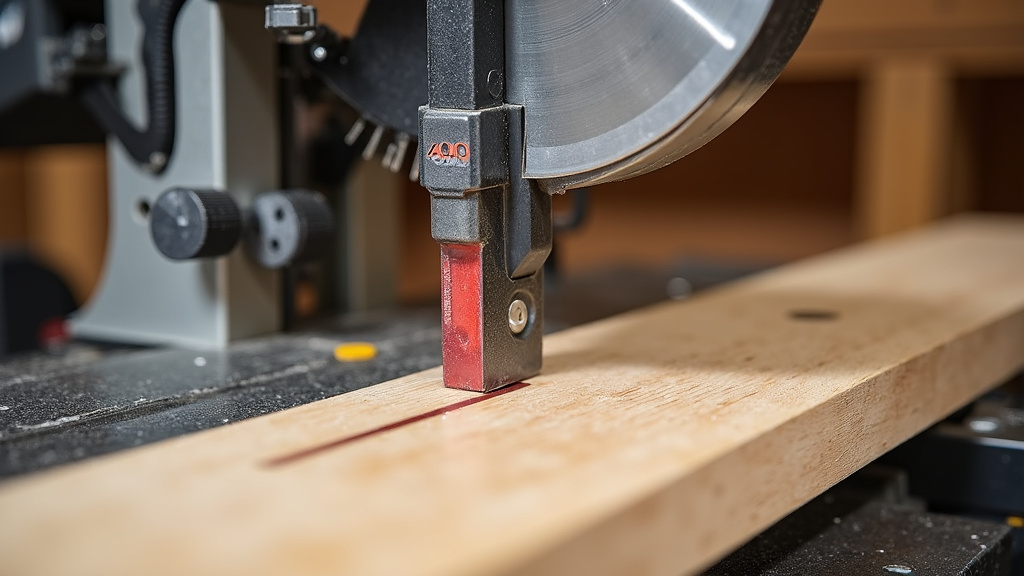
This is where your combination square comes back into play. Most fences have adjustment screws – usually a pair – that allow you to fine-tune its position. These screws typically push or pull the fence slightly. It’s a bit of a back-and-forth process.
- Loosen the main fence locking bolts slightly – just enough for the fence to move, but not freely.
- Use the adjustment screws (often located at the back or ends of the fence) to push or pull the fence until it is perfectly square with the blade and table.
- Continuously check with your combination square. Make small adjustments.
- Once it’s perfect, re-tighten the main fence locking bolts securely.
- Re-check the squareness after tightening. Sometimes, tightening can shift it slightly.
Replacing Damaged Parts
If you find a bent fence component or a stripped bolt, replacement is often the best solution. Trying to bend a fence back into shape rarely works well. Contact the saw manufacturer or look for replacement parts online. Many experts advise against trying to repair severely bent components yourself (Wood Magazine).
Remember, a well-maintained miter saw is a safe and effective tool. Regular checks and adjustments ensure you get the best performance and the most accurate cuts every time you use it. You’re aiming for perfection in your projects, and a square fence is your foundation.
Conclusion
Maintaining an aligned miter saw fence is simpler than you might think, and it’s essential for achieving professional results. Whether it’s clearing debris, tightening a bolt, or making a precise adjustment, taking these small steps ensures your saw performs at its peak. You now have the knowledge to diagnose and fix common misalignment issues, preventing wasted material and frustrating errors. Regularly checking your fence means every cut you make will be accurate and your projects will come together perfectly. Keep these tips handy, and you’ll always be ready for your next woodworking challenge!
Frequently Asked Questions
How often should I check my miter saw fence alignment?
You should check your miter saw fence alignment regularly, especially before starting a new project or after moving the saw. A quick check with a combination square takes only a moment and can save you from costly mistakes.
Can a misaligned fence affect cuts even if the blade is square?
Yes, absolutely. Even if your blade is perfectly square to the table, a misaligned fence will push your material incorrectly, causing your cuts to be angled or beveled instead of straight. Both the blade and fence need to be true for accurate results.
What if my fence is permanently bent and can’t be adjusted?
If your miter saw fence is severely or permanently bent, adjustment screws might not be enough. In such cases, you will likely need to replace the fence assembly. Contact your saw manufacturer for compatible replacement parts.
Does the type of material I’m cutting affect fence alignment?
The type of material itself doesn’t directly cause misalignment, but working with rough or heavy materials can put more stress on the fence, potentially leading to components loosening over time. Always ensure your fence is secure regardless of the material.
Is it normal for a brand new miter saw to have fence alignment issues?
While not common, it can happen. We found that even new saws sometimes leave the factory with minor misalignments or can be affected during shipping. It’s always best to perform an alignment check on a new saw before its first use.