
What Is the Difference Between a Miter Saw and a Chop Saw?
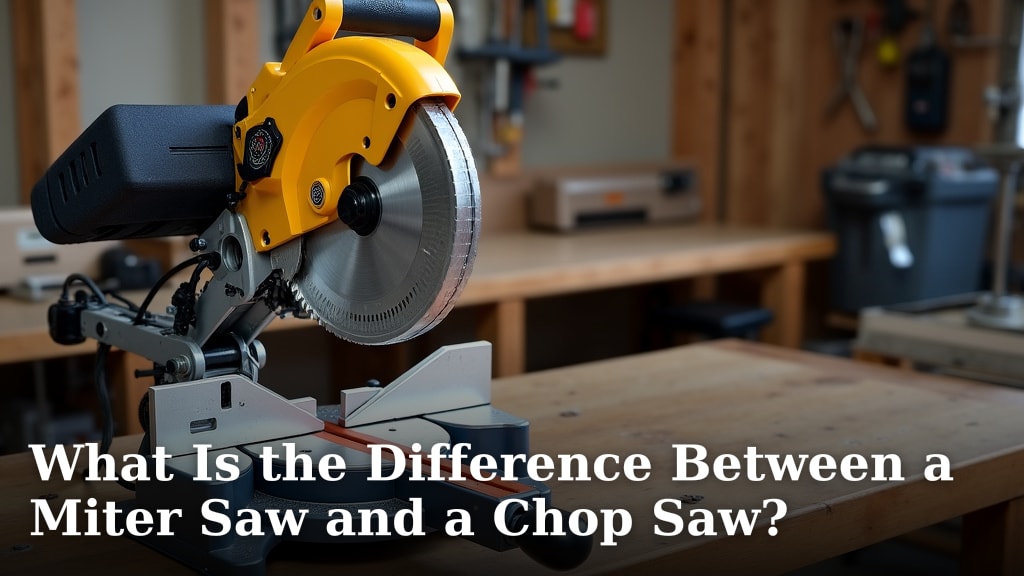
The main difference between a miter saw and a chop saw is their primary function and cutting capabilities. A miter saw excels at precise angled cuts in wood and softer materials, while a chop saw is designed for straight, powerful cuts through tough, harder materials like metal.
Choosing the right saw for your project can feel a bit confusing, right? You want to make sure your cuts are clean and safe. We found that most people pick their saw based on the material they need to cut and the type of cut required. Understanding these differences helps you avoid frustration and get the job done right.
- Miter saws are for accurate angle cuts in wood.
- Chop saws are for straight cuts in metal and masonry.
- Blade types are different for each saw.
- Safety considerations vary between the two.
Ready to learn more? Let’s walk through exactly what makes each of these saws unique.
Understanding the Core Differences Between Miter Saws and Chop Saws
When you’re trying to decide between a miter saw and a chop saw, it really comes down to what you’re cutting and what kind of cut you need. Each tool is built with a specific purpose in mind.
What Exactly is a Miter Saw?
A miter saw is a woodworking tool designed for making precise crosscuts and angled cuts, known as miters and bevels. You’ll often see them used by carpenters, remodelers, and DIY enthusiasts working with wood, plastics, and sometimes aluminum.
Miter Saw Design and Functionality
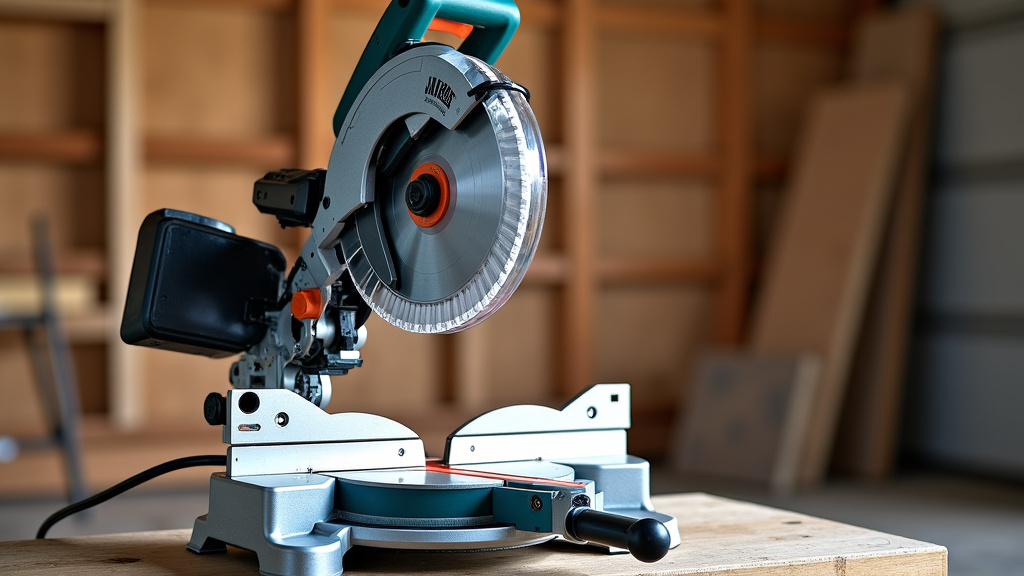
Miter saws feature a mounted circular saw blade on a pivoting arm. This arm allows the blade to swing left or right for miter cuts. Many models also let the blade tilt for bevel cuts. This flexibility is what makes it a go-to for tasks like cutting trim, picture frames, or deck boards.
- Pivoting Arm: Allows for angled cuts up to 45 or even 60 degrees in either direction.
- Tilting Blade: Enables bevel cuts, where the blade itself tilts relative to the fence.
- Sliding Feature (Compound and Sliding Miter Saws): Some miter saws can slide forward and backward, increasing the width of the material they can cut (U.S. Department of Labor, OSHA). This is especially helpful for wider boards.
Common Applications for Miter Saws
Think about projects where accuracy and clean angles are key. That’s where a miter saw shines. We found it’s a staple for:
- Installing crown molding and baseboards.
- Framing pictures and mirrors.
- Building furniture or cabinets.
- Cutting deck railings and picket fences.
Its ability to make perfect joints makes your woodworking projects look professional. You’ll appreciate the crisp lines it creates.
What Exactly is a Chop Saw?
A chop saw, often called an abrasive saw or cut-off saw, is built for a different kind of strength. It’s about making straight, powerful cuts through tough materials like various metals and masonry. Imagine needing to cut rebar or thick steel tubing; that’s a job for a chop saw.
Chop Saw Design and Functionality
Unlike a miter saw, a chop saw is simpler in its movement. Its blade is typically fixed at a 90-degree angle to the base, designed to cut straight down. The power and material of its blade are what set it apart.
- Fixed Angle: Primarily makes straight, 90-degree cuts. Some models have a fence that can be repositioned for basic miter cuts, but this is less common and less precise than a miter saw.
- Abrasive Blade: Uses an abrasive disk, not a toothed blade, to grind through hard materials. This creates a lot of sparks and heat.
- High Torque Motor: Designed for brute force, ideal for slicing through dense materials without bogging down.
Common Applications for Chop Saws
When you need to cut through something really hard, the chop saw is your friend. We found it’s essential for:
- Cutting metal pipes, rebar, and angle iron.
- Chopping through steel studs and other structural metals.
- Slicing masonry materials like concrete blocks or pavers (with the right blade).
- Quickly cutting stock material in fabrication shops.
It’s not about finesse; it’s about getting through the material cleanly and efficiently.
Key Differences in Blades and Materials
The type of blade each saw uses is perhaps the most defining difference. This dictates what materials each saw can safely and effectively cut.
Miter Saw Blades
Miter saws use thin, toothed saw blades, typically made of carbide-tipped steel. The number of teeth varies depending on the type of cut. More teeth mean a smoother finish, fewer teeth mean faster, coarser cuts.
- Material: Designed for cutting wood, plastics, and sometimes non-ferrous metals like aluminum with specialized blades.
- Mechanism: Cuts by shearing and tearing fibers.
- Types: Fine-tooth for trim, general purpose, or specific blades for plywood or laminates.
Using the wrong blade on a miter saw can lead to splintering, blade damage, or even a dangerous kickback. Always match the blade to your material.
Chop Saw Blades
Chop saws use thick, abrasive discs, similar to grinding wheels. These blades don’t have teeth. Instead, they’re made of composite abrasive materials that essentially grind through the material.
- Material: Specifically designed for cutting hard metals, steel, and masonry.
- Mechanism: Cuts by grinding and burning through the material. This generates considerable heat and sparks.
- Types: Aluminum oxide for steel, silicon carbide for masonry.
Never try to put a toothed blade from a miter saw onto a chop saw, or vice versa. The saws operate at different RPMs and are designed for completely different blade types and cutting actions. Safety is paramount here (National Institute for Occupational Safety and Health, NIOSH).
Precision vs. Power Output
Think about what you value most for your project. Do you need surgically accurate angles, or do you need to power through tough stuff?
- Miter Saws: Excel at precision and accuracy. They offer fine controls for exact angles and depths, leading to tight-fitting joints.
- Chop Saws: Are all about raw power and cutting tough materials. While they make straight cuts, they aren’t generally used for the same level of fine angle precision as miter saws.
Safety Considerations: Miter Saw vs. Chop Saw
Both saws are powerful tools and require respect, but their inherent dangers differ slightly due to their application.
Miter Saw Safety Tips
Because you’re often working with smaller, delicate pieces or making angled cuts, attention to detail is key. Always use appropriate eye and ear protection.
- Keep your hands clear of the blade path.
- Secure your material with clamps if needed.
- Allow the blade to reach full speed before cutting.
- Ensure the blade guard is functioning correctly.
Chop Saw Safety Tips
Chop saws generate significant sparks, heat, and sometimes debris. Protective gear is even more crucial here.
- Always wear a face shield and heavy-duty gloves in addition to eye and ear protection.
- Be aware of flammable materials in the vicinity due to sparks.
- Ensure the material is firmly clamped before cutting to prevent kickback.
- Allow the piece to cool before handling, as it can be very hot after a cut.
Comparing Miter Saws and Chop Saws: A Snapshot
Here’s a quick side-by-side to help you visualize the main differences we’ve discussed:
| Feature | Miter Saw | Chop Saw |
|---|---|---|
| Primary Material | Wood, plastic, soft metals | Hard metals (steel, rebar), masonry |
| Blade Type | Toothed (carbide-tipped) | Abrasive disc |
| Main Cut Type | Precise angles, crosscuts, bevels | Straight, 90-degree cuts |
| Precision | High | Moderate (for straight cuts) |
| Sparks/Heat | Minimal | Significant |
| Common Uses | Trim, framing, furniture | Fabrication, construction, metalworking |
How to Choose the Right Saw for Your Project
So, how do you make the right choice? It’s all about matching the tool to the task at hand. Ask yourself a few key questions:
Consider Your Project Needs
What are you actually trying to build or repair? Will it involve delicate joinery or heavy-duty cutting?
- Are you installing new baseboards or building a deck? A miter saw is likely what you need.
- Are you cutting steel fence posts or rebar for a concrete project? Grab a chop saw.
Think About the Materials You’ll Be Cutting
The material dictates the blade, and the blade dictates the saw. It’s a simple, foundational rule.
- If it’s mostly wood or plastic, a miter saw is the correct choice.
- If it’s primarily metal or masonry, a chop saw is your go-to.
Prioritize Precision vs. Raw Power
Do you need to split hairs with an exact angle, or just get through a piece of metal quickly?
- For fine woodworking where every degree matters, the miter saw’s features are essential.
- For robust industrial or construction tasks where tough materials need segmenting, the chop saw’s power is indispensable.
Sometimes you might even need both! Many serious DIYers or professional contractors own both, using each for its specific strengths.
Making Your Decision: A Quick Checklist
Here’s a small checklist to help you decide which saw is right for you:
- Are you cutting wood trim or framing? Opt for a miter saw.
- Do you need to cut metal pipes or rebar? A chop saw is best.
- Is precision in your angles critical? Choose a miter saw.
- Will your project generate many sparks? Prepare for a chop saw.
- Are you working primarily with soft, easy-to-cut materials? Miter saw.
- Are you looking for rough, fast cuts on very dense materials? Chop saw.
Conclusion
Understanding the core differences between a miter saw and a chop saw is key to successful and safe project completion. You’ve seen that one is for precise angles in wood, while the other is for brute-force cuts through metal.
Your choice ultimately depends on your project’s materials and the type of cut you need. We encourage you to always prioritize safety and use the right tool for the job. Making the informed decision now saves you time and frustration later.
Frequently Asked Questions
Can I use a miter saw to cut metal if I just change the blade?
No, you should not use a miter saw to cut metal, even with a metal-cutting blade. Miter saws operate at higher RPMs not suited for metal cutting, and their motor design isn’t built for the stresses involved.
This can be dangerous, causing kickback or damage to the saw and your material. Stick to a chop saw for metal.
Is a chop saw capable of making any angled cuts?
Most traditional chop saws are designed for straight, 90-degree cuts only. While some models may have a fence that can be adjusted for basic miter cuts, their precision for angles is generally far less than a dedicated miter saw.
If precise angled cuts are important for your project, a miter saw is a much better choice.
Why does a chop saw make so many sparks?
Chop saws use abrasive blades that grind through tough materials like metal. This grinding action, combined with the friction and heat generated, causes small molten particles of the material to fly off as sparks.
This is a normal part of its operation, but it means you need extra safety gear, like a face shield and fire-resistant clothing.
Can a miter saw cut through thick wood like 4×4 posts?
Yes, many miter saws, especially sliding compound miter saws, can cut through thick wood like 4×4 posts.
The key is having enough cutting capacity (the saw’s maximum crosscut width and depth) and using the correct blade for the material. Always check your saw’s specifications for its maximum cutting dimensions.
Are there any saws that can do both precise angles and cut metal?
While some specialized “multi-purpose” saws claim to cut various materials, they often don’t achieve the same level of precision as a miter saw for wood or the raw power of a chop saw for thick metal.
For optimal results and safety, we generally recommend using dedicated tools for their specific tasks. Owning both a miter saw and a chop saw is common for those who work with both wood and metal regularly.
