Is a Sliding Miter Saw Worth the Extra Cost?
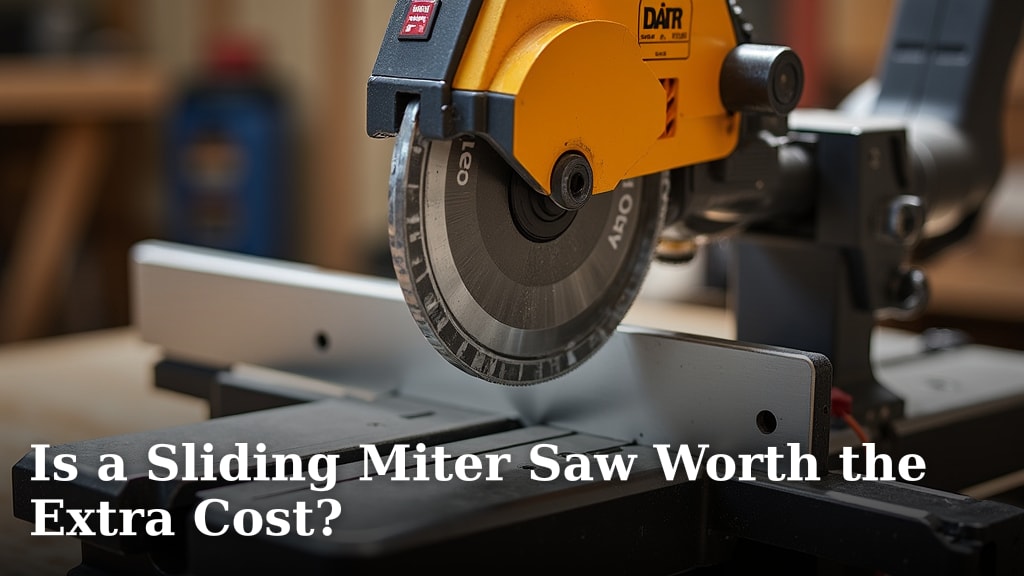
Yes, a sliding miter saw is often worth the extra cost, especially if you need to cut wider boards or make more versatile cuts than a standard miter saw allows. We found it offers significant benefits for many woodworking projects.
You’ll find that the ability to slide the saw blade along a rail lets you tackle materials that would be impossible with a fixed-pivot miter saw. This extra reach is great for cross-cutting wider stock and making longer bevel cuts. Think about the types of projects you do; does your current saw limit you?
- Wider Cut Capacity: Easily handles broad lumber.
- Increased Versatility: Better for angled and compound cuts.
- Smoother Operation: Often provides more controlled cuts.
- Space Saving: Can sometimes replace a table saw for certain tasks.
Let’s walk through exactly why a sliding miter saw might be the perfect addition to your workshop and what you should consider before buying one.
Is a Sliding Miter Saw a Smart Investment for Your Workshop?
Yes, for many woodworkers and DIY enthusiasts, a sliding miter saw is a smart investment that greatly expands your project capabilities. It tackles tasks a standard miter saw simply can’t handle.
Understanding the Key Difference: Sliding vs. Standard Miter Saws
Let’s look at what truly sets these two types of saws apart. It’s all about how the blade moves and the kind of cuts you can make.
Standard Miter Saws: The Basics
Imagine a fixed pivot. A standard miter saw operates by pivoting down to make a cut. It’s fantastic for precision cross-cuts on narrower boards, like trim or framing lumber. You set your angle, pull the blade down, and you’re done.
- Great for repetitive

Conclusion
Deciding if a sliding miter saw is right for you boils down to your specific project needs and the types of cuts you frequently make. If you find yourself consistently needing to cut wider boards or craving more versatility for angled and compound cuts, the investment is genuinely worthwhile. This tool can significantly enhance your woodworking capabilities, saving you time and improving accuracy on various projects. Consider your current limitations and future ambitions, and you’ll likely find a sliding miter saw to be a powerful upgrade for your workshop.
Frequently Asked Questions
Is a sliding miter saw hard to use for a beginner?
Not at all. While it offers more features, the basic operation is similar to a standard miter saw. Most models have clear controls, and you’ll quickly get comfortable with its extended capabilities through practice on scrap wood.
Can a sliding miter saw replace a table saw for crosscuts?
For many crosscutting tasks, especially on wider boards, a sliding miter saw can be an excellent alternative. However, it’s not designed for ripping long boards (cutting with the grain), which is a primary function of a table saw.
How much space does a sliding miter saw need?
While compact models exist, a sliding miter saw generally requires more depth on your workbench than a standard miter saw due to the sliding rails. Account for extra clearance behind the saw for full extension.
Do I need a dual-bevel sliding miter saw?
A dual-bevel feature allows the saw head to tilt both left and right, eliminating the need to flip your workpiece for opposing bevel cuts. If you make a lot of complex angled cuts, this feature adds convenience and can speed up your workflow.
What’s the main benefit of a sliding miter saw over a compound miter saw?
The primary benefit is the increased crosscut capacity. A compound miter saw can make bevel and miter cuts, but the sliding feature of a sliding miter saw allows the blade to move forward, enabling you to cut much wider material.