
Is a Miter Saw Safer Than a Table Saw?
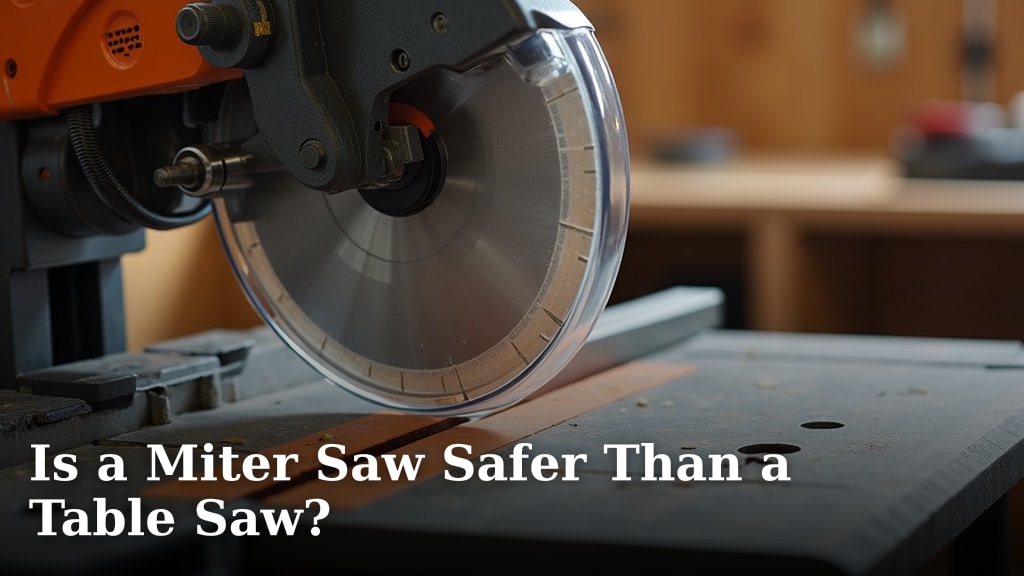
When weighing your woodworking tool options, you might wonder: is a miter saw safer than a table saw? Generally speaking, yes, a miter saw is often considered safer for beginners. This is because the blade is typically stationary. You bring the wood to the blade, reducing the risk of kickback, which is a major concern with table saws. Your hands stay further from the cutting path.
Both tools are powerful and require respect. A table saw has a larger, spinning blade that’s always exposed. This design means you’re often feeding wood through the blade. This action can lead to dangerous situations if not handled with extreme care. We found that proper technique is key for safety on either saw.
- Miter saws generally offer a safer experience, especially for beginners.
- Table saws pose a higher risk due to the exposed, spinning blade and feed motion.
- Kickback is a significant danger with table saws.
- Safety depends heavily on your skill and adherence to safety rules, regardless of the saw.
Let’s break down the specific safety differences and how you can use both tools with confidence. We’ll look at why one might be a better choice for your shop.
“`htmlComparing Miter Saw vs. Table Saw Safety
When deciding between a miter saw and a table saw, safety is a top concern for many woodworkers. We looked into which tool generally offers a safer working experience. Many safety guides suggest that a miter saw is often the safer choice for those new to woodworking. This is primarily due to how you interact with the cutting blade. On a miter saw, the blade is typically in a fixed position. You bring the material you’re cutting to the blade. This method keeps your hands and body further away from the spinning blade. It also greatly reduces the risk of kickback, a common and dangerous phenomenon with table saws.
A table saw, on the other hand, presents a different safety dynamic. The blade on a table saw is always exposed and spinning. You push the material you’re cutting through this spinning blade. This can feel more immediate and requires constant attention. We found that while both tools can be used safely, the inherent design of a miter saw lends itself to fewer accidental exposures. Understanding these differences helps you make an informed choice for your workshop.
Understanding the Risks: Kickback and Blade Exposure
The Danger of Kickback on a Table Saw
Kickback is perhaps the most serious danger associated with table saws. It happens when the wood you’re cutting gets pinched between the blade and the fence or the blade itself. This causes the wood to be violently thrown back towards the operator. Imagine a powerful spring uncoiling suddenly; that’s the force involved. We found that kickback can happen unexpectedly. It’s often caused by improper feeding of the wood, using a dull blade, or not using a blade guard and splitter. The consequences can be severe, including serious injuries to the hands, arms, or even the face (CDC).
Because you are feeding the wood *through* the blade on a table saw, there’s a constant risk of this happening. The angle of the cut, the type of wood, and how you support the workpiece all play a role. Even experienced woodworkers need to be vigilant. We found that using riving knives or splitters, which help maintain a gap in the kerf after the blade passes, significantly reduces the risk of kickback. It’s a simple piece of safety equipment that makes a big difference.
Miter Saw Safety: Blade Location and Hand Placement
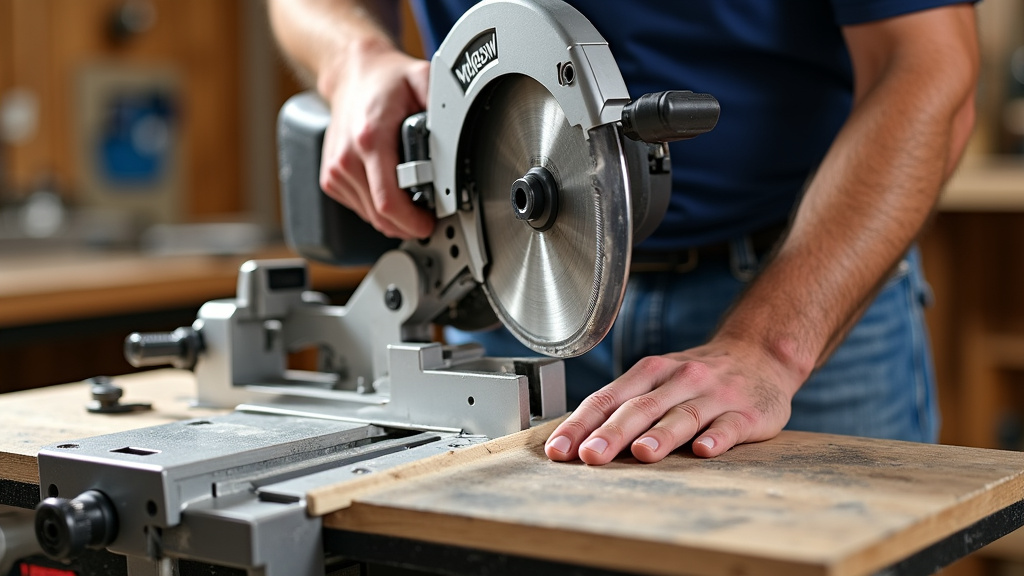
With a miter saw, the blade is usually housed in a motor assembly that swings down. You place your wood on the saw’s base and then bring the blade down through it. This means your hands are generally much further from the cutting path. The blade’s movement is more controlled and predictable. We found that even when making repeated cuts, your hands remain in a relatively safe zone. This design is a key reason why miter saws are often recommended for beginners.
While kickback is less of a concern with miter saws, it’s not entirely impossible. It can occur if the saw is not stable, if the blade binds in the wood, or if the wood is not held down securely. However, the forces involved are typically less intense than with a table saw. Many miter saws also come with blade guards that cover most of the blade when not in use, adding another layer of safety. You simply swing the blade down through the wood.
Ease of Use and Learning Curve
Miter Saw: A Simpler Approach
For someone just starting out, learning to use a miter saw effectively is often quicker and more intuitive. Setting up for a basic crosscut or miter cut is straightforward. You adjust the angle, secure the wood, and make the cut. We found that the learning curve is less steep. This makes it easier to achieve good results without as much risk of error. Many hobbyists find their first saw is often a miter saw because of this ease of use.
The clear markings for angles and the straightforward operation allow you to focus on holding the wood steady. This simplicity helps build confidence. We found that fewer complex adjustments are needed for common cuts. This means less opportunity for mistakes that could lead to safety issues. It’s a tool that lets you get cutting relatively quickly.
Table Saw: Requires More Skill and Practice
Mastering a table saw takes more time and practice. Because you are actively feeding material through a large, spinning blade, your technique matters immensely. We found that proper stance, hand positioning, and understanding how to maintain a consistent feed rate are critical. It’s like learning to drive a manual transmission car – there’s a rhythm and feel you need to develop.
The table saw is incredibly versatile, capable of making rips, crosscuts, dados, and bevels. This versatility means there are more ways to potentially make a mistake. Using a table saw safely requires a deeper understanding of its mechanics and potential hazards. Many woodworking schools and experts recommend extensive training before someone uses a table saw unsupervised. We found that a good push stick and a firm grasp of push blocks are essential to keep your hands safe.
Specific Safety Features and Considerations
Blade Guards and riving Knives
Both saws typically come with blade guards. A miter saw’s guard usually moves automatically as you cut, covering the blade when it’s not in use. Table saws also have guards, but their effectiveness can vary. Many table saw users remove the guard for certain operations. This is where a riving knife or splitter becomes essential. These devices stay in the kerf of the cut, preventing the wood from closing in on the blade and causing kickback.
We found that many modern table saws include excellent integrated riving knives and guard systems. However, older models or cheaper saws might have less effective or easily removable guards. For miter saws, the guard is usually less intrusive and more consistently used. Many miter saws also feature a dust collection port, which helps keep your work area clean and reduces the amount of airborne dust, contributing to a safer environment. We found that good dust collection is often overlooked but important for respiratory health.
Stability and Workspace
The stability of the saw and your workspace is crucial for both tools. A miter saw needs to be securely mounted on a sturdy stand or workbench. If it wobbles during a cut, the blade can bind, increasing the risk of an accident. We found that portable miter saws are often used on job sites where stability can be a challenge. Ensuring you have a solid, level surface is key. Many stands have leveling feet for uneven ground.
A table saw is typically a heavier, stationary piece of equipment. It’s usually placed in a dedicated workshop space. Its weight provides inherent stability. However, the surrounding workspace must be clear of clutter. You need room to maneuver the wood safely. We found that maintaining a clean and organized work area is just as important as the saw’s stability itself. Tripping hazards or cluttered tables can lead to dangerous situations when handling large pieces of lumber.
Choosing the Right Saw for Your Needs
When a Miter Saw is Often the Better First Choice
If you’re new to woodworking or primarily need to make accurate crosscuts and angle cuts on boards and trim, a miter saw is likely your safest and most practical starting point. Its ease of use and reduced risk of kickback make it approachable. We found that for DIY home improvement projects, like installing baseboards or building simple decks, a miter saw handles most tasks effectively and safely. It’s the tool that gets the job done without requiring extensive training.
Think of it like learning to ride a bike with training wheels. It’s designed to give you confidence and teach you the basics. You can achieve professional-looking results quickly. Many woodworkers consider a miter saw a staple in their shop for its speed and accuracy on common cuts.
When a Table Saw Might Be Necessary
If your projects involve breaking down larger sheets of plywood, making rip cuts (cutting along the length of a board), or creating joinery like dados and tenons, a table saw is often indispensable. Its capabilities go far beyond what a miter saw can do. We found that for building furniture, cabinetry, or any project requiring precise sheet goods work, a table saw is the tool of choice. It’s the workhorse of many professional shops for a reason.
However, with its greater versatility comes a higher level of responsibility. It’s essential to invest time in learning safe operating procedures. We found that many sources recommend starting with smaller, manageable pieces of material when learning. This allows you to get a feel for the saw’s power and your ability to control the wood. Don’t rush the learning process; your safety is worth the extra time.
Key Safety Practices for Both Saws
Regardless of which saw you choose, consistent safety practices are non-negotiable. We’ve compiled a quick checklist to keep you safe:
- Always wear safety glasses.
- Keep your work area clean and free of obstructions.
- Ensure the saw is stable and securely mounted.
- Never reach over a spinning blade.
- Use push sticks and blocks when appropriate, especially on a table saw.
- Read and understand your saw’s manual before operating.
Conclusion
When it comes to safety, a miter saw generally has the edge over a table saw, especially for beginners. Its design keeps your hands further from the blade and minimizes the risk of kickback. We found that while a table saw offers incredible versatility, it demands more skill and a deeper understanding of safety protocols. Your choice depends on your project needs and comfort level. Prioritize safety by always using guards, wearing eye protection, and maintaining a clean workspace. Start with the tool that feels most manageable for your current skill set.
Frequently Asked Questions
Is a miter saw truly safe for someone with no woodworking experience?
Yes, a miter saw is often considered a safer starting point for absolute beginners. Its stationary blade and the way you bring the wood to it reduce common risks like kickback. We found that with basic instruction, new users can make accurate cuts with confidence on a miter saw.
Can a miter saw still cause kickback?
While much less common than with a table saw, kickback is still possible on a miter saw. This can happen if the blade binds in the wood or if the saw itself isn’t stable. Always ensure your workpiece is held down firmly. We found that securing the saw and the material is key to preventing any binding.
What is the single biggest safety difference between the two saws?
The primary safety difference lies in how you interact with the blade. On a miter saw, you lower the blade onto stationary wood, keeping your hands farther away. On a table saw, you push wood through a perpetually exposed, spinning blade, increasing exposure and the risk of kickback. We found this difference in blade exposure and wood feed is the main safety factor.
If I buy a table saw, what’s the one safety accessory I absolutely need?
If you’re getting a table saw, a riving knife or splitter is a critical safety accessory. It helps prevent the wood from pinching the blade after the cut, significantly reducing the chance of dangerous kickback. We found that many users consider this more important than the blade guard for certain operations.
Which saw is better for making straight cuts through large plywood sheets?
For breaking down large sheets of plywood, a table saw is the more suitable tool. While it requires more care, its design allows for controlled cuts across wider materials. We found that with proper support and technique, a table saw can handle these tasks more effectively and safely than a miter saw.
