
Do You Need a Laser Guide on a Miter Saw?
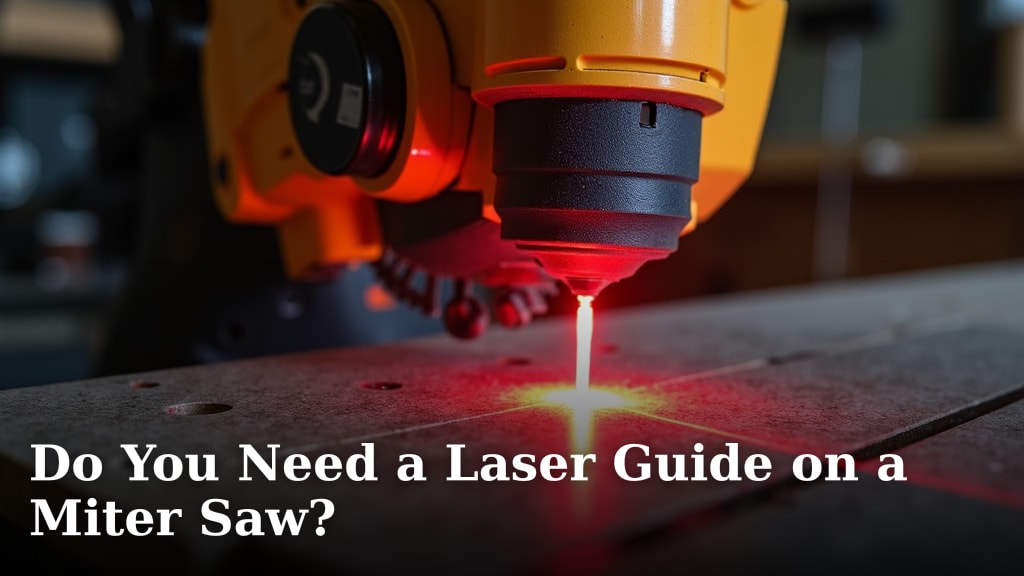
So, do you really need a laser guide on your miter saw? The short answer is: it depends on your needs. While not strictly essential for every cut, a laser guide can dramatically improve your accuracy and confidence, especially for beginners and those tackling detailed projects.
Many woodworkers find that a laser line helps them visualize the cut path precisely before they engage the blade. This can save you time and material by reducing costly errors. We’ve found that for tasks demanding high precision, like trim work or fine furniture making, this feature becomes increasingly beneficial.
- Laser guides help you see where the blade will cut.
- They are great for improving accuracy on your cuts.
- Beginners and those doing detailed work often benefit most. Beginners and those doing detailed work often benefit most from a laser guide.
- They can help prevent costly mistakes and save material.
Let’s take a closer look at what a laser guide offers and if it’s the right addition to your miter saw setup.
Let’s talk about getting those cuts just right on your miter saw. You’re probably wondering if that little laser line is worth the extra cash or just a fancy gimmick. We’ve looked into it, and the truth is, it can be a real game-changer for many woodworkers. It’s not about needing it for every single cut, but understanding how it can boost your accuracy and confidence is key.
Miter Saw Laser Lines: What They Are and How They Work
A miter saw laser guide is essentially a small LED light mounted on the saw. It projects a red or sometimes green line onto your workpiece. This line shows you precisely where the saw blade will make contact. Think of it as a visual target for your cuts. It activates when the saw is powered on, giving you a clear guide before you even lower the blade.
The laser line typically aligns with the kerf of the blade. The kerf is the width of the cut the blade makes. So, if you align the laser perfectly with your pencil mark, the wood you remove will be exactly where you intended. This direct visualization is incredibly helpful, especially when you’re working with small or precise marks. Many users find it much easier than trying to eyeball the blade’s position.
Some higher-end models offer adjustable lasers. This means you can actually fine-tune the laser line to match the blade’s exact kerf or even be offset slightly if you prefer. However, for most standard miter saws with lasers, you’re getting a direct representation of the cut path. We found that this simple visual aid makes a big difference in reducing guesswork.
Who Benefits Most from a Miter Saw Laser Guide?
So, is a laser guide for you? We’ve identified a few groups who tend to get the most bang for their buck with this feature.
1. The Beginner Woodworker
If you’re new to using a miter saw, it can feel a bit intimidating. Getting the cut exactly where you want it takes practice. A laser guide acts like a virtual safety net. It helps you see the consequence of your positioning before the blade spins. This can save you from many frustrating mistakes. You’ll feel more confident making cuts when you have that clear visual confirmation.
2. DIYers Tackling Detailed Projects
Are you building a custom bookshelf, adding intricate trim to your home, or creating detailed craft projects? These tasks demand a higher level of precision. Even a small misalignment can be noticeable. A laser line ensures you’re placing your cut exactly on that pencil mark, leading to cleaner, more professional results. We found that for projects with tight tolerances, the laser becomes almost indispensable.
3. Anyone Prone to Small Errors
Let’s be honest, sometimes our eyes aren’t as sharp as we’d like, or the lighting in the workshop isn’t perfect. A laser guide cuts through the ambiguity. It provides a bright, consistent line that’s easy to follow. This reduces the chance of tiny errors that can add up. If you’ve ever cut a piece just a hair too short or too long, a laser can help prevent that.
4. Those Working with Expensive Materials
Mistakes can be costly, especially when you’re working with premium hardwoods or specialized materials. Wasting a few inches of expensive lumber can sting. A laser guide helps you make the most of every piece. By ensuring accuracy from the first cut, you minimize scrap and save money in the long run. Think of it as an investment in material conservation.
When Might a Laser Guide Be Less Essential?
While we’ve sung its praises, it’s not to say every single miter saw needs a laser. There are situations where its benefit might be minimal.
1. Rough or “Good Enough” Cuts
If you’re primarily cutting lumber for framing a shed, firewood, or other projects where exact precision isn’t critical, a laser might be overkill. For these tasks, aligning visually with the blade or using a simple tape measure for length might be perfectly adequate. The added feature doesn’t offer much improvement over traditional methods here.
2. Highly Experienced Woodworkers
Master woodworkers often develop an **innate sense of precision**. They can eyeball a cut line with remarkable accuracy. For these individuals, a laser might feel like an unnecessary addition or even a slight distraction. Their muscle memory and visual judgment are already highly honed. They’ve likely learned to position their work consistently without external aids.
3. Saws Without a Clear Line of Sight
The effectiveness of a laser guide depends on being able to see the line clearly on your workpiece. If your saw design, dust collection system, or the way you typically hold your material obscures the laser line, its utility diminishes significantly. You need an unobstructed view to benefit from the guidance.

Comparing Laser Guides with Other Saw Features
Miter saws come with a variety of features, each designed to aid in cutting. How does the laser stack up?
vs. Blade Alignment Without a Laser
Before lasers, woodworkers relied on aligning the blade directly with their mark. This involves looking closely at the blade and the material. It’s a skill that takes practice. The laser simplifies this by providing a high-contrast line that’s easier to see than the blade itself. We found that it removes much of the trial and error involved in precise alignment.
vs. Digital Readouts and Stops
Some saws offer digital angle readouts or precise depth and length stops. These are excellent for setting up specific angles or repeating cuts at exact lengths. A laser guide, however, focuses on the visual accuracy of the cut line itself. It complements these features by ensuring you’re hitting the mark once the angle and length are set. It’s about the moment of the cut, not just the setup.
vs. Shadow Lines (LED Cut Systems)
More advanced saws use an LED system that casts a shadow of the blade onto the material. This acts much like a laser, providing a visual guide. Many users find shadow lines to be even clearer than laser lines, especially in bright light or dusty conditions. They are essentially a more modern take on the visual cut guide.
Here’s a quick look at how these guide systems compare:
| Feature | How it Works | Best For |
|---|---|---|
| Laser Guide | Projects a line showing the blade’s kerf. | Beginners, detailed cuts, precise marking. |
| Blade Alignment | Visual alignment of the blade with the mark. | Experienced users, rough cuts, basic tasks. |
| Shadow Line (LED) | Casts a shadow of the blade for guidance. | All levels, enhanced visibility in various conditions. |
| Digital Stops/Readouts | Precise setting of angles, depths, or lengths. | Repeatable cuts, complex angles, set measurements. |
Making the Decision: Is a Laser Worth It for You?
Ultimately, the decision comes down to your personal woodworking style and the types of projects you tackle. If you value accuracy, want to reduce mistakes, and appreciate a clear visual aid, a laser guide is a fantastic addition. It takes some of the guesswork out of a critical part of the cutting process.
Consider your budget, but also consider the cost of wasted materials and the frustration of inaccurate cuts. For many, the peace of mind and improved results are well worth the investment. We found that even when not strictly necessary, it certainly doesn’t hurt and often makes the job more enjoyable and precise.
Here’s a quick checklist to help you decide:
- Do you often work with small or detailed marks?
- Are you a beginner looking for extra guidance?
- Do you work with expensive or easily wasted materials?
- Do you find it difficult to perfectly align the blade visually?
- Do you want to reduce the chances of cutting errors?
- Is accuracy a top priority for your projects?
Conclusion
So, do you need a laser guide on your miter saw? We found that it’s not a one-size-fits-all answer. For beginners, DIYers tackling detailed projects, and anyone aiming to reduce costly mistakes, a laser guide is a smart investment. It provides a clear visual target, boosting confidence and accuracy. While experienced woodworkers or those doing rough cuts might not need it, the peace of mind and material savings it offers are hard to beat for many. If you’re looking to make your cuts more precise and enjoyable, consider adding a laser guide to your setup.
Frequently Asked Questions
Can I add a laser guide to a miter saw that doesn’t have one?
Yes, you often can. Many aftermarket laser guide kits are available for miter saws. These typically attach to the saw housing and can be aligned with your blade. Check your saw model for compatibility and mounting options before purchasing.
Are red or green laser guides better?
Green lasers are generally more visible than red lasers, especially in bright workshop conditions. However, red lasers are more common and usually sufficient for most indoor tasks. Some users find green lasers easier to see on darker wood.
How do I know if my laser guide is accurate?
You can test your laser’s accuracy by aligning it with a pencil mark, making a cut, and then measuring the kerf (the width of the cut). It should align perfectly with the edge of your mark. Some saws also allow for laser calibration to fine-tune the alignment.
Do laser guides use a lot of battery or power?
Most miter saw lasers are powered by the saw itself, drawing minimal power. If you have a cordless saw with a battery-powered laser, it will consume some battery life, but typically not enough to be a major concern for typical use.
Is a shadow line system better than a laser guide?
Both shadow lines (LED cut systems) and laser guides provide visual cut indication. Shadow lines cast a shadow of the blade, which some users find clearer and more visible in dusty conditions or bright light than a projected laser line. It really comes down to personal preference and your specific working environment.
