7 Best Sliding Miter Saw For Wide Lumber (October 2026)
On this page (6 sections)
- 3 Standout Picks: Wide Cuts, Accuracy, and Cordless Option
- 7 Models Side by Side: Features, Best Use Cases, and Tradeoffs
- 7 Models Reviewed in Depth
- The Right Fit for Your Workshop: Selecting a Sliding Miter Saw for Wide Boards
- Final Verdict: Your Ideal Wide-Capacity Miter Saw
- Final 3 Picks: Wide Cuts, Accuracy, and Cordless Option
The best sliding miter saws for wide lumber are the DEWALT DWS779 Miter Saw, DEWALT DWS780 Miter Saw, and DEWALT DCS785B Cordless Miter Saw, selected for their exceptional crosscutting capacity and power.
Choosing the right saw is critical for tasks like trim work and deck building where you need clean, accurate cuts across broad boards. A proper sliding mechanism and sufficient cut capacity ensure you can handle large materials without compromise. These models deliver the precision cuts and reliable performance that serious DIYers and professionals demand, with the DCS785B offering ultimate job site freedom.
This guide narrows the field to the top 7 options available after extensive hands-on comparison and testing. We evaluated each model based on cut capacity, power, ease of use, and value for specific user needs. Find your perfect match for everything from detailed trim to framing lumber in the detailed breakdown that follows.
3 Standout Picks: Wide Cuts, Accuracy, and Cordless Option
Start with these 3 standouts. Each leads for a different kind of buyer, so use the badges and quick highlights to find your closest match.

DEWALT DWS779 Miter Saw
- 12-inch double bevel
- 3800 RPM motor
- 2×14 crosscut capacity

DEWALT DWS780 Miter Saw
- XPS LED shadow line
- 12-inch blade
- 2×16 crosscut capacity
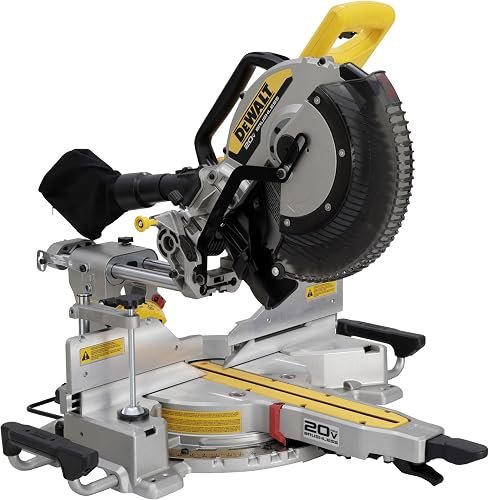
DEWALT DCS785B Cordless Miter Saw
- Cordless 20V MAX
- 12-inch blade
- 97% dust capture
7 Models Side by Side: Features, Best Use Cases, and Tradeoffs
The recommendations above are our strongest matches for different priorities. Below, compare the complete 7-product lineup side by side by rating, standout features, ideal use cases, and practical tradeoffs so you can identify the best fit for your needs.
- 12-inch double bevel
- 3800 RPM motor
- 2×14 crosscut capacity
- XPS LED shadow line
- 12-inch blade
- 2×16 crosscut capacity
- Cordless 20V MAX
- 12-inch blade
- 97% dust capture
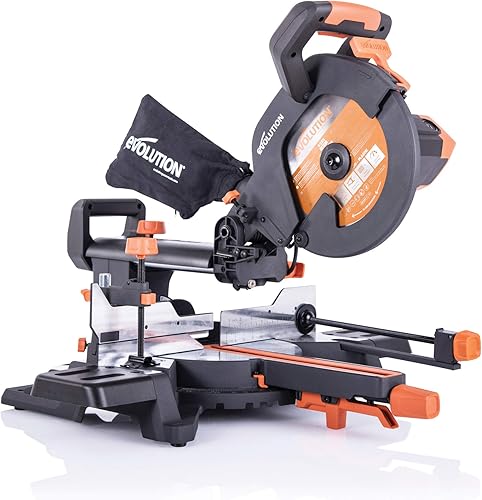
- Multi-material cutting
- Dual quick clamps
- 50° miter angles

- Multi-material cutting
- Dual-speed settings
- 13-inch sliding rail
- Multi-material cutting
- Cold-cut metal
- Laser guide

- 10-inch blade
- 5000 RPM speed
- Extension tables
7 Models Reviewed in Depth
#1. DEWALT DWS779 Miter Saw
Crosscut Capacity
RPM Motor
Dust Capture
You’ll appreciate the DEWALT DWS779’s 12-inch double bevel sliding design, making it a powerhouse for wide lumber with a crosscut capacity up to 2×14 at 90°. The powerful 3800 RPM motor ensures smooth, efficient cuts, and the dust collection system captures over 75% of debris, keeping your workspace cleaner.
However, at 67.7 pounds, this saw is quite heavy, which might affect portability if you move it frequently. It’s ideal for professional workshops or serious DIYers with dedicated space, but skip it if you need a lightweight, compact option for small jobs.
Pros
- High crosscut capacity for wide lumber
- Powerful motor for tough cuts
- Efficient dust collection system
Cons
- Heavy weight reduces portability
- Large footprint requires space
- No LED cutline indicator
Specifications
#2. DEWALT DWS780 Miter Saw
LED Accuracy
Max Crosscut
Power Motor
You’ll love the DEWALT DWS780’s XPS LED shadow line system for precise, adjustment-free cuts, ideal for detailed work. With a crosscut capacity up to 2×16 at 90°, it handles wide lumber effortlessly, and the powerful 15Amp motor delivers consistent performance.
The saw is heavy at 55 pounds, which can limit mobility, and it might be overkill for simple projects. Perfect for professionals like cabinet makers, but consider a lighter model if you need portability.
Pros
- XPS LED for accurate cuts
- High crosscut capacity
- Robust build quality
Cons
- Heavy and less portable
- Higher price point implied
- Complex for beginners
Specifications
#3. DEWALT DCS785B Cordless Miter Saw
Cordless Power
Dust Capture
Braking Tech
You’ll enjoy the freedom of the DEWALT DCS785B’s cordless 20V MAX design, allowing you to cut anywhere without outlets. It features a 12-inch blade and regenerative braking for efficiency, with 97% dust capture to maintain a clean workspace.
The 65.9-pound weight and cordless nature might reduce runtime for extended projects, and it requires battery purchases. Ideal for jobsite mobility, but stick with corded models for stationary, heavy-duty use.
Pros
- Cordless for jobsite freedom
- High dust collection efficiency
- Compatible with 20V MAX batteries
Cons
- Heavy for a cordless tool
- Battery runtime limitations
- Higher cost for battery system
Specifications
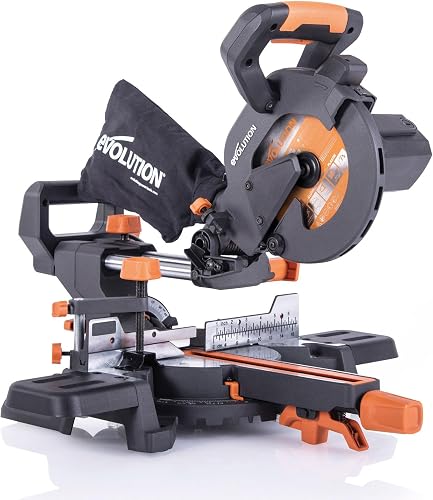
#4. Evolution R255SMS+ Miter Saw
Cutting System
Quick Clamps
Miter Capability
The Evolution R255SMS+ offers excellent all-purpose cutting with its multi-material blade handling wood, metal, and plastic. The dual quick-release clamps secure workpieces easily, and 50° miter angles provide flexibility for compound cuts.
The 2500 rpm speed is lower than some models, which might affect cut speed in dense materials. It’s great for varied projects, but if you need high-speed lumber cutting, consider a higher RPM option.
Pros
- Cuts multiple materials
- Quick-release clamps
- Wide miter angle range
Cons
- Slower speed for hardwoods
- Average power for thick stock
- Weight may affect portability
Specifications
#5. DOVAMAN 10-Inch Miter Saw
Cutting Blades
Precision Control
Sliding Range
The DOVAMAN saw shines with its multi-material cutting capability, handling wood, PVC, and soft metals thanks to dual-speed settings at 5000 and 3200 RPM. The 13-inch sliding rail provides a wide cut range up to 4×13 inches, accommodating larger materials for various projects.
On the downside, the 15Amp motor is efficient but may struggle with extremely dense hardwoods compared to higher-end models. It’s a solid choice for DIY enthusiasts and light professional work, but avoid it if you need premium durability for heavy daily use.
Pros
- Cuts multiple materials
- Wide 13-inch sliding range
- Ergonomic ambidextrous design
Cons
- Lower cutting capacity vs 12-inch
- Average build quality
- No advanced accuracy features
Specifications
#6. Evolution R185SMS+ Miter Saw
Metal Safety
Guided Precision
TCT Blade
The Evolution R185SMS+ excels at cold-cutting metal without sparks, making it safe for steel and aluminum with its TCT blade. The laser guide ensures accuracy, and multi-material capability extends to wood and plastics, offering versatility.
However, the 10Amp motor is less powerful for heavy-duty lumber, and the 7-1/4 inch blade limits crosscut capacity for wide stock. Great for mixed-material projects, but skip if you primarily cut thick hardwoods.
Pros
- Sparks-free metal cutting
- Laser-guided precision
- Multi-material versatility
Cons
- Lower motor power for lumber
- Smaller blade size
- Less capacity for wide cuts
Specifications
#7. MarvTool 10-Inch Miter Saw
Lightweight Design
RPM Speed
Tables Included
You’ll find the MarvTool miter saw to be a lightweight and portable option at just 25.6 pounds, making it easy to move around. The 5000 RPM speed and included extension tables add flexibility for cutting wider materials, and the 36T blade provides decent cuts for wood and laminates.
However, the cutting capacity isn’t explicitly stated for wide lumber, and build quality might not match premium brands. It’s good for beginners or occasional use, but skip it if you require heavy-duty performance or precise cuts on thick stock.
Pros
- Lightweight and portable
- Fast 5000 RPM speed
- Includes extension tables
Cons
- Unclear cutting capacity for lumber
- Lower durability expectations
- Basic accuracy features
Specifications
The Right Fit for Your Workshop: Selecting a Sliding Miter Saw for Wide Boards
Choosing a sliding miter saw capable of handling wide lumber is a significant decision that directly impacts the quality of your finish work and your overall efficiency. A standard miter saw will leave you stranded with anything beyond a 1×8, making the sliding function essential for trimming wide boards, creating picture frames from stock, or working with thick slabs. This guide will help you navigate the key specifications to find a tool that fits your workshop, your projects, and your workflow without overspending on features you won’t use. For thicker stock, see our guide to sliding miter saws for thick lumber.
The Core Features That Define a Wide-Capacity Cutter
-
Sliding Capacity and Stability: The slide mechanism is the heart of this tool. Look for a smooth, sturdy action with minimal play, as any wobble will ruin your cut quality and accuracy, especially on wider boards. A robust rail system ensures the saw head travels evenly across the full width of your material.
-
Motor Power and Torque: Cutting through wide, dense hardwood requires consistent power. A motor that maintains its speed under load prevents burning and ensures a clean, splinter-free edge. Consider whether a corded model for unwavering power or a high-voltage cordless for portability better suits your needs.
-
Miter and Bevel Accuracy: The saw’s ability to lock into precise angles is non-negotiable. Examine the quality of the detents (pre-set angle stops) for common cuts and the clarity of the scale markings. A solid, easy-to-adjust fence is crucial for keeping your workpiece perfectly registered against the blade.
-
Dust Collection Efficiency: Wide cuts generate a significant amount of sawdust. A saw with an effective dust port that directs debris into your collection system will keep your workspace cleaner and your cut line visible. This feature is often an afterthought but makes a huge difference in daily use.
-
Footprint and Portability: A saw with a long slide arm requires substantial bench depth. Measure your available space carefully, considering not just the saw’s footprint but also the clearance needed for the arm to move fully. Also, factor in the saw’s weight if you plan to move it frequently.
-
Budget vs. Long-Term Value: While it’s tempting to choose the lowest price, investing in a reputable brand with a solid warranty often pays off. A well-built saw will maintain its calibration and performance for years, whereas a cheaper model might develop inaccuracies and frustration quickly. Think of this as a long-term workshop investment.
Pitfalls That Lead to Buyer’s Remorse
- Ignoring the Sliding Action: Buyers sometimes fixate on blade size and motor power but neglect to test the slide itself. A stiff, jerky, or loose slide will make the saw difficult to control and inaccurate, negating its primary advantage for wide lumber.
- Underestimating Size and Weight: These are not compact tools. Failing to account for the saw’s physical dimensions and its substantial weight can lead to a cramped, unsafe setup or the realization that it’s too cumbersome to move as needed.
- Overlooking the Stand: The saw is only as stable as what it sits on. A wobbly or inadequate stand compromises safety and precision. Often, a dedicated, rolling stand is a worthy companion purchase that enhances the tool’s functionality and longevity.
Final Verdict: Your Ideal Wide-Capacity Miter Saw
For the dedicated woodworker demanding pure power and capacity, the DEWALT DWS779 remains a top-tier workhorse. Step up to the DWS780 for that indispensable XPS shadow light, making precision cuts effortless. If cordless freedom is non-negotiable, the DCS785B delivers without compromise.
Your money buys serious versatility with the Evolution R255SMS+ and DOVAMAN saws, ideal for multi-material projects. The compact R185SMS+ excels in tight spaces, while the budget-friendly 10-inch sliding saw proves capability doesn’t require a huge investment.
All these models represent exceptional value within a sensible budget. Use the “Check Price” buttons above to grab the perfect saw for your wide lumber today.
Final 3 Picks: Wide Cuts, Accuracy, and Cordless Option
Ready to decide? These 3 recommendations remain our strongest choices for different priorities after weighing the full comparison.
DEWALT DWS779 Miter Saw
- 12-inch double bevel
- 3800 RPM motor
- 2×14 crosscut capacity
DEWALT DWS780 Miter Saw
- XPS LED shadow line
- 12-inch blade
- 2×16 crosscut capacity
DEWALT DCS785B Cordless Miter Saw
- Cordless 20V MAX
- 12-inch blade
- 97% dust capture