Can You Cut Plywood with a Miter Saw?
On this page (8 sections)
Yes, you can cut plywood with a miter saw, and it’s a common practice for many DIYers and professionals. However, for the best results and safety, you’ll need to use the right techniques and a suitable blade. Expect a bit of tear-out if you’re not careful.
You might be wondering if a miter saw is the best tool for plywood. While it excels at crosscuts for trim and dimensional lumber, plywood presents unique challenges. We’ve found that with a few adjustments, your miter saw can handle plywood cuts effectively for many projects.
- Miter saws can cut plywood.
- Blade type is very important for clean cuts.
- Technique helps reduce tear-out.
- Safety precautions are always a must.
Let’s walk through everything you need to know about cutting plywood with your miter saw, making sure you get clean cuts and stay safe.
Using Your Miter Saw for Plywood Cuts
You’re ready to cut some plywood for your next project, and your miter saw is right there. Can it handle the job? Absolutely, it can. We’ve found that a miter saw is a perfectly capable tool for many plywood cutting tasks, especially when you need precise crosscuts.
While a table saw or circular saw might be your go-to for breaking down large sheets, a miter saw shines for smaller, accurate cuts. Think shelves, cabinet parts, or framing where you need consistent angles and lengths. It’s all about choosing the right setup.
The Right Blade Makes All the Difference
When cutting plywood, the blade on your miter saw is arguably the most important factor. Using the wrong blade can lead to frustration, splintered wood, and wasted material. Your goal is a clean, smooth cut with minimal tear-out.
Understanding Blade Types
Saw blades are designed for different materials and cut types. For plywood, you need a blade that prioritizes a smooth finish. This means looking at the number of teeth and the tooth geometry.
- Low tooth count blades (24-40 teeth) are usually for rough, fast cuts in dimensional lumber. They’ll rip through plywood but leave a very ragged edge.
- High tooth count blades (60-80+ teeth) are what you want for plywood. More teeth mean more individual cutting points, resulting in a cleaner shear and less splintering.
The Best Blade for Plywood
We’ve found that a fine-toothed crosscut blade or a dedicated plywood blade works best. Look for blades with 60 to 80 teeth, sometimes even higher. These blades have specific tooth grinds, like Alternate Top Bevel (ATB), which are ideal for delicate materials like veneer-faced plywood.
A positive hook angle on the teeth is good for general cutting, but for plywood, a lower hook angle or even a negative hook angle can help prevent the blade from aggressively “climbing” the wood, giving you more control and a smoother exit cut.
Blade Material and Coating
Carbide-tipped blades are standard and durable. Some blades also come with special coatings that reduce friction and prevent pitch buildup. This is especially helpful when cutting resinous plywood, ensuring the blade stays sharper for longer.
Setting Up Your Miter Saw for Plywood
Once you have the right blade, proper setup is key. It’s not just about turning on the saw and cutting. A few simple adjustments and additions can drastically improve your results and safety.
Backer Board: Your Best Friend Against Tear-Out
This is a crucial step that many people overlook. A zero-clearance insert or a simple scrap piece of wood behind your plywood workpiece (a “backer board”) supports the wood fibers as the blade exits. This virtually eliminates tear-out on the bottom side of your cut. We’ve consistently found this technique to be incredibly effective.
- Place a piece of scrap wood (plywood or even MDF) directly against your saw’s fence.
- Position your workpiece on top of this backer board.
- Cut through both pieces. The backer board acts as sacrificial support.
Securing Your Workpiece
Plywood can be slick, and you need it to stay firmly in place during the cut. Clamps are essential. Don’t rely solely on holding the wood by hand. A shifting workpiece is not only dangerous but will also lead to an inaccurate and messy cut. Use one or more clamps to secure the plywood tightly to the saw’s fence and table.
Many miter saws come with built-in clamps. If yours doesn’t, C-clamps or quick-release clamps work perfectly. Just make sure they don’t interfere with the blade’s path.
Adjusting Your Saw’s Settings
Check that your saw’s miter and bevel settings are locked securely. Even a tiny shift can throw off your cut angle. For most straight crosscuts, ensure your miter is at 0 degrees and your bevel is at 0 degrees (vertical).
A well-maintained saw is a safe saw. Make sure all guards are functioning correctly and that the saw is free of debris. A clean saw also operates more smoothly and accurately.
Cutting Plywood with Precision and Safety
Now that your saw is set up and ready, let’s talk about the actual cutting process. Your technique plays a big role in achieving those clean, accurate cuts you’re aiming for.
Marking Your Cut Line
Measure twice, cut once! Use a sharp pencil or a marking knife for your cut line. A marking knife makes a very fine score, which can help guide the blade and reduce fiber tear-out right at the surface. Consider marking the “good” side of the plywood for your cut.
For extra protection against tear-out, especially on veneered plywood, some woodworkers apply painter’s tape along the cut line. This can help hold the fibers down. We found that while it adds a step, it can make a noticeable difference on very thin or fragile veneers.
The Cutting Technique
Here’s a step-by-step approach for making your cut:
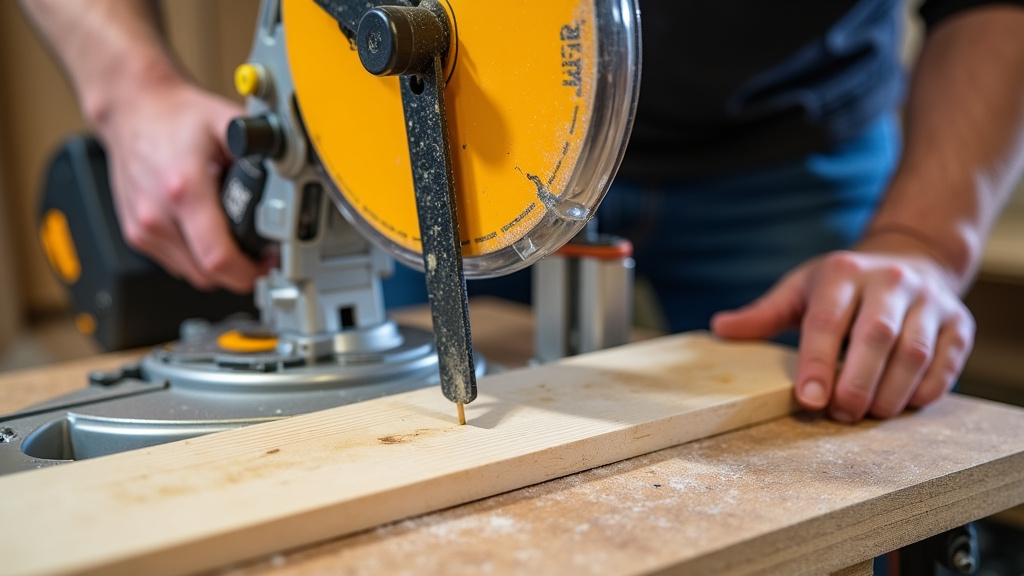
- Lower the blade slowly: Don’t just plunge the blade down. Allow the blade to reach full speed before contacting the wood.
- Cut through deliberately: Apply steady, even pressure. Let the blade do the work. Forcing the cut can lead to splintering and can strain your saw motor.
- Retract the blade slowly: Once the cut is complete, slowly raise the blade completely out of the wood before releasing the trigger and allowing the blade to stop spinning. Pulling the blade up too fast while it’s still spinning can cause kickback or mar the edge of your cut.
For miter cuts, ensure the plywood is still firmly clamped. The angle of the blade will affect how the wood reacts, so a slow, controlled cut is even more important.
Understanding Potential Challenges
While you can cut plywood with a miter saw, it’s good to be aware of its limitations and specific challenges that might arise. Knowing these helps you prepare and avoid frustration.
Tear-Out: The Enemy of Clean Edges
As discussed, tear-out is the biggest challenge when cutting plywood. This is where the blade rips out wood fibers on the exit side of the cut, leaving a rough, splintered edge. While a good blade and backer board significantly reduce this, it’s still a possibility, especially with cheaper plywood or very thin veneers.
Remedy: Always use a high-tooth-count blade (60-80T+), employ a backer board, and cut slowly. Marking your cut line with painter’s tape can also provide an extra layer of protection against tear-out.
Maximum Cutting Capacity
Miter saws have a limited cutting width. They are fantastic for crosscutting narrower pieces of plywood, but they aren’t designed to break down a full 4×8 foot sheet. If you need to cut large sheets, a circular saw with a guide or a table saw is a more appropriate tool.
Consider your project. If you’re cutting cabinet doors or small shelving, your miter saw is perfect. For ripping wide planks or paneling a wall, you’ll need a different tool. We’ve seen many DIYers struggle trying to force a miter saw beyond its design limits.
Safety First: Always Wear Protection
Working with any power tool requires strict adherence to safety guidelines. Your miter saw is no powerful, and plywood can be unwieldy. Never compromise on safety.
Here’s a quick checklist to keep you safe:
- Wear safety glasses or goggles to protect your eyes from flying debris.
- Use hearing protection like earmuffs or earplugs, as miter saws can be loud.
- Keep your hands clear of the blade path at all times, even when the saw is off.
- Ensure the workpiece is securely clamped before making any cut.
- Unplug the saw before changing blades or making any adjustments.
- Work in a well-lit and clear area, free from clutter.
Many experts say that most workshop accidents are preventable by following basic safety rules (National Safety Council). Take your time, focus on the task, and stay safe.
Conclusion
You can confidently use your miter saw for plywood, especially for smaller, precise cuts. Remember, the right blade with a high tooth count is essential. Always use a backer board to fight tear-out. Secure your workpiece with clamps to keep it stable. By following these steps and prioritizing safety, you’ll achieve clean edges and accurate results. So, grab your saw, switch out that blade, and get ready to make some fantastic cuts for your next project!
Frequently Asked Questions
What’s the maximum thickness of plywood a miter saw can cut?
A miter saw’s capacity depends on its blade size. Most 10-inch and 12-inch saws can comfortably cut plywood up to 1-2 inches thick. Always check your specific saw’s manual for its maximum cutting depth, especially for crosscuts.
Can I cut very thin plywood, like 1/8-inch, with a miter saw?
Yes, you can cut very thin plywood. The key is to use a very fine-toothed blade and a robust backer board. This prevents the delicate veneers from splintering or vibrating excessively during the cut. Clamp it down extra securely.
Will cutting plywood dull my miter saw blade faster?
Plywood, especially construction-grade versions, often contains glues and resins that can dull blades quicker than solid wood. Using a good quality carbide-tipped blade and cleaning it regularly will help maintain its sharpness. Investing in a blade designed for plywood also helps with longevity.
Should I always use a zero-clearance insert when cutting plywood?
Using a zero-clearance insert or a backer board is highly recommended for plywood. It significantly reduces tear-out on the bottom side of your cut. While not strictly mandatory for every single cut, it greatly improves the quality of your finish.
Is it safe to cut large sheets of plywood on a miter saw?
No, it’s generally not safe or practical to cut large sheets of plywood on a miter saw. Miter saws are designed for narrower stock and crosscuts. Trying to balance a large, heavy sheet can lead to unstable cuts, tear-out, and a high risk of injury. Use a circular saw with a guide or a table saw for large panels.