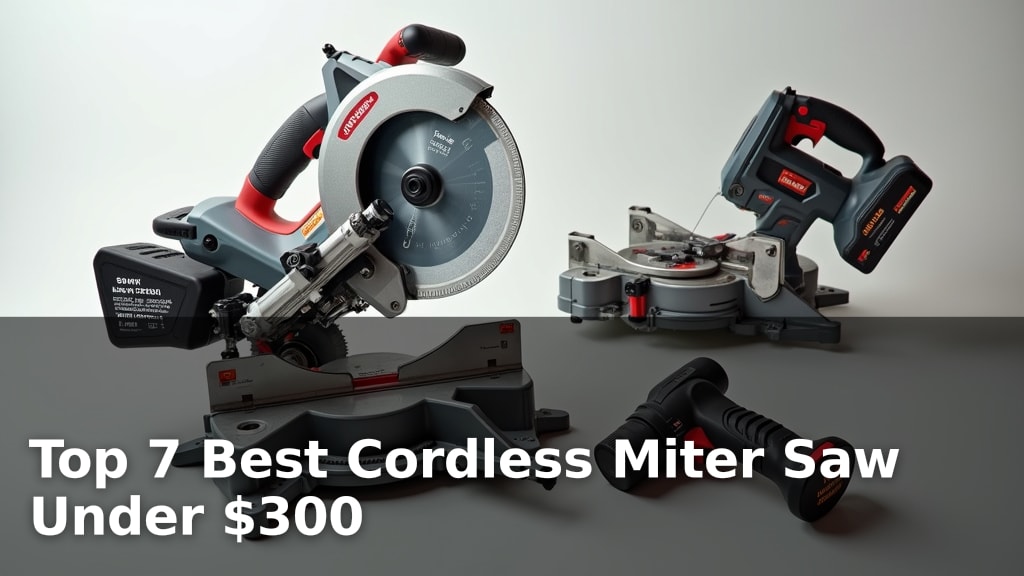
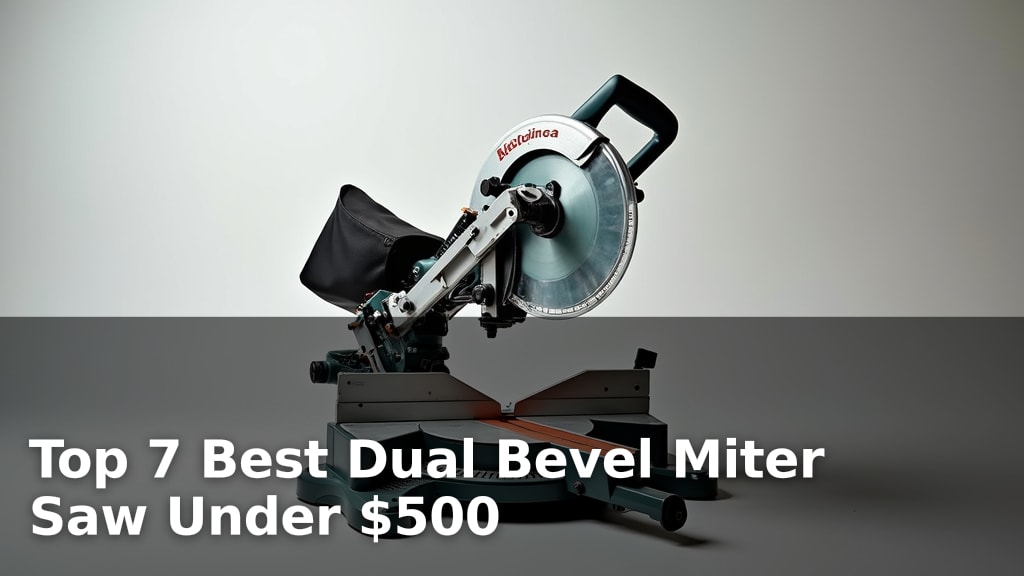
Do I Need A Compound Miter Saw?
You likely need a compound miter saw if your projects demand angled cuts in two directions simultaneously, like crown molding or picture frames.
This tool is essential for its ability to make both bevel and miter cuts, offering great versatility for many woodworking tasks.
Here’s a quick overview of why a compound miter saw might be your next favorite tool:
- It performs both miter and bevel cuts at the same time, saving you time and effort.
- Perfect for intricate trim work, crown molding, and precise framing where complex angles are common.
- Offers significantly more cutting flexibility than a standard miter saw, making it a smart upgrade for many.
- While powerful, consider your project types; simpler tasks might not require its full capability.
- Ultimately, it’s about matching the tool’s abilities to your specific project demands for the best results.
Do I Need A Compound Miter Saw?
A compound miter saw is a fantastic tool for many projects. If your work involves angled cuts on more than one plane, like crown molding, then yes, you absolutely need one.
What Exactly Is a Compound Miter Saw?
Imagine a saw that can tilt and swing. That’s essentially a compound miter saw. It lets you cut angles both horizontally (miter) and vertically (bevel) with impressive accuracy.
This dual-action cutting ability is what sets it apart. It’s like having two saws in one, ready for various cutting situations.
The Magic of Compound Cuts
A “compound cut” is where the saw blade tilts (bevel) and swings (miter) at the same time. Think of it as a diagonal slice through a corner.
This capability is what allows you to create perfectly fitting joints for things like crown molding, where the wood sits at an angle on both walls and ceiling.
Why Not Just a Basic Miter Saw?
A basic miter saw is great for cutting simple angles, often just across the width of a board. It handles crosscuts and straight miter cuts very well.
But a basic miter saw only pivots left or right. It cannot tilt its blade to make a bevel cut. This means it lacks the ability to make those complex compound angles many projects require.
Who Benefits Most from This Saw?
If you’re into carpentry, woodworking, or home renovation, this saw could be your best friend. Anyone who values precision in angled cuts will find it extremely useful.
We found that trim carpenters and DIY enthusiasts working on interior finishing often find this saw indispensable (Fine Homebuilding).
Common Projects Where It Shines
Picture framing is a classic example where a compound miter saw excels. You need those perfect 45-degree cuts on both planes for a clean corner.
Installing baseboards and crown molding is another prime area. The saw makes quick work of these angled pieces, ensuring a snug, professional fit.
Even for deck building or shed construction, where rafters and supports often need precise angles, a compound miter saw can speed up your work and boost accuracy.
Compound vs. Sliding Compound Miter Saw
A standard compound miter saw can cut compound angles, but its crosscut capacity is limited by the blade size. The blade doesn’t move forward or backward.
A sliding compound miter saw has rails, allowing the blade to slide. This dramatically increases its crosscut capacity, letting you cut wider boards while still making bevel and miter cuts.
Many experts say if you frequently cut boards wider than 6-8 inches, a sliding compound model might be a better choice (Wood Magazine).
Here’s a quick comparison to help you see the differences:
| Saw Type | Miter Cuts? | Bevel Cuts? | Crosscut Width | Best For |
|---|---|---|---|---|
| Basic Miter Saw | Yes | No | Narrow Boards | Simple Angled Cuts |
| Compound Miter Saw | Yes | Yes | Moderate Boards | Crown Molding, Trim |
| Sliding Compound Miter Saw | Yes | Yes | Wide Boards | Decking, Flooring, Framing |
Key Features to Look For
When choosing a compound miter saw, consider blade size. 10-inch and 12-inch are common, with 12-inch offering a larger cutting capacity.
A laser guide can be incredibly helpful for precise cuts, showing you exactly where the blade will hit. Dust collection ports are also a boon for keeping your workspace clean.
We often look for models with easily adjustable detents. These allow you to quickly lock in common angles, making your work faster and more accurate.
What About Dual Compound Models?
Most compound miter saws are “single compound,” meaning the head tilts only one way (left or right). You often have to flip your workpiece for bevel cuts from the other side.
A “dual compound” miter saw allows the head to tilt both left and right. This saves time and effort, as you don’t need to reposition your material as often, offering even greater convenience.
When Might You NOT Need One?
If your projects are simple and only involve straight crosscuts or basic miters, a standard miter saw or even a circular saw might suffice. There’s no need to overspend on tools you won’t fully use.
Perhaps you’re only building simple shelves or making rough cuts for framing. In these cases, the added features and cost of a compound miter saw may not be necessary for your needs.
Is a Compound Miter Saw Right for You? A Checklist:
- Do your projects involve crown molding or baseboards?
- Are you often making cuts that need both a bevel and a miter angle?
- Do you seek high precision in your angled woodworking joints?
- Is your current saw limiting your ability to complete certain types of cuts?
- Are you looking for a tool that offers versatility for future projects?
Making Your Decision
Your project needs are the real decision-maker. If you tackle tasks that demand versatile angle cutting, a compound miter saw will significantly upgrade your capabilities.
Think about the types of materials you cut and the complexity of the angles. Investing in the right tool saves frustration and helps you achieve professional-looking results.
Conclusion
A compound miter saw is a powerful addition to any workshop, especially if you handle projects requiring precise, simultaneous miter and bevel cuts. From intricate trim work to framing, its ability to cut complex angles makes it a highly valuable and versatile tool.
While a basic miter saw handles simple cuts, the compound miter saw steps up your game for more detailed work. Consider your project scope and if you often find yourself needing those dual-plane angles. If so, a compound miter saw is not just a want, but often a genuine need for achieving superior craftsmanship.
Can a compound miter saw cut a 4×4?
Yes, most 10-inch and 12-inch compound miter saws can cut a standard 4×4. A 10-inch blade often cuts up to about 3 inches, while a 12-inch blade can cut up to 3.5-4 inches, allowing it to go through a 4×4 in a single pass.
What is the difference between a single and dual compound miter saw?
A single compound miter saw bevels only in one direction (usually left), meaning you might need to flip your workpiece for opposite bevels. A dual compound miter saw bevels both left and right, offering more convenience and often speeding up repetitive tasks by reducing material repositioning.
Is a compound miter saw good for beginners?
Yes, a compound miter saw is suitable for beginners. While it offers more functions than a basic miter saw, its operations are generally intuitive. Many models have safety features and clear guides, making them manageable for those new to woodworking, especially with proper instruction.
What is the most important feature on a miter saw?
Many experts agree that blade quality and accurate, easy-to-read miter and bevel scales are among the most important features. A sharp, high-quality blade ensures clean cuts, while precise scales are essential for setting exact angles without guesswork, leading to better project outcomes.
How do I know what size miter saw blade I need?
The blade size you need depends on the material you plan to cut and its thickness. Common sizes are 10-inch and 12-inch. A 10-inch blade is generally good for most trim and smaller lumber, while a 12-inch blade offers greater cutting depth and crosscut capacity for larger materials like wide decking or framing lumber.