Fixed Base vs Trim Router: Which Size Do You Need? (November 2026)
Pick a full-size fixed base router for power and table-mounted work, and a trim router for light edge work and one-handed control. A fixed base vs trim router choice comes down to how much wood you cut at once and how long you hold the tool.
On this page (12 sections)
- Fixed base vs trim router: the quick verdict
- Fixed base vs trim router side by side
- Power and motor size: fixed base vs trim router
- Weight and handling for long jobs
- Speed control and finish quality
- Fixed base, plunge base and table use
- Corded vs cordless trim routers
- Included parts and ready-to-use kits
- Dust, visibility and shop setup
- Safety, care and setup basics
- Who should buy which size
- Fixed base vs trim router: final choice
Pick a full-size fixed base router for power and table-mounted work, and a trim router for light edge work and one-handed control. The fixed base vs trim router decision comes down to how much wood you cut at once and how long you hold the tool.
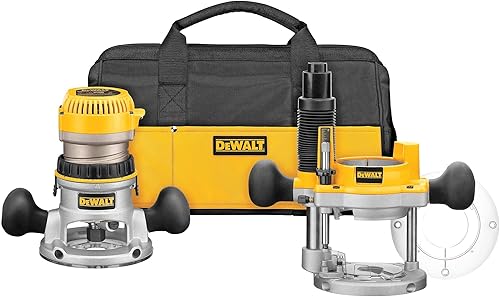
The DEWALT Router in this comparison is a 2-1/4 HP full-size kit. The other two routers are compact 1.25 HP and 1.5 HP models built for trimming and light shaping.
We compared the specs, weights and included parts for each model. Our score weighs specs, features and buyer feedback against what you are shopping for.

Fixed base vs trim router: the quick verdict
A full-size router wins on power and versatility; a trim router wins on weight and close control. The DEWALT is the only full-size option here, with a 12-amp, 2-1/4 HP motor.
The AVID POWER compact weighs 4.4 lb and runs at 1.25 HP. The FLEX trim router runs at 1.5 max HP and weighs 6 lb as a tool.
Size in this comparison is not just height. It is also motor size, base diameter, collet size and how much material the bit can clear in one pass.
A trim router with a 1/4 in collet suits small bits and shallow cuts. A full-size router with 1/4 in and 1/2 in collets suits larger bits and deeper cuts.
Our guide to wood routers for woodworking covers the full range. Use it to see where these 2 sizes sit before you narrow the choice.
Fixed base vs trim router side by side
The table below shows the core gaps in power, weight and speed. Read it by the work you do most, not by the highest number alone.
| Model | Type | Power | Speed | Weight |
|---|---|---|---|---|
| DEWALT Router | Full-size, fixed and plunge | 2-1/4 HP, 12 amp | 8,000-24,000 rpm | 10.1 lb |
| AVID POWER 6.5 Amp 1.25 HP Compact | Compact fixed base | 1.25 HP, 6.5 amp | 10,000-32,000 rpm | 4.4 lb |
| FLEX 24V Brushless Cordless 1.5 HP Trim | Trim router | 1.5 max HP | 16,000-31,000 rpm | 6 lb |
| WEN Mobile Base | Mobile base, not a router | 500 lb capacity | Not applicable | 15.5 lb |
The DEWALT has about twice the horsepower of the AVID POWER. That gap shows up in deep hardwood cuts and large bits.
The FLEX has more power than the AVID POWER on paper. It also has no cord, which changes where you can use it.
For battery-powered options, compare cordless trim routers.
The WEN is included as a shop aid for moving a router table or machine. It does not cut wood.
Power and motor size: fixed base vs trim router
Choose a full-size motor when you cut deep, wide or in hardwood. The DEWALT 12-amp motor is rated at 2-1/4 HP maximum.
DEWALT says the motor provides power to rout through the toughest hardwoods. That claim matters most when you take a deep pass with a large bit.
The AVID POWER is rated at 1.25 HP from a 6.5-amp motor. It suits shaping hard oak table edges and trimming soft pine shelves, according to the maker.
The FLEX is rated at 1.5 max HP with a brushless motor. Brushless motors use less friction, which helps efficiency under load.
Horsepower alone does not tell the whole story. Bit diameter, cut depth and feed rate also load the motor.
What power means in daily use
A 2-1/4 HP router can drive a 1/2 in collet bit through stock with less slowdown. A compact router will need lighter passes.
Hardwood punishes weak motors with burning and chatter. Light passes prevent that, but they take more time.
Softwood and laminates are kinder. A trim router handles them well at higher speeds.
If your work is mostly edge profiles on boards, a trim router has enough power. If you cut panels and joinery, go full size.
Weight and handling for long jobs
Weight matters more than power for overhead and edge work. The AVID POWER weighs 4.4 lb, compared with 10.1 lb for the DEWALT kit.
You will feel that gap after 10 minutes of trimming. A lighter router is easier to keep on a line and easier to start and stop.
The FLEX weighs 6 lb as a tool. Add a battery and it becomes heavier than the AVID POWER by a clear margin.
A full-size router is not meant to be held overhead for long. It shines on a table or on flat work where the base can sit firmly.
A full-size router lift can make above-table height changes easier.
Control with one hand
A trim router fits in one hand for many tasks. That helps on curves, small parts and inside cabinets.
The AVID POWER has a rubber-covered handle for grip. The FLEX has a compact body for similar work.
A 2-1/4 HP router needs 2 hands for most cuts. That is fine on a table, but it limits reach in tight spots.
Our picks for the best small wood router focus on this kind of control. They suit readers who value reach over raw power.
Speed control and finish quality
Variable speed helps you match the bit to the material. The DEWALT ranges from 8,000 to 24,000 rpm with electronic feedback.
Feedback control holds speed under load. That keeps the finish even when the bit bites.
The AVID POWER ranges from 10,000 to 32,000 rpm in 6 speeds. Lower settings help prevent burning in hardwoods, according to the maker.
The FLEX has 6 settings from 16,000 to 31,000 rpm. Its top speed is close to the AVID POWER, but the low end is higher.
Soft start and safe starts
The DEWALT has soft start to reduce start-up torque. That helps control on the first bite.
The AVID POWER has dual LED lights that shine on the cutting path. Better light helps you follow layout lines.
The FLEX has a patent-pending Spindle Stop shaft lock. It helps prevent inadvertent startups during bit changes.
Speed is not a contest for the highest number. Small bits need high speed, and large bits need lower speed for safety.
Fixed base, plunge base and table use
A fixed base router locks at one depth; a plunge base moves up and down. Compare compact routers and plunge routers before choosing a base.
The DEWALT kit includes both bases.
The fixed base suits table mounting and repeatable depth settings. For Bosch users, see the Bosch router table guide.
The plunge base suits starting cuts in the middle of a board.
The AVID POWER and FLEX are fixed base only. You set the depth, lock it, and move the whole router.
For table use, a full-size motor is the standard choice. It has the power and base stability for production work.
Depth adjustment and locks
The DEWALT has a micro-fine ring in 1/64 in increments. The FLEX adjusts to 1/64 in with quick-release collars.
The AVID POWER uses a rack-and-pinion system with a quick lock. That system lets you dial in depth and lock it tight.
A tool-free lock speeds base changes. The DEWALT has an adjustable steel motor cam lock for that purpose.
If you change bits often, test the lock first. A lock that slips ruins depth accuracy on every pass.
Corded vs cordless trim routers
Corded wins for steady shop power; cordless wins for reach. The DEWALT and AVID POWER are corded electric models.
A cord limits you to outlet range. It also removes battery cost and runtime worries.
The FLEX is battery powered at 24 volts. It is sold as a tool only, with no battery or charger included.
FLEX says an average runtime of 275 feet per charge with a 5.0Ah battery, tested on red oak with a 3/8 in roundover bit. That figure helps you plan, but your runtime will vary by bit and wood.
Where cordless helps
Cordless helps on stairs, job sites and inside built-in cabinets. You can move without dragging a cord across the floor.
Cordless also helps for short jobs. You can grab the tool and trim a door without setting up a shop cord.
For all-day production, corded is simpler. You never stop to charge a battery mid-job.
If you already own FLEX 24V batteries, the added cost is lower. If not, add battery and charger costs to the price.
Included parts and ready-to-use kits
Included parts can decide value more than the motor. The AVID POWER includes 5 bits, an edge guide and a roller guide.
It also includes 1/4 in and 3/8 in collets, spare carbon brushes and wrenches. You can start most trim jobs from the box.
The DEWALT includes 1/4 in and 1/2 in collets, a wrench, a large hole sub-base, a vacuum adapter and a soft carry bag. It includes fixed and plunge bases.
The FLEX is tool only. You supply the battery, charger and bits.
What to check in the box
Check collet sizes before you buy bits. A 1/2 in collet opens more bit choices than a 1/4 in only setup.
Check guides for straight and curved work. An edge guide helps with straight cuts, and a roller guide helps with curves.
Check dust control for shop cleanliness. The DEWALT plunge base collects 95% of dust through integral collection, according to the maker.
The AVID POWER includes a dust hood for a standard shop vac.
A good kit reduces first-trip cost. A bare tool can cost more once you add bits and guides.
Dust, visibility and shop setup
Dust control helps you see the bit and keep the shop clean. The DEWALT has through-the-column dust collection on the plunge base.
The AVID POWER has a dust hood that hooks to a standard shop vac. A cleaner cut area means better bit visibility.
The FLEX does not list a dust hood in its included parts. You would need to add your own dust control for shop use.
Visibility matters on layout lines. The AVID POWER dual LED lights help in dim cabinets and under counters.
Moving a router table
Shop setup matters when you use a table. A mobile base lets you roll a table to the work and lock it in place.
The WEN Mobile Base has a 500-pound capacity. It fits square bases from 11.8 x 11.8 in to 35.4 x 35.4 in, and rectangular bases up to 51.2 x 19.7 in.
It has 2 fixed casters, 2 swivel casters and 2 foot-locking brakes. That setup lets you move a machine, then lock it during use.
Safety, care and setup basics
Use the right bit size, secure the workpiece and follow the manual for each model. Safety rules apply to both sizes.
Wear eye and hearing protection. Routers are loud and throw chips at speed.
Check that the bit is fully seated and the collet is tight before each use. A loose bit can loosen further during a cut.
Set speed before you start. Large bits need lower speeds, and small bits need higher speeds for a clean finish.
Care that keeps depth accurate
Clean the base and motor vents after use. Dust buildup can affect locks and depth rings.
Check carbon brushes on corded motors over time. The AVID POWER includes spare brushes for that purpose.
Store bits separately from the router. That protects edges and keeps collets clean.
Learn the ryobi trim router how to use guide for a step-by-step setup routine. It covers bit changes, depth setting and safe starts that apply across brands.
Who should buy which size
Buy full size for production and hardwood; buy trim size for light, frequent edge work. Your main projects should decide.
Choose the DEWALT if you cut panels, make joinery or mount the router in a table. Its 2-1/4 HP motor and 1/2 in collet suit that work.
Choose the AVID POWER if you want a light corded compact with bits and guides in the box. It suits trimming shelves, shaping edges and cutting grooves.
Choose the FLEX if you already use FLEX 24V batteries or work away from outlets. Its 1.5 max HP brushless motor suits trim work on site.
A note on compact vs trim
Trim router and compact router are close terms, but they are not identical. Our trim router vs compact router guide explains the overlap.
That distinction helps if you shop by category name. Some sellers use compact for light fixed base routers.
If you want variable speed in a trim size, see the best variable speed trim router picks. They focus on speed range and control for finish work.
Fixed base vs trim router: final choice
Pick the DEWALT for heavy cuts and table work, the AVID POWER for light corded trimming, and the FLEX for cordless trim work. The fixed base vs trim router choice should match your main material and work location.
If you can own only one router and do mixed work, a full-size kit covers more ground. It will trim edges, but it will feel heavy for that task.
If your work is mostly trimming, a compact router will get more use. Ease of use often beats power you rarely need.
Use the best variable speed trim router list to compare speed options before you buy. Then match collet size and included guides to your bit set.
Frequently asked questions
Is a fixed base router better than a trim router?
A fixed base router is better for heavy cuts, larger bits and table use because it has more power and a stable base. A trim router is better for light edge work because it is lighter and easier to guide by hand.
Match the size to the cut depth and material.
Can a trim router replace a full-size router?
A trim router can replace a full-size router for laminate trimming, small roundovers and hinge mortises. It cannot match a 2-1/4 HP router for deep cuts in hardwood or large raised panels.
Many shops keep both sizes and switch by job.
What speed should I use on a trim router?
Use lower speeds for large bits and hardwoods to reduce burning, and higher speeds for small bits and softwoods for a cleaner finish. The AVID POWER ranges from 10,000 to 32,000 rpm, while the FLEX ranges from 16,000 to 31,000 rpm.
Start low and raise speed if the finish looks rough.
Should I buy a corded or cordless trim router?
Buy corded for steady shop power and no battery cost, and cordless for work away from an outlet. The FLEX is battery powered and sold without a battery and charger, so add that cost.
Corded models run all day from a wall outlet in a fixed shop.


