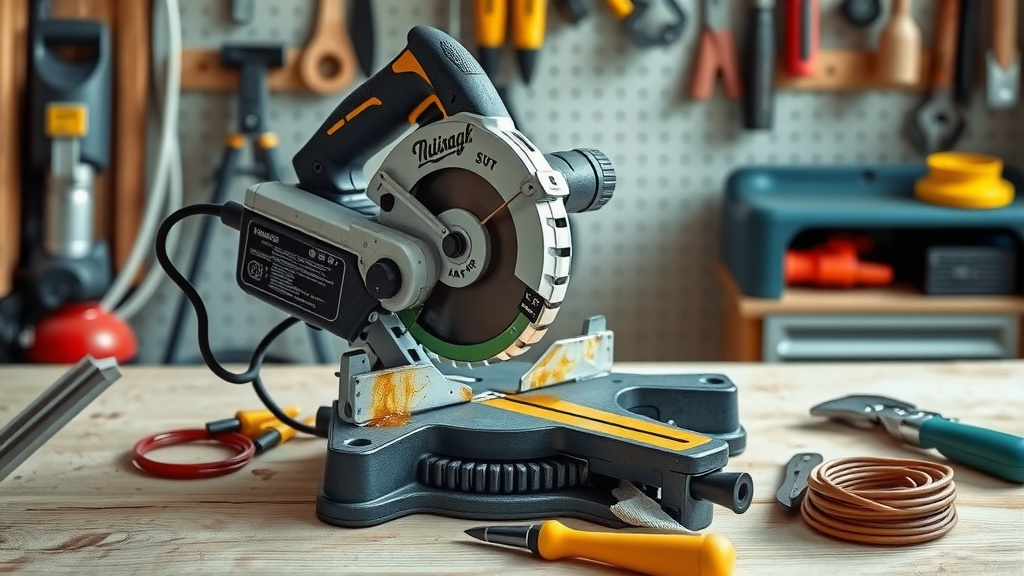
How to Store a Miter Saw Outside
How to store a cross mitre saw outside means keeping it under a drip-free shelter, off wet ground, and protected from rain, dew, and dust. Clean and dry the saw before storage, cover it with a breathable waterproof cover, and check the blade and metal parts for rust after damp weather.
On this page (9 sections)
- Can you store a cross mitre saw outside safely?
- How to store a cross mitre saw outside step by step
- What kind of cover works best outside?
- How do you protect the blade from rust and dull spots?
- How do you stop dew and condensation under the cover
- What should you check after rain or heavy dew
- Which accessories should you store indoors instead
- How long can a saw stay outside before rust becomes a problem
- What is the safest final routine for outdoor storage
Here is how to store a cross mitre saw outside: clean it, dry it, put it on a raised dry surface under shelter, and cover it with a breathable waterproof cover. Those steps block direct rain, reduce dew, and keep the blade, fence, and pivot parts from sitting damp.
Outdoor storage is a compromise, not a full substitute for a dry garage or shed. A covered patio or lean-to can work for active work, while long gaps between jobs call for indoor storage.
Can you store a cross mitre saw outside safely?
Yes, but only under shelter and with a cover, not out in open weather. A roof or lean-to stops rain hitting the saw directly and slows temperature swings.
A tarp alone is not enough. It can trap humid air, hold water in folds, and leave the base exposed to splash and ground moisture.
You also need a raised stand or platform. Concrete, soil, and wet deck boards wick moisture upward and keep the saw damp long after rain ends.
If the saw must sit outside for a work stretch, plan weekly checks. Wipe off dew, look for rust, and make sure the cover drains instead of pooling water.
Our guide on where to store miter saw helps you compare indoor and outdoor spots before you commit to a place.
How to store a cross mitre saw outside step by step
Clean, dry, oil exposed metal lightly, cover, raise the saw, and check often. A cover over a dirty or damp saw locks in the problem.
Unplug the saw and remove the battery if fitted. Brush and vacuum the table, fence, blade guard, and base.
If the guard spring needs attention, see Ryobi miter saw guard spring replacement. Wipe all metal dry.
For dull spots or early rust, our guide to how to clean a miter saw gives a safe routine. Apply light oil to exposed metal and moving pivots, as shown in how to oil a miter saw.
Set the saw on a firm stand a few inches up. Drape a breathable waterproof cover over the top, leaving a small gap on dry days.
What should you do before you cover the saw
Remove loose sawdust, dry the table and fence, and check the blade for moisture. Sawdust holds water against metal and can pack into the guard and pivot joints.
Empty the dust bag or chute. Sawdust left in the bag can hold moisture and hide dampness inside the collection path.
Store loose blades and accessories separately in a dry box. That keeps spare teeth, stops, and small parts away from rain and ground splash.
What kind of cover works best outside?
A breathable waterproof saw cover works best for outdoor storage. It sheds rain while letting humid air escape, which lowers condensation under the cover.
Look for a fitted shape, reinforced corners, and a drain friendly top. A boxy cover that tents over the saw sheds water better than a flat sheet.
A heavy tarp can work for short jobs if you raise the saw and anchor the tarp above it. Still open it on dry days so the saw can air out.
Never seal the saw in plastic and leave it outside. Plastic creates a greenhouse effect in sun and a condensation trap at night.
For general indoor and covered options, compare them with how to store miter saw to see how outdoor choices fit the full routine.
How do you protect the blade from rust and dull spots?
Store the blade dry, coated lightly, and away from direct wetting. Rust and pitch make cuts rougher.
If the saw will sit unused, remove the blade and keep it indoors. Wrap it in dry cloth or a blade guard and place it flat in a dry box.
If the blade must stay on the saw, wipe it clean and dry, then apply a light protective coating. Turn the blade by hand to reach all teeth, and check for rust at the rim and bore.
Keep the blade guard closed over the teeth. The guard limits splashes and reduces accidental contact.
For aluminium work, also read why aluminium chips damage standard mitre saws so you do not store a blade loaded with chips and swarf.
Which spare blade setup helps outdoor storage
A two-blade set helps because you can swap a damp or dull blade for a clean one. That matters on outdoor jobs where humidity, pitch, and fine dust build up faster.
The DEWALT 12-Inch Miter Saw Blade set includes one 80-tooth blade and one 32-tooth blade for crosscutting. DEWALT says the blades suit hardwood, softwood, plywood, and chipboard, and the pair gives you a fine finish option and a faster rough option.
Choose the 80-tooth blade for trim and visible crosscuts. Choose the 32-tooth blade for faster breakdown work where a rougher edge is fine.
Store the spare indoors in dry packaging. Do not leave a spare blade in the same damp cover as the saw, or you lose the benefit of having a clean option.
How do you stop dew and condensation under the cover
Airflow is the main defense against dew and condensation. A cover blocks rain, but only moving air removes the damp layer that forms on cold metal at night.
Raise the saw off the ground and keep space around it. Tight contact with a wet wall, hedge, or stack of lumber slows drying after a foggy morning.
Open one side of the cover when the weather is dry and calm. Even a small gap lets humid air escape without inviting rain inside.
Use desiccant packs inside a dry storage box for small parts, not as a fix for a wet saw. They help with accessories, but they cannot dry a full miter saw.
On cold mornings, wipe condensation off before you start work. A damp blade can throw moisture and pitch onto fresh cuts, and damp joints can stick the next day.
What should you check after rain or heavy dew
Check the blade, fence, table, pivot, and cover seams after every wet spell. Early action stops surface rust before it becomes pitting or a stiff joint.
Dry the table and fence with a clean cloth. Turn the blade slowly and check the teeth, rim, and bore for rust.
Move the saw head through its range if safe to do so. Stiffness at the pivot often means water has reached the joint and needs drying and light oil.
If the Kobalt lock handle still sticks, see Kobalt miter saw lock handle repair. For related checks, see stuck miter saw turntable.
Shake out the cover and check for pooled water. Dry it fully before replacing it, as a damp cover can rewet clean metal.
If rust has started, clean it gently and dry the area. Our how to clean a miter saw guide covers the safe order and tools.
Which accessories should you store indoors instead
Store blades, crown stops, and small setup parts indoors when you can. Accessories are easy to lose, easy to rust, and hard to replace in the middle of a job.
Crown stops are a good example. They sit against the fence and guide crown molding, so dampness or a bent edge can ruin accurate positioning.
The DEWALT Miter Saw Crown Stops set includes two stops for vertical crown molding positioning against the fence. DEWALT lists them for DW703, DW706, DW708, DW712, DW715, DW716, DW717, DW718, and DWS780 models, and the steel construction suits repeated fence contact.
Use these stops when your saw model matches the listed DEWALT models. Keep them in a dry box with the manual and any fence parts you remove for transport.
A 7-1/4 inch finish blade is another item to keep dry and separate. The Freud Diablo Finish Saw Blade has 40 ATB teeth, a 5/8 inch arbor, TiCo Hi-Density carbide teeth, and Perma-SHIELD coating that Freud says protects against heat, gumming, and corrosion.
Freud says this blade suits smooth crosscuts in hardwood, softwood, and plywood. Keep it in dry packaging until use, even though the coating helps resist gumming and corrosion.
How long can a saw stay outside before rust becomes a problem
A saw can sit outside for days under shelter, but weeks of damp storage raise rust risk fast. Timing depends on rain, dew, shade, airflow, and how well you dry and oil the saw before covering it.
Sites with daily fog, coastal air, or ground splash need more frequent checks. A dry, breezy lean-to is safer than a shaded corner that stays wet.
Use our guide to mitre saw how much expected life when you weigh repair costs against moving the saw indoors. Moisture can shorten the life of the blade, fence, and pivot parts before the motor fails.
If you must store outside for a season, remove the blade and store it indoors. Cover the saw with a breathable cover and check it at least monthly, and after every major storm.
What is the safest final routine for outdoor storage
Clean and dry the saw, protect metal lightly, raise it under shelter, cover it with a breathable cover, and inspect it after damp weather. That routine is simple enough to repeat after every job.
Pick a spot with a solid drip free roof and open sides for airflow. Keep the saw off the ground, away from sprinklers, downspouts, and splash zones.
Keep spare blades and crown stops indoors in dry boxes. That protects the parts you need for accurate cuts and keeps them ready when the saw comes back inside.
Use a DEWALT 12-Inch Miter Saw Blade spare for a clean blade ready to swap in. Use DEWALT Miter Saw Crown Stops if crown work is part of your job and your saw model matches, and use the Freud Diablo Finish Saw Blade for portable saw work.
Put the saw back indoors when the job pauses.
Frequently asked questions
Can a miter saw stay outside under a cover?
Yes, short term, if it sits under a solid roof or lean-to, stays off the ground, and gets a breathable waterproof cover. Dry it before covering, open the cover on dry days for airflow, and inspect the blade, fence, and pivot parts for dampness or rust after rain.
What is the biggest risk when storing a saw outside?
Moisture is the biggest risk because it can dull cutting performance, stain the blade, seize moving parts, and shorten the saw's life. Dew and trapped condensation cause damage even without direct rain, so airflow and dry storage matter as much as a cover.
Should I remove the blade before outside storage?
Removing the blade for separate dry storage is safer when the saw will sit unused for weeks. Wrap the blade in dry cloth or cardboard, store it indoors, and refit it only after checking the arbor, guard, and mounting parts for rust or debris.
How often should I check a saw stored outside?
Check it after heavy rain, after several dewy mornings, and at least monthly during long storage. Wipe condensation away, look for rust spots, confirm the cover has not trapped water, and run the saw briefly only after it is fully dry and safe to use.