
How To Store Miter Saw In Garage?
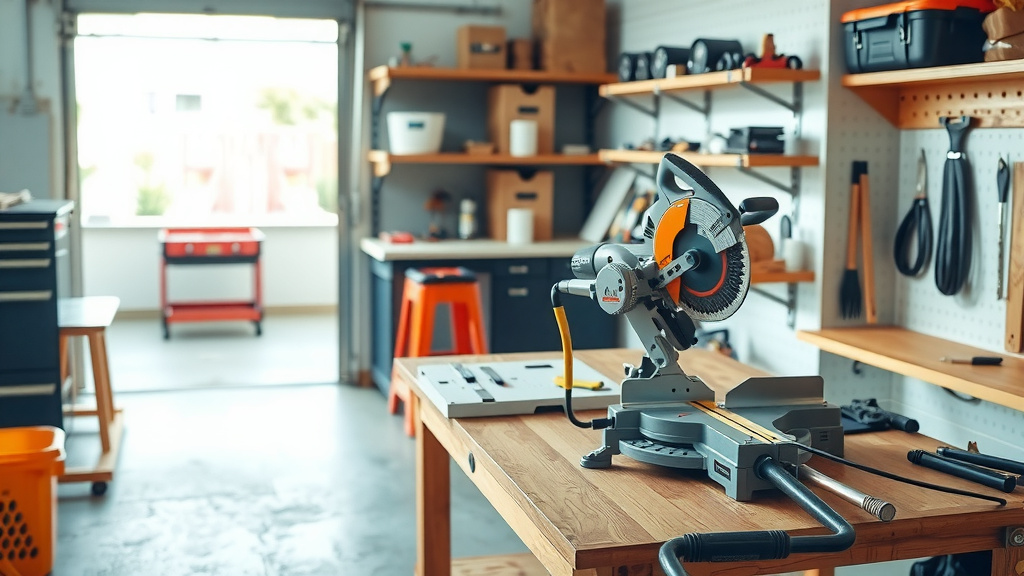
Storing your miter saw in the garage requires careful consideration of space, protection, and accessibility. You should keep it clean, unplugged, and secured from moisture and dust to maintain its condition.
To properly store a miter saw in a garage, prioritize a dry, stable location, ideally on a dedicated stand, shelf, or wall mount, protecting it from environmental damage and ensuring easy, safe access.
Here’s a quick summary to help you store your miter saw effectively:
- Choose a dry and stable location away from direct moisture.
- Clean the saw thoroughly and disconnect power before storing.
- Consider a mobile stand for flexibility or a wall mount for space-saving.
- Protect the saw from dust and humidity with covers or sealed cabinets.
- Ensure the storage method allows for easy and safe access when needed.
How To Store Miter Saw In Garage?
Storing a miter saw in your garage can seem simple, but doing it correctly makes all the difference. You want to protect your investment and keep it ready for your next project. We found that the best approach balances safety, accessibility, and space-saving solutions.
Many homeowners wrestle with garage organization. Finding a proper home for your miter saw means thinking about more than just finding an empty spot. It’s about preserving the tool’s accuracy and ensuring your workspace stays safe.
Why Proper Storage Matters for Your Miter Saw
Your miter saw is a powerful, precise tool. Leaving it exposed or poorly stored can lead to many issues. Think of it like a fine instrument; it needs a good home to keep playing its best tunes.
Protecting Your Tool Investment
A miter saw is not a cheap item. Proper storage shields it from bumps, drops, and environmental damage. This protection helps extend its working life and keeps its calibration true, which is something every woodworker appreciates.
We found that saws left uncovered often accumulate dust, which can clog moving parts. Humidity can cause rust on metal components. Regular maintenance and proper storage go hand-in-hand to keep your saw running smoothly for years.
Ensuring Workplace Safety
An improperly stored saw can be a trip hazard or worse. Imagine tripping over it in a dimly lit garage. Keeping it secure and out of the way is key for accident prevention. This applies especially if you share your garage with others or children.
OSHA guidelines always stress the importance of clear pathways in workshops. A saw stored safely prevents unexpected injuries. You want your garage to be a place for creation, not caution tape.
Preparing Your Miter Saw for Storage
Before tucking your miter saw away, a few simple steps can make a big impact. Think of it as putting your tools to bed properly. These actions ensure it stays in top shape while it rests.
A Quick Clean-Up
Dust and sawdust are the enemies of precision tools. Use a shop vacuum or compressed air to remove debris from the motor vents and blade area. Make sure to clean the table and fence as well. This prevents build-up from hardening or causing issues later.
A small brush can help dislodge stubborn bits. A light wipe-down with a clean cloth also helps. This simple cleaning routine only takes a few minutes but saves hours of future problems.
Disconnecting Power is Important
Always unplug your miter saw before cleaning or storing it. This is a fundamental safety practice. You want to make sure the saw cannot accidentally start up, protecting you and anyone else who might handle it. Safety always comes first when working with power tools.
Maximizing Your Garage Space
Garages often become catch-all spaces. Finding a storage solution that works for your miter saw without sacrificing too much room is a common goal. Let’s look at some popular options that save space and keep your saw safe.
Mobile Miter Saw Stands
A mobile miter saw stand offers excellent flexibility. You can roll your saw out when needed and then tuck it away into a corner or against a wall. Many stands also fold up, further reducing their footprint. This option is perfect if you often need to move your saw or if your workspace changes frequently. It provides a stable work surface too.
Wall-Mounted Solutions
Getting tools off the floor is a classic garage organization strategy. Wall-mounted shelves or custom brackets for your miter saw can free up significant floor space. You can often build a simple shelf from plywood or 2x4s to suit your saw’s dimensions. Just be sure the wall can support the weight securely. Research often connects vertical storage with maximizing usable space (home improvement guides).
Here are some items you might need for a basic wall-mounted shelf:
- Strong wooden boards (plywood or dimensional lumber)
- Heavy-duty L-brackets or shelf supports
- Drill and appropriate bits
- Stud finder for secure mounting
- Level to ensure a straight shelf
- Appropriate screws or lag bolts
Building a Simple Shelf
A custom-built shelf ensures a snug fit for your specific saw. Measure your miter saw’s dimensions, including any clearance needed for the fence or motor. Construct a shelf that’s robust enough to hold the weight. Always attach it to wall studs, not just drywall, for maximum stability and safety. This DIY approach allows for a truly personalized storage spot.
Cabinet or Enclosed Storage
For the ultimate protection, a dedicated cabinet or enclosed workbench offers a fantastic solution. This keeps your miter saw completely shielded from dust, humidity, and accidental bumps. You can build a custom cabinet or adapt an existing one. This method provides a clean, organized look and superior protection, although it might take up more space initially.
Essential Storage Considerations
Beyond where you put it, how you protect your miter saw is vital. Thinking about the garage environment helps you choose the right storage strategy. You want to create a mini-climate for your saw.
Environment Control
Garages are often exposed to more temperature and humidity swings than other parts of your home. These environmental factors can be tough on precision tools. Protecting your saw means acknowledging these challenges. Controlling the immediate environment around your saw helps greatly.
Humidity and Dust Protection
Humidity is a leading cause of rust on metal parts. If your garage is prone to dampness, consider a dehumidifier or place your saw in an airtight container or cabinet. A simple dust cover made from canvas or heavy plastic also goes a long way. This cover acts as a shield against both dust and minor moisture, keeping surfaces pristine.
Easy Access and Convenience
What’s the point of storing your saw if it’s a huge hassle to get it out? The best storage solutions balance protection with easy access. Think about how often you use your saw. If it’s daily, you want it readily available. If it’s occasional, a more secure, less accessible spot might work. Balance security with practicality.
Security Measures
For those with valuable tools, security is another concern. If your garage is easily accessible to others, consider a lockable cabinet or securing the saw to a workbench with chains. While not always necessary, this adds an extra layer of peace of mind. Protecting your saw from theft is as important as protecting it from damage.
A Quick Checklist Before Storing
Before you finally tuck your miter saw away, here’s a short checklist to ensure you haven’t missed anything. This helps make sure your saw is ready for its rest and for its next big job.
- Is the saw unplugged?
- Is it clean and free of sawdust?
- Are all blades securely locked or covered?
- Is it placed in a dry location?
- Is it protected from dust and potential impacts?
- Is it stable and unlikely to fall or tip over?
Conclusion
Storing your miter saw in the garage doesn’t have to be a complicated puzzle. By following a few key principles – safety, protection, and smart space use – you can give your valuable tool the home it deserves. Whether it’s a mobile stand, a sturdy shelf, or a sealed cabinet, the goal is to keep your saw accurate, clean, and ready for your next project. Invest a little time now for a lot of tool longevity later.
How do I protect my miter saw from rust in the garage?
To protect your miter saw from rust, the primary step is to control humidity. Store it in a dry area of your garage. Using a canvas dust cover, applying a light coat of machine oil to exposed metal surfaces (excluding the blade), or storing it inside a sealed plastic container or cabinet with desiccant packs can significantly help.
Can I store my miter saw outdoors under a cover?
Storing a miter saw outdoors, even under a cover, is generally not recommended. Outdoor conditions, including extreme temperature fluctuations, high humidity, and potential for rain or snow, can severely damage the tool’s electronics, motor, and metal components. A garage or shed offers far better protection.
What is the best way to store a large sliding miter saw?
For a large sliding miter saw, a dedicated mobile stand is often the best option. These stands provide a stable base for use and allow you to roll the heavy saw to a less-used area of the garage when not in operation. Alternatively, a heavy-duty workbench with custom-built cutouts for the saw can also work well, offering a permanent, stable spot.
How often should I clean my miter saw before storing it?
You should clean your miter saw after every significant use, especially if you’ve been cutting dusty materials. Before long-term storage (more than a few weeks), a thorough cleaning is essential. Regular cleaning prevents sawdust buildup from becoming caked on and harder to remove, keeping your saw in top working order.
Are there any specific covers recommended for miter saws?
Many tool manufacturers offer custom dust covers designed for their specific miter saw models. Alternatively, a generic heavy-duty canvas or thick plastic cover works well. The key is to find a cover that is breathable enough to prevent moisture trapping but tight enough to keep dust out. Some covers are also water-resistant for added protection.
