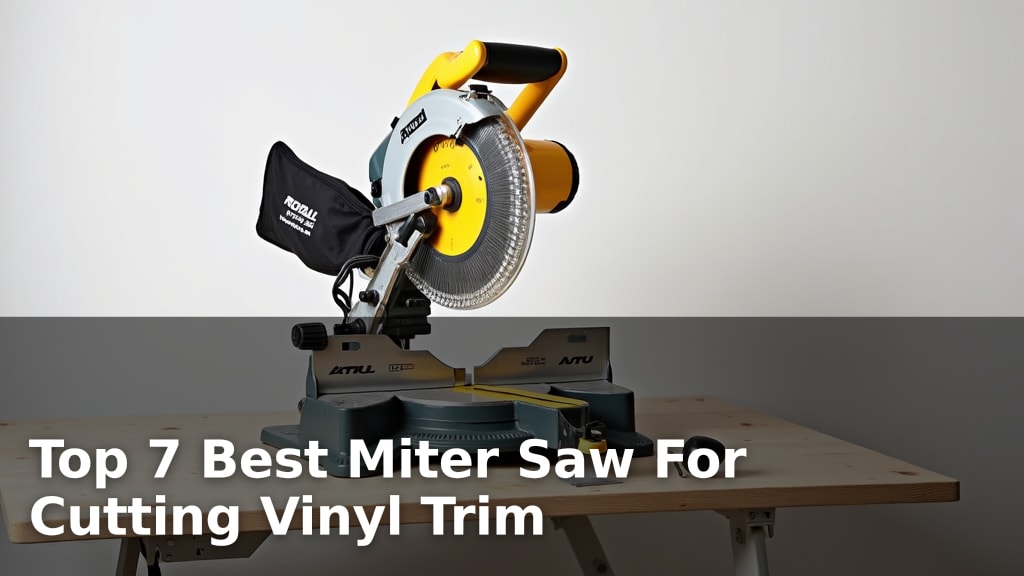
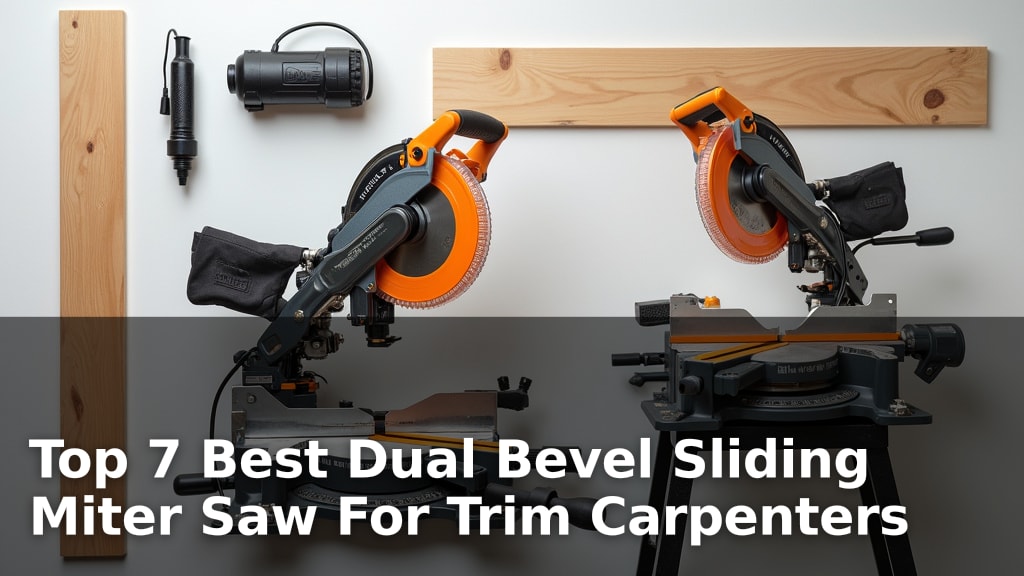
What Size Miter Saw To Cut 6 Inch Baseboard?
A 10-inch miter saw can generally cut a 6-inch baseboard when the board is laid flat on the saw’s table, utilizing its cross-cut capacity.
To successfully cut a 6-inch baseboard, you’ll specifically need a miter saw that offers at least a 6-inch cross-cut capacity, often found in 10-inch or larger sliding compound models.
- A 10-inch miter saw often handles 6-inch baseboards when laid flat.
- Compound miter saws offer bevel and miter cuts, essential for trim work.
- Measure your baseboard’s actual width to choose the right saw.
- Bigger saws (12-inch) offer more capacity for future larger projects.
- Always prioritize safety features and a stable setup for precise cuts.
What Size Miter Saw To Cut 6 Inch Baseboard?
To cut a 6-inch baseboard, a 10-inch miter saw is often suitable if you lay the baseboard flat on the saw table. This setup relies on the saw’s cross-cut capacity.
However, the key isn’t just the blade size, but how much board the blade can actually move through. This is called the saw’s cutting capacity.
Decoding Miter Saw Sizes and What They Mean
When you hear “10-inch miter saw,” it refers to the diameter of the blade it uses. But a larger blade doesn’t always mean it cuts wider material.
The design of the saw, especially if it’s a sliding model, plays a huge role in its capacity. It’s like asking about car speed; engine size is one thing, but the whole design matters.
Blade Size Isn’t Everything
A 10-inch blade is a common size, offering a good balance of power and precision. A 12-inch blade is larger, and generally gives you more potential cutting width.
Still, you need to check the saw’s specifications. Don’t assume a bigger blade always cuts wider. We found this often surprises new users (DIY Network).
Understanding Cross-Cut Capacity
This is the most important measurement for baseboards. Cross-cut capacity tells you the maximum width a board can be when laid flat on the saw table and cut straight across.
For a 6-inch baseboard, you need a saw with at least 6 inches of cross-cut capacity. Many 10-inch sliding miter saws easily meet this.
The 10-Inch Miter Saw: Your Baseboard Workhorse?
For most homeowners and DIY enthusiasts, a 10-inch miter saw is a fantastic all-around tool. It’s compact, powerful, and often more affordable.
Many experts say it is perfectly capable for common trim tasks. It handles most standard lumber sizes with ease.
Why it Often Handles 6-Inch Boards
A 10-inch sliding compound miter saw usually has a cross-cut capacity ranging from 10 to 12 inches. This range is more than enough for a 6-inch baseboard.
The sliding feature lets the blade move forward and back, increasing the effective cutting width. Without this slide, a 10-inch saw might struggle with a 6-inch board laid flat.
When the 10-Inch Might Fall Short
If you have a non-sliding 10-inch miter saw, its cross-cut capacity might be limited to around 5-6 inches. In this case, cutting a 6-inch board flat could be tight or impossible.
Also, if you plan to cut the baseboard vertically against the fence (which is ideal for intricate crown molding but not always needed for simple baseboard), a 10-inch saw might not offer enough vertical height for a full 6-inch board. Many experts agree it’s better to lay baseboards flat for simple cuts (Family Handyman).
Stepping Up to a 12-Inch Miter Saw
A 12-inch miter saw generally offers greater cutting capacity, both in width and sometimes height. This can be a real plus for larger projects.
It’s like having a bigger toolbox; you might not need every tool right now, but it’s nice to have options for the future.
The Benefits of Extra Capacity
A 12-inch sliding miter saw can often cut boards up to 14 or even 16 inches wide. This extra reach is great for very wide trim, decking, or shelving.
Many professionals choose 12-inch models for their versatility. They provide a bit more wiggle room and power, which can be helpful for tough materials.
| Feature | 10-Inch Miter Saw | 12-Inch Miter Saw |
|---|---|---|
| Common Cross-Cut (Sliding) | Up to 12 inches | Up to 16 inches |
| Blade Cost | Generally less expensive | Generally more expensive |
| Saw Size/Weight | More compact, lighter | Larger footprint, heavier |
| Power for Common Tasks | Excellent for most DIY | More robust, professional use |
| Ideal For | Baseboards, trim, small lumber | Wider baseboards, decking, framing |
Considering Future Projects
If you anticipate working with wider materials beyond 6-inch baseboards, a 12-inch saw could be a wise long-term investment. It prevents you from needing an upgrade later.
Think about what other projects are on your horizon. Will you build shelves, decks, or larger furniture? A 12-inch saw offers more future flexibility.
Choosing the Right Type of Miter Saw
Not all miter saws are created equal. Different types offer different capabilities that directly impact what size baseboard they can handle.
Understanding these types helps you make the best decision for your needs. It’s like knowing the difference between a sedan and an SUV.
Standard Compound Saws
These saws can make bevel and miter cuts, but the blade head doesn’t slide. Their cross-cut capacity is limited by the blade’s diameter. A 10-inch non-sliding saw might only cut about 5-6 inches wide.
For a 6-inch baseboard, you would likely need to “flip” the board to complete the cut if you have this type of saw. This method can reduce accuracy.
Sliding Compound Miter Saws
This is often the best choice for baseboards. The blade can slide forward and backward, drastically increasing the cross-cut capacity. Many 10-inch sliding saws can cut 10-12 inches wide.
For your 6-inch baseboard, a 10-inch sliding compound miter saw will comfortably make the cut in one pass. This gives you cleaner, more accurate results.
Dual Bevel Advantages
A dual bevel saw allows the blade to tilt both left and right. This saves you from having to flip your material for opposite angle cuts.
While not strictly necessary for simple baseboard cuts, it’s a convenience that speeds up repetitive tasks. Many users appreciate the time it saves on projects.
Preparing Your Baseboard for a Perfect Cut
Even with the perfect saw, poor preparation can ruin a cut. A few simple steps ensure your baseboard turns out exactly how you want it.
It’s like baking; the ingredients matter, but so does the technique.
Accurate Measurements Are Key
Always measure twice, cut once. This old saying holds true. Use a reliable tape measure and mark your cut lines clearly with a pencil.
Here’s a quick checklist before cutting:
- Verify your measurements against the wall.
- Mark the cut line clearly with a fine pencil.
- Indicate the “waste” side of the cut.
- Check for any obstructions on the baseboard.
- Ensure the board is clean and free of debris.
- Confirm your saw’s angle settings.
Supporting Long Materials
Long baseboard pieces need support on both sides of the saw. Otherwise, the board can sag, leading to inaccurate or angled cuts.
Many people use saw horses, roller stands, or even scrap lumber to create a stable, level surface. This is a simple step that makes a big difference (Tool Review Central).
Essential Safety Practices for Miter Saws
Miter saws are powerful tools and demand respect. Following safety guidelines is not optional; it’s a must for preventing accidents.
Always put your safety first. No cut is worth risking injury, and accidents happen fast.
Always Wear Protective Gear
Eye protection is non-negotiable. Sawdust and wood chips can fly unexpectedly. We found that most workshop accidents involve eye injuries (Safety First).
Also consider hearing protection, especially during extended use. And wear appropriate clothing; avoid anything baggy that could get caught in the blade. Make sure to keep your hands clear of the blade path.
Beyond the Saw: Blades and Setup
Your miter saw is only as good as the blade it’s using and the environment it’s in. The right accessories and setup contribute greatly to cut quality.
Don’t overlook these details; they can really elevate your woodworking projects.
Choosing the Right Blade Type
For fine trim like baseboards, you want a blade with a high tooth count, typically 60-80 teeth. This provides a clean, smooth cut with minimal tear-out.
Blades with fewer teeth (24-40) are better for rough cuts, like framing lumber. Many experts suggest using a dedicated finish blade for trim (Fine Woodworking).
Workspace Stability Matters
Ensure your miter saw is securely mounted to a stand or workbench. A wobbly saw can lead to inaccurate cuts and poses a safety risk.
A clear, well-lit workspace is also important. You need to see your marks clearly and operate the saw without obstacles or distractions.
Conclusion
To cut 6-inch baseboard, a 10-inch sliding compound miter saw is typically your most practical and effective option. Its sliding feature provides the necessary cross-cut capacity to handle the board width in a single pass.
While a 12-inch saw also works well and offers greater versatility for wider materials, it’s often more expensive and takes up more space. For most home projects, the 10-inch slider offers the perfect balance of capability and convenience, ensuring you get clean, precise cuts for your baseboards.
FAQ: Can a 7 1/4 inch miter saw cut 6 inch baseboard?
A 7 1/4 inch miter saw, even a sliding model, will likely struggle to cut a 6-inch baseboard in a single pass when laid flat. Its smaller blade diameter and typical cross-cut capacity (often around 8-9 inches for a slider, much less for a non-slider) mean you’d have to flip the board, which can reduce accuracy and be awkward for trim work.
FAQ: What is the maximum width a 10 inch miter saw can cut?
The maximum width a 10-inch miter saw can cut depends heavily on whether it’s a sliding model. A non-sliding 10-inch miter saw typically cuts around 5-6 inches wide. However, a 10-inch sliding compound miter saw can usually cut materials between 10 to 12 inches wide, making it suitable for many larger projects.
FAQ: Is a sliding miter saw necessary for baseboard?
For most standard baseboard widths (up to about 4-5 inches), a non-sliding compound miter saw can work. However, for wider baseboards like 6 inches or more, a sliding miter saw becomes almost necessary. It allows you to cut the full width in one smooth, accurate pass without having to flip the material.
FAQ: How do I cut wide baseboard vertically?
Cutting baseboard vertically against the fence requires the saw to have enough vertical cutting capacity, which is often limited. To cut a wide baseboard vertically, you would place it against the saw’s fence as if it were standing up against a wall. Many 6-inch baseboards are too tall for smaller miter saws to cut vertically. Lying the baseboard flat is usually the easier and more common method.
FAQ: What’s the difference between a single and dual bevel miter saw?
A single bevel miter saw can only tilt its blade in one direction (usually to the left) to make angled bevel cuts. For a right-hand bevel cut, you would need to flip your workpiece. A dual bevel miter saw, on the other hand, can tilt its blade both left and right. This saves time and effort, as you don’t have to reposition the material for opposite angle cuts, making it more convenient for complex trim work.