
Do You Need Both a Table Saw and a Miter Saw?
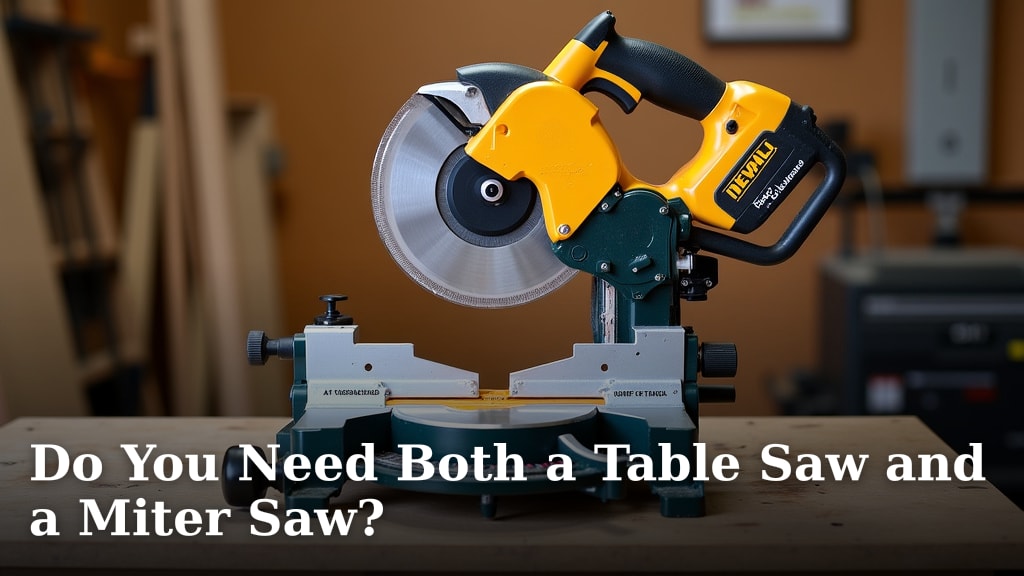
No, you typically do not need both a table saw and a miter saw for every project. Many woodworkers get by with just one. Your choice depends heavily on the types of cuts you make most often and the projects you tackle.
Most beginners will find one or the other sufficient. We found that dedicated hobbyists often add the second saw later. It really comes down to the primary function of each tool and your workshop needs.
- The core differences between table saws and miter saws.
- Which saw is best for crosscuts and rip cuts.
- When a table saw shines for wider materials.
- Why a miter saw excels at precise angle cuts.
- How to decide which tool to buy first.
Let’s walk through the exact functions of each saw. This will help you decide which one best fits your woodworking goals.
Understanding the Core Differences Between Table Saws and Miter Saws
Okay, let’s get down to brass tacks. What exactly do these saws do? Think of them as specialized tools, each with its own superpower. We found that understanding their primary function is key to making your choice.
What is a Table Saw Primarily Used For?
Imagine pushing wood through a stationary blade that comes up from the table. That’s a table saw. Its main purpose is making long, straight cuts along the length of a board. These are called rip cuts.
It’s also excellent for making crosscuts on wider panels, like plywood or MDF. You guide the material, not the blade. This control allows for very precise and repeatable results. Many woodworkers consider it the heart of a woodworking shop.
What is a Miter Saw Primarily Used For?
Now, picture a saw blade that pivots down onto a piece of wood. That’s your miter saw. It’s designed for cutting across the grain of a board. These are called crosscuts.
Miter saws truly shine when you need to cut angles, or “miters,” and bevels. Think about picture frames, door trim, or crown molding. You hold the wood steady, and the saw blade does the moving. This setup makes it fast and accurate for repeatable angle cuts.
Comparing Cuts: When Each Saw Excels
Knowing their basic functions is one thing. But how do they stack up for specific types of cuts you’ll encounter in your projects? We’ve seen many people get confused here, so let’s clarify.
Rip Cuts: Table Saw Dominance
When you need to make a long cut down the length of a board, reducing its width, the table saw is your go-to. This is its bread and butter. You can easily adjust the fence to set your desired width, and then push the board through the spinning blade.
- Accuracy: Table saws offer superior accuracy for rip cuts, especially for long pieces.
- Safety: With proper technique and safety features, ripping on a table saw is much safer than attempting it with a miter saw or circular saw.
- Repeatability: Once the fence is set, you can make dozens of identical rip cuts quickly.
Trying to rip a long board with a miter saw is not only inefficient but also quite dangerous. The blade isn’t designed for it, and you’d have to make multiple passes, leading to an uneven cut. We strongly advise against it.
Crosscuts: Miter Saw for Precision and Angles
For cutting across the width of a board, the miter saw is king. Whether you’re cutting a 2×4 to length or trimming a piece of baseboard, its quick action and angle capabilities are unmatched.
- Speed: A miter saw makes quick work of crosscuts. Just place the wood and pull the blade down.
- Angles: Need a 45-degree angle for a picture frame? The miter saw adjusts easily to precise angles and holds them reliably.
- Bevels: Many miter saws can also tilt to make bevel cuts, adding another layer of versatility for trim work.
While a table saw can make crosscuts using a miter gauge or crosscut sled, it’s not as quick or convenient for repetitive cuts, especially on narrow boards. It also can’t handle the same range of angles and bevels as a dedicated miter saw.
The Wide Material Dilemma
What if you’re working with something like a full sheet of plywood or a wide panel for a cabinet side? This is where their capabilities diverge quite a bit.
Table Saw for Wide Panels
For cutting large sheets of material, the table saw, especially when paired with an outfeed table, is invaluable. You can rip a 4×8 sheet of plywood down its length with relative ease and accuracy. Many DIYers build outfeed tables to support these big pieces of wood (Wood Magazine).
You can also use a crosscut sled on a table saw to make very accurate crosscuts on wider boards that might exceed a miter saw’s capacity. This setup allows you to keep the material flat and stable.
Miter Saw Limitations for Width
A standard miter saw has a limited cutting capacity, typically around 6 to 8 inches for crosscuts. Even a sliding miter saw, which extends this capacity, usually tops out at about 12 to 16 inches. Anything wider than that, and you’re out of luck. You’d have to flip the board and cut again, which can lead to inaccuracies. For larger materials, a miter saw simply isn’t the right tool. While a miter saw has limitations for wide materials, you can still cut plywood with a miter saw using specific techniques.
Deciding Which Saw to Buy First: Your Project Needs
This is the big question for many beginners. If you can only get one, which one should it be? We found that it really boils down to what you plan to build most often.
Think about your initial projects. Will you be building furniture, cabinets, or doing extensive trim work? Or are you mainly focused on framing and basic construction?
Consider a Table Saw as Your First Choice If…
A table saw is often considered the foundation of a woodworking shop. Many experts suggest it’s the more versatile “first” saw for someone getting into furniture making or cabinet building. It teaches you fundamental concepts of precision cutting.
- You plan to build furniture, cabinets, or bookshelves.
- You need to make many accurate rip cuts on various lumber sizes.
- You’ll be working with sheet goods like plywood or MDF frequently.
- You value the ability to make rabbets, dadoes, and other specialized cuts with proper attachments.
We found that once you master a table saw, your options for creative projects open up significantly. It’s a powerhouse for creating custom sizes and shapes.
Consider a Miter Saw as Your First Choice If…
If your projects lean more towards home improvement, renovations, or projects involving precise angles, a miter saw might be your better starting point. It’s often quicker to set up for many tasks.
- You’ll be doing a lot of trim work (baseboards, crown molding, door casings).
- Your projects involve many precise angle cuts (mitered corners).
- You need to quickly and repeatedly cut boards to specific lengths.
- You often work with dimensional lumber (2x4s, 4x4s).
Many contractors and home DIYers find the miter saw to be an indispensable tool for speed and accuracy in framing and finishing tasks. It’s incredibly efficient for repetitive crosscuts.
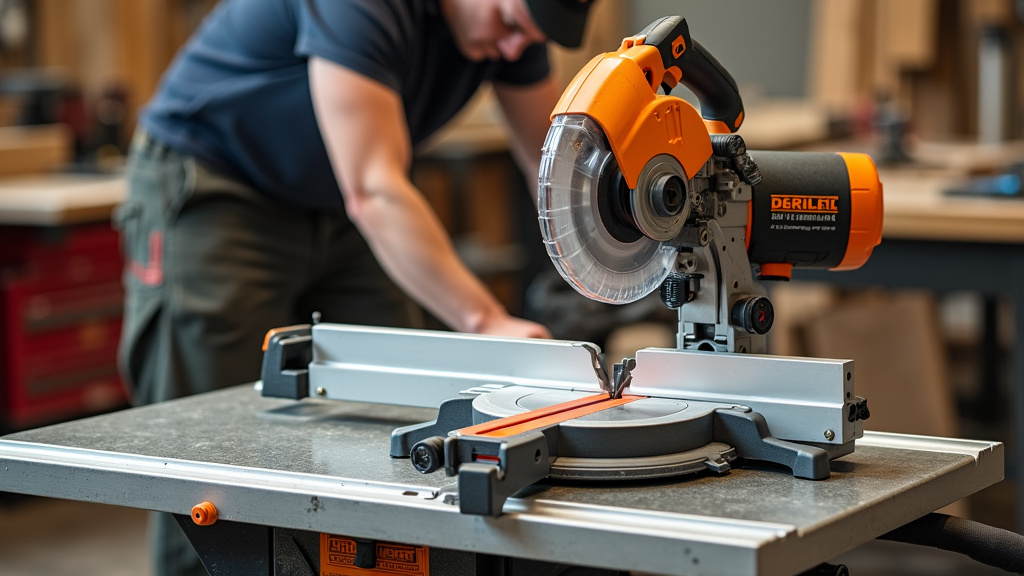
The Synergy of Both: When You’re Ready for the Duo
So, do you need both? Not necessarily at first, as we covered. But many dedicated hobbyists and professionals eventually find that having both saws makes their work much more efficient and accurate. They complement each other beautifully.
| Feature/Cut Type | Table Saw | Miter Saw |
|---|---|---|
| Primary Function | Rip cuts, sheet goods, joinery | Crosscuts, angle cuts (miters/bevels) |
| Rip Cut Performance | Excellent, precise, repeatable | Poor, unsafe, inefficient |
| Crosscut Performance | Good with sled/miter gauge, for wide stock | Excellent, fast, precise angles |
| Angle/Bevel Cuts | Limited with attachments (e.g., sled) | Excellent, quick adjustments |
| Sheet Material (Plywood) | Ideal for ripping and large panel crosscuts | Limited, cannot cut wide sheets |
| Portability | Generally less portable, heavier | Often very portable, lighter |
A Checklist for Your Next Saw Purchase
Here’s a quick guide to help you think through your decision. Answer these questions to pinpoint your immediate need.
- Will most of your cuts be long cuts along the length of a board (ripping)?
- Are you frequently cutting large sheets of plywood or MDF?
- Do your projects involve precise, repeated angle cuts for trim or framing?
- Is your primary goal to build furniture or cabinets from scratch?
- Do you need to cut many boards to a consistent length quickly?
- Is shop space a major concern for you?
Your answers will likely point you towards the saw that will serve you best right now. Remember, you can always add the other saw later as your skills and project ambitions grow. Many woodworkers start with one and find that the other becomes a welcome addition to their workshop down the road. It’s about building your tool collection intelligently, based on your evolving needs.
Conclusion
You’ve seen that both table saws and miter saws have distinct strengths. There’s no one-size-fits-all answer. Your immediate needs and typical projects should guide your first purchase. We found that dedicated woodworkers often acquire both tools over time. They truly complement each other in a well-equipped workshop.
Focus on the saw that tackles your most frequent cuts. Then, as your skills and project ambitions grow, consider adding the other. You’ll build a workshop that perfectly suits your woodworking journey.
Frequently Asked Questions
Can a circular saw replace either a table saw or a miter saw?
A circular saw offers good portability and can make both rip and crosscuts. However, it lacks the precision and repeatability of a stationary table saw or miter saw. It’s often used for rough cuts or when you need to bring the saw to the material.
Which saw is generally safer for a beginner?
Both saws require careful handling and proper safety procedures. Many find miter saws to be more intuitive for beginners because the material is held stationary. Table saws, especially for rip cuts, demand more technique and respect for the blade’s power.
Do I need a sliding miter saw or a standard one?
A sliding miter saw offers a greater crosscutting capacity than a standard miter saw. If you frequently cut wider boards, like 10- or 12-inch material, a slider is a better choice. For narrower trim or framing lumber, a standard miter saw is often sufficient.
Can I make angled cuts on a table saw?
Yes, you can make angled cuts on a table saw by tilting the blade for bevels or using a miter gauge or sled for mitered crosscuts. While effective, it’s generally not as quick or convenient for repetitive angle cuts as a miter saw.
How much space do I need for each saw?
A miter saw typically requires less dedicated space and can often be folded away or placed on a portable stand. Table saws, especially larger cabinet saws, need more permanent floor space and often benefit from outfeed support, making them less portable.
