
How to Cut an Octagon with a Miter Saw?
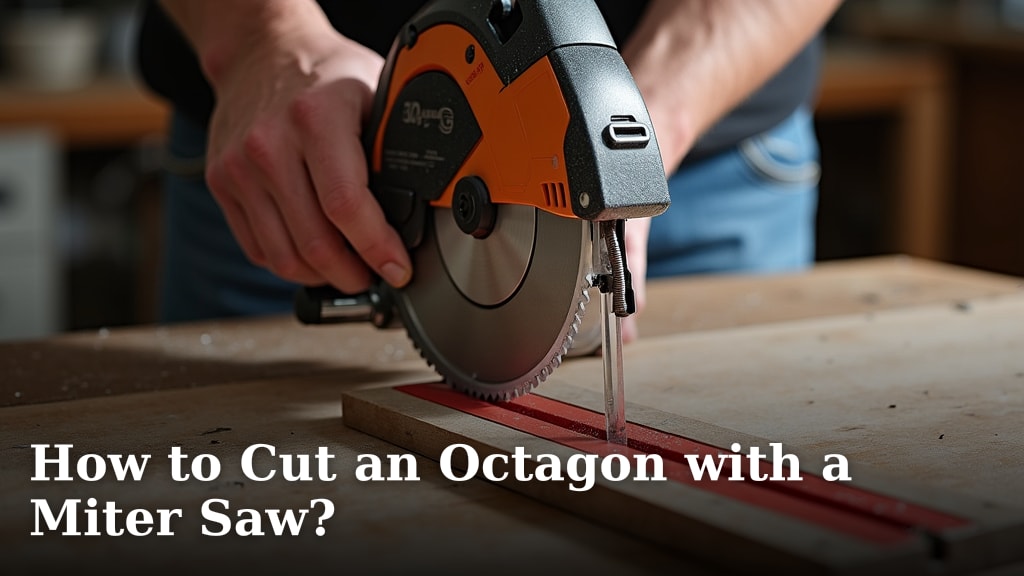
You can absolutely cut an octagon with a miter saw. It’s a straightforward process that requires understanding specific angle settings. You’ll need to make eight equal cuts to form the shape. Don’t worry, we’ll walk you through it.
Cutting geometric shapes like octagons can seem tricky. However, with the right approach, your miter saw can be a powerful tool for woodworking projects. Many DIYers find success by focusing on precise angle measurements. This technique is key for creating clean, symmetrical shapes in your builds.
- Miter saws can cut octagons.
- Set your saw to the correct angles.
- You need eight equal cuts for an octagon.
- Accuracy is important for a good result.
Let’s get your miter saw set up to create that perfect octagon. Below, we’ll cover the exact settings and steps you need to follow.
“`htmlMastering Octagon Cuts with Your Miter Saw
Cutting an octagon with a miter saw is very achievable. It really comes down to setting your saw to the correct angles. You’ll be making eight equal cuts on your material. Don’t worry; we’ll guide you through each step of the process.
Understanding the Geometry of an Octagon
An octagon is a shape with eight equal sides and eight equal angles. When you’re cutting it on a miter saw, you’re essentially creating those eight sides by making angled cuts. Each interior angle of a regular octagon is 135 degrees.
The Miter Saw’s Role in Octagon Creation
Your miter saw is perfect for this. Its ability to pivot and cut at precise angles makes it ideal. You’ll use the miter angle adjustment to create the points of your octagon. The saw handles the precision work for you.
Calculating the Correct Saw Angle
This is the most important part. For an octagon, you need to divide a full circle (360 degrees) by the number of sides (8). That gives you 45 degrees. This 45-degree mark is the angle between the center lines of two adjacent sides of the octagon if you were looking down at it from above.
However, your miter saw doesn’t cut this angle directly. Instead, it cuts the angle relative to the edge of your material. We need to find the bevel angle or the angle that your blade will be set to relative to the fence, which creates the correct corner angle. This angle is 22.5 degrees.
Think of it like slicing a pizza. If you want 8 equal slices, you cut at 45-degree intervals from the center. But when you’re cutting the edge of the slice at the crust, the angle your knife makes with the outer edge is different. For an octagon, that outer edge angle is 22.5 degrees.
Why 22.5 Degrees?
Let’s break down the math simply. Imagine you’re starting with a square piece of wood. To make it an octagon, you cut off the corners. Each corner needs to be cut at an angle that creates two new edges, effectively replacing the corner point. The full 360 degrees of the circle is divided by 8 sides, giving 45 degrees per “segment”. Half of that segment is the angle needed for each cut, which is 22.5 degrees. This ensures your cuts meet perfectly to form the eight sides.
Setting Up Your Miter Saw for Precision Cuts
Before you even touch the blade to wood, let’s get your saw ready. Safety first, always! Make sure you understand your saw’s controls. Dust collection is also a good idea; sawdust can get everywhere.
Step 1: Adjust the Miter Angle
Locate the miter angle adjustment on your saw. This is usually a lever or knob that allows you to pivot the saw head. Set this to 22.5 degrees. Most saws have clear markings for this. You’ll want to set it to 22.5 degrees in one direction for your first set of cuts, and then 22.5 degrees in the opposite direction for the other set.
Step 2: Check the Bevel Angle
For a standard octagon cut, you typically don’t need to adjust the bevel angle. Keep it at 0 degrees. This means the blade is perfectly vertical to the cutting surface. If you were making a more complex shape or working with thicker material in a way that required an angled cut from the side, you might adjust the bevel, but for a basic octagon, 0 degrees is what you need.
Step 3: Test the Cut
It’s wise to make a test cut on a scrap piece of wood. Cut a small piece at 22.5 degrees. Then, pivot your saw to the opposite 22.5-degree setting and make another cut on the same scrap. If these two cuts meet at a 45-degree angle (forming a point, not a flat edge), your settings are correct. You can also measure the angle with a protractor.
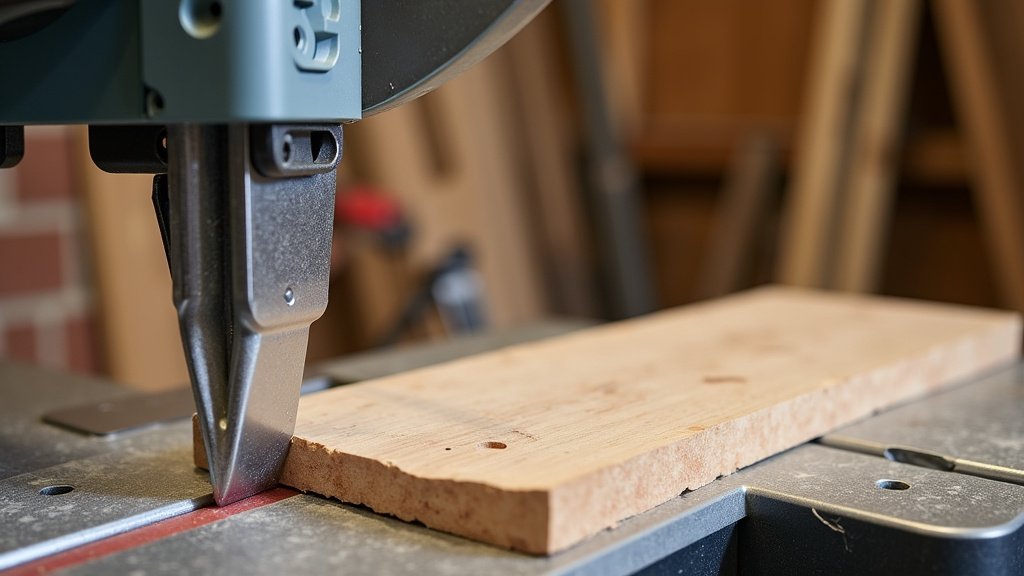
Cutting Your Octagon: Step-by-Step Guide
Now you’re ready to cut your actual material. The key here is consistency. Every cut needs to be as identical as possible to get a symmetrical octagon.
Preparing Your Material
You can start with a square or a round piece of material. If you’re starting with a square, you’ll be cutting off the corners. If you’re starting with a longer piece and want to create an octagonal frame or a series of octagonal pieces, you’ll need to measure and mark carefully.
Marking Your First Cut (Starting with a Square)
If you have a square piece of wood and want to create an octagon from it, you’ll need to mark where to make your cuts. Measure in from each corner along the edges. A good starting point is to measure about 1.5 inches in from each corner on both sides. Draw a line connecting these marks. This line represents where your cut will begin.
For instance, if you have a 10-inch square, measure 1.5 inches in from each corner along both edges. You’ll have points that are 1.5 inches from the corner on each side. Connect these points across the corner. This creates a triangle you’ll be cutting off. The remaining shape will be an octagon.
Making the Eight Cuts
Let’s assume you’ve set your miter saw to 22.5 degrees and your material is ready. For a perfect octagon, you’ll need eight equal cuts.
Cut 1-4: Angling Inward
Start with your material positioned against the fence. Make your first cut at the 22.5-degree angle. This cut will remove a corner or create the first angled edge. Rotate your material or adjust your saw for the next cut. You’ll make four cuts that angle “inward” towards the center of your piece (or four cuts to remove the corners of a square).
Remember to use your marked lines if you’re starting from a square. Position the saw blade so it follows that marked line. Make a clean, decisive cut. Ensure the wood is held firmly against the fence and the saw’s base.
Cut 5-8: Angling Outward
Now, you’ll pivot your saw to the opposite 22.5-degree angle. You’ll make the next four cuts. These cuts will meet the ends of your first four cuts, closing the shape into an octagon. If you started with a square, these cuts will finish removing the corners and form the new sides.
It’s critical that the distance between each cut is consistent. If you’re cutting off corners of a square, the distance from the corner along the edge to where your cut starts must be the same for all four corners. This is where a good tape measure and a sharp pencil come in handy.
Tips for Success and Common Pitfalls
Even with clear instructions, woodworking can throw curveballs. Here are a few pointers to help you get a clean octagon on the first try.
- Secure Your Material: Always use clamps to hold your workpiece firmly in place. A slipping board can ruin a cut and be dangerous.
- Measure Twice, Cut Once: This old adage is a lifesaver. Double-check your angle settings and your measurements before you cut.
- Blade Sharpness Matters: A sharp blade cuts cleaner and requires less force. A dull blade can splinter your wood and lead to inaccurate cuts.
- Watch for Tear-Out: Especially on the exit side of the cut, you might get some splintering. Use painter’s tape or a sacrificial backer board to minimize this.
- Consistency is Key: Make sure your material is always positioned the same way against the fence for each corresponding cut.
Consider this checklist to ensure you’re on the right track:
- Is your miter saw set to 22.5 degrees?
- Is your bevel angle at 0 degrees?
- Have you tested your angle on scrap wood?
- Is your material securely clamped?
- Are your measurement marks accurate?
- Do you have a sharp blade installed?
Follow these steps, and you’ll be well on your way to creating perfectly cut octagons for your projects. It’s a great skill to add to your woodworking repertoire!
“`Conclusion
You’ve learned how to confidently cut an octagon using your miter saw. Remember, the key is setting your saw to 22.5 degrees and ensuring your bevel is at 0 degrees. Precision in your measurements and a steady hand will create those eight equal sides. With a little practice, you’ll be crafting perfect octagons for any project. Now, go ahead and try a test cut on a scrap piece to solidify your settings before tackling your main project!
Frequently Asked Questions
What if my miter saw doesn’t have a 22.5-degree detent?
Many miter saws have fine adjustment knobs or markings that allow you to dial in precise angles. You can also use a digital angle finder to get your saw blade exactly to 22.5 degrees. Just ensure your setting is locked firmly in place before cutting.
Can I use this method to cut an octagonal frame?
Yes, this method is perfect for creating an octagonal frame. You would typically start with longer pieces of wood and make your 22.5-degree cuts on each end, angled inwards. This ensures the corners meet correctly to form the octagon shape.
How do I avoid tear-out when cutting an octagon?
To minimize tear-out, use a sharp blade and consider applying painter’s tape along the cut line on your workpiece. For very delicate wood, a sacrificial backer board clamped to your material can also help support the wood fibers as the blade exits.
What’s the difference between the miter angle and the bevel angle for this cut?
For cutting an octagon’s sides, you primarily use the miter angle to turn the saw head. The bevel angle refers to tilting the blade itself, which you keep at 0 degrees for a standard octagon to ensure the cut is vertical.
What happens if I cut at 45 degrees instead of 22.5 degrees?
Cutting at 45 degrees would create a much steeper angle, resulting in a different shape, not an octagon. You would end up with fewer sides, or the cuts would overlap significantly, preventing the formation of eight equal sides with the correct interior angles.
