How Long Should A Miter Saw Station Be?
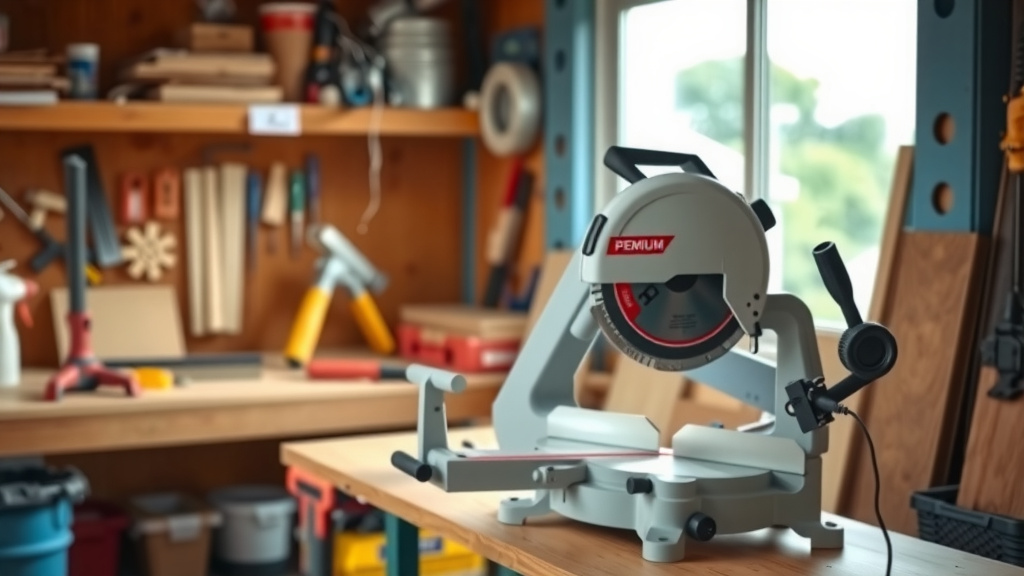
The ideal length for a miter saw station typically ranges from 8 to 12 feet, providing ample support for common lumber sizes and enhancing safety during cuts.
However, your specific project needs, available workspace, and the types of materials you frequently cut are the primary factors that determine the optimal length for your miter saw station.
Here’s a quick overview of what you’ll find in this guide:
- Your station’s ideal length depends heavily on your typical project size.
- Safety and stability are paramount, needing good material support.
- Consider your available workshop space before committing to a design.
- Future projects and tool integration should influence your initial plans.
- Even a compact setup can be highly effective with clever design choices.
How Long Should A Miter Saw Station Be?
A miter saw station should be long enough to support the longest material you routinely cut, often suggesting a minimum of 8 to 12 feet for practical home workshop use.
Thinking about building or upgrading your miter saw station? That’s a fantastic idea! A well-designed station can transform your woodworking experience. But how long should it really be?
The truth is, there’s no single magic number. It all comes down to your unique needs, like a perfectly tailored suit. Let’s dive into what makes a miter saw station just right for you.
Why Length Matters More Than You Think
Imagine trying to cut a long piece of trim with only a short support. It’s wobbly, unsafe, and just plain frustrating, isn’t it? That’s why station length is so critical.
The main goal is to provide stable and consistent support for your workpiece on both sides of the saw. This helps prevent dangerous kickbacks and ensures cleaner, more accurate cuts.
Safety First: A Longer Station, A Safer You
When you have proper material support, your hands are free to operate the saw controls. You’re not juggling a heavy board while trying to make a precise cut. This significantly reduces the risk of accidents.
Many woodworking safety guidelines emphasize the importance of adequate workpiece support (Woodworking Project Safety Council). A longer station directly contributes to this crucial safety aspect.
Accuracy and Precision: Your Project’s Best Friend
Ever notice how a tiny wobble can ruin a perfect cut? A stable, long station helps eliminate that movement. This translates into more accurate angles and cleaner edges for all your projects.
Think of it like drawing a straight line. It’s much easier with a long ruler than with a tiny one. The same principle applies here for precision cutting.
Key Factors Influencing Your Miter Saw Station’s Length
So, how do you figure out your ideal length? It’s a bit like choosing the right car; you consider how you’ll use it. Here are the main questions to ask yourself:
What Projects Do You Tackle Most Often?
Are you frequently cutting long pieces of decking for an outdoor project, or mostly short picture frame pieces? If you’re building furniture, you might work with 8-foot boards.
If you’re into trim work, you might handle 12-foot or even 16-foot pieces. Your typical project size is perhaps the biggest factor in determining your ideal station length.
How Much Workshop Space Do You Have?
We all dream of expansive workshops, but reality often dictates our limits, right? Measure your available wall space carefully. A 12-foot station is wonderful, but not if it blocks your only pathway.
Consider how much room you need to walk around, store materials, and operate other tools. A good station fits within your space without making your workshop feel like a maze.
Material Support Needs: The “Wingspan” Principle
Your miter saw itself has a base. You need “wings” extending out from both sides. Many experts recommend having at least equal support length on each side to the longest board you’ll cut.
For an 8-foot board, that might mean 4 feet on each side of the saw, for a total of an 8-foot station (plus the saw’s width). If you’re cutting 10-foot boards, you’re looking at 10 feet of overall support.
Common Miter Saw Station Lengths and Their Uses
Let’s look at some common station lengths and what they’re best suited for. This might help you visualize what works for you.
| Station Length | Best For | Typical Materials Supported | Key Benefit |
|---|---|---|---|
| 4-6 Feet (Compact) | Small shops, portable use, hobbyists | Up to 4-6 ft lumber, small trim, craft wood | Space-saving, easy to move |
| 8-10 Feet (Standard) | Average workshops, DIYers, remodelers | Up to 8-10 ft lumber, baseboards, shelving | Versatile, good balance of size/support |
| 12-16+ Feet (Pro/Large) | Large shops, pro builders, deck work | Up to 12-16 ft lumber, large trim, long beams | Maximum support for long materials |
The Standard 8-Foot Station: A Popular Choice
We found that an 8-foot miter saw station is often a sweet spot for many home workshops. This provides enough support for standard lumber sizes, like 2x4s or 1x10s, which usually come in 8-foot lengths.
This length is also manageable in many garages or basement workshops. It strikes a good balance between functionality and not overwhelming your space.
Designing for Efficiency and Functionality
Beyond just length, consider how your station will integrate with your workflow. A well-designed station is a joy to use.
Integrating Stop Blocks and Fences
A good miter saw station will have a built-in fence and stop block system. This lets you make repeatable cuts quickly and accurately, without constantly measuring. A longer station provides more room for these essential features.
Research often highlights how integrated measuring systems drastically improve workshop productivity (Fine Woodworking).
Storage Solutions: Keeping Things Tidy
Do you need drawers for blades, pencils, and safety glasses? Maybe open shelves for frequently used jigs? Planning storage underneath your long work surfaces makes your station even more useful.
A longer station naturally offers more opportunities for clever storage integration, keeping your workspace clear and organized.
Customizing Your Station for Future Needs
It’s smart to think a little ahead, isn’t it? What if your hobby grows? What if you get a bigger saw down the road?
Making It Modular: Flexibility is Key
Consider building your station in sections. For example, a central saw cabinet with detachable or fold-down extension wings. This gives you flexibility if your space or needs change.
Modular designs allow you to expand your workstation easily as your projects get bigger or your shop evolves.
Future-Proofing Your Design Checklist
Before you commit to a design, take a moment to review this checklist:
- Can it support the longest material you use now?
- Is there room to add another tool, like a planer, later?
- Are the extension wings easily adjustable or removable?
- Does it allow for future dust collection upgrades?
- Is it stable enough for even the heaviest cuts?
Conclusion
Ultimately, the “perfect” length for your miter saw station isn’t about hitting a specific number, but about creating a workspace that genuinely serves you. It’s about safety, accuracy, and making your woodworking projects more enjoyable and efficient.
By considering your common projects, available space, and future needs, you can design a station that feels tailor-made. Whether it’s a compact 6-foot setup or an expansive 16-foot beast, ensure it provides stable support and helps you achieve great results every time. Happy building!
How do I determine the minimum length for my miter saw station?
To determine the minimum length, measure the longest board you typically cut. Your station should provide at least half of that length as support on each side of the miter saw, plus the width of the saw itself. For example, an 8-foot board would ideally need a station offering 4 feet of support to the left and 4 feet to the right of the saw.
Can a miter saw station be too long for a small shop?
Yes, absolutely. While more support is generally better, an excessively long miter saw station in a small shop can impede movement, block other tools, or make the space feel cramped and inefficient. It’s crucial to balance ideal support length with your available floor space and workflow considerations.
Are foldable or collapsible miter saw stations a good alternative?
Yes, foldable or collapsible miter saw stations, or those with retractable wings, are excellent alternatives for smaller workshops or for those who need a portable setup. They offer the necessary support during use but can be stored compactly, maximizing precious workshop space when the saw isn’t in operation.
Should my miter saw station’s height be adjustable?
While not strictly necessary, an adjustable-height miter saw station can be very beneficial. It allows you to set the working height to match your comfort level or to align with other shop tables, creating a seamless workflow. However, a fixed-height station at a comfortable ergonomic level is perfectly adequate for most users.
How does dust collection affect miter saw station length?
Dust collection needs can indirectly influence station length. A longer station might accommodate a larger dust hood or more extensive ducting for effective chip removal. However, the primary factor for length remains material support; dust collection is more about integrating a system into the station’s overall design.