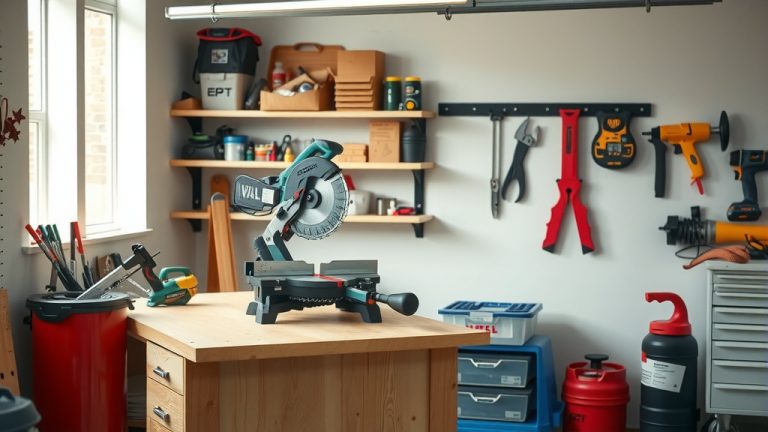
How To Mount A Miter Saw To A Table?

To mount a miter saw to a table, you typically align the saw’s base holes with pre-drilled holes on your workbench or a dedicated miter saw stand, then secure it using bolts, washers, and nuts.
Ensuring a stable and vibration-free setup for your miter saw is paramount for both accuracy and safety in your woodworking projects.
TL;DR: How to Mount Your Miter Saw
- Gather Tools: Get bolts, washers, nuts, a drill, and wrenches.
- Pick a Spot: Choose a sturdy, level table or stand.
- Position & Mark: Place the saw, mark bolt locations.
- Drill Holes: Carefully drill through the marks.
- Secure It: Fasten the saw with bolts, tightening firmly.
How To Mount A Miter Saw To A Table?
Mounting your miter saw to a table involves securing its base to a sturdy surface, providing stability and precision for every cut you make.
This simple step transforms your saw from a wobbly tool into a reliable workstation, making your projects safer and much more accurate.
Why Bother Mounting Your Miter Saw?
Have you ever tried to make a precise cut only to have your miter saw shift slightly?
Mounting eliminates that frustrating movement. It keeps your saw firmly in place, improving cut quality significantly.
A mounted saw also means enhanced safety. There’s less chance of the saw tipping or moving unexpectedly during operation (OSHA guidelines often stress equipment stability).
You gain better control and confidence with every pass, which is a big win for any woodworker.
Choosing Your Workbench or Stand
Not just any surface will do for mounting your miter saw. You need something robust.
A dedicated miter saw stand offers mobility and often includes support wings for longer materials.
Many experts say a heavy, stable workbench is also a fantastic option, especially if you have ample space in your shop.
Look for a surface that can handle vibrations and the weight of your saw without flexing.
Essential Tools and Materials You’ll Need
Before you begin, gather your supplies. Think of it like prepping for a cooking show – everything needs to be ready.
You’ll need bolts, washers, and nuts that match the holes in your saw’s base, usually found in the manufacturer’s manual (research confirms this is standard practice).
A power drill with appropriate bits, a pencil or marker, and a set of wrenches or a socket set are also crucial.
Sometimes, a scrap piece of wood or plywood can serve as an adapter plate if your table doesn’t align perfectly.
Safety First: A Quick Check
Before you even think about drilling, take a moment for safety. Are you wearing your safety glasses?
Is your saw unplugged? These small steps can prevent big problems, as many safety reports highlight.
Make sure your workspace is clear of clutter, giving you plenty of room to maneuver safely around your saw.
The Pre-Mount Checklist
Getting ready means checking off a few things first. It’s like checking your bags before a trip.
- Read your miter saw’s manual.
- Clear your workspace completely.
- Ensure the table surface is level and clean.
- Verify you have all mounting hardware.
- Double-check saw is unplugged.
Step-by-Step Guide: Bolting Down Your Saw
This is where the magic happens! Follow these steps, and you’ll have a secure saw in no time.
Step 1: Position and Mark
Place your miter saw precisely where you want it on the table. Consider blade clearance and material support.
Using a pencil or marker, carefully mark the locations of the mounting holes on your table through the saw’s base.
Take your time here; accurate marking means accurate drilling.
Step 2: Drill Pilot Holes
Remove the saw from the table. Now, grab your drill.
Select a drill bit slightly smaller than your bolts, but large enough for the bolt shank to pass through easily.
Drill straight down through your marked spots. We found that drilling pilot holes helps prevent wood splitting and guides your bolts smoothly.
Step 3: Secure the Saw
Place your miter saw back onto the table, aligning its mounting holes with your newly drilled holes.
Insert your bolts from the top, pushing them through the saw base and table.
From underneath, add a washer to each bolt, followed by a nut. The washer helps distribute the pressure, protecting your table (research confirms this practice for stability).
Step 4: Tighten Everything Up
Using your wrenches or socket set, tighten the nuts firmly. Don’t overtighten and strip the bolts, but make sure there’s no wobble.
Test the saw for any movement. A truly mounted saw should feel like it’s part of the table itself.
Other Mounting Methods to Consider
Bolting is the go-to method, but sometimes you need more flexibility.
Quick-release clamps offer a semi-permanent solution, letting you easily remove the saw when not in use.
Some users create a dedicated plywood base that gets bolted to the saw, which then clamps to the table.
Research often highlights that the best method depends on your workshop’s layout and how often you need to move your saw around.
Mounting Method Comparison
| Method | Stability | Portability | Effort |
|---|---|---|---|
| Bolts & Nuts | Excellent | Low | Moderate |
| Quick-Release Clamps | Good | High | Low |
| Plywood Sub-Base | Very Good | Moderate | Moderate |
Ensuring Long-Term Stability
Once mounted, it’s not a “set it and forget it” situation. Regular checks keep your setup secure.
Periodically inspect the bolts and nuts for tightness. Vibrations from cutting can sometimes loosen them.
We found that a quick check before each major project ensures everything stays put, preventing any unexpected wobbles.
Common Mounting Mistakes to Avoid
Nobody’s perfect, and mistakes happen. But some are easily sidestepped.
Don’t use bolts that are too short or too long. Short bolts won’t secure properly; long ones can snag.
Skipping washers is another common error, which can lead to damage over time.
Also, mounting on an unstable surface will defeat the whole purpose, so choose your table wisely.
Conclusion
Mounting your miter saw to a table is a straightforward process that brings significant benefits to your woodworking.
You gain accuracy, stability, and most importantly, enhanced safety.
By following these steps, choosing the right method, and performing quick checks, you create a workspace that truly supports your craftsmanship.
Now go forth and make some precise cuts with confidence!
Frequently Asked Questions About Mounting Miter Saws
How tight should the bolts be when mounting a miter saw?
The bolts should be tightened firmly enough so that the saw does not wobble or shift during use. Avoid overtightening, as this can strip the threads or damage the table or saw base. A good rule of thumb is snug, plus a quarter turn with a wrench, then re-check after a few cuts.
Can I mount my miter saw directly onto a portable sawhorse?
While you can temporarily place a miter saw on a sawhorse, it’s not ideal for permanent mounting. Sawhorses often lack the mass and stability needed to dampen vibrations effectively for precise cuts. A dedicated miter saw stand or a sturdy workbench is always a better, safer choice for mounting.
What if my miter saw’s mounting holes don’t align with my workbench?
If the holes don’t align, you can create an adapter plate from a piece of plywood. Bolt the miter saw to this plywood first, then secure the plywood adapter plate to your workbench using different bolt patterns or clamps. This provides a stable intermediate layer.
Is it safe to use wood screws instead of bolts for mounting?
Many experts advise against using wood screws for mounting a miter saw. Bolts, washers, and nuts provide a much stronger, more reliable, and secure connection that resists vibration and lateral forces better than wood screws. The integrity of wood screws can degrade over time with heavy use.
How often should I check the mounting hardware for tightness?
It’s a good practice to check your mounting hardware for tightness before starting any large project or after every few hours of continuous use. Vibrations from cutting can gradually loosen nuts and bolts, so a quick verification ensures your saw remains stable and safe for every job.