8 Best C-Clamps for Woodworking (November 2026)
The best C clamps for woodworking include the WORKPRO 6" Clamps for Woodworking 2-Pack for small fixtures and glue-ups, the HORUSDY 8-Pack Bar Clamps for Woodworking for covering many sizes, and the EQUIPTZ 6 inch Spring Clamps Heavy Duty for quick holding and layout.
On this page (9 sections)
- How we compared these c clamps for woodworking
- The best c clamps for woodworking for your bench
- How to use c clamps for woodworking without crushing your stock
- What size C clamp do you need for woodworking?
- Should you pick a C-clamp, bar clamp or spring clamp?
- How do C clamps compare to other woodworking clamps?
- Which C clamps are best for woodworking with a miter saw or pocket hole jig?
- How should you care for c clamps for woodworking?
- Verdict: which c clamps for woodworking should you buy?
The best c clamps for woodworking for most benches are the WORKPRO 6 inch clamps, because their 6 inch opening, 150 lb force and one-handed release cover small fixtures and glue-ups. Choose a steel C-clamp when you need screw pressure on thick stock, and choose a bar clamp set when you need reach across wider panels.
C clamps earn their place by giving controlled pressure for fixtures and assemblies. A screw lets you add force in small steps and hold a part while glue sets or you cut.
If you are new to clamps, start with our guide to woodworking clamps and our picks for best clamps for woodworking projects.
Our picks at a glance
-
1
 Best for small fixtures and glue-ups
WORKPRO 6" Clamps for Woodworking 2-Pack
9.7/10 our score
See it on Amazon -
2
 Best for covering many sizes
HORUSDY 8-Pack Bar Clamps for Woodworking
9.6/10 our score
See it on Amazon -
3
 Best for quick holding and layout
EQUIPTZ 6 inch Spring Clamps Heavy Duty
9.5/10 our score
See it on Amazon
- 4
 Check it
Amazon Basics Adjustable Metal Face Clamps
Best for face frame and pocket hole work - 5
 Check it
EQUIPTZ 6 Pack Bar Clamps for Woodworking
Best for combo size bar clamp sets - 6
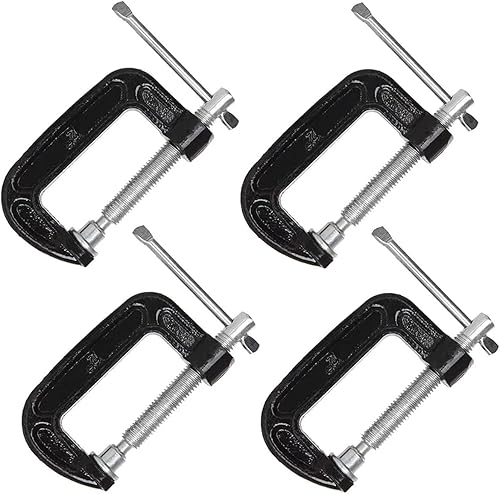 Best for heavy duty steel C-clamp workCheck it
- 7
 Check it
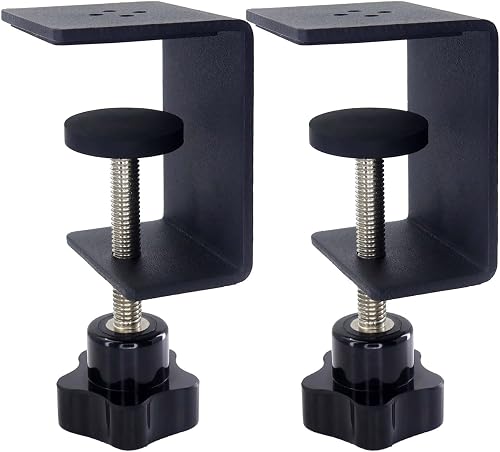
Jhanw 2 Pack Heavy Duty C Clamp
Best for bench mounting and precision holding - 8
 Check it
IRWIN Quick-Grip 1964758 One-Handed Mini Bar Clamp
Best for confined spaces
How we compared these c clamps for woodworking
We compared specs and buyer feedback against the job you need done. Our score weighs opening size, throat depth, force and ease of use.
We checked how each clamp opens, how far the throat reaches and how much force it applies. We also checked pads, release speed and whether it can spread as well as squeeze.
Opening tells you the widest stock the jaws can close on. Throat depth tells you how far behind the edge the clamp can reach.
Pad shape and frame stiffness decide how force lands on wood.
A 2 inch opening with a 1 inch throat suits blocks and fixture plates. A 6 inch bar clamp suits frame parts and small glue-ups.
A 12 inch bar clamp adds reach for wider boxes, while a 3 inch spring mouth suits thin stock for layout.
The best c clamps for woodworking for your bench
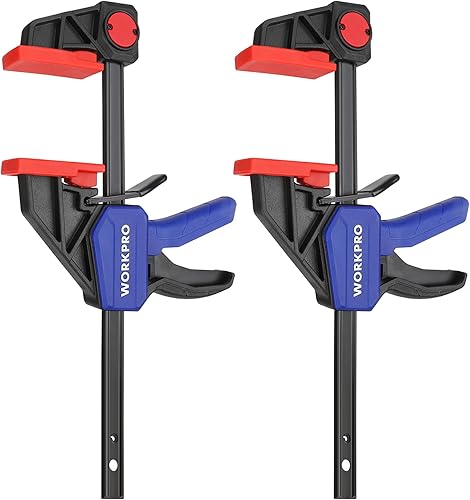
WORKPRO 6" Clamps for Woodworking 2-Pack: Best for small fixtures and glue-ups
- 6 inch maximum opening
- 150 lb clamping force
- 2-3/8 inch throat depth
- Quick release and spreader mode
Two light duty 6 inch bar clamps with quick release, non-marring pads and 150 lb of force for small woodworking assemblies.
Pros
- One-handed squeeze and release
- Pads protect finished surfaces
- Converts to a spreader
Cons
- Only two clamps in the pack
- 6 inch opening is small for wide panels
WORKPRO suits small fixtures, box assembly and light glue-ups where you need one-handed holding. Its 6 inch opening and 2-3/8 inch throat depth fit small blocks and bench fixtures without a large frame getting in the way.
The clamp gives 150 lb of force with a quick release lever. That pressure suits many small wood joints, and the red button lets the same tool work as a spreader when you need to push parts apart.
The build pairs high-quality nylon with hardened steel bars, which helps resist bending under pressure. The ergonomic non-slip handle also reduces hand fatigue, so you can keep pressure steady while you align a joint.
Non-marring pads protect finished surfaces and help keep glue squeeze-out from marking a face. The anti-slip texture helps the clamp stay put on smooth stock and spreads contact so the jaws shift less as glue sets.
The trade-off is size and count. This light duty 2-pack will not span a wide panel or press a large lamination.
For wider work, step up to a 12 inch bar clamp or a larger C-clamp.
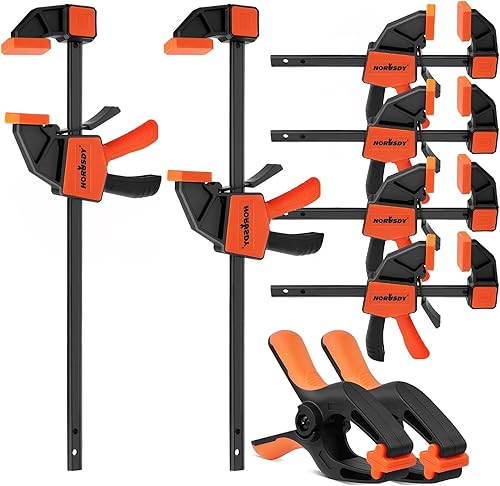
HORUSDY 8-Pack Bar Clamps for Woodworking: Best for covering many sizes
- 4 pcs 6 inch
- 2 pcs 12 inch
- 2 pcs 6 inch spring clamps
- 150 lb load limit
An 8 piece set that mixes 6 inch and 12 inch bar clamps with spring clamps for layout, glue-ups and holding parts in place.
Pros
- Larger count for multiple joints
- 12 inch reach for wider parts
- Spreader function on bar clamps
Cons
- Spring clamps have lower force
- Mixed set takes more storage space
HORUSDY suits a bench where you jump between small parts and medium panels. The set includes 4 pcs 6 inch bar clamps, 2 pcs 12 inch bar clamps and 2 pcs 6 inch spring clamps, so you have a clamp for layout and a clamp for glue-up.
The bar clamps give 150 lb of squeeze capacity with a metal ratchet design. The 6 inch clamps can spread to 11-9/64 inches, and the 12 inch clamps can spread to 17-21/64 inches, which helps with frames and box parts.
A quick-change button lets you reverse the jaws for spreader use. That helps when you need to hold a cabinet or frame open during assembly.
The strong nylon body and hardened steel bar also help withstand frequent use.
The flexible pads have a non-slip texture that enhances clamping force. The quick release makes repositioning faster, and the ergonomic handle supports one-handed use when your other hand must hold the workpiece.
The trade-off is mixed force. The spring clamps grip at a lower level, so use them for layout and light holding rather than heavy glue pressure.
The 8 piece count also takes more storage space than a 2-pack.
EQUIPTZ 6 inch Spring Clamps Heavy Duty: Best for quick holding and layout
- 6 inch length
- 3 inch mouth opening
- 30 lb grip
- 4 pack
Four heavy duty 6 inch spring clamps with a 3 inch mouth opening for fast holding during layout and light assembly.
Pros
- Fast one-hand squeeze
- Wide mouth for thin stock
- Non-detachable jaw pads
Cons
- 30 lb grip is light for glue-ups
- Plastic body limits hard pressure
EQUIPTZ spring clamps suit layout and quick holding jobs. The 6 inch clamps have a 3 inch mouth opening, so they can bite on thin stock, a tarp edge or a backdrop without much effort.
They give a 30 lb grip, which is light compared with screw clamps. That grip is enough to hold a fence, keep a template aligned or hold light parts while you mark them.
It is not rated for closing a glue joint that needs sustained pressure.
The jaw pads stay in place during use. That matters when you squeeze and release a clamp many times, because loose pads slow you down.
The broad jaws and groove design also help hold a workpiece without slipping.
Soft rubber handles help you squeeze with less hand strain, which suits users who clamp repeatedly. The premium plastic body and anti-rust coated manganese steel spring also resist rust.
The trade-off is pressure. Do not use these for a glue joint that needs strong, even pressure, because the spring may not keep the joint closed.
Use them as a third hand for layout, then move to a bar or C-clamp for the glue-up.
Amazon Basics Adjustable Metal Face Clamps: Best for face frame and pocket hole work
- 3 inch jaw reach
- Clamps stock up to 2-3/4 inch thick
- Thumb screw knobs
- Swivel pads
- 2 pack
Two adjustable metal face clamps with a 3 inch jaw reach and swivel pads for pocket hole joinery and face work.
Pros
- Swivel pads spread pressure
- Thumb screws adjust quickly
- Suits pocket hole joinery
Cons
- Screw tightening needs two hands
- Limited to 2-3/4 inch thick stock
Amazon Basics face clamps suit face frames, pocket hole joinery and repair work. Each clamp has a 3 inch jaw reach and can clamp stock up to 2-3/4 inches thick.
Thumb screw knobs let you adjust the jaw quickly. You can set the opening, place the clamp and tighten it without a long screw run.
That helps when you need to check alignment, drill, then move to the next joint.
Swivel pads spread force and protect surfaces. That helps on flat faces where you want even pressure without a dent.
The pads also follow slight angles, so the clamp stays seated instead of rocking.
The metal face design gives a flatter contact area than a standard C-clamp jaw. That flat contact matters for pocket hole work, because the two faces must stay flush while the drill enters at an angle.
The trade-off is speed. A screw clamp takes longer than a trigger clamp.
For repeated face work that trade-off is worth it, but it is a poor choice for a fast multi-joint glue-up.
EQUIPTZ 6 Pack Bar Clamps for Woodworking: Best for combo size bar clamp sets
- 2 pcs 12 inch
- 4 pcs 6 inch
- 150 lb force
- One-handed trigger release
Six quick grip bar clamps in 6 inch and 12 inch sizes with 150 lb of force for gluing, carpentry and DIY assembly.
Pros
- Combo sizes in one pack
- One-handed trigger release
- Converts to spreader
Cons
- Six clamps may not cover large laminations
- 150 lb force is light for heavy press work
EQUIPTZ bar clamps suit gluing, carpentry and DIY assembly where you need both 6 inch and 12 inch reach. The pack includes 2 pcs 12 inch and 4 pcs 6 inch quick grip clamps.
Each clamp gives 150 lb of force with a one-handed trigger release. You can position a part, squeeze to close the gap and release with one hand.
That speed matters when glue is open and you must close several joints before it tacks.
The 2-in-1 design converts from an F-clamp to a spreader. That helps when you need to press a frame open or hold parts apart during a dry fit, so one tool covers squeezing and spreading.
Reinforced nylon and hardened steel help resist flex. The soft padded jaws protect the workpiece while providing a secure grip, which helps on finished faces where a bare jaw could mark the wood.
The trade-off is count and force. Six clamps will not cover a large panel lamination, and 150 lb is light for heavy press work.
For large laminations, a steel C-clamp or larger bar clamp will do that job better.
Zeromall 2 Inch C-Clamp Set: Best for heavy duty steel C-clamp work
- 2 inch jaw opening
- 1 inch throat depth
- Cast iron body
- 4 pack
Four cast iron 2 inch C-clamps with a 1 inch throat depth for small, high pressure fixture work on the bench.
Pros
- Steel C frame for strong pressure
- Floating swivel pad adapts to surfaces
- Four clamps for multiple fixtures
Cons
- 2 inch opening is very small
- Slow to tighten and release
Zeromall suits small, heavy pressure jobs on a bench. Each C-clamp has a 2 inch jaw opening and 1 inch throat depth, which fits small blocks, shelf parts and fixture pieces.
The cast iron body and high strength screw give direct screw pressure. That is useful when you need to hold a part flat against a bench or press two small parts together.
The high hardness body also resists wear and rust.
A floating swivel jaw pad moves to meet the surface. The pad helps prevent slipping and reduces marks.
It also adapts to surfaces that are not perfectly parallel, so pressure stays centered instead of pushing at one corner.
The ergonomic T-shaped handle helps you tighten with less strain. That shape gives leverage for firm pressure without a separate swing bar, which helps in tight bench spaces.
The trade-off is size and speed. A 2 inch opening is small, and a screw clamp takes longer to set than a trigger clamp.
It will not close on thick stock or reach across a wide panel, so size it to the job.
Jhanw 2 Pack Heavy Duty C Clamp: Best for bench mounting and precision holding
- 0.23 to 2.04 inch range
- 200 lb load capacity
- 3 mm reinforced steel
- Mounting holes
Two heavy duty steel C-clamps adjustable from 0.23 to 2.04 inches, with mounting holes for permanent bench or jig use.
Pros
- Wide thin to thick range
- Mounting holes for jigs
- 200 lb capacity stated
Cons
- Only two clamps per pack
- Screw action is slower than trigger clamps
Jhanw suits precision holding and bench-mounted fixtures. The clamps adjust from 0.23 to 2.04 inches, so they can hold thin sheets as well as thicker boards up to about 2 inches.
The build uses 3 mm reinforced steel with a stated 200 lb load capacity. That suits small assembly where you need steady pressure and repeatable results.
The textured coating also resists rust and moisture.
Four 4 mm pre-drilled holes on top let you mount each clamp to a workbench or jig. Permanent mounting helps when you need a fixed stop for repeated cuts or glue-ups, holding the same position every time.
The precision screw mechanism lets you adjust and lock the clamp with one hand for materials up to 2 inches thick. That helps when your other hand is holding a small part, a tool or a guide.
The trade-off is count and speed. You get two clamps, and the screw action is slower than a trigger clamp.
For a fixed jig that slower action gives more control, but for a fast glue-up a trigger bar clamp will be quicker.
IRWIN Quick-Grip 1964758 One-Handed Mini Bar Clamp: Best for confined spaces
- 6 inch size
- 4 pack
- 140 lb force
- One-handed trigger
Four 6 inch one-handed mini bar clamps with 140 lb of force for smaller workpieces and tight spaces.
Pros
- Compact mini size
- One-handed trigger release
- Non-marring pads
Cons
- 140 lb is less than 150 lb rivals
- 6 inch size limits wide work
IRWIN suits smaller workpieces and confined spaces. This set includes four 6 inch one-handed mini bar clamps for jobs where a full size clamp will not fit.
The clamps give 140 lb of force with a one-handed trigger release. You can squeeze, release and reposition without putting the workpiece down.
The pistol grip design also enhances comfort during assembly.
Non-marring pads protect the surface while you clamp. Resin construction with hardened steel bars helps resist flex, and the mini size is about 25 percent smaller than regular clamps in this line.
The compact size helps inside boxes, small frames and tight bench corners. It also helps on small workpieces where a large jaw would block your view or hit an adjacent part.
The trade-off is size and force. At 6 inches, these mini clamps will not span wide panels, and 140 lb is less than the 150 lb in several rivals here.
For wide glue-ups, step up to a full size bar clamp or steel C-clamp.
How to use c clamps for woodworking without crushing your stock
Use c clamps with pads, cauls and light screw turns, because screw pressure can dent soft wood fast. Put the swivel pad on the face, add scrap if the edge is soft and tighten in small turns.
Check the joint line as you tighten. Stop when the gap closes and glue starts to squeeze out.
More turns rarely help and often push one part out of line.
For a fixture, clamp the workpiece to the bench first, then clamp the parts to the fixture. Clean glue from pads after each use, because dried glue can mark the next workpiece.
Snug by hand first, then add a quarter turn at a time. If one part shifts, loosen, realign and tighten again instead of forcing it.
What size C clamp do you need for woodworking?
Choose C clamp size by the thickest stock you will clamp, plus room for pads and screw travel. Measure the stock, then pick an opening that clears it with room to tighten.
Throat depth matters as much as opening. A deep throat lets the clamp reach past a wide edge.
A shallow throat limits you to edges and small blocks.
For small blocks and fixtures, a 2 inch opening with a 1 inch throat covers many bench jobs. For thicker stock, step up to a clamp that opens past 2 inches with a deeper throat.
If you need to clamp across a panel, do not force a small C-clamp. A bar clamp or a set from our best woodworking clamp set guide will reach farther and release faster.
Small C clamps for fixtures
Small C clamps suit blocks, box parts and jigs. Their short frames fit in tight spaces and give direct pressure where a bar clamp frame would hit the bench.
Larger C clamps for thick stock
Larger C clamps suit thick laminations and heavy fixtures. Check throat depth before you buy, because a large opening with a shallow throat may still fail on wide stock.
Should you pick a C-clamp, bar clamp or spring clamp?
Pick a C-clamp for screw pressure, a bar clamp for reach and speed, and a spring clamp for quick light holding. Each type solves a different bench problem.
C clamps give controlled force in small steps. They are strong for small fixtures but slow to open and close.
Bar clamps open wide and release fast. They suit glue-ups where you need to squeeze many joints in a row.
Spring clamps are fastest for layout. They hold a guide or template while you mark, but their grip is too light for most glue joints.
C clamps for pressure
Use C clamps when you need to press a part to a bench or squeeze a small joint with steady force.
Bar clamps for reach
Use bar clamps when the work is wide or when you need one-handed operation during glue-ups.
Spring clamps for layout
Use spring clamps when you need a fast hand for a fence, template or light part.
How do C clamps compare to other woodworking clamps?
C clamps give more direct pressure than bar clamps, but bar clamps are faster and reach farther. That trade-off drives most buying choices.
A C-clamp frame is compact, so it fits around a fixture where a bar clamp body would block your hands. The screw also gives fine control on small joints.
A bar clamp has a long bar and a trigger. You can open it, place it and squeeze it in seconds, which matters when glue is open.
For soft contact on wooden parts, compare our best wooden clamps for woodworking guide. For very small parts, our best small clamps for woodworking picks cover mini bar clamps and spring clamps.
Which C clamps are best for woodworking with a miter saw or pocket hole jig?
Use a face clamp for pocket hole work and a C-clamp for bench fixtures near a miter saw. The right clamp depends on the jig and the stock.
For pocket hole joinery, a face clamp with swivel pads holds flat faces true while you drill. The Amazon Basics face clamps fit that job with a 3 inch jaw reach.
Near a miter saw, a C-clamp can hold a workpiece to a bench or stop block. See our Best Miter Saw Clamp guide and How To Use Miter Saw Clamp? before you cut.
For pocket hole jigs, our best kreg pocket hole clamp guide covers clamps made for that system, which often fit the base and fence better than a general C-clamp.
How should you care for c clamps for woodworking?
Keep c clamps clean, dry and lightly oiled, because rust and dried glue hurt grip and screw action. Wipe the screw and frame after use, especially after glue work.
Store C-clamps where they will not fall or bend the screw. A bent screw will not tighten true and can slip under load.
Check pads and swivel pads for wear. Replace or clean a pad that is cracked, loose or covered in glue, because a bad pad can mark your workpiece.
For bar clamps, wipe the bar clean and keep the release lever free of dust. A dirty bar can bind and make one-handed release harder.
Verdict: which c clamps for woodworking should you buy?
Pick the WORKPRO 6 inch clamps for most small fixtures and glue-ups, the Zeromall or Jhanw steel C-clamps for hard screw pressure, and the HORUSDY set when you need many sizes. That rule covers most benches.
If your work is mostly small boxes and frames, start with the WORKPRO 2-pack and add a steel C-clamp set for bench fixtures.
If your work is mostly panels and glue-ups, start with a combo bar clamp set and add a C-clamp for thick stock.
If you need a full shop overview, read our woodworking clamps buying guide next and compare it with our best woodworking clamp set picks before you buy more.
Our top 3 picks at a glance
-
1
Best for small fixtures and glue-ups
WORKPRO 6" Clamps for Woodworking 2-Pack
9.7/10 our score
See it on Amazon -
2
Best for covering many sizes
HORUSDY 8-Pack Bar Clamps for Woodworking
9.6/10 our score
See it on Amazon -
3
Best for quick holding and layout
EQUIPTZ 6 inch Spring Clamps Heavy Duty
9.5/10 our score
See it on Amazon
Frequently asked questions
Are C clamps good for woodworking?
Yes, C clamps are good for woodworking when you need controlled screw pressure on small fixtures. Use them for gluing blocks, holding a workpiece to a bench and clamping parts that need steady force.
For wide panels, a bar clamp gives more reach and faster release.
What size C clamp do I need for woodworking?
Measure the thickest stock you plan to clamp, then add room for the pads and screw travel. A 2 inch opening suits small blocks and fixtures.
Larger C clamps suit thicker laminations.
Check throat depth too, because deep stock needs more reach behind the screw.
Do C clamps crush wood?
C clamps can dent or crush soft wood if you tighten the screw too far. Use the swivel pads, add cauls or scrap between the clamp and the workpiece, and stop when the joint closes.
Screw pressure builds fast, so small turns matter on pine and other soft stock.
Are bar clamps better than C clamps for glue-ups?
Bar clamps are usually faster for glue-ups because you can squeeze them with one hand and release them quickly. C clamps give more direct screw pressure for small, heavy fixtures.
Many shops keep both types and choose by opening size, throat depth and pressure.
How many clamps should a beginner buy?
Start with four to six clamps that cover your most common sizes. Small projects often need pairs for each joint, so single clamps can run short fast.
A mixed set with small and medium sizes helps you learn which opening you use most before you buy more.