Can You Use a Cordless Miter Saw for Framing?
On this page (9 sections)
- Framing with a Cordless Miter Saw: Is it a Good Fit?
- Power and Performance: What to Expect
- Portability: The Undeniable Cordless Advantage
- Accuracy and Precision for Framing Work
- When a Cordless Miter Saw Might Be Your Best Bet for Framing
- Considerations for Large-Scale Framing Projects
- Is a Cordless Miter Saw the Right Choice for Your Framing Needs?
- Conclusion
- Frequently Asked Questions
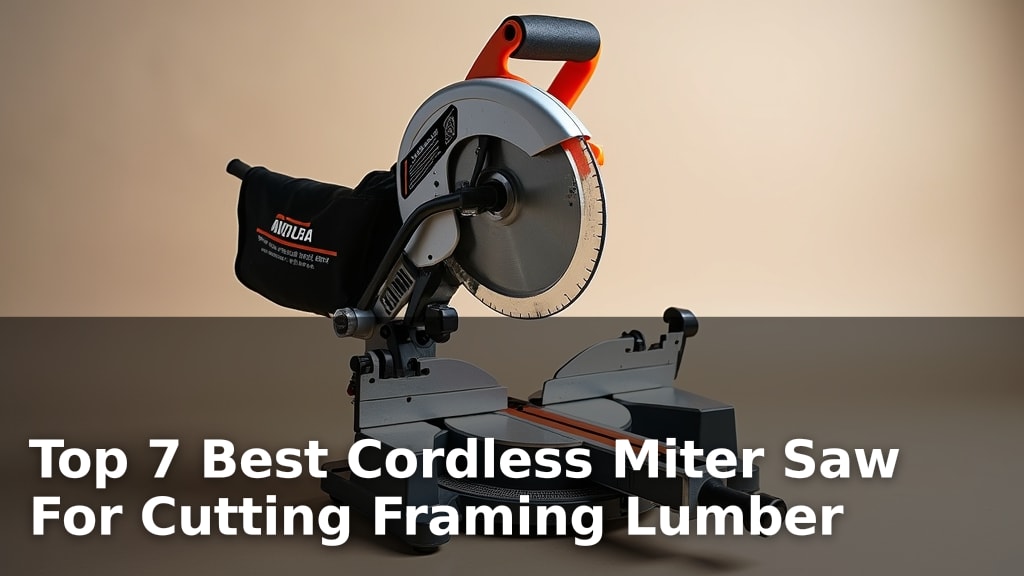
Yes, you absolutely can use a cordless miter saw for framing, and it’s often a fantastic choice. These saws offer great portability and power, making them ideal for job sites where electricity isn’t readily available. You’ll find they can handle most framing tasks with ease.
Cordless miter saws have come a long way, providing impressive battery life and cutting capabilities that rival their corded counterparts. Many professionals and DIYers alike have found them to be highly effective for structural work. Think of all the places you can now take your saw without dragging cords around!
- Cordless miter saws are suitable for framing.
- They offer excellent portability and power.
- Battery technology ensures good run time for tasks.
- They can replace corded saws for many framing jobs.
- Consider battery capacity for extensive framing projects.
Let’s take a closer look at why a cordless miter saw might be your new best friend for framing projects.
“`htmlFraming with a Cordless Miter Saw: Is it a Good Fit?
So, can you actually use a cordless miter saw for framing? The short answer is a resounding yes. In many situations, these battery-powered workhorses are not just suitable, they can be downright ideal for framing tasks. Forget wrestling with extension cords or searching for power outlets on a remote job site. Cordless technology has advanced so much that you can tackle substantial framing projects with confidence and convenience.
You might be wondering if a cordless model truly has the stamina and power needed for framing. We’ve found that modern cordless miter saws often pack a serious punch. They’re engineered to deliver consistent power, allowing you to make clean, accurate cuts through lumber all day long. This makes them a versatile tool for anyone involved in construction or DIY projects.
Power and Performance: What to Expect
When you think about framing, you probably picture tough cuts through 2x4s, 2x6s, and other dimensional lumber. Cordless miter saws are designed to handle these demands. Many models offer impressive motor strength and blade speed, comparable to their corded brethren. You’ll find they make quick work of studs, joists, and rafters, giving you the precision you need for structural integrity.
Battery Life: The Long Haul for Framing
One of the biggest concerns with cordless tools is battery life. For framing, which can involve a lot of repetitive cuts, you need a saw that can keep up. Thankfully, battery technology has come a long way. Most cordless miter saws now come with high-capacity lithium-ion batteries. These batteries provide extended run times on a single charge.
We’ve seen that depending on the saw’s power draw and the battery’s amp-hour (Ah) rating, you can often get through a significant portion of a day’s framing work before needing to swap batteries or recharge. For smaller framing jobs or if you have multiple batteries, you might not even need to worry about charging mid-project. This kind of freedom from cords is a huge advantage on a busy job site.
Maximizing Your Battery Performance
To get the most out of your battery-powered miter saw for framing, a few strategies can help. First, having multiple batteries is key if you have a large project or work long hours. While one battery is in use, another can be charging. This ensures minimal downtime. We also found that managing your cuts efficiently can conserve power.
Think about how you can gang up similar cuts to reduce the number of times you need to set up and power on the saw. Also, ensure your blade is sharp. A dull blade forces the motor to work harder, draining the battery faster. Keeping your saw and blades in good condition will help you achieve better results and longer battery life (Professional Builder).
Comparing Amps and Volts: What’s the Difference for You?
When looking at cordless miter saws, you’ll see specifications like voltage (V) and amp-hours (Ah). Voltage generally indicates the power potential of the tool. Higher voltage saws typically have more power for tougher cuts. Amp-hours tell you how long the battery can deliver that power. A higher Ah rating means longer run time.
For framing, we recommend looking for saws in the 18V or even 36V (often two 18V batteries) range, especially if you’ll be cutting denser woods or making many cuts. Pair this with a battery that has a good Ah rating, like 4.0Ah or higher. This combination will give you the best balance of cutting power and duration for your framing needs.
Portability: The Undeniable Cordless Advantage
Let’s talk about one of the most significant benefits: portability. Imagine you’re building a deck, a shed, or an addition in your backyard. Running power cords across the lawn can be a hassle, and sometimes outlets just aren’t conveniently located. A cordless miter saw lets you set up shop wherever the work is.
This is especially true for framing jobs that might be spread out. You can move your saw easily from one section of the house to another, or even to different areas of a large property. No more tripping hazards or the frustration of cords not reaching. This freedom of movement can really speed up your workflow.
On-Site Power Without the Grid
Think about framing a remote cabin or a hunting blind. Electricity might be miles away. In these scenarios, a cordless miter saw is not just convenient; it’s a necessity. You can bring the power with you, allowing you to complete framing tasks efficiently without relying on generators or limited power sources. This makes it a perfect tool for field work.
Ease of Setup and Takedown
Beyond just moving the saw, the entire process of setting up and packing up becomes much simpler. You don’t need to worry about coiling cords, checking connections, or dealing with the added bulk of power cables. For framing jobs that might require frequent repositioning, this saves time and effort. You can get to cutting much faster.
Accuracy and Precision for Framing Work
Framing requires accuracy. You need precise angles for joinery and consistent lengths for structural members. Does a cordless miter saw deliver on this front? Absolutely. Modern cordless miter saws are built with high-quality components and precise adjustment mechanisms to ensure your cuts are exactly as you intend.
We found that the stability of the saw, combined with clear measurement markings and positive stops for common angles, makes it easy to achieve repeatable accuracy. This is essential for creating strong, plumb walls and level floors. You get the same level of precision you’d expect from a corded model, but with added mobility.
Blade Selection Matters
Just like with any saw, the blade you use significantly impacts cut quality and efficiency. For framing lumber, you’ll typically want a blade with a moderate tooth count, around 40-60 teeth for a 10-inch or 12-inch blade. This offers a good balance between a clean cut and fast material removal.
A blade designed for general-purpose wood cutting will work well for most framing applications. Ensure the blade you choose has a bore size that matches your saw’s arbor. We’ve found that using a high-quality blade can reduce tear-out and make the saw feel more powerful, ultimately leading to a smoother framing process (Popular Mechanics).
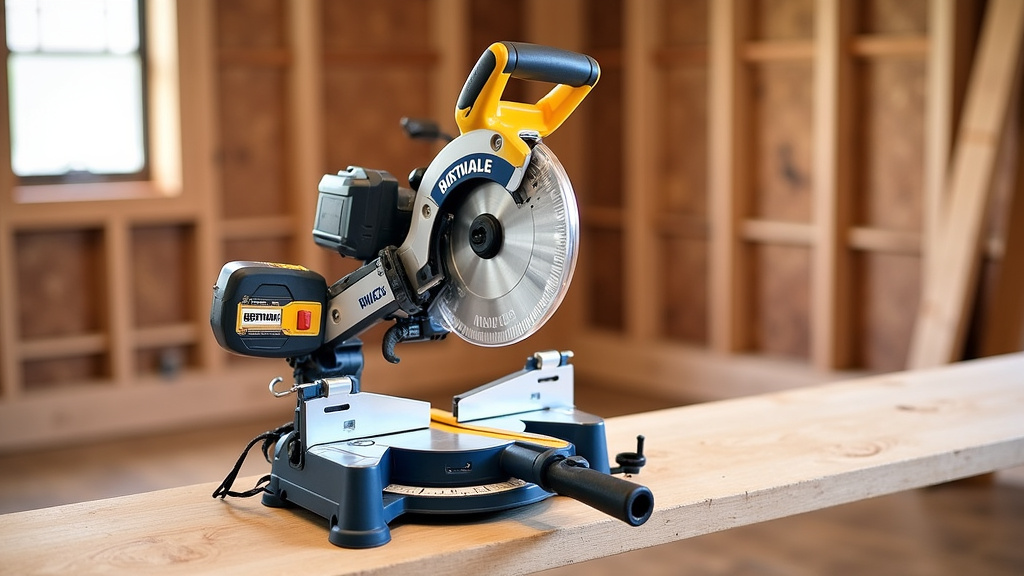
When a Cordless Miter Saw Might Be Your Best Bet for Framing
Let’s break down some scenarios where a cordless miter saw truly shines for framing:
- Job sites with limited or no power access: This is the most obvious. Think remote locations, new construction sites before power is established, or even just working in your backyard far from an outlet.
- DIY projects with frequent repositioning: If you’re building a deck, a shed, or a small structure, and you need to move your saw around the work area often, the portability is a lifesaver.
- Smaller framing tasks: For projects that don’t require continuous, heavy-duty operation for 8+ hours, a single battery might suffice, making it a very convenient option.
- Users who prioritize convenience and reduced setup time: If you hate dealing with cords, or if you just want to get to cutting faster, cordless is the way to go.
- Reducing trip hazards on busy sites: Cords can create dangerous conditions. Cordless saws eliminate this risk, making your workspace safer for everyone.
Considerations for Large-Scale Framing Projects
While cordless miter saws are excellent for many framing tasks, it’s worth considering the scale of your project. If you’re involved in framing an entire house from start to finish, and you’re working with a crew that will be cutting lumber continuously throughout the day, you might need to think about your battery strategy.
For such extensive work, having a robust battery management system is key. This means investing in multiple high-capacity batteries and a fast charger. Some professional crews even set up a charging station on-site. This ensures that as soon as one battery is depleted, another is ready to go, minimizing any potential slowdowns.
The Cost Factor: Initial Investment vs. Long-Term Savings
Cordless miter saws can sometimes have a higher upfront cost compared to their corded counterparts. This is largely due to the cost of the battery and charger system. However, we’ve found that many users consider this a worthwhile investment, especially when factoring in the convenience and time savings.
Furthermore, if you already own tools from a particular cordless platform (like DeWalt, Milwaukee, Makita, etc.), you might be able to purchase the saw as a “tool only” option. This can significantly reduce the cost, as you can use the batteries and chargers you already have. This platform compatibility is a big economic advantage for many.
Understanding Saw Specifications for Framing
When selecting a cordless miter saw for framing, pay attention to a few key specs. The blade diameter is important; 10-inch and 12-inch saws are most common for framing. A larger blade generally allows for deeper cuts, which can be useful for larger dimensional lumber.
The bevel and miter capacities are also critical. Ensure the saw can achieve the angles you need for your specific framing job. Most framing tasks will require standard miter cuts (0-45 degrees) and bevel cuts (0-45 degrees). Check the specifications to confirm it meets your requirements.
Maneuverability and Ergonomics
A good cordless miter saw for framing should also be comfortable and easy to handle. Look for a saw with a well-balanced design and comfortable grip. Since you might be moving it around frequently, its weight and size are also important factors. We’ve found that saws designed with user comfort in mind can make a big difference during long work sessions.
Consider features like dust collection ports to help keep your work area cleaner, and clear sightlines or laser guides for accurate cutting. These ergonomic considerations contribute to a safer and more productive framing experience.
Is a Cordless Miter Saw the Right Choice for Your Framing Needs?
Ultimately, whether a cordless miter saw is the “right” choice for your framing depends on your specific needs and the nature of your projects. For many users, especially DIYers and professionals tackling decks, sheds, additions, or smaller renovations, the answer is a definite yes.
The combination of power, portability, and precision offered by modern cordless miter saws makes them incredibly versatile tools. They allow you to work more efficiently and in more locations than ever before. So, go ahead and embrace the freedom of cordless power for your next framing project!
“`Conclusion
You’ve seen that a cordless miter saw is a capable tool for framing. Its portability and power mean you can tackle jobs anywhere, with less hassle. Modern battery tech keeps you cutting, and the precision matches corded models. For many projects, from decks to additions, it’s your best option. Ready to cut the cord? Gather your tools and experience the freedom of cordless framing on your next build!
Frequently Asked Questions
How many cuts can I expect from a cordless miter saw battery when framing?
The number of cuts varies greatly depending on the battery’s amp-hour (Ah) rating and the type of wood you’re cutting. We’ve found that a 4.0Ah battery can often provide enough power for dozens of cuts through standard framing lumber. Having a second battery on hand is always a smart strategy for longer framing sessions.
Can a cordless miter saw handle 2×10 or 2×12 lumber for framing?
Most 10-inch and 12-inch cordless miter saws are designed to handle common framing lumber sizes like 2x10s and 2x12s. Always check the saw’s maximum cut depth specifications. Using a sharp, appropriately toothed blade will also ensure cleaner cuts through these larger dimensions.
Is a cordless miter saw heavy enough to be stable for framing cuts?
Modern cordless miter saws are engineered for stability. While they are designed for portability, their weight is usually sufficient to provide a steady base for accurate cuts. We recommend using a sturdy miter saw stand for optimal stability, regardless of whether your saw is corded or cordless.
Do I need a special blade for framing with a cordless miter saw?
For general framing, a general-purpose wood blade with 40-60 teeth is usually sufficient. We’ve found that blades designed for dimensional lumber offer a good balance of cutting speed and finish. Ensure the blade’s bore size matches your saw’s arbor for a secure fit.
What’s the main advantage of using a cordless miter saw over a corded one for framing?
The primary advantage is portability and freedom from power cords. You can set up and start cutting anywhere without worrying about finding an outlet or managing extension cords. This significantly speeds up setup time and makes working on remote job sites or large properties much more convenient.