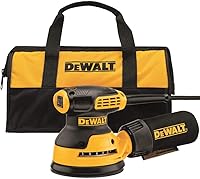
DA Sander vs Orbital Sander: What Is the Difference? (November 2026)
A DA sander is a random orbital sander, so DA and random orbital mean the same tool for most buyers. In this da sander vs orbital sander guide, dual action means the pad spins and orbits at once, which gives a swirl-free finish that a plain orbital sander cannot match.
On this page (13 sections)
- DA sander vs orbital sander: the quick verdict
- What dual action means on an orbital sander
- DA sander vs orbital sander side by side
- How the sanding motion changes the finish
- Speed control: where DA models differ
- Cordless, corded and what fits your space
- Weight, height and control in your hand
- Dust collection and clean paper changes
- Who should buy which DA sander
- How to use a DA sander without swirl marks
- When a plain orbital sander still makes sense
- Other saw comparisons you may be reading
- The verdict on DA sander vs orbital sander
A DA sander is a random orbital sander, so the terms point to the same tool in most shops today. The da sander vs orbital sander choice is really about sanding motion, not brand names.
Dual action means the pad spins and orbits at the same time.
A plain orbital sander only orbits. It moves the pad in a small circle and does not rotate the paper.
That can leave circular scratch patterns, especially with light pressure on soft wood.
Our score weighs specs, features and buyer feedback against what you are shopping for. We compared the four sanders below on motor type, speed range, weight, dust handling and pad size.

DA sander vs orbital sander: the quick verdict
Pick a DA, or random orbital, sander for almost all wood finishing work. It gives a more even finish, removes material at a useful rate and works with common 5 inch hook-and-loop paper.
Pick a plain orbital sander only if you need a very light touch for polishing or for tasks where spin could be a problem. Most readers shopping for wood should skip that niche.
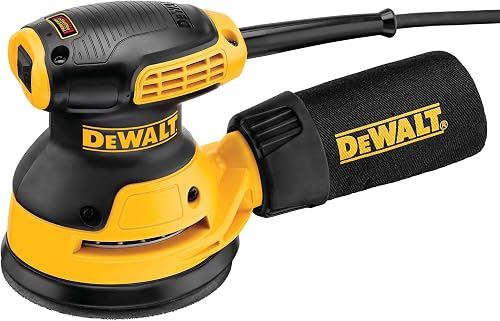
The four products in this guide are all random orbital sanders. That includes the DEWALT 20V MAX Orbital Sander at 9.7, the DEWALT Orbital Sander at 9.4, the BLACK+DECKER Orbital Sander at 9.3 and the SKIL 5” Random Orbital Sander with Cyclonic at 9.2.
If you want the broader picture first, our guide to different types of sanders places random orbital sanders next to belt, palm, sheet and detail sanders.
What dual action means on an orbital sander
Dual action means two motions happen together: the pad spins and the pad orbits. The spin turns the paper.
The orbit moves the whole pad around a small offset path.
That mix keeps fresh grit in contact with the wood. It also stops the sander from cutting a deep circular groove in one spot.
A plain orbital sander has only the orbit. The paper does not spin, so one area of grit does most of the work.
That same area can wear down, load up or polish the surface instead of cutting it.
DA is an older shop term for the same idea. Random orbital is the term you will see in most current product names, including all four sanders here.
DA sander vs orbital sander side by side
The table shows why DA models win for wood, even though plain orbital sanders still have a small place. Motion is the main difference.
Speed control, paper changes and dust handling decide which DA model fits you.
| Feature | Plain orbital | DA or random orbital |
|---|---|---|
| Pad motion | Orbits only | Spins and orbits |
| Finish on wood | More likely to show swirl marks | More even, swirl-free finish |
| Paper wear | One area does more work | Fresh grit keeps reaching the surface |
| Control on edges | Gentle, but slow to cut | Faster cutting, needs light pressure |
| Best use | Light polishing and niche tasks | Furniture, panels, doors and general prep |
All four sanders here use 5 inch hook-and-loop pads. That size covers large flat areas well and still fits many smaller pieces when you guide it with care.
Our orbital vs random orbital sander comparison goes deeper into this motion difference. Read that next if you keep seeing both terms in listings.
How the sanding motion changes the finish
Random orbital motion spreads scratches out instead of letting them build up in a circle. That is why DA sanders are the default for a finish you plan to stain, paint or clear coat.
With a plain orbital sander, the pad follows the same small circular path again and again. On soft pine, that can leave faint arcs that show under clear finish.
With a DA sander, the spin shifts the paper on every pass. Each grit grain touches the wood in a new place.
The result is a finer, more uniform scratch pattern at the same grit.
Speed still matters. The DEWALT 20V MAX Orbital Sander runs from 8,000 to 12,000 OPM.
The SKIL runs from 7,000 to 13,000 OPM. The corded DEWALT and BLACK+DECKER models run at 12,000 OPM.
Higher speed does not always mean a better finish. On fine grit, extra speed can make the sander grab and move too fast.
Lower speeds give you more control near edges and on veneer.
Keep the sander moving and use light pressure. Let the speed and grit do the work.
Pressing down harder can stall the orbit, load the paper and leave uneven patches.
Speed control: where DA models differ
Variable speed helps you match the sander to the grit and the task. Single speed is simpler, but it forces you to use the same pace for rough work and fine finishing.
The DEWALT 20V MAX Orbital Sander gives variable-speed control from 8,000 to 12,000 OPM. That range lets you slow down for fine paper and speed up for faster stock removal.
The SKIL 5” Random Orbital Sander with Cyclonic gives 7,000 to 13,000 OPM. Its wider range is useful when you move from coarse shaping to fine smoothing without changing tools.
The DEWALT Orbital Sander (DWE6421) runs at 12,000 OPM on a 3.0-amp corded motor. The BLACK+DECKER Orbital Sander (BDERO100) also runs at 12,000 OPM on a 2.0 amp motor.
For heavy removal, 12,000 OPM is plenty. For fine finishing, a lower setting gives you time to react if the pad catches an edge.
If you plan to sand thin pieces often, variable speed is worth choosing.
Cordless, corded and what fits your space
Cordless wins for mobility. Corded wins for long, steady sessions without battery changes.
Neither power type changes the DA motion itself.
The DEWALT 20V MAX Orbital Sander is battery powered and weighs 2.5 pounds as a tool. That light weight helps when you carry the sander around a large tabletop or work outside.
The other three models are corded electric at 120 volts. The corded DEWALT weighs 3.4 pounds.
The BLACK+DECKER weighs 3.2 pounds. The SKIL weighs 3.4 pounds.
A cord can tangle on edges or catch on clamps. Plan your path before you start, keep the cord behind you and stop to reposition it when needed.
Cordless tools still have limits. Battery runtime depends on the battery you use, and battery and charger are sold separately for the DEWALT 20V MAX model.
Weight, height and control in your hand
A low profile and light weight help you keep the pad flat on the work. That matters as much as motor power for a clean finish.
The DEWALT 20V MAX Orbital Sander has a low-profile height so you can get close to the work surface. It also has a texturized rubber overmold grip for comfortable sanding.
The corded DEWALT Orbital Sander has a shorter height and a separate counterweight design that reduces vibration. Rubber over-mold in critical areas helps with grip during long passes.
The BLACK+DECKER Orbital Sander is described as lightweight and compact so it fits in tight spaces. Its comfort grip handle is meant to reduce fatigue.
The SKIL sander uses an ergonomic design with a soft rubber grip and counterweight balance to reduce hand fatigue. Its compact size also helps in tight places.
Weight alone does not tell the full story. Balance, grip shape and vibration control affect comfort more than a few ounces on a scale.
Dust collection and clean paper changes
Good dust collection keeps the paper cutting and your workspace cleaner. Every sander here has some form of dust handling, but the design differs.
The DEWALT 20V MAX Orbital Sander has a one-handed locking dust bag. Its dust port fits directly to DWV010 or DWV012 dust collectors, which are sold separately.
The corded DEWALT Orbital Sander also has a one-handed locking dust bag and can attach directly to DWV010 or DWV012 dust collectors.
The BLACK+DECKER Orbital Sander includes a dust collection bag. Its hook-and-loop system allows fast and easy paper changes.
The SKIL sander uses an X-flow dust collector with cyclone force and a transparent container. You can see when it needs emptying without opening it.
Clean paper cuts faster and leaves a finer finish. When dust packs into the grit, the sander rubs instead of cutting.
That is why emptying the bag or box often matters.
All four use hook-and-loop paper changes. The DEWALT 20V MAX model uses an 8-hole hook-and-loop pad.
Fast changes make it easier to move through grits in order.
Who should buy which DA sander
Choose by power source first, then by speed control and dust design. The motion is the same across these four models, so fit and workflow decide the winner.
Choose the DEWALT 20V MAX Orbital Sander if you want cordless mobility, variable speed from 8,000 to 12,000 OPM and a low profile. It suits owners who already use 20V MAX batteries.
Choose the DEWALT Orbital Sander (DWE6421) if you want corded power, a shorter body and reduced vibration from its counterweight design. It suits steady shop work on flat panels.
Choose the BLACK+DECKER Orbital Sander (BDERO100) if you want a simple corded sander with a dust bag and sandpaper sheet included. It suits first-time buyers and general home projects.
Choose the SKIL 5” Random Orbital Sander with Cyclonic if dust visibility and variable speed matter most. Its transparent box and 7,000 to 13,000 OPM range suit careful finish work.
If you want a ranked view across more models, our best random orbital sander for woodworking guide widens the field beyond these four.
How to use a DA sander without swirl marks
Light pressure, steady movement and clean paper prevent most swirl marks. A DA sander does the motion work for you, but technique still matters.
Start with the right grit for the finish you want. Move through grits in order and skip as few steps as possible on soft wood.
Turn the sander on before it touches the wood. Keep the pad flat and move it in slow, overlapping passes across the surface.
Our guide on how to use orbital sander on wood walks through pressure, pass direction and paper changes in detail.
For DEWALT owners, our how to use dewalt orbital sander guide covers the controls on those tools step by step.
Change paper when it loads, glazes or stops cutting evenly. Vacuum the surface between grits so loose grains do not scratch the next stage.
When a plain orbital sander still makes sense
A plain orbital sander fits light polishing and very delicate surfaces. It is not the best choice for stock removal or a stain-ready finish.
The lack of spin can be useful on fragile finishes where you want minimal cutting. It can also feel gentler on small parts that are hard to hold steady.
Those uses are narrow. For furniture prep, door sanding, tabletop smoothing and general woodwork, DA motion is faster and more predictable.
Do not confuse a plain orbital sander with a palm sander or a sheet sander. Those tools use different pad shapes and motions, and they solve different problems.
Our guide to different types of sanders helps you place each tool in that wider lineup.
Other saw comparisons you may be reading
Sander choice often comes up while readers compare saws, so a few cross-links help. Miter saw topics are separate from sanding, but they share the same workshop.
If you are deciding between saw types, read What Is the Difference Between a Miter Saw and a Table Saw? for cut types and setup. For miter saw capacity, compare What Is the Difference Between a Sliding and Non-sliding Miter Saw? before you buy.
Those saw guides do not change the sander verdict. They simply keep a reader who arrived through a saw search from landing on the wrong tool.
The verdict on DA sander vs orbital sander
Buy a DA or random orbital sander for wood, and treat plain orbital as a niche light-duty option. In this da sander vs orbital sander comparison, dual action motion gives the better finish for almost every project.
Pick the DEWALT 20V MAX Orbital Sander for cordless work with variable speed. Pick the corded DEWALT for steady shop power.
Pick the BLACK+DECKER for a simple starter setup. Pick the SKIL for variable speed and visible dust collection.
Whichever model you choose, use light pressure, keep the pad moving and change paper before it loads. Those habits matter more than chasing the highest OPM number.
Next, read our orbital vs random orbital sander guide to lock in the motion difference. Then check how to use orbital sander on wood before your first pass.
Frequently asked questions
Is a DA sander the same as a random orbital sander?
Yes, in most current tool listings DA means dual action and random orbital describes the same motion. The pad spins on its own axis and also orbits around a center point, which helps prevent deep scratches and swirl marks on wood.
What is the difference between a DA sander and an orbital sander?
A plain orbital sander moves the pad in a small circle without spinning it, so the same part of the paper stays in contact. A DA or random orbital sander spins and orbits, so fresh abrasive keeps reaching the surface and the finish looks more even.
Can I use a DA sander for fine woodwork?
Yes, a DA sander suits fine woodwork when you use light pressure and the right grit for the stage. Start with a lower speed for control, keep the sander moving, and change paper before it loads or glazes.
This helps you avoid gouging thin edges.
Which sander leaves fewer swirl marks?
A random orbital or DA sander leaves fewer swirl marks than a plain orbital sander because it does not track in one circular path. Light pressure, a clean sheet and steady movement matter as much as the tool itself for a smooth finish.