Do You Need A Miter Saw And A Table Saw?
On this page (9 sections)
You often need both a miter saw and a table saw to handle a wide range of woodworking and DIY projects effectively, as each tool excels at different types of cuts.
While a miter saw is perfect for precise crosscuts and angled cuts, a table saw is essential for accurate ripping and squaring large sheet goods. If you are deciding whether both belong in your shop, see whether you need both saws.
- A miter saw is best for precise crosscuts, angles, and trim work on narrower boards.
- A table saw excels at ripping long boards, cutting sheet goods, and making dadoes.
- For many serious woodworkers or diverse DIY projects, owning both saws provides the most versatility.
- You might choose one over the other based on project type, budget, and available workshop space.
- Consider your most frequent tasks to decide if you need both or if one can suffice for now.
Do You Need A Miter Saw And A Table Saw?
Whether you need a miter saw and a table saw depends entirely on your specific projects and the types of cuts you frequently make.
For a truly versatile workshop, these two saws often complement each other beautifully, tackling different cutting tasks with precision.
Understanding Your Project Needs First
Before buying any saw, ask yourself: what do you plan to build? Are you doing small crafts, or are you constructing cabinets and shelving?
Your typical projects dictate which tools become your primary workshop companions. Think about the types of wood you cut and their sizes.
The Miter Saw: Precision for Crosscuts
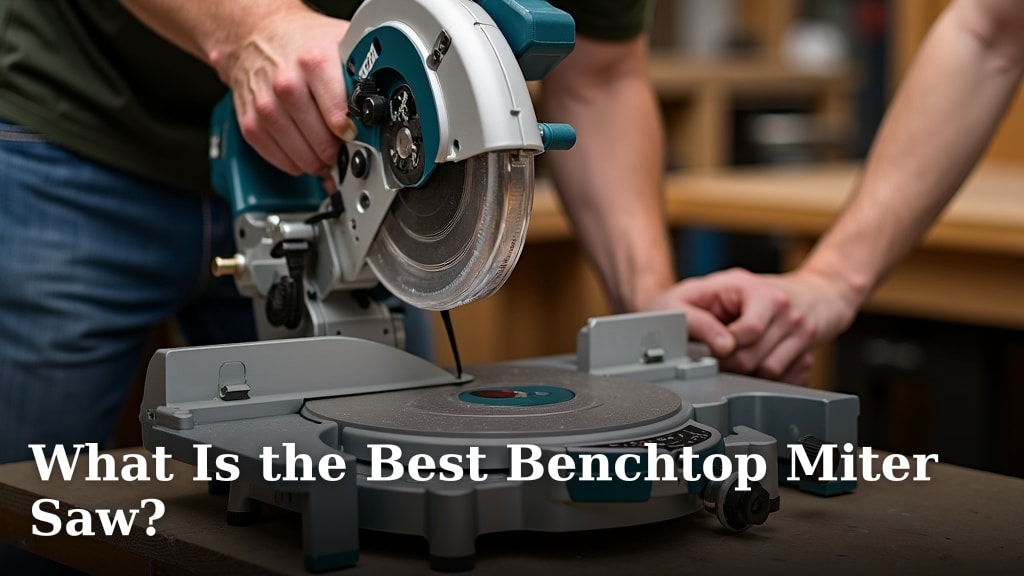
The miter saw, sometimes called a chop saw, is your go-to for precise crosscuts on boards.
Imagine cutting a 2×4 to length or making picture frames; a miter saw provides perfectly angled cuts quickly and reliably. We found that most people love it for trim work.
Miter Saw Strengths
A miter saw is fantastic for cutting boards shorter and for making specific angles, known as miter cuts, or bevels.
It’s very safe for these operations because the material is held stationary while the blade moves through it. Many experts say it’s ideal for crown molding (The Family Handyman).
Best For:
- Cutting studs or 2x4s to length.
- Making precise angle cuts for trim, molding, and picture frames.
- Crosscutting wider boards up to its capacity.
- Quick, repetitive cuts on smaller pieces.
The Table Saw: Power for Rips and Sheets
Now, let’s talk about the table saw. This tool is a powerhouse for making long, straight cuts, especially when you need to rip a board down its length.
Do you need to cut a 4×8 sheet of plywood into smaller pieces? The table saw is your absolute best friend for that task.
Table Saw Strengths
A table saw excels at ripping — cutting wood along the grain — and squaring up large panels. It can handle sheet goods like plywood or MDF with ease.
Research often connects the table saw with cabinetry and furniture making, where accurate, long cuts are critical (Fine Woodworking).
Best For:
- Ripping boards to a specific width.
- Cutting large sheets of plywood or MDF.
- Creating dadoes or rabbets with the right blade.
- Making non-through cuts for joinery.
When You Might Need Both Saws
Many seasoned woodworkers and serious DIYers find they simply cannot live without both saws. Why?
Because they tackle fundamentally different types of cuts. It’s like needing both a hammer and a screwdriver; they perform distinct, essential functions.
Complementary Tools for Diverse Projects
Imagine you’re building a bookshelf. You’ll use your table saw to rip your plywood shelves to the correct depth.
Then, you’ll grab your miter saw to precisely cut the face frame pieces to length and angle them for perfect joints. See how they work hand-in-hand?
Key Differences at a Glance
To help you decide, let’s look at the core differences. This isn’t about one being “better,” but about what each tool does best.
Understanding these distinctions is key to building a functional and efficient workshop.
| Feature | Miter Saw | Table Saw |
|---|---|---|
| Main Cut Type | Crosscuts, Miter, Bevel | Ripping, Dadoes, Sheet Cuts |
| Material Movement | Material held still, blade moves | Material pushed through blade |
| Best For | Trim, framing, small parts | Cabinets, furniture, sizing panels |
| Portability | Generally more portable | Less portable, often stationary |
Budget and Space Considerations
We know that tools cost money and workshops rarely have endless space. These are real-world factors in your decision.
A quality miter saw and table saw are investments. You might start with one and add the other later as your skills and projects grow.
Making the Smart Choice for Your Setup
If space is tight, a compact jobsite table saw might be an option, but it won’t handle large sheets as easily as a full cabinet saw.
Some people opt for a sliding compound miter saw which offers a wider crosscut capacity, reducing the immediate need for a table saw for certain tasks.
Your Skill Level and Safety
Both saws require respect and proper safety practices. A miter saw is often considered more beginner-friendly due to its controlled cutting motion.
Table saws, while incredibly versatile, demand careful attention to technique to prevent kickback and other hazards. Always read your manual!
Deciding Your Saw Path: A Quick Checklist
Not sure where to begin? Use this checklist to help clarify your needs. Go through these points to find the right tools for you.
It’s about matching the tool to the task, not just owning the most equipment.
- Are you primarily doing trim work, decking, or framing? (Miter Saw focus)
- Do you plan to build cabinets, furniture, or cut large sheets? (Table Saw focus)
- Is your workshop space limited?
- What’s your initial budget for these tools?
- Are you comfortable learning advanced safety techniques for ripping?
- Do your projects often require both accurate long rips AND precise angle cuts?
Conclusion
Ultimately, whether you need both a miter saw and a table saw depends on your woodworking ambitions and the specific cuts your projects demand.
For casual DIYers focusing on trim and smaller projects, a miter saw might be sufficient. But for those building furniture, cabinets, or tackling diverse tasks, owning both tools is ideal.
They truly are complementary, each filling a vital role in a comprehensive workshop. Consider starting with the one that addresses your most frequent needs, then expand your toolkit as your skills and projects evolve.
Can a miter saw substitute for a table saw for all projects?
No, a miter saw cannot fully substitute for a table saw. While it excels at crosscuts and angles, it cannot perform long rip cuts or precisely size large sheet goods, which are primary functions of a table saw.
Is a table saw dangerous for beginners?
A table saw can be more intimidating for beginners due to the risks of kickback and contact with the blade. However, with proper training, safety measures, and consistent practice, it can be operated safely and effectively (OSHA).
What kind of cuts can only a table saw make?
Only a table saw can make long, accurate rip cuts along the length of a board, precisely size large panels like plywood, and create dadoes, rabbets, or tenons using specialized blades and jigs.
If I only have space for one saw, which should I choose?
If you only have space for one saw, consider your most frequent projects. If you do more trim, framing, or short, angled cuts, a miter saw is the better saw for you. If you build furniture, cabinets, or work with sheet goods, a table saw is more versatile for those tasks.
Are there any all-in-one machines that combine both functions?
While some specialized woodworking machines offer multiple functions, including crosscutting and ripping, they are typically larger, more complex, and significantly more expensive than individual miter and table saws. They are less common for a home workshop.