Can You Use A Miter Saw As A Table Saw?
No, you absolutely cannot safely or effectively use a miter saw as a table saw. These tools are built for fundamentally different cutting tasks and come with distinct safety features.
While both cut wood, a miter saw excels at precise cross-cuts and angles, whereas a table saw is designed for ripping long boards and handling sheet goods.
Here’s a quick overview of what you’ll learn:
- Miter saws and table saws have different purposes.
- Attempting to swap their roles is unsafe and inefficient.
- Miter saws make precise angle and cross-cuts.
- Table saws are for long rip cuts and larger materials.
- Always choose the correct tool for your project to ensure safety and quality.
Can You Use A Miter Saw As A Table Saw?
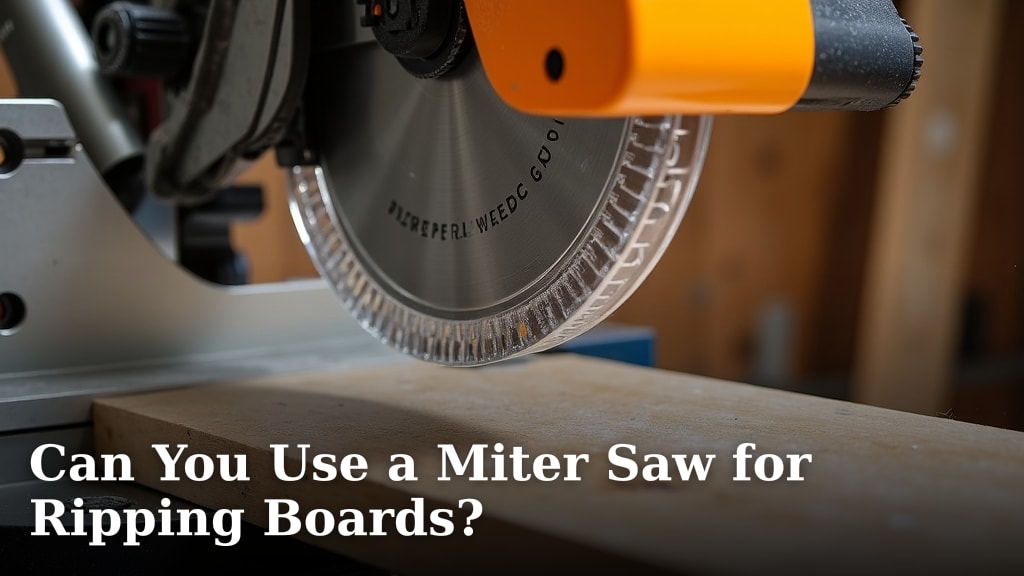
You really shouldn’t use a miter saw as a table saw due to fundamental differences in design and function. Doing so can be very dangerous and will likely give you poor results.
Understanding the Core Design Differences
Think of it like this: a screwdriver and a hammer both work with fasteners, but they do completely different jobs. A miter saw and a table saw are similar. They both cut wood, but their designs are specialized.
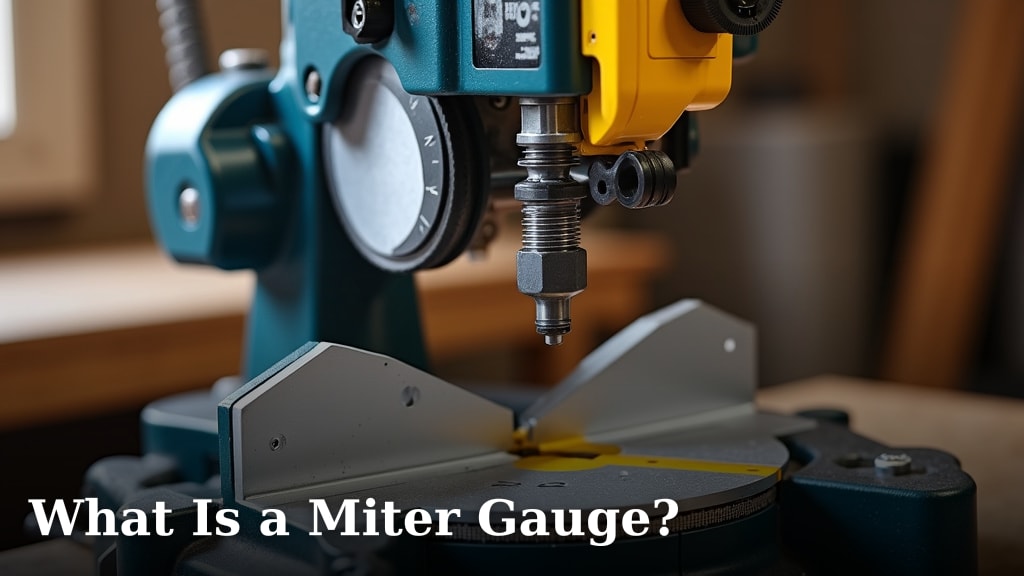
A miter saw has its blade mounted above the workpiece, pulling down to cut. A table saw’s blade comes up from below a flat surface. For table-saw crosscuts, learn how a miter gauge guides boards. This basic difference changes everything about how you use them and what they excel at.
Miter Saw: The Cross-Cutting King
A miter saw is perfect for making precise cross-cuts, which means cutting across the grain of a board. It shines when you need to cut boards to length or create angled cuts for trim, frames, or crown molding.
You place your wood against a fence, hold it still, and bring the blade down. It’s built for accuracy on smaller pieces and repetitive cuts. Many experts say a miter saw is a must-have for finish carpentry (Woodworking Journal).
Table Saw: The Ripping Powerhouse
The table saw is built for ripping, which involves cutting along the grain of a board. This is how you make wider boards narrower, or cut large sheets of plywood into more manageable pieces. The flat table provides a large, stable surface to support big materials.
With a fence to guide your material and a blade that stays put, you push the wood through. This setup allows for long, straight, consistent cuts that a miter saw simply can’t handle.
Why Swapping Tools Is A Bad Idea
Trying to make a miter saw act like a table saw is like trying to use a screwdriver to hammer a nail. It’s clumsy, ineffective, and frankly, risky. You might manage a crude cut, but it won’t be accurate, and you’ll be putting yourself at risk.
We found that many woodworking incidents happen when people try to use a tool for something it wasn’t designed for (OSHA safety guidelines).
Safety Concerns: A Top Priority
Safety is the primary reason not to interchange these tools. A miter saw has no flat table to support long material for rip cuts. There’s no rip fence to guide the wood steadily. This means your wood can easily twist, bind, or kick back forcefully.
A table saw, conversely, lacks the precise angling mechanisms and fence needed for accurate miter cuts without specialized jigs. It’s important to always respect the design limitations of each tool.
Specific Cuts Each Tool Excels At
Let’s get practical. When do you grab which saw?
- Miter Saw: Cutting trim to length, angled picture frames, deck boards, creating repetitive identical pieces, cutting dimensional lumber (2x4s, 2x6s) for framing.
- Table Saw: Making a 2×10 board into two 2×5 boards (ripping), breaking down a full sheet of plywood for cabinets, creating dadoes or rabbets (with the right blade/setup).
Comparing Miter Saws and Table Saws Side-by-Side
A quick comparison helps to see just how different these tools are. Understanding their strengths makes choosing the right one straightforward.
| Feature | Miter Saw | Table Saw |
|---|---|---|
| Primary Cut Type | Cross-cuts, angles, bevels | Rip cuts, sheet goods, dadoes |
| Blade Movement | Pivots down onto material | Fixed, material pushed through |
| Material Support | Small fence, limited width | Large, flat tabletop |
| Safety Features | Blade guard, brake, hold-down clamp | Blade guard, splitter, anti-kickback pawls, push stick |
| Best For | Trim, framing, precise length cuts | Panel cuts, narrowing boards, custom stock |
The Dangers of Improvised Setups
You might see videos online of people trying to modify a miter saw to rip wood. Please, do not try this at home. These setups are often unstable, lack proper safety guards, and can lead to severe injuries. We found that improper tool modifications are a common cause of workshop accidents (Consumer Product Safety Commission).
Your fingers, eyes, and overall well-being are far more important than saving a few minutes or avoiding buying another tool.
When One Tool Just Won’t Do
Sometimes, your project will call for both tools. For example, if you’re building a bookshelf, you might rip plywood sheets on your table saw for the shelves and sides. Then, you’d use your miter saw to cut trim pieces to length and angle them for a decorative top.
Having both tools gives you the versatility to tackle a wide array of projects safely and with professional-looking results. Investing in the right tool for the job always pays off in the long run.
Choosing the Right Saw for Your Project: A Checklist
Unsure which saw to grab? Use this quick checklist:
- Are you cutting across the grain or to a specific length? Grab the miter saw.
- Do you need to cut angles or bevels on smaller pieces? The miter saw is your friend.
- Is the goal to cut long strips from a wider board? Reach for the table saw.
- Are you breaking down large sheets of plywood or MDF? A table saw handles this best.
- Do you need maximum stability for a long, straight cut? That’s a job for the table saw.
Prioritizing Safety and Accuracy
At the end of the day, your safety and the quality of your work are what count. Using the correct tool ensures both. Don’t compromise either for convenience or because you lack the “other” tool. It’s worth waiting, borrowing, or investing to do it right.
Many woodworking experts emphasize that a safe workshop is one where tools are used as intended. This guidance protects both you and your material.
Conclusion
While a miter saw and a table saw both cut wood, they are distinct tools designed for different tasks. You cannot safely or effectively use a miter saw as a table saw. The design, safety features, and primary functions of each tool are specialized.
A miter saw excels at precise cross-cuts and angles, perfect for trim and framing. The table saw is your go-to for accurate rip cuts and breaking down sheet goods. Always choose the appropriate tool for your specific cut to ensure both your safety and the best possible outcome for your project.
Can a miter saw make long rip cuts?
No, a miter saw is not designed to make long rip cuts. Its setup with a fence and pivoting blade is meant for cross-cutting and angle cuts on shorter material. Attempting to rip with a miter saw is extremely unsafe and will likely result in inaccurate cuts and potential kickback.
Are there any attachments to convert a miter saw into a table saw?
While you might find some improvised or custom jigs online, there are no universally recognized or safe attachments that genuinely convert a miter saw into a functional, safe table saw. Such modifications are highly discouraged due to significant safety risks and poor performance.
What is the main difference between cross-cutting and ripping?
Cross-cutting means cutting across the wood grain, typically to shorten a board. Ripping means cutting along the wood grain, usually to narrow a board or to cut larger sheets into strips. Miter saws are for cross-cuts, and table saws are for rip cuts.
If I only have one saw, which one should I get first?
The choice depends heavily on the types of projects you plan to do. If you mostly work on trim, picture frames, or smaller projects requiring precise length and angle cuts, a miter saw is a great start. If you deal with larger sheets of plywood, build furniture, or need to narrow boards frequently, a table saw might be more beneficial.
Is it more dangerous to use a miter saw or a table saw?
Both miter saws and table saws are powerful tools that require respect and proper safety procedures. Neither is inherently “more dangerous” than the other if used correctly. However, misusing either tool, such as trying to make a miter saw perform a rip cut, significantly increases the danger of accidents.