
How To Build A Miter Saw Bench?
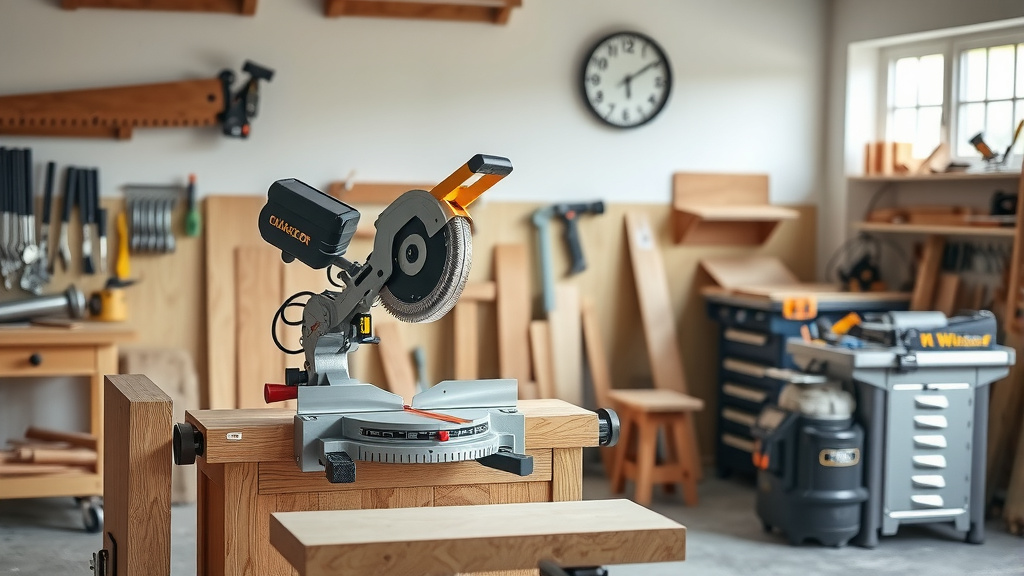
To build a miter saw bench, you typically construct a sturdy frame from plywood or 2x4s, design wings for material support, and integrate dust collection right into its structure.
Careful planning for height, stability, and built-in storage makes your miter saw bench a genuine asset, boosting both safety and accuracy in your workshop.
- Plan your bench height to match your miter saw for perfect cuts.
- Gather essential materials like durable plywood and sturdy 2x4s.
- Construct a strong base and integrate long support wings.
- Add a dust collection system and smart storage solutions for tools.
- Ensure your saw is perfectly leveled for maximum precision and safety.
How To Build A Miter Saw Bench?
Building a miter saw bench involves creating a stable platform with extensions for material support, customized to your saw’s height for optimal cutting accuracy.
This project significantly enhances your workshop’s efficiency by providing a dedicated, ergonomic workstation for precise cuts and better dust management.
Why Build Your Own Miter Saw Bench?
Have you ever struggled with awkward long cuts on your miter saw? A custom bench solves this problem directly.
It provides dedicated support, making those repetitive crosscuts or intricate angles much safer and more accurate. Think of it as your saw’s personal assistant.
Many woodworkers find that a custom bench reduces strain and fatigue, especially during longer projects (Woodworking Magazine).
Beyond Basic Support
A good bench is more than just a table. It includes storage, integrated dust collection, and often mobility.
This transforms your miter saw into a fully functional cutting station, freeing up valuable workspace elsewhere.
Planning Your Perfect Miter Saw Workbench
Before cutting a single board, proper planning is your best friend. What are your unique workshop needs?
Consider the size of your saw, the typical length of materials you cut, and available space.
Measuring Your Miter Saw
Place your saw on a level surface. Measure the height from the floor to the top of its cutting surface.
This measurement is absolutely vital. Your bench wings must match this height for seamless material support.
Desired Bench Height and Ergonomics
We found that a bench height matching your hip bone often leads to less back strain during use.
An ergonomic setup helps you work longer and more comfortably. Your future self will thank you.
Space Considerations
How much room do you have? Will your bench be stationary or need to move?
Planning for width and length ensures your bench fits perfectly and remains functional.
Essential Materials and Tools You’ll Need
Gathering everything upfront saves time and prevents interruptions. What’s in your toolbox?
Most benches use common materials that are easy to find at any hardware store.
Building Materials Checklist
- ¾-inch plywood (for top and shelves)
- 2x4s or 2x6s (for frame)
- Wood screws (2 ½-inch and 1 ¼-inch)
- Wood glue
- Casters (if making it mobile)
- T-track (optional, for clamps)
Tools Checklist
- Miter saw (of course!)
- Drill/driver
- Tape measure
- Pencil
- Speed square
- Circular saw or table saw
- Level
- Safety glasses and hearing protection
Step-by-Step Construction Guide
Ready to get started? Let’s break down the build into manageable steps.
Remember the carpenter’s motto: “Measure twice, cut once.” It truly saves headaches.
Building the Base Frame
Start by cutting your 2x4s to length for the main frame. You’ll need four legs, two long rails, and two short rails.
Assemble the base using wood screws and glue for maximum rigidity. We found that pre-drilling pilot holes prevents wood splitting (Woodsmith).
Creating the Support Wings
These are the extensions on either side of your miter saw. Cut plywood pieces for the tops of these wings.
Ensure the top surfaces are precisely level with your miter saw’s base, matching your earlier measurements.
Many experts suggest using a straightedge to verify perfect alignment across the entire surface.
| Feature | Plywood (¾-inch) | MDF (¾-inch) |
|---|---|---|
| Durability | Excellent (strong, resists warping) | Good (durable, but prone to moisture damage) |
| Cost | Moderate to high | Lower (more budget-friendly) |
| Edge Finish | Can splinter, needs sanding/edging | Smooth, takes paint well |
| Weight | Lighter | Heavier (very dense) |
Integrating Dust Collection
Miter saws generate a lot of dust. A good dust collection system is not just about cleanliness, it’s about health and visibility.
Consider building a shroud around the back of your saw or cutting an opening in the benchtop to connect to a shop vac.
Research often connects airborne sawdust with respiratory issues (NIH). Keep your lungs happy!
Adding Storage Solutions
A smart bench has storage. Drawers underneath are perfect for blades, tape measures, and pencils.
Open shelves can hold larger items like clamps or even a small shop vac.
We found that adding a simple cleat system on the side for quick access to measuring tools works wonders.
Making It Mobile: Casters or Fixed?
Do you need to move your bench around the shop? Casters provide fantastic mobility.
Just ensure you choose locking casters so the bench stays put when you’re cutting.
If space isn’t an issue, a fixed bench offers ultimate stability, but limits flexibility.
Leveling Your Saw for Precision
After your bench is built, the final step is to secure and level your miter saw.
Use shims if necessary to ensure the saw base is perfectly flat and its cutting surface aligns with your extension wings.
A small miscalibration here can lead to frustratingly inaccurate cuts.
Safety First: Tips for Your New Bench
A sturdy bench is a safer bench. Always keep your workspace clean and clutter-free.
Wear appropriate safety gear like eye protection and hearing protection.
Never bypass safety features on your saw. They are there for a reason, protecting your hands and fingers.
Common Mistakes to Avoid
One frequent mistake is not making the bench tall enough. This causes unnecessary bending.
Another is forgetting to make the extension wings precisely level with the saw’s cutting deck.
Finally, skimping on fasteners or glue can lead to a wobbly bench, which is both annoying and unsafe.
Customizing Your Bench for Unique Needs
Your bench can grow with you. Consider adding a stop block system for repeatable cuts.
T-tracks integrated into the top allow for quick clamping of workpieces.
Some people even build in power strips for easy access to tools. Make it truly yours!
Conclusion
Building your own miter saw bench is a rewarding project that transforms your workshop experience.
By following these steps, you create a stable, ergonomic, and highly functional cutting station tailored to your needs.
A dedicated miter saw bench improves accuracy, enhances safety, and helps keep your workspace tidy. It’s an investment in your craftsmanship and efficiency.
What’s the ideal height for a miter saw bench?
The ideal height for a miter saw bench typically matches the height of your miter saw’s cutting surface, allowing your material to lie flat and fully supported. For ergonomics, many people aim for a height that aligns with their hip bone, minimizing back strain during use.
Can I use 2x4s for the entire bench frame and top?
While 2x4s are excellent for the bench’s frame, using them for the entire top surface is less ideal. A flat sheet material like ¾-inch plywood or MDF provides a much smoother, more stable, and more continuous work surface crucial for accurate cuts, especially on longer materials.
How do I ensure the bench’s support wings are perfectly level?
To ensure perfect levelness, use a long straightedge spanning from your miter saw’s base across the extension wing. Apply shims or carefully adjust the wing’s supports until the straightedge sits flush across all points, indicating a perfectly even plane. Check this from multiple angles.
What kind of dust collection works best for a miter saw bench?
For a miter saw bench, a combination of a shop vacuum connected directly to the saw’s dust port and a custom-built dust hood or shroud behind the saw works best. This captures both the direct chip ejection and the ambient dust that escapes the saw’s integrated collection system.
Is a mobile miter saw bench better than a stationary one?
The “better” choice between mobile and stationary depends on your workshop size and how you work. A mobile bench with locking casters offers flexibility if space is limited or if you need to reconfigure your shop frequently. A stationary bench provides maximum stability and can often support heavier materials, making it ideal for dedicated cutting stations in larger shops.
