
How To Make Sliding Miter Saw With Angle Grinder?
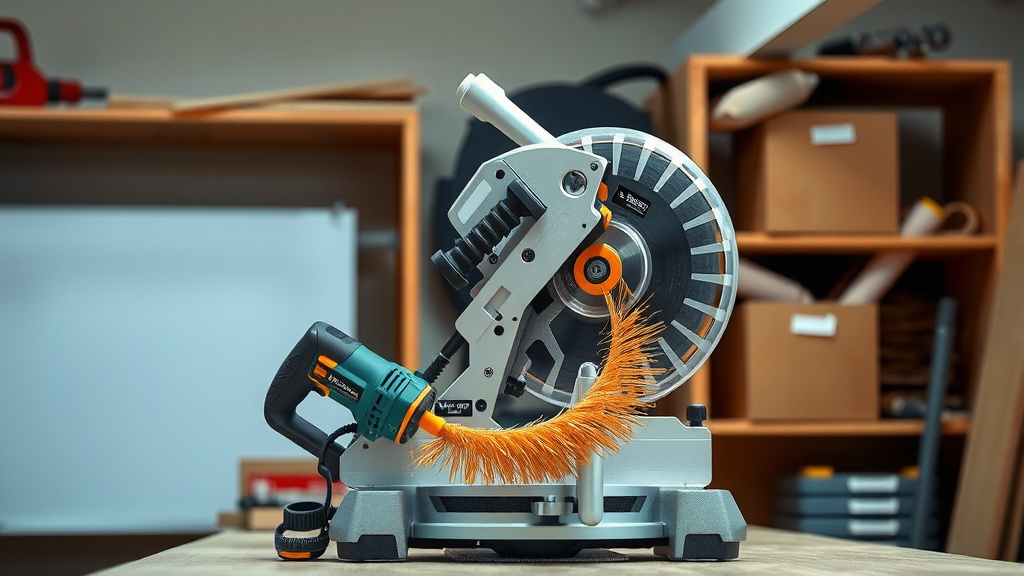
Creating a sliding miter saw from an angle grinder involves building a custom sled and rail system, securely mounting the grinder to the sled, and designing a stable base with a fence for accurate cuts.
This DIY project requires careful planning, welding or strong fastening, and precise measurements to transform an angle grinder into a functional sliding miter saw.
- You can attempt to build a DIY sliding miter saw using an angle grinder, but it comes with significant safety risks.
- The process involves creating a custom sliding mechanism and securely mounting the grinder.
- Expect to invest time in precise fabrication and material gathering.
- Safety precautions are absolutely vital throughout the construction and use.
- A commercially made miter saw is always safer and more accurate for serious work.
How To Make Sliding Miter Saw With Angle Grinder?
To make a sliding miter saw from an angle grinder, you’ll fabricate a stable frame, construct a smooth sliding carriage, and securely attach your angle grinder for controlled cuts.
This DIY approach transforms basic tools into a specific cutting station with careful engineering.
Why Even Consider This DIY Project?
Perhaps you are a dedicated DIY enthusiast who loves a good challenge in the workshop.
Maybe you have an angle grinder lying around and envision a way to expand its utility for specific cuts.
We understand the desire to innovate and to make the tools you have work harder for you.
This creative approach often stems from needing a precise cutting solution without investing in another large tool.
Understanding the Risks and Realities
Before diving in, it is absolutely vital to grasp that this project carries inherent dangers.
Angle grinders are powerful tools, not designed for fixed miter saw operations, which creates a significant safety concern.
Many experts caution against modifying power tools beyond their intended use due to the potential for severe injury (tool safety guidelines).
You are essentially creating a new machine, and all safety responsibility falls squarely on your shoulders.
The Core Concept: Combining Two Tools
The idea is to mount your angle grinder securely onto a sliding carriage system above a stable base and fence.
This setup allows the grinder to cut stock placed against the fence with controlled precision and angles.
Think of it as giving your handheld grinder a fixed, guided path, mimicking a miter saw’s movement.
The challenge lies in making every component robust, precise, and safe for repetitive use.
Gathering Your Materials and Tools
Preparation is key. You will need a variety of materials and tools to bring this project to life successfully.
We found that having everything ready prevents frustrating stops and starts during construction.
Here’s a general list of what you might need before you start:
- Strong metal stock (angle iron, square tubing) for the frame.
- Smooth steel rods or linear rails for the sliding mechanism.
- Bearings or bushings compatible with your chosen rails.
- Thick plywood or MDF for the base and fence.
- Assorted nuts, bolts, washers, and strong epoxy or welding supplies.
- An angle grinder, of course, preferably one you are comfortable modifying.
- Basic workshop tools: welder, drill, saw, measuring tape, clamps, safety gear.
The Step-by-Step Construction Guide
This is where your vision starts to become a tangible, working piece of equipment. Patience and precision are your best allies here.
Each step builds upon the last, so take your time and double-check your work as you go along.
Designing and Building the Base Frame
Start with a sturdy base for your entire setup. This is the foundation that supports everything else.
Many experts suggest using heavy-gauge steel for minimal vibration and maximum stability.
Measure and cut your angle iron or square tubing to form a rectangular frame that will hold the sliding mechanism.
Attach a solid plywood or MDF top to this frame, which will serve as your cutting surface.
Don’t forget to incorporate an adjustable fence, allowing you to set different cutting angles with confidence.
Crafting the Sliding Mechanism
This part is the heart of your “sliding” miter saw. It needs to be buttery smooth and rock-solid.
You can choose between simple steel rods with bushings or more advanced linear rails and bearings.
Many DIYers start with steel rods, as they are more readily available and simpler to implement.
Securely mount your chosen rails to the back of your base frame, ensuring they are perfectly parallel and level.
A carriage or sled will ride on these rails, carrying your angle grinder back and forth for the cut.
Here’s a quick comparison of common sliding elements:
| Sliding Element | Pros | Cons |
|---|---|---|
| Steel Rods + Bushings | Affordable, simple to install, good for light use. | Can flex under heavy load, less precise over time, requires lubrication. |
| Linear Rails + Bearings | Highly precise, very smooth, excellent load capacity. | More costly, installation requires greater accuracy, often harder to source. |
Mounting the Angle Grinder Securely
This is arguably the most critical safety point. Your grinder must be immovably attached to the sliding carriage.
Design a bracket that firmly clamps around the grinder’s body, avoiding any part that rotates or gets hot.
We found that custom-fabricated metal brackets, possibly welded, offer the best security.
Ensure the cutting wheel aligns perfectly with the fence and base at its lowest point.
You must also devise a way to activate the grinder’s power switch safely and reliably each time you cut.
Integrating Essential Safety Features
Safety cannot be an afterthought; it must be built into your design from the very start.
Consider adding a clear guard around the cutting wheel to contain sparks and debris (OSHA guidelines).
An emergency stop button, easily accessible, is a wise addition, often recommended by safety experts.
Ensure all electrical connections are secure and properly insulated to prevent accidental shocks.
Remember, a fixed grinder setup is very different from its handheld use, demanding extra vigilance.
Initial Testing and Fine-Tuning
Before cutting any valuable material, perform extensive tests with scrap pieces. Safety first, always.
Check for wobbles, misalignment, or any play in the sliding mechanism and grinder mount.
Adjust the fence and carriage until you achieve precise 90-degree and 45-degree cuts.
Listen for unusual noises or vibrations that could indicate a problem with your construction.
This testing phase is where you iron out all the kinks and ensure reliable operation.
Crucial Safety Checklist Before Use
Every time you operate your DIY sliding miter saw, run through this quick but essential safety checklist.
- Is the grinder securely mounted with no movement?
- Are all guards in place and functioning correctly?
- Is your workpiece firmly clamped to the fence and base?
- Are you wearing appropriate personal protective equipment (PPE)?
- Is the work area clear of obstructions and flammable materials?
- Do you have a clear escape route if something goes wrong?
Acknowledging Limitations and Trade-offs
While creative, this DIY tool will likely not match the performance or safety of a factory-made miter saw.
Expect limitations in cutting depth, accuracy over time, and the types of materials you can safely cut.
A professionally engineered miter saw benefits from years of research and rigorous safety testing (consumer reports).
Your custom build will require ongoing checks and maintenance to maintain any level of safety and accuracy.
Is This Truly a Smart Investment of Your Time?
Consider the hours you will spend designing, sourcing materials, building, and refining this project.
Factor in the cost of materials, which can add up surprisingly quickly for quality components.
Sometimes, the time and financial outlay might approach the cost of an entry-level miter saw.
For serious woodworking or metalworking, the reliability and features of a dedicated tool are often unmatched.
When a Dedicated Miter Saw is Non-Negotiable
If you perform precise cuts regularly, especially for construction, cabinetry, or fine woodworking, a proper miter saw is a must.
They offer features like laser guides, dust collection ports, and specific bevel/miter adjustments that are hard to replicate.
Many professionals would agree that for consistent quality and safety, investing in the right tool is always the best choice.
Think about the long-term safety and efficiency benefits a commercial tool brings to your workshop.
Conclusion
Transforming an angle grinder into a sliding miter saw is a testament to DIY ingenuity and resourcefulness.
It demands considerable skill, precise construction, and an unwavering commitment to safety at every turn.
While possible, remember that this custom creation will have limitations and inherent risks compared to a purpose-built machine.
For casual, low-stakes projects, it might offer a unique solution, but for anything critical, a commercial miter saw remains the gold standard.
Always prioritize your safety and consider if the time and effort are truly worth the outcome for your specific needs.
What is the main safety concern with a DIY angle grinder miter saw?
The primary safety concern is that angle grinders are handheld tools, not designed for fixed, automated cutting. Securing them into a custom setup introduces risks of blade misalignment, unintended movement, and lack of proper safety guards, potentially leading to serious injury. The user takes on all safety responsibilities.
Can I achieve precise cuts with a homemade sliding miter saw?
Achieving highly precise cuts with a homemade sliding miter saw using an angle grinder is challenging. While careful construction can yield reasonable accuracy for some projects, it will rarely match the precision, repeatability, and fine adjustment capabilities of a factory-made miter saw.
What materials are best for the sliding mechanism?
For the sliding mechanism, many builders use smooth, hardened steel rods paired with linear bearings or bushings for a smoother glide. Alternatively, aluminum extrusion profiles with specialized glides can also work. The key is low friction, high rigidity, and excellent resistance to wear over time.
Is this project suitable for beginners?
This project is generally not suitable for beginners. It requires a solid understanding of tool mechanics, metal fabrication, precise measurement, and significant safety awareness. If you lack experience with advanced DIY builds or modifying power tools, it is safer to avoid this project.
How much money can I save by building this instead of buying a miter saw?
While you might save on the initial purchase price of a new miter saw, the cost of materials (steel, linear rails, fasteners), specialized tools (welder, accurate measuring instruments), and your time can quickly add up. Often, an entry-level miter saw might be a more cost-effective and certainly safer investment in the long run.
