What Are The Disadvantages Of A Miter Saw?
On this page (10 sections)
- What Are The Disadvantages Of A Miter Saw?
- Limited Cutting Capacity: A Common Frustration
- Portability and Space Challenges
- Safety Concerns: Power Requires Respect
- Cost and Maintenance: What to Expect
- Specific Cuts a Miter Saw Struggles With
- Alternatives to Consider for Different Needs
- Checklist: Is a Miter Saw Right For Your Project?
- Comparison: Miter Saw vs. Table Saw
- Conclusion
Miter saws, while excellent for precise crosscuts, have disadvantages like limited cutting width and depth, making them unsuitable for very wide boards or thick materials.
You might also find their bulkiness a problem for smaller workshops or if you need true portability for job sites, as they can be quite heavy.
- Miter saws are amazing for specific cuts but have some drawbacks you should know.
- You’ll often run into trouble cutting boards that are very wide or exceptionally thick.
- These machines can take up a fair bit of room, which is tough for smaller spaces.
- Moving them around isn’t always easy due to their considerable weight.
- You need to be extra careful with safety; they are powerful tools.
- Don’t forget the initial cost and ongoing blade expenses.
What Are The Disadvantages Of A Miter Saw?
Many woodworkers appreciate a miter saw for its ability to make accurate angled cuts. However, it’s not a universal tool, and you’ll find it has specific limitations that can affect your projects.
Understanding these drawbacks helps you decide if it’s the right tool for your current task or if another saw might serve you better.
Understanding the Miter Saw’s Core Purpose
Before diving into the downsides, let’s remember what a miter saw does best. It excels at quickly cutting stock at various angles and bevels. Think about picture frames, trim work, or deck building.
It’s designed for repetitive, precise cuts, letting you work efficiently. Many professionals rely on it for its speed and accuracy on these specific tasks.
The Miter Saw’s Sweet Spot
A miter saw is a champion for making crosscuts, which go across the grain of wood. It’s fantastic for cuts like miters (angled cuts) and bevels (slanted cuts). Do you need to cut a lot of crown molding or baseboards? This is your go-to machine.
We found that for smaller pieces of lumber or trim, its accuracy is hard to beat. It offers a consistent cut every time, which saves you a lot of time and frustration.
Limited Cutting Capacity: A Common Frustration
One of the most frequent complaints about miter saws involves their cutting capacity. You might quickly discover they just can’t handle every piece of wood you throw at them.
This limitation often becomes clear when you work with larger projects. It’s a bit like trying to fit a square peg in a round hole, isn’t it?
When Wide Boards Become a Wall
Standard miter saws have a limited width they can cut. For instance, a 10-inch saw might only handle a 6-inch wide board. If you’re cutting an 8-inch or 10-inch wide shelf, you could be out of luck.
Even sliding miter saws, which offer more capacity, still have limits. You might need to flip the board or use a different tool entirely for very wide panels.
Thickness Restrictions: Not for Every Job
Beyond width, miter saws also have a depth restriction. They are not built for cutting very thick materials. Imagine trying to cut a 4×4 post with a smaller miter saw; it just won’t work.
The blade size and motor power set the boundary here. We found that for anything thicker than a typical 2×4 or 2×6, you often need to consider a different kind of saw.
Portability and Space Challenges
Miter saws are substantial tools. If you’re thinking of taking your saw from one job site to another, or if your workshop is compact, their size and weight become a real consideration.
They aren’t always as easy to move as you might hope. It’s not like carrying a toolbox; it’s more like moving a small piece of furniture.
The Weight Factor on Job Sites
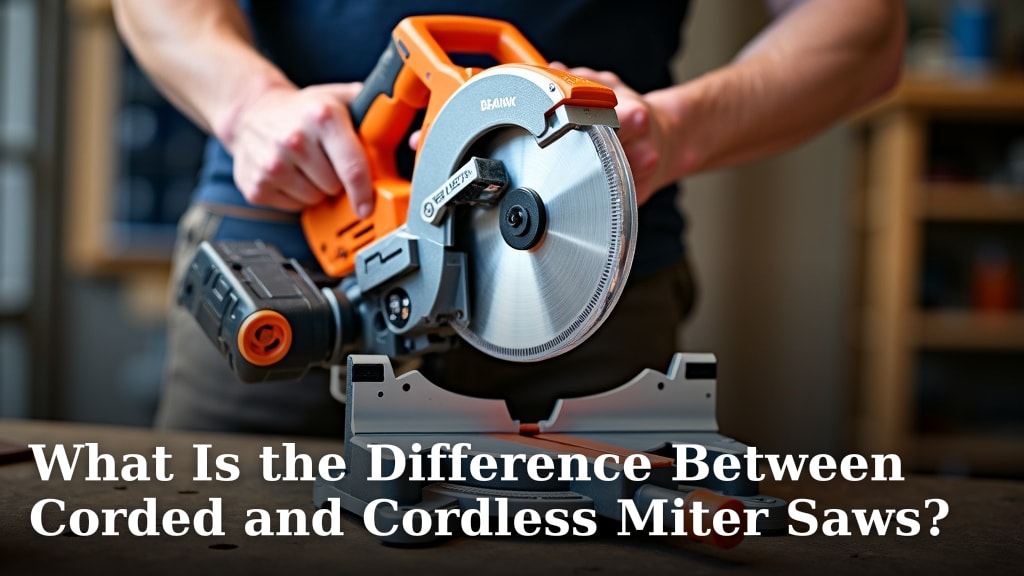
Many miter saws, especially the more robust sliding compound models, can weigh a lot. Lifting a 50-pound or even 70-pound saw repeatedly can be taxing.
If your work involves moving your equipment frequently, this weight can lead to fatigue. You might spend more time setting up and taking down than actually cutting.
Workshop Footprint: Are You Cramped?
Even in a fixed location, a miter saw demands space. A sliding model needs extra room behind it for the blade to move. Are you working in a small garage or basement corner?
You need to plan for its operational area. Many experts say that insufficient workspace can be a hidden disadvantage for smaller workshops.
Safety Concerns: Power Requires Respect
Any power tool demands respect, and a miter saw is no different. Its spinning blade and powerful motor mean you always need to be aware and cautious. Ignoring safety protocols can have serious results.
Thinking about safety isn’t a chore; it’s a necessary part of using powerful machinery. It’s about protecting your hands and your project.
Blade Hazards and Kickback Risks
The rotating blade is obviously the main hazard. You must keep your hands clear and ensure your material is clamped securely. We found that kickback is a real risk if the wood isn’t held tight.
Always wear safety glasses and hearing protection. A moment of inattention can lead to an accident, so staying focused is key.
Noise and Dust: Unavoidable Byproducts
Miter saws generate significant noise and a lot of sawdust. Without proper hearing protection, prolonged exposure to the noise can be harmful. Do your ears a favor and protect them.
The fine dust produced can also be a respiratory hazard. Many guidelines point to dust collection systems as a good first step (OSHA).
Cost and Maintenance: What to Expect
When you budget for a miter saw, you’re not just buying the tool itself. There are other costs that add up over time. It’s like buying a car; the purchase price is only the beginning.
Being aware of these ongoing expenses helps you plan your tool investment wisely.
Initial Investment: More Than Just the Saw
Good quality miter saws are not cheap. A basic model might be affordable, but a sliding compound miter saw can be a significant investment. You might also need a stand, clamps, and other accessories.
Don’t forget the cost of good quality blades, which are essential for clean cuts. It’s about having the right tools for the right job.
Blade Replacements and Upkeep
Miter saw blades wear out or get dull, especially if you cut a lot of hardwoods or even some softer materials. Replacing them adds to your ongoing expenses. Dull blades don’t cut well and can be dangerous.
Keeping your saw clean and properly adjusted also takes time. A well-maintained saw performs better and lasts longer, so it’s a worthwhile effort.
Specific Cuts a Miter Saw Struggles With
While miter saws excel at crosscuts, they are absolutely the wrong tool for other common woodworking tasks. Trying to force a miter saw into these roles can be inefficient or even unsafe.
Knowing its limits helps you pick the correct tool every time. It’s about using the specialized tool for its intended purpose.
Rip Cuts Are Out of Bounds
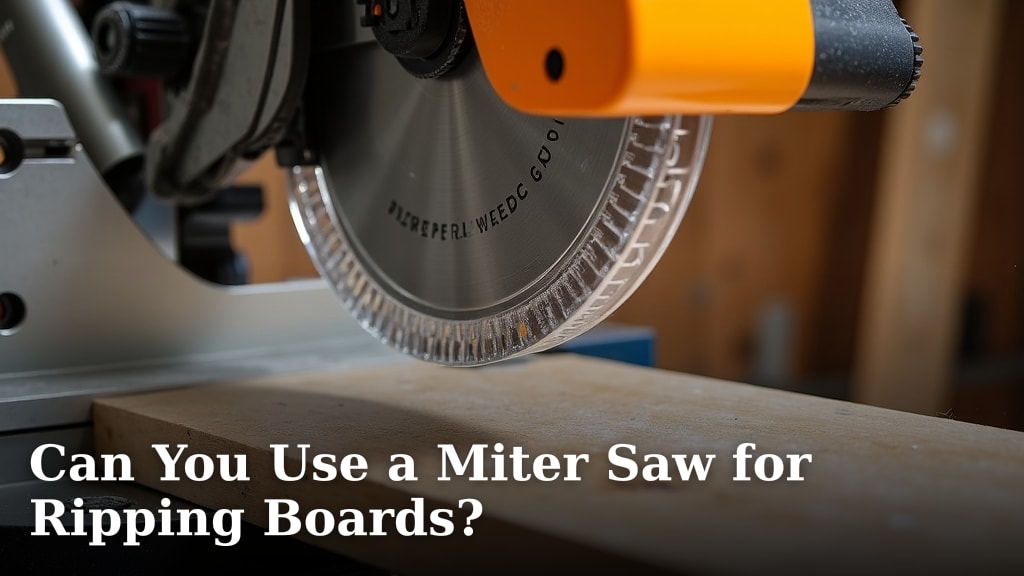
A rip cut goes along the grain of the wood, making a board narrower. A miter saw is not designed for rip cuts. Attempting one can be very dangerous and will likely yield poor results.
For rip cuts, you’ll definitely need a table saw or a circular saw with a guide. They are built for safely and accurately cutting with the grain.
Compound Angles Can Be Tricky
Miter saws are fantastic for simple miter or bevel cuts. However, making compound angles, which involve both a miter and a bevel cut at the same time, can sometimes be a puzzle.
While some compound miter saws can do this, setting them up accurately can take practice and patience. It’s not always as straightforward as it looks on YouTube.
Alternatives to Consider for Different Needs
If a miter saw’s disadvantages feel too limiting for your project, don’t worry. There are other saws that might be a better fit. Every tool has its strengths, and knowing them helps you build your workshop.
Thinking about alternatives can save you time, money, and frustration in the long run.
When a Table Saw Shines
For large sheet goods, rip cuts, and very wide crosscuts, a table saw is often the superior choice. It offers a stable platform and guides that allow for consistent, long cuts. Research often connects table saws with greater versatility for many cutting types (Fine Woodworking).
If your projects involve breaking down plywood or cutting many long strips, a table saw will be much more efficient.
The Versatility of Circular Saws
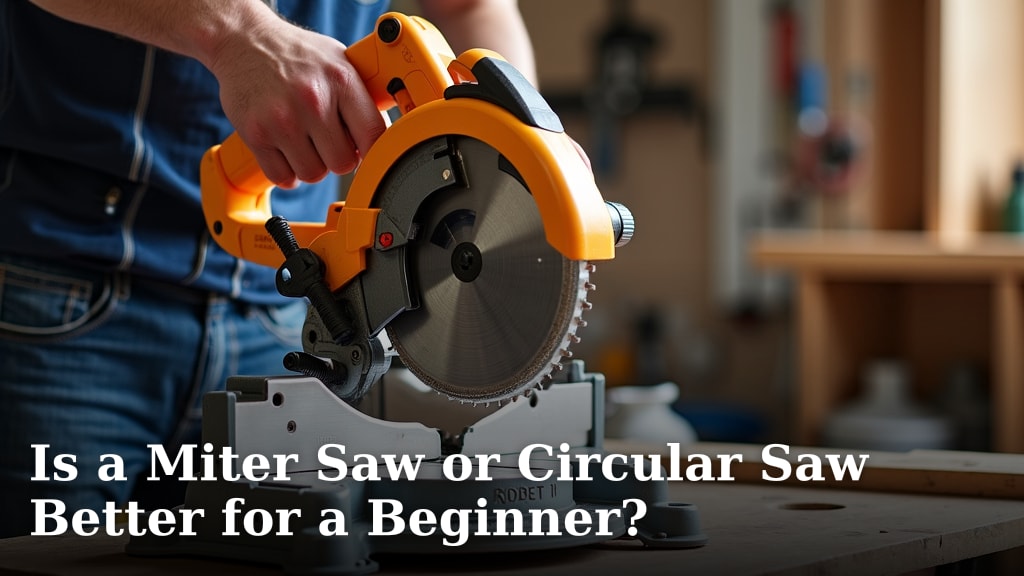
For true portability and cutting sheet goods that are too large for a table saw, a circular saw becomes your friend. It’s handheld, adaptable, and can make both crosscuts and rip cuts with the right guides.
While not as precise for repeated miter cuts, a circular saw offers excellent flexibility for job sites or cutting large panels that don’t fit on a miter saw.
Checklist: Is a Miter Saw Right For Your Project?
- Do you primarily need precise crosscuts?
- Are your boards generally less than 12 inches wide?
- Will you be making many repetitive angled cuts?
- Is your workshop space adequate for the saw’s footprint?
- Are you ready to invest in proper safety gear and training?
Comparison: Miter Saw vs. Table Saw
| Feature | Miter Saw | Table Saw |
|---|---|---|
| Primary Use | Precise crosscuts, miters, bevels | Rip cuts, wide crosscuts, sheet goods |
| Cutting Width | Limited (e.g., 6-16 inches) | Very wide (limited by fence/table) |
| Cutting Depth | Limited (e.g., 2-4 inches) | Moderate (e.g., 3-4 inches) |
| Portability | Moderate to low (can be heavy) | Generally low (stationary tool) |
| Best For | Trim work, framing, small projects | Furniture, cabinets, breaking down lumber |
Conclusion
Miter saws are incredibly useful tools, especially for projects requiring accurate crosscuts and angled pieces. However, it’s wise to acknowledge their limitations before you start your next build.
Understanding their disadvantages, such as limited cutting capacity, bulkiness, and specific safety considerations, helps you make better tool choices. By knowing what a miter saw can’t do, you can equip your workshop with the right combination of tools for any challenge.
How can I make a miter saw more versatile?
You can increase a miter saw’s versatility by adding a suitable miter saw stand with outfeed supports for longer pieces. Also, using a high-quality blade designed for different materials like fine wood or even non-ferrous metals can help, provided the saw is rated for it.
Are miter saws safe for beginners?
Yes, miter saws can be safe for beginners, but only with proper instruction and strict adherence to safety rules. Always read the manual, wear protective gear, and practice with scrap wood. Taking an introductory woodworking class can also be very beneficial.
What’s the main difference between a miter saw and a chop saw?
A “chop saw” is an older term often used for a basic miter saw that only makes straight 90-degree crosscuts. Modern miter saws, especially compound miter saws, can also tilt for bevel cuts and pivot for miter cuts, offering much more versatility than a simple chop saw.
Can a miter saw cut metal?
Some specialized miter saws are designed to cut metal, often called “metal chop saws” or “abrasive saws.” Standard woodworking miter saws should not be used for metal, as their blades are not designed for it and can be dangerous or damage the tool. Always check your saw’s specifications.
How often should I change my miter saw blade?
The frequency depends on how often you use it and the types of materials you cut. If you notice tear-out, burning marks on the wood, or if the saw struggles to cut, it’s likely time for a new blade. Keeping a sharp blade is important for safety and cut quality.