What Can You Build with Just a Miter Saw?
On this page (4 sections)
You can build many useful projects with just a miter saw, especially if you focus on projects with straight cuts and angled joints. Think about items that primarily use 90-degree corners or simple bevels. It’s surprisingly versatile for a single tool.
While a miter saw excels at precise crosscuts and angles, you won’t be building curved furniture or intricate carvings. But for many common household and workshop items, it’s more than enough. You’ll find it perfect for creating strong, functional pieces.
- Miter saws handle most basic woodworking projects.
- Great for picture frames, trim, and small boxes.
- Perfect for repetitive, accurate angle cuts.
- Limitations include curved shapes and wide boards.
Ready to see exactly what you can create and how to get started? Let’s dive into some fantastic project ideas for your miter saw.
Projects You Can Build with a Miter Saw
A miter saw is a surprisingly powerful tool for woodworking, even if it’s the only power tool you own. You can create many useful and attractive items for your home and garden.
Most projects that rely on straight cuts and precise angles are perfect for a miter saw. Think about making things like picture frames, small shelves, or even basic furniture. The key is to choose projects that don’t need curved cuts or very wide boards.
Home Decor and Organization Projects
Your home can greatly benefit from a miter saw. You can make custom pieces that fit your style and space perfectly. These projects are often quick to build.
Picture Frames and Art Displays
This is a classic miter saw project. With its ability to make perfect 45-degree cuts, you can create flawless corners for frames of any size. It’s much cheaper than buying custom frames.
- Choose your wood: pine, oak, or even reclaimed wood.
- Measure your artwork carefully.
- Cut the four pieces with opposing 45-degree angles.
- Assemble using wood glue and clamps or small nails.
You can also build simple shadow boxes or floating shelves to display art or collectibles. These add a personal touch to any room.
Small Shelves and Storage Boxes
Need a place to put your keys or display a small plant? A miter saw makes building simple shelves easy. You can build floating shelves or small wall-mounted units. These are great for clutter control.
Storage boxes are another excellent choice. Think about decorative boxes for trinkets, or even small toy chests. These are typically made with four sides and a bottom, all cut straight. We found that joining corners with miter cuts gives a cleaner look (Woodworking Monthly).
Basic Bookcases and Entryway Organizers
For more ambitious projects, consider a basic bookcase or an entryway organizer. These are essentially larger versions of shelves and boxes. They rely on many straight cuts and strong joints.
You can create cubbies for shoes or hooks for coats. While you might need to dado a groove for back panels, many designs simply use plywood tacked to the back. This makes them accessible for beginners.
Garden and Outdoor Creations
Your miter saw isn’t just for indoor projects. It can help you spruce up your garden and patio too. These projects are usually functional and decorative.
Planter Boxes and Garden Beds
Building a planter box is a straightforward project. You’ll cut four sides and a bottom. Raised garden beds are also simple, using longer planks cut to size. These let you grow your own vegetables or flowers.
Remember to use lumber suitable for outdoor use, like cedar or pressure-treated wood. This will help your creations last longer. Many sources suggest choosing decay-resistant wood (USDA Forest Service).
Simple Outdoor Benches or Stools
If you need extra seating, a basic bench or stool is within reach. You’ll cut legs, aprons, and seat slats. These often use butt joints or half-lap joints, which a miter saw can easily handle with proper jigs.
Keep the design simple. Avoid complex curves or intricate joinery. Focus on sturdy construction. You’ll have a functional piece for your patio or porch.
Workshop and Utility Items
Your miter saw can also help you organize your own workspace. Building jigs, racks, or storage solutions can improve your efficiency.
Workshop Jigs and Fixtures
Many jigs for other woodworking tools rely on straight, accurate cuts. For example, a simple crosscut sled for a table saw, or specialized jigs for router work, can be started with your miter saw. These help you make even better cuts in the future.
You can also build a miter saw stand or extension wings to support longer pieces of wood. This improves accuracy and safety. A good setup makes a big difference (Fine Woodworking Magazine).
Tool Storage and Organizers
Tired of searching for your tools? Build custom shelves or cubbies for your workshop. A simple wall-mounted tool rack or a small cabinet for fasteners is easy to make. This keeps your space tidy and efficient.
Consider making small drawers or bins for hardware. You can even build a custom charging station for your cordless tools. Everything will have its own designated spot.
Understanding the Miter Saw’s Strengths and Limitations
To get the most out of your miter saw, it’s good to know what it does best and where it falls short. This helps you choose the right projects.
Its main strength is precise crosscuts and angle cuts on relatively narrow boards. It’s designed for accuracy and repeatability, making tasks like cutting trim or framing much faster.
Where a Miter Saw Excels
Miter saws are kings of specific types of cuts. They make repetitive tasks simple and ensure consistency. This leads to a professional finish on your projects.
- Crosscutting: Cutting across the grain of a board. This is its primary function.
- Miter Cuts: Angled cuts for joining corners, like in picture frames or trim.
- Bevel Cuts: Angled cuts through the thickness of the board, useful for decorative edges.
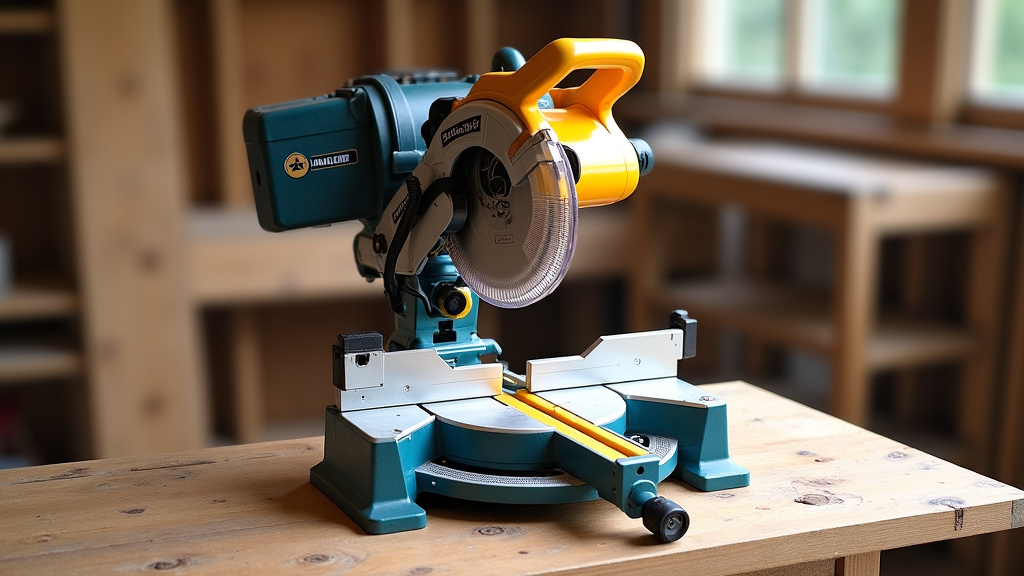
- Compound Cuts: A combination of miter and bevel cuts, perfect for crown molding.
You’ll find these cuts are clean and accurate with a good miter saw. This accuracy is what makes so many projects possible with this single tool. It’s a time-saver for many tasks.
Where a Miter Saw Has Limitations
While versatile, a miter saw isn’t a do-it-all tool. Knowing its boundaries helps you plan projects more effectively. You wouldn’t use a screwdriver to hammer a nail, right?
Board Width and Length
Most miter saws have a limited crosscut capacity. This means you can only cut boards up to a certain width. A 10-inch saw might cut a 2×6, while a 12-inch saw might handle a 2×8 or even a 2×10, especially with a sliding feature. You generally can’t cut very wide panels like plywood sheets.
For longer boards, you’ll need external support. This means sawhorses or roller stands. Otherwise, the unsupported wood can bind the blade or cause unsafe kickbacks. Safety first is always a good rule of thumb.
Complex Shapes and Joinery
A miter saw makes straight cuts. It cannot make curved cuts, dados (grooves), rabbets (steps), or tenons (tabs) without specialized jigs or attachments. These types of cuts often require a table saw, router, or bandsaw. So, don’t expect to build a Windsor chair with just your miter saw.
For projects requiring complex joinery, you might need to look into hand tools or additional power tools down the road. But for many basic items, simple butt joints or miter joints are perfectly sufficient.
Miter Saw Checklist: What You Can (and Can’t) Do
Here’s a quick reference to help you decide if a project is suitable for just a miter saw.
| Feature | Miter Saw Strengths | Miter Saw Limitations |
|---|---|---|
| Type of Cut | Crosscuts, Miters, Bevels, Compound | Curves, Dados, Rabbets, Grooves |
| Board Width | Typically 6-12 inches (depending on saw) | Plywood sheets, very wide panels |
| Complexity | Simple frames, boxes, straight assemblies | Intricate carvings, complex joinery |
| Versatility | Excellent for trim, framing, small furniture | Limited to straight-line cutting applications |
Before you start any project, consider these questions:
- Does this project primarily use straight cuts and angles?
- Are the boards narrow enough for my saw’s capacity?
- Can I achieve the necessary joints with simple butt or miter connections?
- Do I have adequate support for longer pieces of wood?
- Is safety accounted for in my workspace setup?
- Am I willing to do any more complex steps (like sanding curves) by hand?
Answering these questions will help you choose projects that lead to successful and satisfying results. Don’t overthink it; just start simple and build your skills.
Conclusion
As you’ve seen, your miter saw is a powerful and surprisingly versatile tool. You can tackle a wide array of projects, from custom home decor to practical workshop organizers, all with straight and angled cuts. Focus on designs that fit your saw’s capabilities, and you’ll create strong, functional items.
Don’t let the limitations discourage you. Instead, use them to guide your project choices and spark your creativity. Grab some lumber, consult your project ideas, and start building. You’ll be amazed at what you can achieve!
Frequently Asked Questions
Can a miter saw cut angles other than 45 and 90 degrees?
Absolutely! A miter saw can make cuts at various angles, typically from 0 to 50 or 60 degrees in both directions. This flexibility is what makes it so useful for creating custom angles for trim, frames, and furniture components.
Do I need a special blade for different types of wood with a miter saw?
While a general-purpose blade works for most tasks, using a blade with more teeth (like 60-80 teeth) will give you a cleaner, smoother cut on hardwoods and for fine finishing work. Fewer teeth (around 24-40) are better for faster cuts on rough lumber.
Is it safe to cut small pieces of wood with a miter saw?
You can cut small pieces, but it requires extra caution. Use clamps to secure the workpiece and never hold small pieces with your bare hand close to the blade. Many woodworkers use a dedicated push block or jig for very small items to maintain safety.
Can I cut metal or plastic with a miter saw?
Generally, a standard woodworking miter saw is not designed for cutting metal or thick plastics. You would need a special blade and often a different type of saw, like a metal chop saw, to do this safely and effectively. Using the wrong blade can be very dangerous. You can learn more about how to safely cut metal with a miter saw in our detailed guide.
How accurate are miter saw cuts for precise woodworking?
Miter saws are known for their precision in making crosscuts and angles. When properly calibrated and used with a good quality blade, they can deliver very accurate cuts. This makes them ideal for projects where tight-fitting joints are important, like cabinetry or furniture.