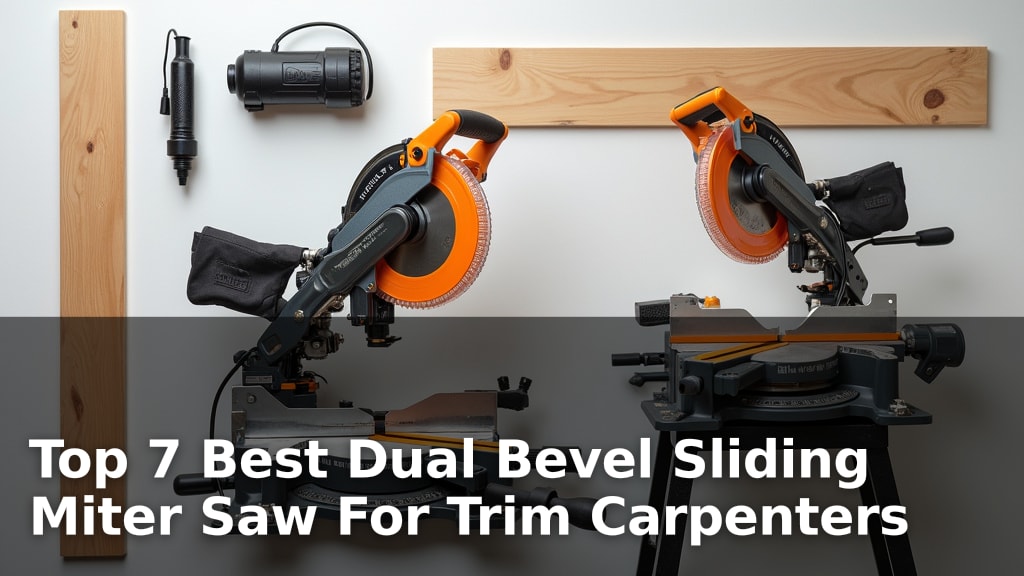
What Size Miter Saw For Baseboard?
For most baseboard projects, a 10-inch miter saw is a versatile and commonly recommended choice.
However, a 12-inch miter saw offers greater cutting capacity for wider or taller baseboards, especially if you plan to tackle crown molding too.
Here’s a quick overview of what you’ll learn:
- A 10-inch miter saw is ideal for standard baseboard widths, offering great portability.
- Consider a 12-inch saw for wider trim pieces or future crown molding installations.
- Sliding compound miter saws provide the best versatility for extra-wide baseboards.
- Proper blade selection and accurate angle settings are as important as the saw size itself.
- Always prioritize your safety with proper gear and careful operation.
What Size Miter Saw For Baseboard?
The best miter saw size for baseboard depends on your project’s specific trim width and any future cutting ambitions.
Many DIYers and pros find a 10-inch or 12-inch sliding compound miter saw offers the perfect balance of capacity and portability.
Why Miter Saw Size Matters for Baseboards
Think about the height of your baseboard. A miter saw’s size refers to its blade diameter.
This diameter directly impacts how wide and thick a piece of wood it can cut in a single pass.
For baseboards, you’re often making angled cuts for inside and outside corners.
This means you need enough blade clearance to cut the full width of the trim at an angle.
Understanding Miter Saw Types for Trim Work
Before diving into blade sizes, let’s quickly differentiate the main types of miter saws you’ll encounter.
Knowing these will help you pick the right tool for your baseboard tasks.
- Standard Miter Saw: This saw cuts at fixed angles and bevels in one direction. It’s simple but limited for wider boards.
- Compound Miter Saw: A step up, it cuts both miter (side-to-side) and bevel (tilt) angles. This is very helpful for complex trim.
- Sliding Compound Miter Saw: The blade head slides forward and backward, significantly extending the cutting capacity. This is often the go-to for wider baseboards.
The Sweet Spot: 10-inch vs. 12-inch Miter Saws
When it comes to baseboard installation, you’ll generally be choosing between these two common sizes.
Let’s weigh their benefits so you can make an informed decision for your workshop.
The 10-inch Miter Saw: Your Agile Partner
A 10-inch miter saw is a fantastic all-around tool for most home projects, including standard baseboards.
It’s lighter, more portable, and often more affordable than its larger counterpart (Industry Consensus).
For baseboards up to about 5-6 inches tall, a 10-inch sliding compound miter saw can easily handle the angled cuts.
Its blade speed is also typically higher, which often results in cleaner cuts, especially on delicate trim materials.
The 12-inch Miter Saw: The Capacity King
If your baseboards are particularly wide or tall, say 6 inches or more, a 12-inch miter saw is often the better choice.
It offers a greater cross-cut capacity, meaning it can cut wider pieces of wood in one pass.
This saw becomes almost essential if you plan to install taller crown molding, which requires cutting at steep compound angles.
Many professionals prefer the 12-inch model for its versatility across various trim sizes (Professional Carpenters often note).
Considering Other Miter Saw Capacities
While 10-inch and 12-inch models dominate the market, some smaller saws exist. What about them?
Smaller 7 ¼-inch or 8 ½-inch miter saws are generally too limited for baseboard work, especially when making angled cuts.
You’ll quickly find yourself needing to flip the board or make multiple passes, which can compromise accuracy.
Investing in a 10-inch saw is often the minimum practical recommendation for serious baseboard projects.
The Critical Role of Sliding Functionality
No matter the blade size, if you’re dealing with wider baseboards, a sliding compound miter saw is a game-changer.
The sliding rails dramatically increase the saw’s effective cutting width.
This means a 10-inch sliding saw can often cut wider baseboards than a non-sliding 12-inch saw.
Always check the cross-cut capacity specifications of any saw you consider, as this tells you the maximum width it can handle.
Blade Choice: Don’t Overlook It!
The saw’s size is one thing, but the blade you use is equally important for clean baseboard cuts.
For fine finish carpentry like baseboards, you’ll want a blade with a high tooth count.
Blades with 60 to 80 teeth are often recommended for minimizing tear-out and creating smooth edges (Tool Manufacturers’ Guidance).
A sharp, appropriate blade makes a huge difference in the final look of your installed trim.
Table: 10-inch vs. 12-inch Miter Saw for Baseboards
Let’s quickly compare the typical uses and benefits of these two popular sizes.
| Feature | 10-inch Miter Saw | 12-inch Miter Saw |
|---|---|---|
| Typical Baseboard Width | Up to 5-6 inches (especially with sliding feature) | Up to 7-8 inches (or more with sliding feature) |
| Portability | Generally lighter and easier to move | Heavier, less portable, but more stable |
| Cost | Often more affordable | Higher initial investment |
| Blade Speed | Typically higher RPM, cleaner cuts on trim | Slightly lower RPM, powerful for larger lumber |
| Versatility | Great for most trim, smaller framing | Excellent for all trim, crown molding, larger framing |
Practical Tips for Perfect Baseboard Cuts
Beyond the saw size, a few simple practices will help you achieve professional-looking baseboard installations.
Accuracy is your best friend when cutting trim, as gaps show everything.
Here’s a small checklist to guide you:
- Measure Twice, Cut Once: This age-old advice is critical for trim.
- Test Cuts: Always make practice cuts on scrap wood with your chosen angles.
- Support Your Work: Use outfeed supports to prevent the baseboard from falling after the cut.
- Dust Collection: A clean workspace helps you see clearly and reduces respiratory hazards.
- Proper Clamping: Secure your baseboard firmly to the saw fence for accurate, safe cuts.
Don’t Forget Safety!
Working with any power tool requires respect and caution. Always wear safety glasses and hearing protection.
Keep your hands clear of the blade’s path, and ensure your saw is in good working condition.
A little bit of caution can prevent a lot of grief.
Conclusion
Choosing the right size miter saw for baseboard work really comes down to your specific needs and the size of your trim.
For most standard baseboards, a 10-inch sliding compound miter saw offers an excellent blend of cutting capacity, precision, and portability.
However, if you’re tackling wider baseboards or planning future crown molding projects, the extra capacity of a 12-inch sliding compound miter saw is often worth the investment.
Remember, the right blade and careful setup are just as important as the saw itself. Happy cutting!
What is the best type of miter saw for baseboard and trim?
A sliding compound miter saw is often considered the best type for baseboard and trim. Its ability to cut both miter and bevel angles, combined with the sliding feature, allows it to handle a wide range of trim sizes and complex cuts needed for corners.
Can a 7 ¼-inch miter saw cut baseboards effectively?
While a 7 ¼-inch miter saw can make some straight cuts on narrow baseboards, it generally lacks the cross-cut capacity for wider baseboards, especially when cutting at angles. You might struggle with many common baseboard dimensions, making it less effective for most projects.
Do I need a double-bevel miter saw for baseboards?
A double-bevel miter saw is a nice convenience but not strictly necessary for baseboards. It allows you to tilt the blade left or right without flipping the workpiece. A single-bevel compound miter saw can still complete all necessary baseboard cuts; you might just need to flip the trim for certain angles.
How important is a high tooth count blade for cutting baseboards?
A high tooth count blade is very important for cutting baseboards. Blades with 60 to 80 teeth (or more) produce much cleaner, smoother cuts on wood trim. This minimizes splintering and tear-out, which is essential for creating tight, professional-looking joints in your baseboards.
What safety precautions should I follow when cutting baseboards with a miter saw?
Always wear safety glasses to protect your eyes from flying debris. Hearing protection is also recommended. Keep your hands a safe distance from the blade and use clamps or firm pressure against the fence to secure the baseboard. Ensure the blade guard is functioning correctly and clear your work area of clutter.