What Is the Best Miter Saw for a Small Business Owner?
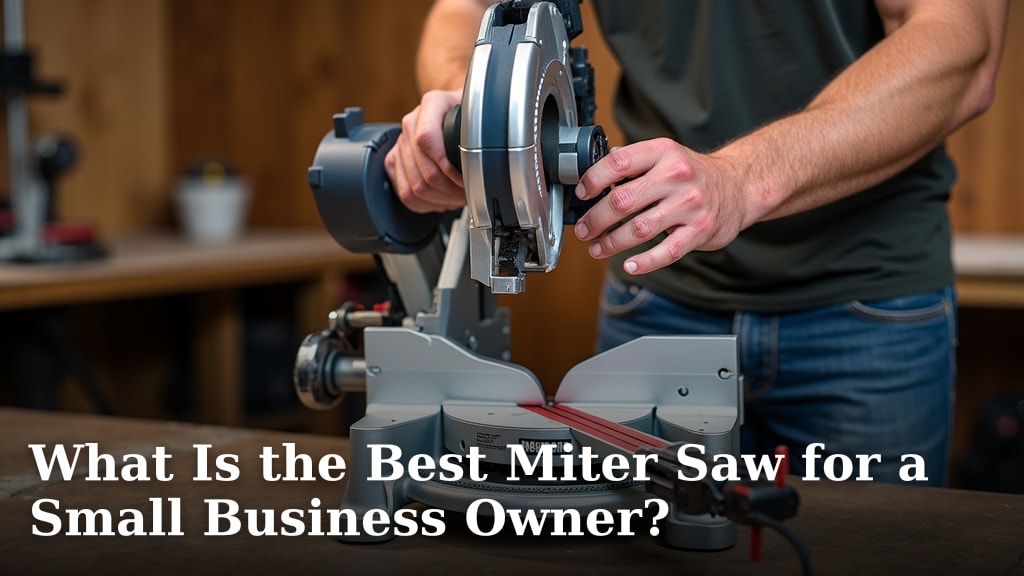
The best miter saw for a small business owner is usually a 10 or 12-inch sliding compound miter saw. We found these models offer the versatility and precision needed for most projects without being overly large or expensive.
Choosing the right miter saw depends on your specific work. Do you need to cut wide boards? Are you often working on job sites? Your projects will guide your choice between different types of saws. It’s about matching the tool to your business needs.
- A 10 or 12-inch sliding compound miter saw is often ideal.
- Consider your typical projects and materials.
- Look for features like dust collection and portability.
- Budget and available workspace are also key factors.
Let’s dive into the details to help you find the perfect miter saw that fits your small business and budget.
Choosing the Right Miter Saw for Your Business Needs
The best miter saw for a small business balances power, precision, and portability. It needs to handle your projects without breaking your budget or taking up too much space.
You want a saw that feels like an extension of your own hands. It should be reliable and efficient every time you use it.
Understanding Different Miter Saw Types
Miter saws come in a few main types. Each one has pros and cons. Knowing these differences will help you make a smart choice.
Think about what you cut most often. This will guide you to the right tool.
Standard Miter Saws
A standard miter saw is the simplest type. It only makes straight crosscuts and miter cuts. It doesn’t bevel (tilt) or slide.
These are good for basic trim work or cutting smaller pieces of wood. They are often the most affordable option. Their compact size makes them easy to store.
Compound Miter Saws
Compound miter saws add the ability to bevel. This means the blade can tilt to one side. You can make angled cuts on two planes at once.
This feature is great for crown molding and picture frames. It offers more versatility than a standard miter saw. They come in single or dual compound versions.
Sliding Compound Miter Saws
Sliding compound miter saws are often the most popular choice for professionals. They combine bevel and miter cuts with a sliding action.
The sliding rail lets the blade move forward and backward. This allows you to cut much wider boards. This is a huge advantage for many projects, as noted by woodworking experts (Fine Woodworking Magazine).
Many small business owners find this type to be the most useful. It offers the best blend of features.
Key Features to Look For in a Miter Saw
When you’re shopping, certain features stand out. These can make your work easier and more accurate. Let’s look at what matters most.
Think about your typical workday. Which features would save you time or prevent frustration?
Blade Size and Cutting Capacity
Miter saws typically use 10-inch or 12-inch blades. This refers to the diameter of the blade. A larger blade usually means a greater cutting capacity.
- 10-inch blades: Good for smaller, lighter tasks. More compact saws.
- 12-inch blades: Can cut wider and thicker materials. More powerful.
For a small business, a 12-inch sliding miter saw offers the most range. It lets you cut a variety of materials without needing a different saw.
Motor Power
The motor power is measured in amps (for corded saws). More amps mean more power. This is important for cutting dense woods or thick materials.
A saw with 15 amps is common and usually sufficient. It will handle most jobs you throw at it. We found that underpowered saws lead to frustration and slower work.
Accuracy and Precision
Accuracy is critical for professional results. Look for saws with clear, easy-to-read miter and bevel scales. Positive stops are also important.
Positive stops are pre-set detents at common angles (like 0, 15, 22.5, 30, 45 degrees). They help you quickly and accurately set angles. Many users note that a saw’s out-of-the-box accuracy varies (Tools of the Trade).
Dust Collection
Wood dust is more than just messy. It can be a health hazard. Good dust collection is important for your workspace and your lungs.
Look for saws with efficient dust ports. Some models come with dust bags. Connecting your saw to a shop vacuum will give you the best results. You want to keep your shop clean and safe.
Portability and Weight
Will you be moving your saw often? If so, weight and portability matter. Some saws are lighter and easier to carry.
Consider if you need a dedicated stand. Or, if you’ll be setting it up on a workbench. A lighter saw saves your back on job sites.
Budgeting for Your Miter Saw
The cost of miter saws varies widely. You can find basic models for a couple of hundred dollars. High-end professional saws can cost over a thousand.
Set a budget, but also think of it as an investment. A more expensive saw might last longer and perform better. This can save you money in the long run.
| Saw Type | Typical Price Range | Best For |
|---|---|---|
| Standard Miter Saw | $100 – $250 | Basic crosscuts, small trim |
| Compound Miter Saw | $200 – $400 | Trim, crown molding, picture frames |
| Sliding Compound Miter Saw | $350 – $800+ | Wide boards, all-around versatility |
Power Source: Corded vs. Cordless Miter Saws
Most miter saws are corded. They plug directly into an outlet. This provides consistent power for long periods.
Cordless miter saws run on batteries. They offer ultimate portability. They are great for job sites without easy access to power. But, you’ll need extra batteries.
For most shop-based small businesses, a corded saw is more reliable. For mobile businesses, cordless might be worth the investment.
Accessories and Upgrades for Your Miter Saw
A good miter saw can be made even better with the right accessories. These can improve safety, accuracy, and ease of use.
Think of these as ways to enhance your current setup. They often offer a good return on investment.
Miter Saw Stand
A dedicated miter saw stand provides a stable and comfortable workstation. Many stands are portable and fold up for storage.
They often include extensions to support long workpieces. This is a huge safety benefit and improves cutting accuracy.
Better Blades
The blade that comes with your saw is often a basic general-purpose one. Upgrading to a higher-quality blade makes a big difference.
Different blades are designed for specific materials (wood, plywood, laminates). A blade with more teeth generally gives a smoother cut. Experts agree that a good blade is worth the extra cost (Wood Magazine).
Laser Guides and LED Lights
Some saws include a laser guide that projects the cut line. This helps you line up your workpiece accurately. Others have LED lights to illuminate the work area.
These features can improve precision and visibility. They can be especially helpful in dimly lit workshops.
A Checklist for Choosing Your Miter Saw
To help you narrow down your choices, here’s a quick checklist. Use this to think through your specific needs before buying.
- Will it cut the widest material you usually work with?
- Does it offer the accuracy you need for your projects?
- Is it portable enough if you need to move it around?
- Does it fit within your budget for a long-term tool?
- Is the dust collection adequate for your workspace?
- Are replacement blades and parts easy to find?
By considering these points, you can feel confident in your decision. You want a tool that supports your business for years to come.
Conclusion
Choosing the best miter saw for your small business means investing in your efficiency and craftsmanship. We’ve seen that a 10 or 12-inch sliding compound miter saw often hits that sweet spot for versatility and precision.
By carefully considering your project types, workspace, and budget, you can find a tool that genuinely supports your growth. Remember to prioritize features like motor power, accuracy, and dust collection.
Take the time to research specific models that align with your needs. A well-chosen miter saw will be a cornerstone of your business for years to come.
Frequently Asked Questions
What’s the main difference between a 10-inch and 12-inch miter saw blade?
The primary difference is the cutting capacity. A 12-inch blade allows you to cut wider and often thicker materials than a 10-inch blade. This makes 12-inch saws more versatile for a broader range of projects.
Are cordless miter saws as powerful as corded ones?
Cordless miter saws have made significant advancements in power. While some high-end cordless models can rival corded ones for many tasks, corded saws generally offer consistent, sustained power without battery limitations, which is crucial for heavy-duty, continuous use.
How important is dust collection on a miter saw?
Dust collection is very important for both safety and cleanliness. Fine wood dust can be a health hazard and create a messy workspace. Good dust collection systems, especially when paired with a shop vacuum, significantly reduce airborne particles and keep your shop cleaner.
Can I use a miter saw for metal or plastic?
You can use a miter saw for some types of metal or plastic, but you must use the correct blade designed for those specific materials. Never use a wood-cutting blade on metal or plastic, as it can be dangerous and damage your saw or material. Always check the manufacturer’s recommendations.
Is it worth buying a miter saw stand?
Yes, a miter saw stand is often a worthwhile investment. It provides a stable, ergonomic working height and often includes extensions to support longer workpieces safely. This improves accuracy and reduces fatigue, especially if you’re frequently cutting larger materials or moving your saw.