How To Make A Chop Saw Table?
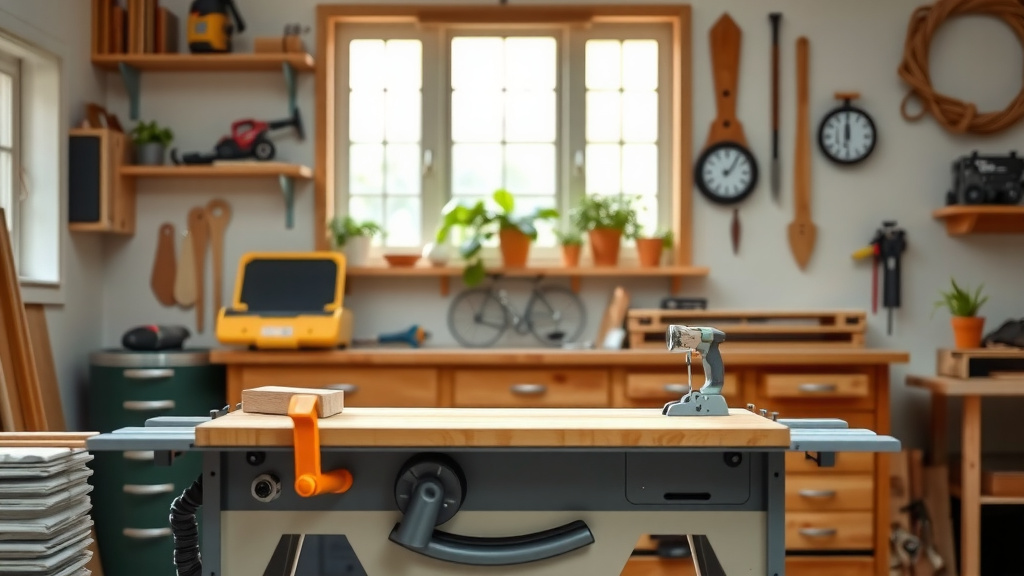
To make a chop saw table, you’ll generally build a sturdy wooden frame, attach a flat top surface, and create a custom platform for your miter saw that aligns with the table’s height.
This ensures extended support for long workpieces, improves cutting accuracy, and helps manage sawdust, making your woodworking projects safer and more efficient.
- Building a chop saw table improves accuracy and safety for repetitive cuts.
- Start with a clear design and gather essential materials like plywood and 2x4s.
- Construct a robust base frame, then add a stable, level top surface.
- Integrate a custom saw platform, a reliable fence, and useful stop blocks.
- Consider dust collection and mobility features for a truly optimized setup.
How To Make A Chop Saw Table?
Making a chop saw table involves constructing a solid workbench with precise support wings for your saw, ensuring a level work surface for accurate cuts every time.
It transforms your miter saw into a more versatile and safe station, extending its practical use far beyond just basic crosscuts.
Why Bother Building a Custom Chop Saw Table?
You might wonder, “Is it really worth the effort?” Absolutely! A dedicated chop saw table boosts your precision, giving you dead-on cuts that are tough to achieve freehand. Many experienced woodworkers report significantly fewer errors with a stable setup.
It also provides essential support for longer materials, preventing dangerous wobbles and slips. Think of it as a co-pilot for your saw, keeping everything aligned and steady (OSHA guidelines often emphasize stable work surfaces).
Planning Your Chop Saw Table: A Good Start
Before cutting anything, grab a pencil and paper. Sketch out your ideal table. Consider the space you have available and the typical size of materials you cut. A well-planned table fits your specific needs, not a generic one.
We found that designing for your saw’s dimensions is key. Measure its base and cutting height carefully. This step prevents frustrating rebuilds later, saving you time and materials.
Essential Materials for Your Project
What do you need to buy? For a durable and stable table, we often recommend ¾-inch plywood for the top and 2x4s or 2x6s for the frame. These materials offer a great balance of strength and affordability.
You will also need wood screws, wood glue, and possibly some bolts for attaching the saw. Many experts suggest using construction-grade lumber for the frame due to its stability.
Basic Tools You’ll Need
Don’t worry, you won’t need a full workshop. You’ll definitely need a circular saw or table saw for cutting larger sheets of plywood, a drill for fasteners, and a good measuring tape. A speed square and pencil are also your best friends for accuracy.
Having a level and some clamps on hand will also make assembly much smoother. We found that these basic tools cover most of the construction process effectively.
Step-by-Step Construction Guide
Building the Base Frame First
Start with the foundation. Construct a sturdy rectangular frame using your 2x4s or 2x6s. This frame will be the primary support for your entire table. Think of it as the skeleton of your workbench.
Ensure all corners are square and securely fastened with wood glue and screws. Many builders add a middle support beam for extra rigidity, especially for longer tables.
Adding the Top Surface and Wings
Next, cut your ¾-inch plywood for the main table top and the support wings. The main top will sit directly on your base frame. The wings will extend from either side of your saw, forming a continuous work surface.
Attach these pieces firmly to the frame, ensuring they are perfectly level. Remember, a flat surface means accurate cuts (research consistently links flatness to cutting precision).
Creating a Custom Saw Platform
This is where your saw sits. Cut a section out of your main table top to house the miter saw. The goal is for the saw’s cutting bed to be perfectly flush with your table wings. This step is critical for continuous workpiece support.
You might need to build a smaller, raised platform *inside* the main table opening to achieve this flush height. Test fit your saw often during this stage to get it just right.
Installing a Reliable Fence System
A good fence is non-negotiable for accuracy. Many people opt for a simple straight piece of plywood or hardwood bolted to the back of the table. This provides a consistent reference point for your cuts.
Ensure the fence is perfectly perpendicular to your saw blade at its 90-degree setting. Use a reliable square to check this crucial alignment repeatedly.
Adding Handy Stop Blocks
For repetitive cuts of the same length, stop blocks are game-changers. These are small pieces of wood or metal that you can clamp onto your fence. They act as a physical stop for your material.
We found that adding a simple T-track system to your fence allows for easy, adjustable stop block placement. It saves immense time when cutting multiple identical pieces (think picture frames or cabinet parts).
Integrating Dust Collection
Sawdust is more than just messy; it’s a health concern (NIH and CDC highlight respiratory risks). Design your table to include a dust port or shroud behind the saw. This helps capture dust at the source.
You can create a simple plywood box around the back of your saw, funneling dust towards a shop vacuum. A clean workspace is a safer and more enjoyable workspace.
Mobile or Stationary? Your Choice
Will your table stay put, or do you need it to move? Adding locking casters to the bottom of your base frame transforms a stationary bench into a mobile workstation. This offers great flexibility in smaller shops.
If you choose casters, ensure they are heavy-duty and can lock securely. A wobbly table is a dangerous table, so stability is paramount.
Essential Checklist for Building a Chop Saw Table
- Draw a detailed plan for dimensions.
- Gather all wood and hardware.
- Assemble the main base frame.
- Attach the main top and support wings.
- Create and fine-tune the saw platform for flushness.
- Install and align the fence perfectly.
- Add stop blocks for repetitive cuts.
- Plan for dust collection.
- Consider adding casters for mobility.
- Perform final safety checks.
Optimizing Your Chop Saw Table Features
Beyond the basics, you can add extra features. Consider integrating storage drawers underneath for blades and accessories. Some builders add fold-down outfeed supports for extra-long materials.
We found that small details like a ruler glued to the fence can dramatically speed up measurements, making every cut more efficient. Personalizing your table makes it truly yours.
| Feature | Benefit | Complexity (1-5) |
|---|---|---|
| Extended Support Wings | Increased accuracy for long boards | 2 |
| Integrated Fence | Consistent reference point for cuts | 3 |
| Adjustable Stop Blocks | Fast, repetitive cuts of same length | 3 |
| Dust Collection Shroud | Cleaner air, less cleanup | 4 |
| Locking Casters | Easy workshop rearrangement | 2 |
Conclusion
Building your own chop saw table is a rewarding project that greatly enhances your woodworking capabilities. It provides a safer, more accurate, and efficient workspace, turning routine cuts into precision tasks.
By following these steps, you’ll create a customized station that not only supports your miter saw but also elevates the quality and enjoyment of all your future projects. Happy building!
What kind of wood is best for a chop saw table?
For the frame, common construction lumber like 2x4s or 2x6s is excellent for strength and stability. For the top surface and wings, ¾-inch plywood or MDF is often recommended because it provides a smooth, flat, and stable work platform that resists warping.
How high should a chop saw table be?
The ideal height for a chop saw table typically matches your comfortable working height. Many people aim for a table height that places the saw’s cutting bed at about waist level, or roughly 34-36 inches from the floor, for ergonomic comfort and control (ergonomics experts often recommend this range).
Can I add storage to my chop saw table?
Absolutely! Adding storage is a popular and practical upgrade. You can design open shelves or enclosed drawers underneath the table for organizing saw blades, clamps, safety glasses, and other frequently used accessories, keeping your workspace tidy and efficient.
Is a fence necessary for a chop saw table?
Yes, a fence is highly recommended and almost essential for a chop saw table. It provides a consistent reference point for your material, ensuring accurate and repeatable cuts, especially when working with angled cuts or needing precision across many pieces.
How do I make sure my chop saw table is level?
To ensure your chop saw table is level, use a reliable spirit level at various points across the table top during construction. Shimming the legs or adjusting caster heights can help achieve perfect levelness. A truly level surface is crucial for maintaining cutting accuracy.