Where To Store Miter Saw?
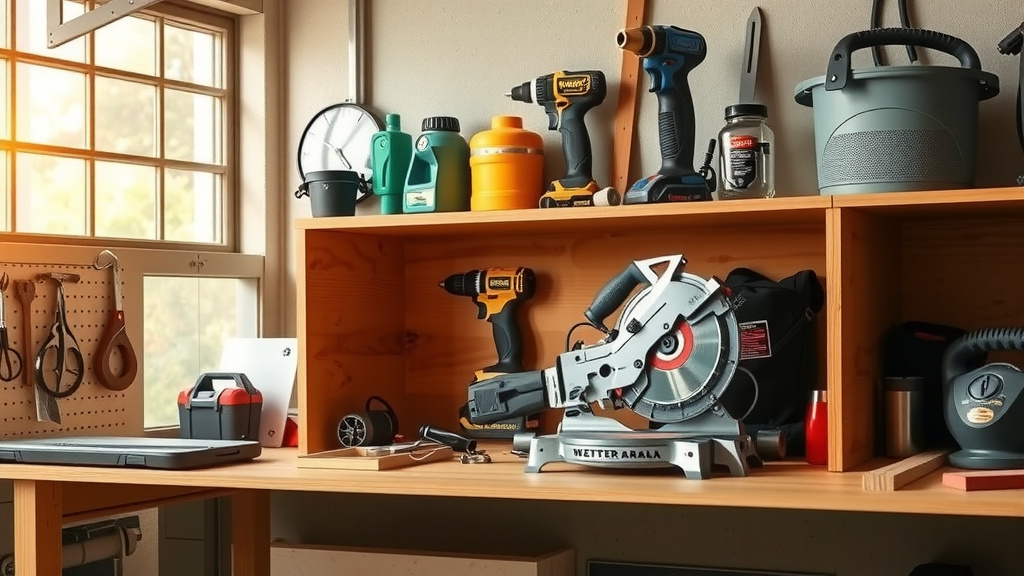
To store your miter saw, keep it in a dry, climate-controlled space to prevent rust and damage. A dedicated stand, cabinet, or wall mount provides the best protection and accessibility.
Always disconnect the power, clean the saw, and store it with the blade guarded when not in use to ensure safety and maintain its accuracy.
- Keep your miter saw in a stable, dry environment.
- Consider a dedicated stand or workbench integration for frequent use.
- Wall mounts or overhead storage work well for saving floor space.
- Always protect the blade and manage cords properly.
- Regular cleaning before storage extends your saw’s life.
You’ve just finished a big project, and now it’s time to put your miter saw away. But wait, where should it go? Simply tossing it in a corner or leaving it out in the elements can lead to big problems. Proper storage isn’t just about neatness; it’s about preserving your investment and keeping your workshop safe.
Think of your miter saw like a good friend; you wouldn’t leave a friend out in the rain, right? This powerful tool deserves a designated spot. Let’s talk about the best ways to store your miter saw, no matter your space or how often you use it.
Where To Store Miter Saw?
You should store your miter saw in a clean, dry, and secure location, ideally with stable temperature and humidity. This protects it from dust, moisture, and accidental bumps, which can affect its precision and lifespan.
Why Good Miter Saw Storage Matters
A miter saw is a precision instrument. Leaving it exposed to moisture can cause rust on critical components, impacting its accuracy. Dust can gum up moving parts and even shorten motor life. We found that proper storage directly impacts a saw’s performance and longevity.
Beyond protection, a dedicated storage spot also keeps your workspace tidy. You wouldn’t want to trip over a power cord or a loose saw, would you? Safety is always a top priority in any workshop (OSHA guidelines frequently remind us of this).
The Elements Are Your Saw’s Enemy
Imagine your saw sitting in a damp garage. Condensation can slowly form, leading to rust. This rust isn’t just cosmetic; it can seize up adjustment mechanisms and dull blades. Many experts say that humidity is a major culprit in tool degradation.
Temperature swings are also not ideal. Extreme cold can make plastic components brittle, while extreme heat can affect lubrication. A stable environment helps your saw stay in tip-top shape, ready for your next project.
Dedicated Stands: A Miter Saw’s Best Friend
For many users, a dedicated miter saw stand is the ultimate solution. These stands often come with wheels, making them portable, and they fold up for more compact storage. You get the benefit of portability and stability during use.
Some stands even have extension wings, allowing you to cut longer pieces of wood. When the work is done, you simply fold it up, secure the saw, and roll it into a corner. It’s like giving your saw its own little garage.
Workbench Integration: Built-In Convenience
If you have a permanent workshop, integrating your miter saw into a workbench is a fantastic option. You can build a custom setup with outfeed supports and dust collection. This creates a seamless and efficient cutting station.
We found that many serious woodworkers prefer this method. Your saw is always ready, always at the right height, and always supported. It reduces setup time and enhances overall workflow.
Wall-Mounted Storage: Reclaiming Floor Space
Is your workshop or garage bursting at the seams? Wall-mounted solutions can be a lifesaver. You can create a sturdy shelf or use specialized brackets to hang your miter saw. This keeps it off the floor, freeing up valuable real estate.
Just make sure the wall mounting is incredibly strong. A miter saw is heavy! We recommend anchoring into wall studs, not just drywall, for maximum security and peace of mind.
Overhead Storage: Out of Sight, Not Out of Mind
Similar to wall mounts, overhead storage shelves or ceiling racks can be an option for very tight spaces. This is usually more suitable for lighter tools, but some robust systems can handle a miter saw. Again, extreme caution and strong anchoring are necessary.
This method requires a bit more effort to get the saw down and set up. However, if you only use your miter saw occasionally, and floor space is a premium, it could be a clever space-saving tactic.
Cabinet and Enclosed Storage: The Ultimate Protection
For the best protection against dust and moisture, storing your miter saw in a closed cabinet is ideal. You can build a custom cabinet or use heavy-duty metal storage. This offers a barrier against shop debris and environmental factors.
Imagine a cabinet specifically designed for your saw, with pull-out shelves or a dedicated compartment. It keeps the saw clean, secure, and ready for action. It’s like giving your saw its own private, climate-controlled room.
Portable Job Site Boxes: For the Mobile Pro
If you take your miter saw to different job sites, a heavy-duty carrying case or job site box is essential. These cases protect the saw from impacts during transport and keep it secure. Many miter saws come with custom cases, which is a great start.
We’ve observed that professionals rely on these rugged boxes. They’re built to withstand the bumps and knocks of transport. Your saw stays safe, and you avoid arriving at a job with a damaged or misaligned tool.
Blade Storage: Keep Those Teeth Sharp
Never forget about your miter saw blades! Store them in their original packaging or in a dedicated blade storage case. Loose blades can be dangerous and easily get dull or damaged. A dull blade is a frustrating and inefficient blade.
Keeping blades separate from the saw, especially when storing the saw for extended periods, is a good habit. You wouldn’t want an accidental bump to chip a tooth. Sharp blades cut better and are safer to use.
Cord Management: No Tangled Messes
Before storing your saw, always wrap the power cord neatly. You can use Velcro straps, cable ties, or simply coil it carefully. A tangled cord is not only annoying but also a trip hazard. A well-managed cord also helps it last longer, preventing kinks and breaks.
Think of it as tucking your saw into bed. Everything is tidy, nothing is stressed, and it’s ready to wake up and work when you need it next.
Checklist for Optimal Miter Saw Storage
- Disconnect the power cord before any storage.
- Clean the saw thoroughly, removing dust and debris.
- Ensure the blade guard is in place and secure.
- Store in a dry, stable temperature and humidity environment.
- Keep the saw stable, preventing it from tipping or falling.
- Organize the power cord to prevent tangles.
Comparing Miter Saw Storage Options
Let’s look at some popular storage methods to help you decide what’s best for your setup.
| Storage Type | Pros | Cons | Best For |
|---|---|---|---|
| Dedicated Stand | Portable, stable during use, often collapsible. | Can still take up floor space when folded. | Users needing portability and stability. |
| Workbench Integration | Always ready, seamless workflow, custom solutions. | Permanent, uses dedicated bench space. | Permanent workshops, frequent users. |
| Wall-Mounted Shelf | Saves floor space, keeps saw protected. | Requires heavy-duty anchors, lifting saw is needed. | Small shops, occasional use. |
| Enclosed Cabinet | Maximum protection from dust and moisture. | Takes up floor space, can be bulky. | Long-term storage, dusty environments. |
| Job Site Box | Durable, secure for transport, impact resistant. | Primarily for transport, can be heavy. | Mobile professionals, frequent travel. |
Conclusion
Storing your miter saw correctly isn’t just about putting it away; it’s about respecting a powerful tool and extending its life. Whether you opt for a dedicated stand, a custom workbench, or clever wall storage, the key is to keep it dry, clean, and secure. A well-stored miter saw is a happy miter saw, always ready to deliver precise cuts for your next project.
Take a few extra minutes after each use to clean and store your saw properly. You’ll thank yourself later when it performs flawlessly project after project. Your workshop will be safer, and your tools will last longer. That’s a win-win in anyone’s book.
How do I protect my miter saw from rust?
To protect your miter saw from rust, store it in a dry, low-humidity environment. Consider using a saw cover or an enclosed cabinet to shield it from moisture and dust. Applying a light coat of machine oil to exposed metal parts, after cleaning, can also provide a protective barrier.
Can I store my miter saw outdoors?
No, you should not store your miter saw outdoors, even if covered. Outdoor conditions expose the saw to fluctuating temperatures, humidity, and potential precipitation, leading to rust, corrosion, and damage to electronic components. Always bring it indoors to a sheltered space.
How do I store miter saw blades safely?
Store miter saw blades safely in their original packaging, a dedicated blade storage case, or on a wall-mounted rack designed for blades. This prevents accidental cuts, protects the teeth from damage, and keeps them from dulling prematurely. Never store loose blades.
Is it okay to store a miter saw on the floor?
While you can temporarily place a miter saw on the floor, it’s not ideal for long-term storage. It makes the saw more susceptible to dust, moisture, and accidental bumps or trips. A raised stand, shelf, or workbench integration offers better protection and safety.
Should I remove the blade when storing my miter saw?
It’s generally not necessary to remove the blade for routine storage, especially if you plan to use the saw again soon. However, always ensure the blade guard is securely in place. If storing the saw for an extended period or moving it frequently, some users prefer to remove the blade and store it separately for extra safety and blade protection.