Best 10 Inch Miter Saw Blades for Metal: Top 9 Picks (November 2026)
The best 10 inch miter saw blades for metal include the TOMAX 10-Inch 80 Tooth TCG Aluminum for aluminum and non-ferrous metals, the Luckyway 10 Inch Miter Saw Blade 52T for mixed wood and aluminum work, and the IVY Classic 40088-5 Swift Cut 10-Inch x for repeated ferrous-metal cut-off work.
On this page (13 sections)
- The best 10 inch miter saw blades for metal
- How we compared these 10-inch metal blades
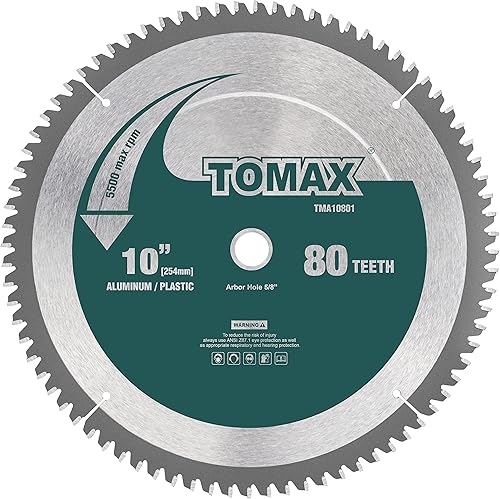
- 1. TOMAX 10-Inch 80 Tooth TCG Aluminum: Best for aluminum and non-ferrous metals
- 2. Luckyway 10 Inch Miter Saw Blade 52T: Best for mixed wood and aluminum work
- 3. IVY Classic 40088-5 Swift Cut 10-Inch x: Best for repeated ferrous-metal cut-off work
- 4. TOYAKI 10-Inch Miter Saw Blade: Best for fine aluminum cuts
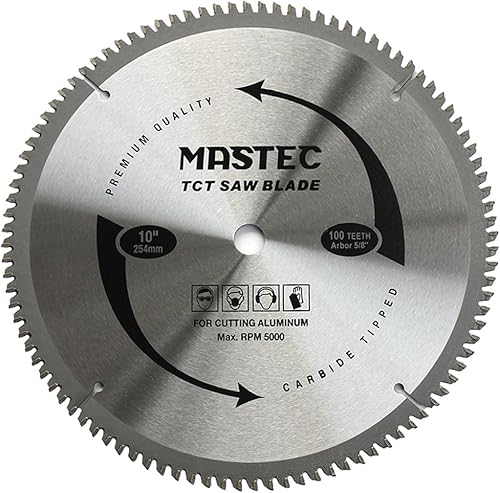
- 5. MASTEC 10-Inch 100T Carbide Tooth TCG: Best for smooth plastic and aluminum cuts
- 6. FOXBC 10 Inch Saw Blade 90-Teeth Ultimate: Best for wood-first shops
- 7. CRALY 10 Inch 100 Teeth Aluminum: Best for thin aluminum and composite
- 8. TWIN-TOWN 10-Inch 52 Teeth Dry Cut Steel: Best for low-rpm steel cut-off saws
- 9. X-YEAH 10 Inch 100T Aluminum Non-Ferrous Metal: Best for general non-ferrous metal cuts
- How to choose a 10-inch metal blade for your saw
- Which 10-inch metal blade should you buy?
The best 10 inch miter saw blade for metal is the TOMAX 80-tooth TCG blade for aluminum and other non-ferrous metals.
Choose the IVY Classic for chop-saw cut-off work in steel, or the TWIN-TOWN when your machine is a low-rpm metal cut-off saw with a 1-inch arbor.
Those three choices cover the main split in this roundup, which is non-ferrous metal versus ferrous metal.
A blade that works well in aluminum does not become a steel blade because it shares the same diameter.
The most important match is not the tooth count alone.
Check whether you are cutting aluminum, plastic, brass, copper, steel or another material, then confirm the blade diameter, arbor and maximum speed against your saw.
That order matters because material decides the blade type before finish or speed comes into the decision.
A 10-inch blade can fit the guard and still be wrong for the arbor, the saw speed or the workpiece.
Think about the work you do most often rather than the hardest cut you might make once.
A shop that trims aluminum angle every week needs a different setup from a shop that cuts one steel profile now and then.
Tooth count helps once the material is settled, since higher counts generally suit finer, more controlled cuts.
Lower counts can suit faster general work, but they do not remove the need for a safe setup.
If you're unsure whether your tool is suitable, read Can You Use A Metal Blade On A Miter Saw?.
For aluminum-only work, our guide to best miter saw blades for aluminum narrows the choice further.
Use those links as a starting point, then return to the arbor and speed checks before you buy.
A short pause at that stage is easier than forcing a blade that was not made for your saw.
Our picks at a glance
-
1
 Best for aluminum and non-ferrous metals
TOMAX 10-Inch 80 Tooth TCG Aluminum
9.7/10 our score
See it on Amazon -
2
 Best for mixed wood and aluminum work
Luckyway 10 Inch Miter Saw Blade 52T
9.6/10 our score
See it on Amazon -
3
 Best for repeated ferrous-metal cut-off work
IVY Classic 40088-5 Swift Cut 10-Inch x
9.5/10 our score
See it on Amazon
- 4
 Check it
TOYAKI 10-Inch Miter Saw Blade
Best for fine aluminum cuts - 5
 Check it
MASTEC 10-Inch 100T Carbide Tooth TCG
Best for smooth plastic and aluminum cuts - 6
 Check it
FOXBC 10 Inch Saw Blade 90-Teeth Ultimate
Best for wood-first shops - 7
 Check it
CRALY 10 Inch 100 Teeth Aluminum
Best for thin aluminum and composite - 8
 Check it
TWIN-TOWN 10-Inch 52 Teeth Dry Cut Steel
Best for low-rpm steel cut-off saws - 9
 Check it
X-YEAH 10 Inch 100T Aluminum Non-Ferrous Metal
Best for general non-ferrous metal cuts
The best 10 inch miter saw blades for metal
The TOMAX is the best overall match for common 10-inch aluminum work, while the IVY Classic is the clearer choice for steel cut-off work.
The other blades fill specific gaps based on tooth count, material and saw compatibility.
That gap matters because a fine aluminum blade and a steel cut-off blade solve different problems.
Start with the material on your bench and the saw you will fit the blade to.
If both point to aluminum or plastic, the high-tooth TCG options deserve the closest look.
If both point to steel, stay with a blade made for ferrous metal and a compatible chop or cut-off saw.
Neither group is a simple upgrade from the other, and the diameter alone does not make them interchangeable.
The picks below keep those lines separate so the choice stays practical at the saw.
TOMAX 10-Inch 80 Tooth TCG Aluminum: Best for aluminum and non-ferrous metals
- 10-inch diameter
- 80 teeth
- 5/8-inch arbor
- TCG grind
- For aluminum, plastic and non-ferrous metals
The TOMAX combines an 80-tooth TCG grind with a 5/8-inch arbor for aluminum, plastic and non-ferrous metal work. It also fits circular saws, miter saws and table saws.
Pros
- TCG grind
- 80 carbide teeth
- 5/8-inch arbor
Cons
- Designed for non-ferrous materials rather than steel
Luckyway 10 Inch Miter Saw Blade 52T: Best for mixed wood and aluminum work
- 10-inch diameter
- 52 teeth
- 5/8-inch arbor
- General-purpose carbide blade
- For wood, aluminum and non-ferrous metals
Luckyway is a flexible choice when one 10-inch blade needs to cover wood, aluminum and non-ferrous metals. Its 52-tooth design sits between fast rough work and fine finishing.
Pros
- General-purpose material range
- 5/8-inch arbor
- 52-tooth layout
Cons
- Less specialized than a high-tooth aluminum blade
IVY Classic 40088-5 Swift Cut 10-Inch x: Best for repeated ferrous-metal cut-off work
- 10-inch cut-off blade
- 3/32-inch thickness
- 5/8-inch arbor
- 5-pack
- Maximum 6,100 rpm
The IVY Classic is a Type 1 cut-off blade for chop saws and ferrous metal. Its aluminum-oxide grain, reinforced fiberglass mesh and 5-pack suit repeated cut-off work.
Pros
- Designed for steel and sheet metal
- 5-pack
- Reinforced construction
Cons
- For chop saws, not high-speed saws
TOYAKI 10-Inch Miter Saw Blade: Best for fine aluminum cuts
- 10-inch diameter
- 120 teeth
- 5/8-inch arbor
- 2.8 mm thickness
- TCG aluminum blade
TOYAKI puts 120 teeth on a 10-inch carbide blade for fine-finish work in aluminum, plastic and non-ferrous metals. Its 5/8-inch arbor fits most common saw models.
Pros
- Highest tooth count here
- Fine-finish focus
- 5/8-inch arbor
Cons
- Less suited to fast rough cuts
MASTEC 10-Inch 100T Carbide Tooth TCG: Best for smooth plastic and aluminum cuts
- 10-inch diameter
- 100 TCG teeth
- 5/8-inch arbor
- 2.8 mm thickness
- Maximum 5,000 rpm
MASTEC uses a 100-tooth TCG pattern for aluminum, plexiglass, plastic and non-ferrous metals. It is a strong middle ground between the 80-tooth TOMAX and 120-tooth TOYAKI.
Pros
- 100-tooth TCG design
- 5/8-inch arbor
- 5,000 rpm maximum operating speed
Cons
- Material range does not include ferrous steel
FOXBC 10 Inch Saw Blade 90-Teeth Ultimate: Best for wood-first shops
- 10-inch diameter
- 90 teeth
- 5/8-inch arbor
- Wood-cutting design
- Compatible with listed 10-inch saw brands
FOXBC is the outlier in this group because it is made for wood, not metal. Keep it in consideration only when your 10-inch miter saw spends most of its time on molding, hardwoods, softwoods or sheet goods.
Pros
- 90 teeth
- 0.087-inch kerf
- Wood-focused finish
Cons
- Not a metal-cutting blade
CRALY 10 Inch 100 Teeth Aluminum: Best for thin aluminum and composite
- 10-inch diameter
- 100 TCG teeth
- 5/8-inch arbor
- 2.5 mm thin kerf
- For thin aluminum, plastic and composite
CRALY targets thin aluminum, plastic and composite with a 100-tooth TCG blade and 2.5 mm thin kerf. Its Black Ice coating is described as reducing friction, heat and corrosion.
Pros
- Thin kerf
- 100 TCG teeth
- For aluminum, plastic and composite
Cons
- Circular-saw compatibility is specified
TWIN-TOWN 10-Inch 52 Teeth Dry Cut Steel: Best for low-rpm steel cut-off saws
- 10-inch diameter
- 52 teeth
- 1-inch arbor
- Cermet tips
- For steel and ferrous metal at up to 3,000 rpm
TWIN-TOWN is the dedicated steel choice here, with cermet tips, a 1-inch arbor and a 3,000 rpm limit. It belongs on a low-rpm metal cut-off saw, not a typical high-speed miter saw.
Pros
- Made for steel and ferrous metal
- Cermet tips
- Noise and vibration vents
Cons
- 1-inch arbor limits saw compatibility
X-YEAH 10 Inch 100T Aluminum Non-Ferrous Metal: Best for general non-ferrous metal cuts
- 10-inch diameter
- 100 teeth
- 5/8-inch arbor
- TCG grind
- For aluminum, brass, bronze and copper
X-YEAH covers aluminum and several other non-ferrous metals with 100 tungsten carbide teeth and a 5/8-inch arbor. It is compatible with circular, miter, jobsite and table saws.
Pros
- Broad non-ferrous material range
- 5/8-inch arbor
- TCG grind
Cons
- Not intended for ferrous steel
How we compared these 10-inch metal blades
We compared the stated material range, tooth count, arbor size, blade type, speed information and saw compatibility.
We also considered how directly each blade fits the searcher's likely job, from fine aluminum cuts to steel cut-off work.
Those details keep the comparison grounded in what a buyer can check before ordering.
For example, a 5/8-inch arbor is common here, while the TWIN-TOWN uses a 1-inch arbor for a different saw type.
Speed limits also separate the group, since some blades list a maximum rpm and others are meant for lower-speed machines.
Our score weighs specs, features and buyer feedback against what you're shopping for.
It does not mean every blade fits every saw, and it does not replace the saw or blade instructions.
A high score should be read as a fit for the stated job, not as permission to ignore the manual.
That is why material, arbor and saw type come before tooth count in each write-up.
When two blades look close on paper, the narrower material range often points to the more specialized tool.
| Product | Best for | Diameter | Teeth | Arbor | Our score |
|---|---|---|---|---|---|
| TOMAX 10-Inch 80 Tooth TCG Aluminum | aluminum and non-ferrous metals | 10 inches | 80 | 5/8 inch | 9.7 |
| Luckyway 10 Inch Miter Saw Blade 52T | mixed wood and aluminum work | 10 inches | 52 | 5/8 inch | 9.6 |
| IVY Classic 40088-5 Swift Cut 10-Inch x | repeated ferrous-metal cut-off work | 9.5 | |||
| TOYAKI 10-Inch Miter Saw Blade | fine aluminum cuts | 120 | 5/8 inch or 16 mm | 9.3 | |
| MASTEC 10-Inch 100T Carbide Tooth TCG | smooth plastic and aluminum cuts | 100 TCG | 5/8 inch | 9.2 | |
| FOXBC 10 Inch Saw Blade 90-Teeth Ultimate | wood-first shops | 90 | 8.8 | ||
| CRALY 10 Inch 100 Teeth Aluminum | thin aluminum and composite | 100 TCG | 5/8 inch | 8.6 | |
| TWIN-TOWN 10-Inch 52 Teeth Dry Cut Steel | low-rpm steel cut-off saws | 1 inch | 8.4 | ||
| X-YEAH 10 Inch 100T Aluminum Non-Ferrous Metal | general non-ferrous metal cuts | 100 | 5/8 inch | 8.1 |
1. TOMAX 10-Inch 80 Tooth TCG Aluminum: Best for aluminum and non-ferrous metals
TOMAX 10-Inch 80 Tooth TCG Aluminum: Best for aluminum and non-ferrous metals
- 10-inch diameter
- 80 teeth
- 5/8-inch arbor
- TCG grind
- For aluminum, plastic and non-ferrous metals
The TOMAX combines an 80-tooth TCG grind with a 5/8-inch arbor for aluminum, plastic and non-ferrous metal work. It also fits circular saws, miter saws and table saws.
Pros
- TCG grind
- 80 carbide teeth
- 5/8-inch arbor
Cons
- Designed for non-ferrous materials rather than steel
The TOMAX is the strongest all-around pick for a standard 10-inch saw cutting aluminum, plastic and non-ferrous metals.
Its 80 carbide teeth and TCG grind put it in the smooth-cut category without reaching the very high tooth count of the TOYAKI.
That middle position suits daily trim work where a clean edge matters and the cut should not crawl.
The 10-inch diameter and 5/8-inch arbor match the common setup used by many blades in this roundup.
TOMAX lists compatibility with circular saws, miter saws and table saws, so it offers more tool flexibility than a blade limited to one saw type.
That range helps when the same blade moves between benches, provided each saw accepts the arbor and speed.
The electrophoretic coating is intended to reduce rust and corrosion between jobs.
TOMAX also describes the carbide teeth as construction grade and provides a limited lifetime warranty.
Choose it when your main work involves aluminum or other non-ferrous material and you want a specialized TCG blade.
It is not the right choice for steel simply because the blade is 10 inches.
2. Luckyway 10 Inch Miter Saw Blade 52T: Best for mixed wood and aluminum work
Luckyway 10 Inch Miter Saw Blade 52T: Best for mixed wood and aluminum work
- 10-inch diameter
- 52 teeth
- 5/8-inch arbor
- General-purpose carbide blade
- For wood, aluminum and non-ferrous metals
Luckyway is a flexible choice when one 10-inch blade needs to cover wood, aluminum and non-ferrous metals. Its 52-tooth design sits between fast rough work and fine finishing.
Pros
- General-purpose material range
- 5/8-inch arbor
- 52-tooth layout
Cons
- Less specialized than a high-tooth aluminum blade
Luckyway suits a workshop that needs one 10-inch blade for wood, aluminum and non-ferrous metals.
Its 52 teeth give it a more general-purpose position than the 80-, 100- and 120-tooth aluminum blades.
That lower count fits shops where changing materials is part of the routine.
The 5/8-inch arbor fits the common size used by many blades in this group.
Luckyway lists compatibility with circular saws, miter saws and table saws, which helps if the blade moves between tools.
The trade-off is specialization, since a general-purpose layout may not be the first choice for the finest aluminum finish.
This is the practical pick when your projects change often and you do not want a dedicated aluminum blade for every task.
Choose Luckyway for mixed material work where convenience matters more than the highest tooth count.
Check the saw manual before moving between wood and metal, and clear away chips between materials.
3. IVY Classic 40088-5 Swift Cut 10-Inch x: Best for repeated ferrous-metal cut-off work
IVY Classic 40088-5 Swift Cut 10-Inch x: Best for repeated ferrous-metal cut-off work
- 10-inch cut-off blade
- 3/32-inch thickness
- 5/8-inch arbor
- 5-pack
- Maximum 6,100 rpm
The IVY Classic is a Type 1 cut-off blade for chop saws and ferrous metal. Its aluminum-oxide grain, reinforced fiberglass mesh and 5-pack suit repeated cut-off work.
Pros
- Designed for steel and sheet metal
- 5-pack
- Reinforced construction
Cons
- For chop saws, not high-speed saws
The IVY Classic is the dedicated steel option for a chop saw.
It is a Type 1, 10-inch cut-off blade made with resin-bonded aluminum-oxide grain for steel, angle iron, sheet metal and other ferrous-metal products.
That construction suits straight cut-off work rather than finish trim.
Its 3/32-inch thickness and 5/8-inch arbor are useful details for setup.
The blade is double reinforced with fiberglass mesh, and its arbor is reinforced with metal.
The pack contains 5 blades, which suits repeated cut-off work where a blade is spent on tough stock.
The maximum rotational speed is 6,100 rpm, but the blade is not for high-speed saws.
That warning matters more than the diameter because a 10-inch blade can still be wrong for a particular machine.
Pick IVY Classic when your task is cutting ferrous metal on a compatible chop saw.
Choose a toothed carbide blade instead when you need a different saw type or a smoother edge-focused cut.
4. TOYAKI 10-Inch Miter Saw Blade: Best for fine aluminum cuts
TOYAKI 10-Inch Miter Saw Blade: Best for fine aluminum cuts
- 10-inch diameter
- 120 teeth
- 5/8-inch arbor
- 2.8 mm thickness
- TCG aluminum blade
TOYAKI puts 120 teeth on a 10-inch carbide blade for fine-finish work in aluminum, plastic and non-ferrous metals. Its 5/8-inch arbor fits most common saw models.
Pros
- Highest tooth count here
- Fine-finish focus
- 5/8-inch arbor
Cons
- Less suited to fast rough cuts
TOYAKI is the fine-finish choice because its 120 teeth are the highest count in this roundup.
The blade is designed for aluminum, plastic and non-ferrous metals, with a TCG profile and high-grade carbide construction.
That combination points toward controlled cuts on trim and visible edges.
It has a 10-inch diameter, 2.8 mm thickness and 5/8-inch arbor.
TOYAKI describes the arbor as 16 mm, and the blade is intended for most common saw models, including miter saws, table saws and circular saws.
The extra teeth make sense when your priority is a controlled, fine cut rather than the fastest possible feed.
They also mean the cut may feel slower, so steady pressure matters more than pushing the work through.
More teeth do not make it a steel blade, however, and they do not remove the need to secure the workpiece.
Choose TOYAKI for aluminum trim and other non-ferrous projects where finish matters.
For frequent rough cuts, the 52-tooth Luckyway may be a more flexible match.
5. MASTEC 10-Inch 100T Carbide Tooth TCG: Best for smooth plastic and aluminum cuts
MASTEC 10-Inch 100T Carbide Tooth TCG: Best for smooth plastic and aluminum cuts
- 10-inch diameter
- 100 TCG teeth
- 5/8-inch arbor
- 2.8 mm thickness
- Maximum 5,000 rpm
MASTEC uses a 100-tooth TCG pattern for aluminum, plexiglass, plastic and non-ferrous metals. It is a strong middle ground between the 80-tooth TOMAX and 120-tooth TOYAKI.
Pros
- 100-tooth TCG design
- 5/8-inch arbor
- 5,000 rpm maximum operating speed
Cons
- Material range does not include ferrous steel
MASTEC sits between the lower-tooth general-purpose blades and the 120-tooth TOYAKI.
Its 100 TCG carbide teeth are designed for aluminum, plexiglass, plastic and non-ferrous metals.
That layout suits work where a smooth surface matters without moving to the highest tooth count.
The blade has a 10-inch diameter, 5/8-inch arbor and 2.8 mm thickness.
MASTEC also gives a maximum operating speed of 5,000 rpm, which should be compared with your saw before installation.
The product description focuses on smooth cutting and says the thin kerf is intended for fast, smooth cuts.
Those details make it a useful middle choice when you want a specialized aluminum blade for repeat cuts.
Choose MASTEC for aluminum and plastic work where a clean surface matters.
It is not a ferrous-metal blade, so use the IVY Classic or TWIN-TOWN for steel-specific jobs.
6. FOXBC 10 Inch Saw Blade 90-Teeth Ultimate: Best for wood-first shops
FOXBC 10 Inch Saw Blade 90-Teeth Ultimate: Best for wood-first shops
- 10-inch diameter
- 90 teeth
- 5/8-inch arbor
- Wood-cutting design
- Compatible with listed 10-inch saw brands
FOXBC is the outlier in this group because it is made for wood, not metal. Keep it in consideration only when your 10-inch miter saw spends most of its time on molding, hardwoods, softwoods or sheet goods.
Pros
- 90 teeth
- 0.087-inch kerf
- Wood-focused finish
Cons
- Not a metal-cutting blade
FOXBC is included as a compatibility warning as much as a product choice.
Its 90 teeth, 0.087-inch kerf and 5/8-inch arbor are designed for wood, including fine molding, hardwoods, softwoods, veneered plywood and melamine.
That wood focus separates it from every metal option in this group.
The blade is compatible with listed 10-inch DeWalt, Skil, Metabo and Makita saws, along with other 10-inch miter and table saws.
That does not turn it into a metal blade.
Choose FOXBC only if your saw is mainly used for wood and you occasionally compare metal-cutting options.
Using a wood blade for metal work can lead to the wrong tooth design, material match and operating procedure.
For a metal-focused shop, replace this option with TOMAX, MASTEC, CRALY or X-YEAH for non-ferrous work.
Use IVY Classic or TWIN-TOWN for the ferrous-metal choices in this roundup.
7. CRALY 10 Inch 100 Teeth Aluminum: Best for thin aluminum and composite
CRALY 10 Inch 100 Teeth Aluminum: Best for thin aluminum and composite
- 10-inch diameter
- 100 TCG teeth
- 5/8-inch arbor
- 2.5 mm thin kerf
- For thin aluminum, plastic and composite
CRALY targets thin aluminum, plastic and composite with a 100-tooth TCG blade and 2.5 mm thin kerf. Its Black Ice coating is described as reducing friction, heat and corrosion.
Pros
- Thin kerf
- 100 TCG teeth
- For aluminum, plastic and composite
Cons
- Circular-saw compatibility is specified
CRALY targets thin aluminum, plastic and composite with 100 carbide-tipped TCG teeth and a 2.5 mm thin kerf.
The blade also has a 5/8-inch arbor and is described for circular saws.
That narrower material range gives it a clearer job than a general-purpose blade.
Its Black Ice anti-stick coating is intended to reduce friction, heat and corrosion during use.
CRALY also describes a laser-cut steel body, expansion slot and stabilizer vents, all aimed at controlling the blade during cutting.
The thin kerf can help on stock where material loss and a straight cut matter.
That makes CRALY a better fit when thin aluminum and composite are regular materials in your project list.
Choose it when thin kerf and a 100-tooth aluminum layout fit your work.
Confirm that your miter saw accepts the stated 5/8-inch arbor and that the circular-saw compatibility matches your machine.
If your saw is only listed for circular use, do not assume it will transfer to a miter saw.
8. TWIN-TOWN 10-Inch 52 Teeth Dry Cut Steel: Best for low-rpm steel cut-off saws
TWIN-TOWN 10-Inch 52 Teeth Dry Cut Steel: Best for low-rpm steel cut-off saws
- 10-inch diameter
- 52 teeth
- 1-inch arbor
- Cermet tips
- For steel and ferrous metal at up to 3,000 rpm
TWIN-TOWN is the dedicated steel choice here, with cermet tips, a 1-inch arbor and a 3,000 rpm limit. It belongs on a low-rpm metal cut-off saw, not a typical high-speed miter saw.
Pros
- Made for steel and ferrous metal
- Cermet tips
- Noise and vibration vents
Cons
- 1-inch arbor limits saw compatibility
TWIN-TOWN is the steel-focused blade in this group, but it is not a typical drop-in replacement for a 10-inch miter saw blade. It uses a 1-inch arbor and is made for low-rpm metal cut-off saws operating at up to 3,000 rpm.
The 52-tooth blade is intended for mild steel profiles, pipe, angle iron, tube, channels, steel studs, thin gauge and solid bars. Its cermet tips combine ceramic and metal materials, while stabilizer vents are intended to manage noise, vibration and heat.
Those details give it a clear job, but they also limit compatibility. A 5/8-inch arbor miter saw is not automatically suitable for a 1-inch-arbor blade.
Choose TWIN-TOWN only when your saw's arbor, speed and instructions match. For a standard 5/8-inch miter saw, start with a compatible non-ferrous blade unless the manufacturer specifically approves a ferrous-metal setup.
9. X-YEAH 10 Inch 100T Aluminum Non-Ferrous Metal: Best for general non-ferrous metal cuts
X-YEAH 10 Inch 100T Aluminum Non-Ferrous Metal: Best for general non-ferrous metal cuts
- 10-inch diameter
- 100 teeth
- 5/8-inch arbor
- TCG grind
- For aluminum, brass, bronze and copper
X-YEAH covers aluminum and several other non-ferrous metals with 100 tungsten carbide teeth and a 5/8-inch arbor. It is compatible with circular, miter, jobsite and table saws.
Pros
- Broad non-ferrous material range
- 5/8-inch arbor
- TCG grind
Cons
- Not intended for ferrous steel
X-YEAH is a broad non-ferrous option with 100 tungsten carbide teeth, a TCG grind and a 5/8-inch arbor.
It is intended for aluminum, brass, bronze, copper and other non-ferrous metals.
That material list goes beyond aluminum, which can help in shops that handle several soft metals.
The 10-inch blade has a stated 2.8 mm kerf and a 0-degree hook angle.
X-YEAH lists compatibility with circular saws, miter saws, jobsite saws and table saws, giving it a wide tool range when the arbor and speed match.
The electrophoretic coating is intended to reduce rust and corrosion, while the TCG tooth shape is designed for smooth, burr-free cuts.
These features make it a reasonable alternative to the TOMAX when your material list includes more than aluminum.
Choose X-YEAH for general non-ferrous work across several saw types.
It is not intended for ferrous steel, so keep a separate steel-cutting solution for that material.
How to choose a 10-inch metal blade for your saw
The best 10 inch miter saw blade for metal depends first on the material and arbor, then on tooth count and finish. A blade that fits the diameter can still be unsafe or ineffective if its arbor or speed does not match the saw.
Match the blade to the metal
Aluminum and other non-ferrous metals are covered by the TOMAX, Luckyway, TOYAKI, MASTEC, CRALY and X-YEAH options. Steel and other ferrous materials need a blade specifically intended for them, such as the IVY Classic or TWIN-TOWN.
Do not treat aluminum and steel as interchangeable. The tooth design, blade type and saw requirements can differ.
Confirm the arbor before buying
A 5/8-inch arbor appears on the TOMAX, Luckyway, IVY Classic, TOYAKI, MASTEC, CRALY and X-YEAH blades. TWIN-TOWN uses a 1-inch arbor, so it needs a different tool match.
The arbor is the center hole that mounts to the saw. Measure or check your saw manual instead of assuming that every 10-inch blade uses the same opening.
Use tooth count as a finish and speed clue
The 52-tooth Luckyway and TWIN-TOWN are positioned for general-purpose or steel work.
The 80-tooth TOMAX, 90-tooth FOXBC, 100-tooth MASTEC, CRALY and X-YEAH, and 120-tooth TOYAKI move toward finer, more controlled cuts.
That spread shows why tooth count should be read with material and saw type, not on its own.
A high tooth count can improve the finish on aluminum trim, but it can also slow the feed.
A lower count can clear material faster, but it may leave a rougher edge on soft metal.
Tooth count is only one part of the choice.
Material type, grind, kerf, arbor and maximum speed still decide whether the blade belongs on your saw.
Start with the workpiece, then check the arbor, then compare the speed limit.
Only after those checks does it help to choose between 80, 100 and 120 teeth for the finish you want.
For a wider look at blade selection, compare this roundup with Best Miter Saw Blade.
If you are still deciding which saw size suits the work, see What Is the Best 10 Inch Miter Saw?.
Keeping the saw size question separate can prevent a blade purchase from hiding a tool problem.
Set up and use the blade carefully
Disconnect power before changing the blade, fit the arbor correctly and make sure the blade direction matches the saw. Clamp or support the workpiece as needed, keep hands away from the cutting path and use the guard as designed.
Run the blade only within the stated speed range. The IVY Classic has a maximum of 6,100 rpm, MASTEC lists 5,000 rpm, and TWIN-TOWN is for low-rpm use up to 3,000 rpm.
Keep aluminum chips and residue from building up around the teeth. Let the blade do the work, avoid forcing the cut and inspect the teeth and body before the next project.
Which 10-inch metal blade should you buy?
The TOMAX 10-Inch 80 Tooth TCG Aluminum is the best 10 inch miter saw blade for metal when your main work is aluminum or other non-ferrous material.
Pick TOYAKI for the highest tooth count, MASTEC for a balanced 100-tooth TCG option, or Luckyway when one blade must cover wood and aluminum.
Those three cover the main non-ferrous choices, from fine finish to mixed shop work.
For steel, choose IVY Classic if your tool is a compatible chop saw.
Choose TWIN-TOWN only when you have a low-rpm metal cut-off saw with a matching 1-inch arbor.
That arbor difference is the clearest warning in this roundup, since most other blades here use 5/8 inch.
Do not treat the steel blades as upgrades for a standard miter saw.
They belong to a different saw setup and a different cutting job.
Before you order, match the material, arbor, diameter and speed in that order.
When those four line up, the tooth count can guide the final pick between a faster cut and a finer finish.
Our top 3 picks at a glance
-
1
Best for aluminum and non-ferrous metals
TOMAX 10-Inch 80 Tooth TCG Aluminum
9.7/10 our score
See it on Amazon -
2
Best for mixed wood and aluminum work
Luckyway 10 Inch Miter Saw Blade 52T
9.6/10 our score
See it on Amazon -
3
Best for repeated ferrous-metal cut-off work
IVY Classic 40088-5 Swift Cut 10-Inch x
9.5/10 our score
See it on Amazon
Frequently asked questions
Can you use a metal blade on a 10-inch miter saw?
Yes, but the blade, saw and material must match. A 5/8-inch arbor is common among the aluminum blades here, while the TWIN-TOWN uses a 1-inch arbor and is made for a low-rpm metal cut-off saw.
Check the saw manual and blade speed before cutting.
What is the best 10 inch miter saw blade for metal?
The TOMAX 80-tooth TCG blade is the strongest general pick for aluminum and other non-ferrous metals because it combines a 10-inch size, 5/8-inch arbor and TCG grind. For steel, choose a dedicated ferrous-metal cut-off blade instead.
How many teeth should a 10-inch metal-cutting blade have?
Choose tooth count by the material and finish you need. The 52-tooth blades here favor general-purpose or steel work, while the 80-, 100- and 120-tooth blades focus more on smooth aluminum and non-ferrous-metal cuts.
More teeth can mean a slower cut.
Can an aluminum blade cut steel?
No. An aluminum blade is not a substitute for a ferrous-metal blade.
TOMAX, TOYAKI, MASTEC, CRALY and X-YEAH are described for aluminum or other non-ferrous materials, while IVY Classic and TWIN-TOWN are the steel-focused options here.


