9 Best Belt Sanders with Dust Collection (November 2026)
The best belt sanders with dust collection include the SKIL 6 Amp 3"x18" Belt Sander for vacuum-connected sanding, the WEN 6307 Variable Speed Detailing File Sander for detail work and tight spaces, and the DEWALT 20V MAX* Belt Sander (best cordless with dust extraction).
On this page (9 sections)
- How we compared these belt sanders with dust collection
- Belt sander with dust collection: how the systems compare
- How do I choose between a belt sander and an orbital sander for dusty work?
- What size belt should I buy for dust collection and power?
- How do I set up a belt sander vacuum attachment?
- Is a dust bag enough, or should I buy vacuum extraction?
- Corded, cordless or air: which power source fits your shop?
- What other belt sanders should I consider?
- Verdict: which belt sander with dust collection should you buy?
The best belt sander with dust collection for most woodworkers is the SKIL 6 Amp 3"x18" Belt Sander, because it pairs a standard vacuum connection with micro-filtration and pressure control. The WEN 6307 ties on score for detail work, since its narrow belt and included dust port attachment suit contours that a wide belt cannot reach.
Dust control is the reason this guide exists. A belt sander moves a lot of wood quickly, and that means a lot of fine dust in the air and on your surfaces.
Our score weighs specs, features and buyer feedback against what you are shopping for, with dust collection as a central factor.
If you are still deciding between sander types, start with our guide to different types of sanders. It explains when a belt sander is the right tool and when another shape fits the job better.
Our picks at a glance
-
1

-
2
 Best for detail work and tight spaces
WEN 6307 Variable Speed Detailing File Sander
9.7/10 our score
See it on Amazon -
3

- 4
 Check it
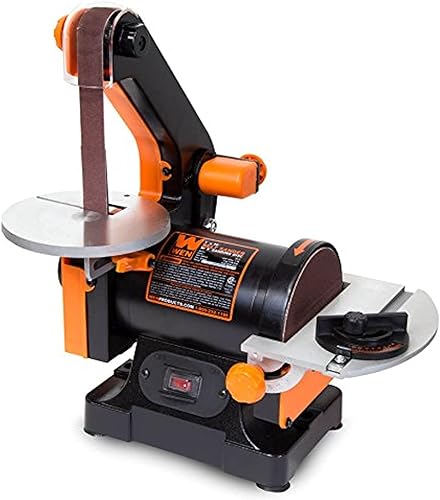
WEN Benchtop Belt and Disc Sander
Best benchtop combo with two dust ports - 5
 Check it
Jellas 7Amp Handheld Belt Sander
Best for a dust bag plus vacuum adapter - 6
 Check it
BLACK+DECKER Belt Sander with Dust Bag
Best simple dust bag sander - 7
 Check it
WEN Benchtop Belt and Disc Sander
Best larger benchtop with dust port - 8
 Check it
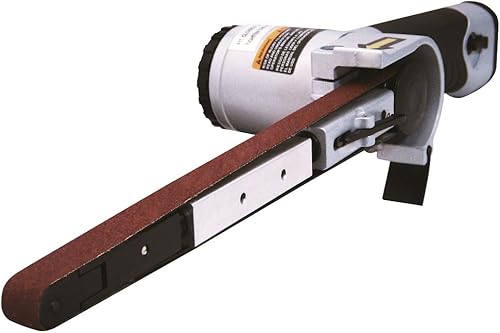
AP Astro Pneumatic 3037 Air Belt Sander
Best air-powered for spot work - 9
 Check it
Ingersoll Rand 360-418 1/2" x 18" Air
Best air sander for auto and metal work
How we compared these belt sanders with dust collection
We compared the specs, dust systems and likely use for each model, then ranked them by score. Handheld 3 inch sanders lead for general woodworking, while benchtop and air models earn their places for specific jobs.
For blade shaping, compare belt sanders for knife making.
A belt sander with vacuum attachment suits long sessions in a closed shop, because extraction keeps airflow steady. A dust bag suits short jobs and work away from an outlet.
Both approaches appear in this guide, so you can match the system to your space.
For stationary work, our best belt sander for woodworking guide covers models chosen for shaping and smoothing. This guide narrows that field to dust collection first.
SKIL 6 Amp 3"x18" Belt Sander: Best for vacuum-connected sanding
- 6.0 A corded motor
- 3 in x 18 in belt
- Fits standard 1-1/4 in vacuum hoses
- Micro-filtration captures fine dust particles
- Pressure control indicator
- Auto track belt alignment
A 6 Amp handheld sander with vacuum compatibility, micro-filtration and pressure control for cleaner, more even sanding on wood surfaces.
Pros
- Vacuum compatible with 1-1/4 in hoses
- Pressure control warns on heavy pressure
- Auto track keeps belt centered
Cons
- Corded, so reach depends on outlet
- No dust bag listed as included
The SKIL 6 Amp 3"x18" Belt Sander suits woodworkers who sand large flat surfaces and want a vacuum hose to do the dust work. Its 6.0 A motor sands wood surfaces with steady power, while the 3 x 18 inch belt covers wide boards in fewer passes.
For stock thicknessing, compare a belt sander vs planer before choosing a tool.
Dust collection is the headline. SKIL says micro-filtration captures and contains fine dust particles, and the sander is vacuum compatible with standard 1-1/4 inch vacuum hoses.
That fit matters, because a standard hose size is easier to connect than a proprietary port.
Pressure control sets this sander apart. The indicator illuminates when you apply the right amount of pressure, which helps you avoid gouging when the belt bites.
Auto track belt alignment keeps the belt centered as you work.
The trade-off is the cord. It is a 120V corded tool at 5.5 pounds, so range depends on your outlet and extension cord.
There is also no dust bag listed in the box, so vacuum extraction is the intended path for dust control.
WEN 6307 Variable Speed Detailing File Sander: Best for detail work and tight spaces
- 2 A motor
- 1/2 in x 18 in belt
- Variable speed 1080 to 1800 ft per minute
- Dust port attachment included
- Three abrasive belts included (80, 120, 320 grit)
- Belt pivots up to 55 degrees
A narrow 1/2-inch belt file sander with variable speed and an included dust port attachment for shaping contours and details.
Pros
- Narrow belt reaches tight contours
- Variable speed from 1080 to 1800 ft per minute
- Dust port attachment included
Cons
- Narrow belt removes wood more slowly on wide flat surfaces
- 2 A motor has less power for aggressive removal
The WEN 6307 Variable Speed Detailing File Sander suits detail work rather than wide flat sanding. Its 1/2 by 18 inch belt reaches tight corners, strange contours and narrow edges that a 3 inch belt cannot fit into.
Variable speed runs from 1080 to 1800 feet per minute, so you can slow the belt for delicate shaping or raise it for faster removal. The belt pivots up to 55 degrees, which helps you meet angled work without twisting your wrist.
Dust collection comes through the included dust port attachment, which connects the sander to a dust collection system of your choice. WEN includes three abrasive belts in 80, 120 and 320 grit, plus a two-year warranty.
At 2.4 pounds and 2 amps, this is a light, low-power tool. It will not strip a wide board as fast as a 6 or 7 Amp sander.
Choose it for shaping and smoothing details, not for aggressive material removal on large surfaces.
DEWALT 20V MAX* Belt Sander: Best cordless with dust extraction
- 20V MAX* brushless motor, tool only
- 3 in x 21 in belt
- DEWALT AirLock compatible dust collection
- Dust bag included
- Variable speed trigger with 25-speed dial
- Wireless tool control with compatible DEWALT vacuums
A cordless 3x21 belt sander with AirLock dust collection, a dust bag and wireless vacuum control for work away from an outlet.
Pros
- Cordless freedom on large jobs
- Up to 95% dust collection efficiency with AirLock system
- Variable speed with 25-speed dial
Cons
- Tool only, battery and charger not included
- AirLock dust collection parts sold separately
The DEWALT 20V MAX* Belt Sander suits jobsite and carpentry work where a cord cannot reach. It is a brushless cordless 3 x 21 inch sander sold as tool only, so you supply the battery and charger.
Dust collection is strong on paper. DEWALT says the AirLock dust collection system delivers up to 95% dust collection efficiency, and the sander includes a branded dust bag for jobs without extraction.
Wireless tool control lets it pair with a compatible DEWALT vacuum or dust extractor.
A variable speed trigger and a 25-speed selection dial give you fine control across materials. DEWALT says the brushless motor delivers up to 22% more power than a corded version, and quick-release tool-free belt changes save time between grits.
The trade-off is cost and setup. Battery, charger and AirLock parts are separate purchases.
If you already own DEWALT 20V batteries, this sander is an easy addition. If not, a corded sander may cost less to start.
WEN Benchtop Belt and Disc Sander: Best benchtop combo with two dust ports
- 2.3 A motor
- 1 in x 30 in belt plus 5 in disc
- Two separate dust ports
- Belt up to 3160 ft per minute, disc 3450 RPM
- 80-grit disc and 100-grit belt included
- Miter gauge included
A compact benchtop belt and disc combo with two dust ports for connecting vacuum extraction to either the belt or the disc.
Pros
- Two dust ports for belt and disc
- Belt and disc in one machine
- Heavy-duty base prevents walking
Cons
- 1 in belt is narrow for wide flat surfaces
- Benchtop only, not for handheld work
The WEN Benchtop Belt and Disc Sander suits small parts, edges and deburring work that benefits from a fixed machine. It combines a 1 x 30 inch belt with a 5 inch sanding disc in one unit.
Dust collection is a clear strength here. WEN gives this model two separate dust ports for maximum vacuuming efficiency, so you can connect extraction to the belt side or the disc side as the job changes.
That matters, because disc sanders can throw dust sideways if extraction only serves the belt.
The 2.3 A motor drives the belt to 3160 ft per minute and the disc to 3450 RPM. WEN includes an 80-grit disc, a 100-grit belt, a miter gauge and a two-year warranty.
A heavy-duty base prevents walking and wobbling.
The trade-off is the narrow 1 inch belt. It is great for edges and small pieces, but slow for wide flat surfaces.
This is a stationary tool, so choose it for bench work rather than handheld sanding around a room.
Jellas 7Amp Handheld Belt Sander: Best for a dust bag plus vacuum adapter
- 7 A, 120V motor
- 3 in x 21 in belt
- Detachable dust collection bag
- 2-in-1 vacuum adapter in 35 mm and 32 mm
- Variable speed knob with 6 settings
- 10 sanding belts in 40 to 180 grit included
A 7 Amp handheld sander with a detachable dust bag and a 2-in-1 vacuum adapter, plus 10 belts covering 40 to 180 grit.
Pros
- Dust bag and vacuum adapter both included
- Variable speed with 6 dials
- 10 belts in 5 grits included
Cons
- Can clamp to a table, which adds setup time for handheld jobs
- Heavier feel for overhead work
The Jellas 7Amp Handheld Belt Sander suits woodworkers who want both a dust bag and a vacuum option in one box. Its 7 Amp, 120V motor drives a 3 x 21 inch belt for aggressive removal on large flat surfaces.
Dust collection covers both paths. The dust collecting bag is detachable and easy to clean, and a 2-in-1 vacuum adapter in 35 mm and 32 mm connects your vacuum cleaner for extraction during longer sessions.
That adapter range helps if your hose size differs from the standard.
Variable speed uses a knob with 6 dial settings, so you can match belt speed to the task. Jellas includes 10 sanding belts: two each in 40, 60, 80, 120 and 180 grit.
The sander can also clamp to a table with two metal C clamps to act as a bench sander.
The trade-off is versatility that adds weight and setup. For simple handheld jobs, the clamps and extra belts are extras you may not use.
The 10 foot power cord helps reach, but a corded tool still ties you to an outlet.
BLACK+DECKER Belt Sander with Dust Bag: Best simple dust bag sander
- 7.0 A corded motor
- 3 in x 21 in belt
- Easy-empty dust bag included
- Medium grit belt included
- 3-position handle
- Flush low-profile design
A straightforward 7 Amp corded sander with an included dust bag, a 3-position handle and a flush design for edge sanding.
Pros
- Dust bag included in the box
- 7 A motor for large flat surfaces
- Adjustable 3-position handle
Cons
- No vacuum attachment listed
- Dust bag needs regular emptying for best airflow
The BLACK+DECKER Belt Sander with Dust Bag suits home woodworkers who want a simple, ready-to-use setup. Its 7.0 Amp motor drives a 3 x 21 inch belt, and the corded design gives unlimited runtime on the biggest jobs.
Dust collection is straightforward. An easy-empty dust bag is included in the box, along with the DS321 sander and a medium grit belt.
Emptying the bag keeps your worksurface cleaner and improves visibility as you sand.
The angled belt sands closer to adjoining surfaces, and the flush low-profile design extends reach for vertical surfaces. A 3-position handle adjusts to your orientation and helps reduce fatigue.
The retractable hood exposes the top of the belt for tight spaces.
The trade-off is extraction. No vacuum attachment is listed, so the bag is your only dust system.
On long sessions, a vacuum-connected sander will capture more dust than a bag alone. For weekend projects, this simple setup is easy to live with.
WEN Benchtop Belt and Disc Sander: Best larger benchtop with dust port
- 4.3 A motor
- 4 in x 36 in belt plus 6 in disc
- 2.25 in dust port for dust extractor
- Belt tilts 0 to 90 degrees
- Cast iron base
- Miter gauge and stop bar included
A larger benchtop combo with a wide 4x36 belt that tilts to 90 degrees and a 2.25 inch dust port for a dust extractor.
Pros
- Wide 4 in belt for larger pieces
- Belt tilts 0 to 90 degrees
- Dust port connects to an extractor
Cons
- No dust collection detail listed for the disc side
- Large footprint for a small shop
The WEN Benchtop Belt and Disc Sander suits larger bench work than the smaller WEN combo. It pairs a 4 x 36 inch belt with a 6 inch disc, giving you a wide belt for bigger pieces.
Dust collection centres on a 2.25 inch dust port for connecting a dust extractor. That size fits many extractor hoses, so check your hose before you order.
WEN does not list a separate dust detail for the disc side, so plan extraction around the belt port.
The belt tilts from 0 to 90 degrees, which helps with angled edges and bevels. A 4.3 Amp motor runs to 3600 RPM, and the cast iron base prevents heavy vibrations.
A miter gauge and stop bar are included for steadier angled work.
The trade-off is footprint. At 22 x 11 x 12.5 inches, this machine needs real bench space.
No dust collection is listed for the disc, so disc dust may need a vacuum positioned close by. Choose it for a fixed bench station, not for portable work.
AP Astro Pneumatic 3037 Air Belt Sander: Best air-powered for spot work
- Air-powered, 0.5HP
- 1/2 in x 18 in belt
- Free speed 16,000 RPM
- Variable speed control
- Three belts included in 36, 40 and 60 grit
- Simple belt tension lever
A light air belt sander for spot weld removal and surface work, with variable speed control and three coarse belts included.
Pros
- Light 2.2 lb tool for spot work
- Variable speed control
- Three belts included
Cons
- No dust collection port listed
- Requires an air compressor and hose
The AP Astro Pneumatic 3037 Air Belt Sander suits shop work where you already have compressed air. Its 0.5HP air motor drives a 1/2 x 18 inch belt at a free speed of 16,000 RPM for spot weld removal and surface work.
Variable speed control helps you match belt speed to the task, and a simple belt tension lever makes changes fast. Increased pulley space accepts newer thicker belts, and a non-slip handle grip adds comfort during short bursts of work.
Three belts are included in 36, 40 and 60 grit, which are coarse grits suited to removal rather than fine finishing. At 2.2 pounds, this is a light tool for reaching into tight spots.
The trade-off is dust collection. No dust port is listed, so debris control depends on your workspace and ventilation.
You also need an air compressor, hose and air supply at the right pressure. For woodworking dust control, the corded and cordless models in this guide are better fits.
Ingersoll Rand 360-418 1/2" x 18" Air: Best air sander for auto and metal work
- Air-powered, 0.6 hp motor
- 1/2 in x 18 in belt
- 20,000 RPM and 4,700 sfpm
- Tool-free belt changes
- Power regulator
- Three Norton belts in 60, 80 and 100 grit included
A compact right-angle air belt sander with tool-free belt changes and a power regulator for spot welds, rust and surface finishing.
Pros
- Tool-free belt changes
- Light 2.4 lb right-angle design
- Power regulator for control
Cons
- No dust collection port listed
- Air compressor not included
The Ingersoll Rand 360-418 1/2" x 18" Air Belt Sander suits auto shops, metalworking and industrial surface finishing. Its 0.6 hp motor runs at 20,000 RPM and 4,700 sfpm for removing spot welds, rust, burrs and surface deposits.
The compact right-angle design reaches tight spaces, and a tool-free articulating arm helps with awkward angles. Tool-free belt changes let you swap abrasive types during a project without reaching for tools.
A power regulator adjusts power to the task.
Three Norton belts are included in 60, 80 and 100 grit, and a hex wrench is in the box. At 2.4 pounds, the tool stays light during repeated short jobs.
The composite housing is built for long-term reliability in shop use.
The trade-off matches the other air model. No dust collection port is listed, and the air compressor is not included.
This sander earns its place for metal and auto work, not for clean woodworking in a closed shop.
Belt sander with dust collection: how the systems compare
Vacuum extraction captures the most dust on long jobs. A hose connected to a belt sander vacuum attachment pulls dust away as the belt creates it.
The SKIL fits standard 1-1/4 inch hoses, the Jellas adapter fits 35 mm and 32 mm hoses, and the DEWALT pairs with compatible vacuums through wireless control.
A dust bag is simpler and works anywhere. The BLACK+DECKER and Jellas include bags, and the DEWALT includes one too.
Bags need emptying, and airflow drops as they fill.
Empty the bag often to keep capture steady.
Benchtop ports need the right hose size. The WEN 6515T has two dust ports, while the WEN 6502T has a 2.25 inch port.
Measure your extractor hose before you buy, so the connection seals well.
Air sanders have no listed dust port. The Astro Pneumatic and Ingersoll Rand models suit metal and auto work.
If dust collection is your priority, choose an electric model with a bag or port.
How do I choose between a belt sander and an orbital sander for dusty work?
Choose a belt sander for fast removal on flat wood, and an orbital sander for fine finishing. A belt sander strips and levels quickly, while an orbital sander smooths with less risk of gouging.
Our belt sander vs orbital sander guide breaks down the trade-offs by job type.
When a belt sander is the better pick
A belt sander suits stripping paint, levelling boards and removing a lot of material fast. Dust volume is high, so extraction matters more.
Pair it with a vacuum or a dust bag from this guide.
When an orbital sander is the better pick
An orbital sander suits final smoothing before finish. Dust volume is lower, and many models use a dust bag or vacuum port.
If fine finishing is your main job, compare orbital models alongside these belt sanders.
What size belt should I buy for dust collection and power?
A 3 x 18 or 3 x 21 inch belt suits most handheld woodworking. That width covers boards quickly and fits standard belts.
Narrow 1/2 x 18 inch belts suit detail and file work, while benchtop belts suit fixed small parts.
Handheld 3 inch belts
The SKIL, DEWALT, Jellas and BLACK+DECKER use 3 inch belts. Choose this size for floors, table tops, doors and large flat panels.
Dust output is high, so connect a vacuum or use a bag on every job.
Detail and file belts
The WEN 6307 and the two air models use 1/2 x 18 inch belts. Choose this size for contours, spot work and tight corners.
Dust output is lower, but a port still helps in a closed shop.
Benchtop belts
The WEN 6515T uses a 1 x 30 inch belt, and the WEN 6502T uses a 4 x 36 inch belt. Choose benchtop models for small parts you can hold against a fixed belt.
Extraction ports keep the bench area cleaner between pieces.
How do I set up a belt sander vacuum attachment?
Connect the hose, check the seal and start extraction before the belt touches wood. A loose hose leaks airflow and drops capture.
Test the fit with the sander off, then run the vacuum first.
Match the hose size
The SKIL fits standard 1-1/4 inch hoses. The Jellas includes 35 mm and 32 mm adapters.
The WEN benchtop models use their own dust ports, with the 6502T at 2.25 inches. Measure your hose and match it before your first job.
Keep extraction running
Start the vacuum before you start the sander, and let it run a few seconds after you stop. That order keeps dust moving toward the port instead of settling on the surface.
Learn from miter saw setups
If you already run extraction on a saw, our how to set up dust collection on a miter saw guide covers hose routing and sealing habits that transfer to sanders. A best miter saw dust collection system guide also helps if you share one extractor across tools.
Is a dust bag enough, or should I buy vacuum extraction?
A dust bag is enough for short jobs, and vacuum extraction wins for long sessions. Bags are simple, portable and included with several models here.
Extraction captures more dust over time and keeps airflow steady.
When a dust bag works well
Use a bag for outdoor work, short repairs and jobs where a hose would tangle. Empty the BLACK+DECKER or Jellas bag often, because a full bag reduces airflow and capture.
When extraction is worth it
Use extraction for indoor shops, long sanding sessions and fine grits that create airborne dust. The SKIL vacuum fit and the DEWALT AirLock system target exactly that use.
A note on palm sanders
If you finish small pieces by hand, our best palm sander with dust collector guide covers a smaller tool with the same dust priorities.
Corded, cordless or air: which power source fits your shop?
Corded suits fixed shops, cordless suits worksites and air suits metal shops. Each power source changes how dust collection works, because hose routing and tool weight differ.
Corded electric
The SKIL, Jellas, BLACK+DECKER and WEN models are corded. You get unlimited runtime, but the cord can snag.
Plan outlet placement before you start long jobs.
Cordless battery
The DEWALT 20V MAX* is the only cordless model here. It suits large jobs away from outlets, and wireless vacuum control pairs it with compatible DEWALT extraction.
Battery runtime becomes your limit, so bring a spare.
Air powered
The Astro Pneumatic and Ingersoll Rand models need a compressor. They suit spot weld and rust work where dust port options are limited.
For woodworking, electric models with bags or ports fit better.
What other belt sanders should I consider?
Consider brand-specific models if you already own a battery platform. A sander that shares your batteries saves money and space.
Two related guides cover those options.
Ryobi battery platform
If you own Ryobi batteries, our best Ryobi belt sander guide covers models that share that platform. Compare dust systems there against the DEWALT cordless pick here.
Mini belt sanders
For small details and narrow work, our best mini belt sander guide covers compact models. The WEN 6307 in this guide fills a similar role with a 1/2 inch belt and an included dust port.
Verdict: which belt sander with dust collection should you buy?
Buy the SKIL 6 Amp for vacuum-connected woodworking, the DEWALT 20V MAX for cordless jobs, the WEN 6515T for benchtop work and the WEN 6307 for detail work.* Each pick leads on dust collection for its job type, and the scores reflect that fit.
Choose the Jellas or BLACK+DECKER if you want a dust bag in the box without buying extraction gear. Choose the WEN 6502T for larger bench pieces with a tilting belt.
Choose either air model only for metal and auto work, where dust ports are not listed.
Match the dust system to your shop before you compare extra features. A vacuum port that fits your hose will do more for clean air than any other spec on this list.
Our top 3 picks at a glance
-
1
-
2
Best for detail work and tight spaces
WEN 6307 Variable Speed Detailing File Sander
9.7/10 our score
See it on Amazon -
3
Frequently asked questions
What is the best belt sander with dust collection?
The SKIL 6 Amp 3x18 is the best belt sander with dust collection for most woodworkers, because it fits standard 1-1/4 inch vacuum hoses and uses micro-filtration to capture fine dust. The DEWALT 20V MAX* is the top cordless choice, while the WEN 6515T suits benchtop work with two dust ports.
Does a belt sander vacuum attachment work better than a dust bag?
A belt sander vacuum attachment usually captures more dust than a dust bag, because a shop vacuum or extractor pulls air continuously through the port. A dust bag still helps on short jobs and keeps a worksurface cleaner.
Many sanders here offer both options, so you can switch as the job changes.
Which belt sander has a dust bag included?
The BLACK+DECKER DS321 includes a dust bag and a medium grit belt. The Jellas 7Amp includes a detachable dust bag plus a 2-in-1 vacuum adapter.
The DEWALT 20V MAX* belt sander also includes a branded dust bag, with optional AirLock extraction for cleaner work.
Can I use a belt sander with a vacuum attachment on a benchtop model?
Yes. The WEN 6515T has two separate dust ports, one for the belt and one for the disc.
The WEN 6502T has a 2.25 inch dust port for a dust extractor.
Connect the hose before you start, and check that the port size matches your vacuum or extractor hose.
Are air belt sanders good for dust collection?
The air models in this guide, the Astro Pneumatic 3037 and the Ingersoll Rand 360-418, do not list a dust collection port. They suit spot weld removal and metal finishing where you can control debris close to the work.
For woodworking dust control, choose a corded or cordless sander with a bag or vacuum port.