9 Best Corded Miter Saws (October 2026)
The best corded miter saws include the Makita LS1019L 10" Dual-Bevel Sliding Compound Miter for wide trim and compound cuts, the DEWALT Miter Saw for portable 10-inch cuts, and the DEWALT 12-Inch Miter Saw for larger crosscuts.
On this page (4 sections)
The best corded miter saw for most trim and woodworking jobs is the Makita LS1019L. For another corded sliding-saw option, read the Bosch GCM12SD review.
Its 10-inch dual-bevel sliding design combines wide stated crown molding capacity with a rail system made to reduce the space needed behind the saw.
For simpler crosscuts, a 10-inch single-bevel saw can be easier to carry and store. For short, occasional cuts, compare manual miter box and saw sets.
If your work includes wider lumber, metal or frequent compound angles, compare those needs before choosing by blade size alone.
Our picks at a glance
-
1
 Best for wide trim and compound cuts
Makita LS1019L 10" Dual-Bevel Sliding Compound Miter
9.7/10 our score
See it on Amazon -
2

-
3

- 4
 Check it
SKIL 10" Dual Bevel Sliding Compound Miter
Best for dual-bevel value - 5
 Check it
Metabo HPT 10-Inch Compound Miter Saw
Best for a lightweight workshop saw - 6
 Check it
DEWALT 20V MAX 7-1/4-Inch Miter Saw
Best for cordless portability - 7
 Check it
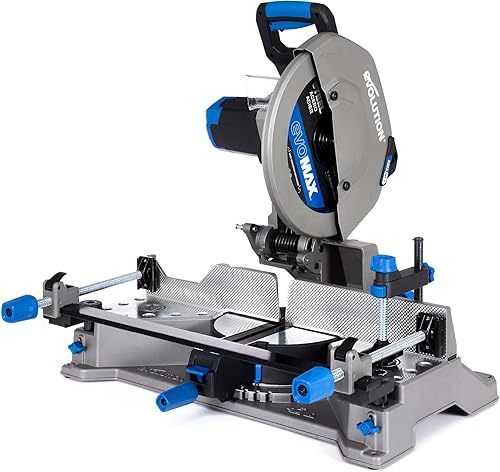
Evolution S14MCS 14" Mitering Chop Saw
Best for miter cuts in steel - 8
 Check it
DOVAMAN 10-Inch Sliding Miter Saw
Best for mixed-material projects - 9
 Check it
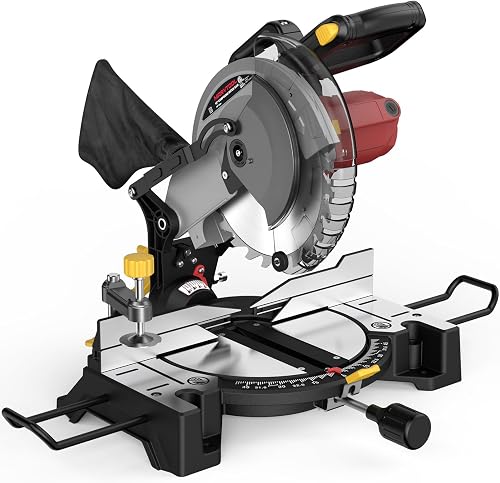
MarvTool 10-inch Compound Miter Saw
Best for compact compound cuts
Best corded miter saws for different jobs
The Makita LS1019L leads this group for trim capability, followed by the DEWALT DWS713, DEWALT DWS715, SKIL MS6305-00, Metabo HPT C10FCG2, DEWALT DCS361B, Evolution S14MCS, DOVAMAN DMS01A and MarvTool JS-1017C3. This roundup compares stated features and capacities for the materials and cuts each saw is designed to handle.
Makita LS1019L 10" Dual-Bevel Sliding Compound Miter: Best for wide trim and compound cuts
- 10-inch dual-bevel sliding design
- 6-5/8 in nested crown molding capacity
- 5-1/4 in vertical cutting capacity
- Single slide-glide rail system
Its sliding action, dual bevels and stated crown molding capacity suit trim work that needs wider cuts and compound angles. The rail design is made to let the saw operate close to a wall.
Pros
- Dual bevels and sliding action
- Large stated crown molding capacity
- Rail design reduces rear clearance needs
Cons
- Heavier than the compact single-bevel picks
- More features than needed for basic crosscuts
The Makita LS1019L suits trim work that combines wide cuts with compound angles. Compare Makita compound miter saws for more options from the brand.
Makita gives it a nested crown molding capacity of 6-5/8 inches and vertical cutting capacity of 5-1/4 inches.
Its dual-bevel sliding design helps when you need to cut wider stock and change bevel direction without flipping the workpiece. The linear ball bearing system is engineered for accurate cuts, while the laser provides a visual cut reference.
The unusual rail arrangement uses a single slide-glide operation, which Makita says reduces the saw's footprint and lets it operate flush against a wall. That can help in a compact shop where a conventional rear sliding rail would need more clearance.
Choose it if you regularly cut crown molding, baseboards or wider boards and want a sliding saw that handles bevels in both directions. For a small shop, measure the full work area and the space needed to support long stock.
DEWALT Miter Saw: Best for portable 10-inch cuts
- 10-inch single-bevel compound saw
- 15-amp motor
- 14 miter detent stops
- 31 lb stated weight
A 10-inch blade and single-bevel layout cover common crosscuts and angled cuts while keeping the saw relatively light. Its fence supports base vertically for trim work.
Pros
- 14 positive miter stops
- Lightweight for a corded saw
- Tall sliding fence
Cons
- Single bevel requires repositioning for opposite bevels
- No sliding action
The DEWALT DWS713 is a straightforward corded 10-inch compound saw for common crosscuts and single-bevel work. Its 15-amp motor and 14 positive miter stops support repeatable angle setups.
The saw cuts 2 x 6 inch lumber at 90 degrees and 2 x 4 inch lumber at 45 degrees. Its tall sliding fence supports 4-1/4 inches of base vertically, and the saw weighs 31 lb.
Its single-bevel head tilts left from 0 to 48 degrees and right from 0 to 3 degrees, so cuts that need the opposite bevel may require turning the workpiece. The saw has no sliding action, making it a better fit for narrower stock than a wide-board slider.
Choose the DWS713 for a corded saw that handles trim and framing cuts within its stated capacity. If your projects need wider crosscuts, compare the 12-inch DEWALT or a sliding model.
DEWALT 12-Inch Miter Saw: Best for larger crosscuts
- 12-inch single-bevel compound saw
- 15-amp motor
- 14 miter detent stops
- Supports 2 x 8 in lumber at 90 degrees
The larger blade and stated crosscut capacity suit wider stock than a 10-inch saw. It remains a single-bevel, non-sliding design.
Pros
- 12-inch blade
- Stated 2 x 8 in crosscut capacity at 90 degrees
- 14 positive miter stops
Cons
- Single bevel limits convenience for paired bevel cuts
- Larger blade may be unnecessary for trim-only work
This 12-inch DEWALT is the pick for buyers who want a larger blade and stated crosscut capacity in a non-sliding format. It cuts 2 x 8 inch lumber at 90 degrees and 2 x 6 inch lumber at 45 degrees.
The 14 positive miter stops help return to common angles, and the tall sliding fence supports 5-1/2 inches of base vertically. Like the 10-inch DWS713, this is a single-bevel saw, so compound work in both directions can take extra repositioning.
The 12-inch blade may make sense when your stock exceeds the capacity of a 10-inch saw. It also adds bulk, so consider how often you will move the tool and whether you have a stable bench or stand.
Pick it for larger crosscuts within its stated capacity and frequent angle changes. Choose a slider instead if board width is the main limitation.
SKIL 10" Dual Bevel Sliding Compound Miter: Best for dual-bevel value
- 10-inch dual-bevel sliding saw
- 15-amp motor
- LED shadow line
- Crosscuts 2 x 12 in lumber at 90 degrees
The SKIL combines a sliding rail with dual bevels and a shadow line. Its stated 2 x 12 in crosscut capacity at 90 degrees makes it a capable option for wider boards.
Pros
- Dual bevels and sliding action
- LED shadow line
- Stated 2 x 12 in crosscut capacity
Cons
- Larger footprint than a basic non-sliding saw
- Confirm stand and storage space
The SKIL MS6305-00 combines sliding action, dual bevels and an LED shadow line at 10 inches. Those features make it a flexible corded choice for woodworkers handling wider boards and compound angles.
Its stated crosscut capacity reaches 2 x 12 inch lumber at 90 degrees and 2 x 8 inch lumber at 45 degrees. The saw also has 11 positive stops at common miter angles, with cuts up to 50 degrees left and right.
The LED shadow line helps show the blade position on the workpiece. SKIL says it provides greater accuracy than traditional lasers, though the setup and blade condition also affect the cut.
Choose the SKIL if you want a 10-inch slider with dual bevels and a wide stated crosscut capacity. Check the space needed for its rails and extension supports before planning a permanent bench location.
Metabo HPT 10-Inch Compound Miter Saw: Best for a lightweight workshop saw
- 10-inch single-bevel compound saw
- 15-amp motor
- 24 lb stated weight
- Miter range from 0 to 52 degrees left and right
Its stated 24 lb weight makes it the lightest corded pick here. The broad miter range and left bevel adjustment suit general woodworking where sliding action is not required.
Pros
- Lightweight at 24 lb
- Miter range reaches 52 degrees both directions
- 5-year tool body warranty
Cons
- Single bevel
- No sliding action
The Metabo HPT C10FCG2 is a lightweight corded option for straightforward miter and bevel work. At 24.2 lb, it is lighter than the other corded saws in this group.
It has a 10-inch blade, a 15-amp motor and a miter range from 0 to 52 degrees left and right. Its bevel range runs from 0 to 45 degrees left, making it a single-bevel saw.
The vise clamping system helps secure the workpiece, and the large table provides material support. Metabo HPT backs the tool with a 5-year tool body warranty.
Choose this model for a lighter saw that handles angled cuts without a sliding rail. For wider crosscuts or bevels in both directions, a sliding dual-bevel model offers more flexibility.
DEWALT 20V MAX 7-1/4-Inch Miter Saw: Best for cordless portability
- Battery powered
- 7-1/4-inch sliding miter saw
- 30 lb stated weight
- Integrated cut line indicator
This DEWALT is the cordless option in the group, with a cut line indicator and compact design. Choose it when portability matters more than a corded power source.
Pros
- Compact and lightweight design
- Cut line indication needs no adjustment
- 11 positive miter stops
Cons
- Battery powered, so it is not a corded saw
- Smaller blade than the 10- and 12-inch options
The DEWALT 20V MAX is the cordless option in this comparison. Its 30 lb design and cut line indicator make it a candidate for jobs where carrying a corded saw or finding an outlet would be inconvenient.
This saw's 7-1/4-inch sliding format has capacity for nested crown molding up to 3-5/8 inches and base vertically up to 3-1/2 inches. The stainless steel detent plate has 11 positive stops, and the oversized bevel scale helps set bevel angles.
It runs on DEWALT 20V MAX batteries and is sold as a tool only. It therefore doesn't fit a corded-only purchase, despite appearing in this broader comparison of powered miter saws.
Pick it when portability matters most and you already have compatible batteries. If you need a corded miter saw, compare the corded DEWALT or Metabo HPT options instead.
Evolution S14MCS 14" Mitering Chop Saw: Best for miter cuts in steel
- 14-inch metal-cutting chop saw
- Cermet carbide blade
- Miter cuts up to 46 degrees
- Corded electric power
This is a metal-cutting saw for fabricators and metalworkers, not a wood miter saw. Its cermet carbide blade and miter gauge are aimed at cutting steel.
Pros
- Designed for metal cutting
- Miter range up to 46 degrees
- Electronic blade brake
Cons
- Not intended for ordinary wood trim cuts
- Heavier than the woodworking saws here
The Evolution S14MCS is a dedicated metal-cutting miter chop saw for work involving steel rather than ordinary wood trim. Its 14-inch cermet carbide blade and reinforced base are designed for metal fabrication.
Evolution says the saw makes cuts up to 46 degrees and uses a 1,100 RPM motor with soft start and an electronic brake. Evolution also says the included blade can make more than 3,500 cuts in 4-inch mild steel.
A metal-cutting chop saw has a different purpose from a woodworking miter saw. Don't choose it for baseboards, crown molding or lumber just because it offers miter angles.
Pick the S14MCS when you need a corded tool for miter cuts in metal. To compare the tool categories, read metal chop saw vs miter saw.
For wood projects, use one of the saws designed for that material.
DOVAMAN 10-Inch Sliding Miter Saw: Best for mixed-material projects
- 10-inch sliding design
- 15-amp motor
- Two speed settings
- Includes three TCT blades
DOVAMAN includes three blades and offers two speed settings for wood, PVC and soft metals. Check the blade guidance and cutting limits for each material before use.
Pros
- Sliding rail and extendable side tables
- Two speed settings
- Includes three blades
Cons
- Dual bevel capability is not specified
- Check material compatibility before cutting
DOVAMAN's 10-inch slider is aimed at projects involving wood, PVC and soft metals. It has a 15-amp motor, two speed settings and includes three TCT blades.
The 13-inch sliding rail and extendable side tables support longer workpieces, while the built-in laser offers a cut reference. DOVAMAN's product highlight gives a maximum cut of 3.5 x 13.4 inches.
The two speed settings are 4,500 and 3,200 RPM. Use a blade suited to the material, and follow the tool's instructions.
Choose it if mixed-material projects and included blades appeal to you. If your work is mainly wood trim, compare its capacity and adjustments with woodworking saws.
MarvTool 10-inch Compound Miter Saw: Best for compact compound cuts
- 10-inch single-bevel compound saw
- 15-amp motor
- Miter and bevel adjustments
- 20.5 lb stated weight
This compact saw offers miter and bevel adjustments in a lightweight format. Its included extension tables support setup for longer material.
Pros
- Lightweight at 20.5 lb
- Miter and bevel adjustment
- Includes extension tables
Cons
- No sliding action
- Confirm blade suitability for the material
The MarvTool 10-inch compound saw is a compact corded option with a stated weight of 20.5 lb. It includes extension tables, a vise clamp and a 36-tooth blade.
Its miter adjustment reaches 45 degrees, and its bevel adjustment ranges from 0 to 45 degrees. That gives it compound-cut capability, though it is a single-bevel design and does not slide.
MarvTool says the saw can cut wood, plastic and soft metal. Check that the included blade is suitable for the material before cutting.
Choose it for occasional compound cuts where a lighter saw is useful and sliding capacity is not needed. For wider stock, look at the Makita or SKIL sliders.
How to choose a corded compound miter saw
Choose a corded compound miter saw by matching its cutting capacity, bevel setup and rail design to your stock and workspace. For a cordless brand alternative, compare Ryobi compound miter saws.
If a hand-guided box might cover your project, see miter box vs miter saw. A larger blade alone doesn't guarantee that a saw will make the cut you need.
Start by measuring the widest and tallest material you expect to cut. Then compare those measurements with the maker's stated crosscut capacity and vertical fence capacity at the angles you use.
If you need help narrowing the features, our guide to How To Choose A Miter Saw? walks through blade size, sliding action and bevel needs. For a closer look at when the rails help, see Do I Need A Sliding Compound Miter Saw?.
Does a sliding corded miter saw fit your work?
A sliding saw helps when your boards are too wide for a fixed-head saw's crosscut capacity. Its rails also take up space, so check rear clearance and the footprint before setting up a permanent station.
The Makita's single slide-glide rail system is designed to work flush against a wall. Other saws may need more clearance behind them, and long stock also needs support on both sides.
When is a single bevel enough?
A single-bevel saw suits many basic crosscuts and trim jobs when you can turn the workpiece to make the opposite bevel. A dual-bevel saw can save repositioning when you make paired compound cuts or repeat angles across long runs.
Think about your normal workflow rather than the maximum angle printed in a feature list. If you make only square cuts and occasional miters, a simpler saw may cover the work.
Which corded miter saw should you choose?
Choose the Makita LS1019L if you need a sliding dual-bevel saw for wide trim and compound cuts. Pick the DEWALT DWS713 or Metabo HPT for lighter, fixed-head corded work, and choose the 12-inch DEWALT when its stated crosscut capacity matches your stock.
The Evolution is the choice here for metal miter cuts, while the cordless DEWALT is useful when mobility matters more than a cord. If you're still deciding whether this tool belongs in your shop, read Do I Need A Miter Saw? and Miter Saw vs Radial Arm Saw: Which Should You Choose?.
Frequently asked questions
Does Milwaukee make a corded miter saw?
Milwaukee's miter saw range and availability can change, so check its current product catalog before buying. Our guide to Does Milwaukee Make A Corded Miter Saw? covers the question and what to consider if you want a corded model from that brand.
Are all miter saws in this roundup corded?
No. The DEWALT 20V MAX 7-1/4-Inch Miter Saw is battery powered, while the other woodworking saws here are corded electric.
The Evolution S14MCS is also corded, but it is designed for metal cutting rather than ordinary woodwork.
Is a 10-inch or 12-inch miter saw better?
Neither size is automatically better. Compare the saw's stated capacity with the widest and tallest stock you cut, then consider whether sliding action is needed for wider crosscuts.
A 10-inch saw may be easier to move, while a 12-inch blade can suit larger cuts within the model's capacity.
What is the difference between a compound and a sliding compound miter saw?
A compound saw tilts its blade to make bevel cuts as well as miter cuts. A sliding compound saw adds rails so the head travels through the workpiece, which can increase crosscut width.
Sliding rails need room, so check the saw's footprint and clearance before choosing one.
Can I use a wood miter saw to cut metal?
Use a saw and blade designed for the specific material. The Evolution S14MCS is a metal-cutting chop saw, while the other picks are primarily woodworking tools.
Don't fit an unapproved blade or assume a wood saw is suitable for metal.
Follow the manufacturer's instructions for blade choice and safe operation.
Our top 3 picks at a glance
-
1
Best for wide trim and compound cuts
Makita LS1019L 10" Dual-Bevel Sliding Compound Miter
9.7/10 our score
See it on Amazon -
2
-
3
Frequently asked questions
What is the best corded miter saw for most woodworking?
The Makita LS1019L is the strongest fit here for varied trim and woodworking because it combines a 10-inch blade, sliding action and dual bevels. If you mostly make basic crosscuts, a single-bevel DEWALT or Metabo HPT may be simpler to set up and store.
Match the saw to your widest stock and the angles you make most often.
Is a corded miter saw better than a cordless one?
A corded saw keeps drawing power from an outlet, while a cordless model needs a charged battery. Choose corded for a fixed shop or repeated cutting near power, and cordless when moving between locations matters more.
The DEWALT 20V MAX pick here is battery powered, so it does not meet a strict corded-only requirement.
Do I need a sliding compound miter saw?
Choose a sliding compound saw when you need wider crosscuts and bevel cuts without turning the workpiece. A basic compound saw can be enough for narrower boards and occasional trim.
Compare the saw's stated capacity with your stock width, and leave room for the rails behind the saw unless its design allows closer wall placement.
Can a miter saw cut metal?
Some mitering saws are designed for metal, but a wood miter saw is not a substitute for a metal-cutting model. The Evolution S14MCS is a dedicated metal-cutting chop saw with a cermet carbide blade.
Use only a blade approved for the material and saw, and follow the tool's safety instructions.
How do I choose between a 10-inch and 12-inch miter saw?
A 12-inch blade can suit wider or taller stock, while a 10-inch saw may be easier to move and store. Capacity depends on the saw design, so compare the maker's stated crosscut and vertical capacities with the material you plan to cut.
A slider can also increase crosscut width.


