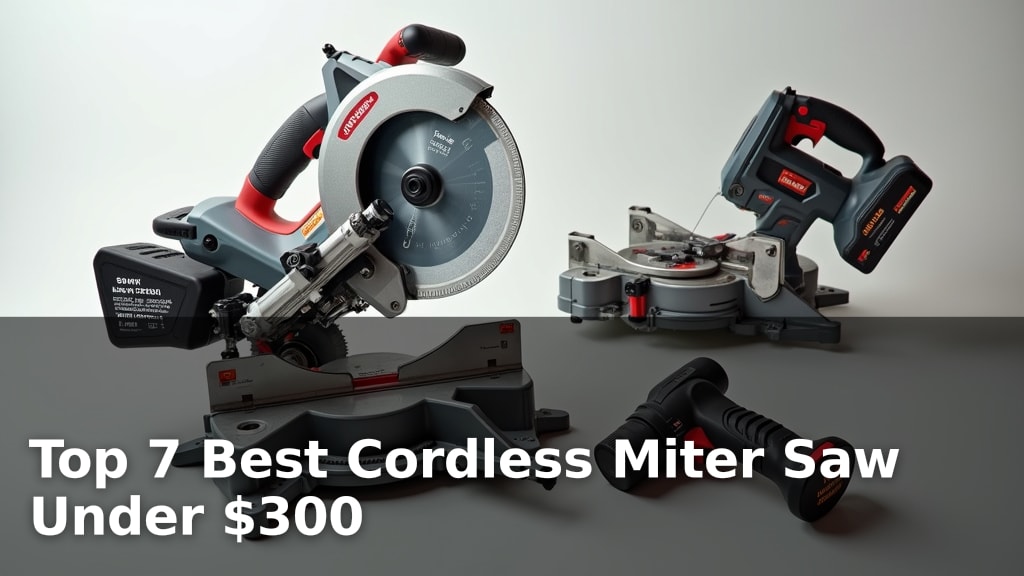
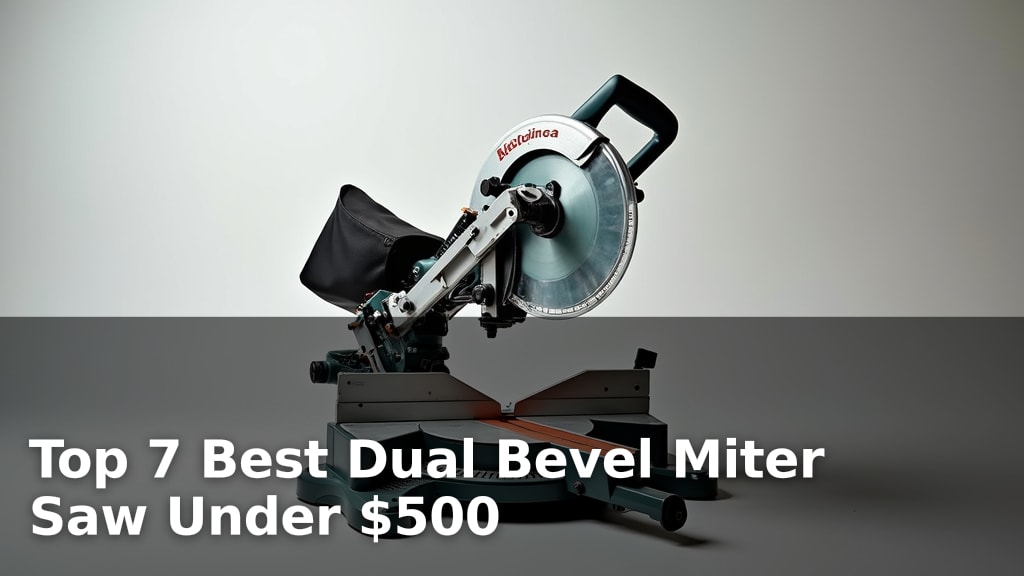
How To Choose A Miter Saw?
Choosing a miter saw depends on your project needs, from basic trim work to heavy-duty carpentry, considering blade size, cut capacity, and saw type.
To choose a miter saw effectively, assess your required cutting angles, portability needs, and budget before looking at features like laser guides or dust collection.
Thinking about a new miter saw? Picking the right one can feel like a maze. We’re here to guide you. Here’s a quick rundown of what you’ll find:
- Understand your specific project requirements.
- Learn about the different types of miter saws.
- Discover how blade size impacts your work.
- Explore key features for precision and safety.
- Set a realistic budget for a quality tool.
How To Choose A Miter Saw?
You choose a miter saw by matching its capabilities, like blade size and angle adjustments, to the specific types of cuts and materials you will work with most often.
Carefully consider power, portability, and safety features that align with your workshop space and project demands.
Why Even Bother With A Miter Saw?
Ever tried to get a perfectly straight cut on a long board with a handsaw? It’s tough, right? Miter saws make those precise, repetitive cuts easy.
They are the go-to tool for accurate crosscuts and angled cuts on trim, decking, and framing. Many woodworkers consider a miter saw a core tool (Fine Woodworking).
What Kind Of Cuts Do You Need To Make?
Before looking at models, think about your projects. Are you cutting baseboards or building a sturdy deck? Your answer guides you to the right saw.
Different saws excel at different tasks. Let’s break down the common cut types.
Straight Crosscuts: Simple & Sweet
This is the most basic cut: a straight line across a board. Imagine cutting a 2×4 to length. Any miter saw handles this with ease, giving a clean edge.
For simple projects like shelving, a basic miter saw is often all you need. Don’t buy more than you need for simple tasks.
Angled Cuts: The Miter Angle Magic
Need to join two pieces of wood at a corner, like for a picture frame? Miter cuts shine here. The saw blade pivots horizontally to cut at specific angles.
This capability gives the miter saw its name. It’s essential for creating snug corner joints that look professional.
Bevel Cuts: Slanting Edges With Ease
Sometimes you cut a board at an angle through its thickness, not its width. Think about crown molding. That’s a bevel cut, where the saw blade tilts vertically.
Some saws bevel one way (single-bevel), others tilt both left and right (dual-bevel). We found that dual-bevel saws save time because you avoid flipping your workpiece.
Compound Cuts: The Best Of Both Worlds
Combine a miter angle with a bevel angle for a compound cut. This is needed for complex trim work like crown molding, where pieces meet at angles on both the wall and ceiling.
A compound miter saw handles both horizontal and vertical angles simultaneously. This makes detailed woodworking possible.
Decoding Miter Saw Types: Which One Is For You?
The type of miter saw you pick directly impacts its capabilities. Let’s explore the main categories. Each offers distinct advantages for your projects.
Standard Compound Miter Saw: The Workhorse
This is your most common miter saw. It cuts miters (angles left and right) and single bevels (tilts one way).
It’s perfect for many DIY projects and general woodworking tasks. These saws are generally more compact and lighter.
Sliding Compound Miter Saw: Reaching Further
This saw adds rails, letting the blade slide forward and back. This greatly increases its crosscut capacity.
You can cut much wider boards, like a 12-inch plank, in one pass. If working with wide lumber, a sliding saw is a game-changer. Research highlights their versatility for larger materials (Wood Magazine).
Dual-Bevel Miter Saw: Flip-Free Convenience
A dual-bevel saw allows the blade to tilt both left and right for bevel cuts. No need to flip your workpiece for opposing bevels.
This saves time and reduces errors, especially on long pieces. Many professional carpenters prefer these for efficiency on complex projects. It’s about streamlining your workflow.
Blade Size: The Heart Of The Saw
Miter saws use different blade diameters, commonly 8, 10, or 12 inches. The blade size directly determines cut depth and width.
A larger blade means a larger cutting capacity. Consider the thickness of wood you’ll cut. This is a key decision point when you choose a miter saw.
| Blade Size | Typical Use | Max Crosscut (approx.) |
|---|---|---|
| 8 Inches | Small trim, picture frames | Up to 6 inches wide |
| 10 Inches | Baseboards, shelving, smaller decking | Up to 8 inches wide |
| 12 Inches | Larger framing, wide decking, thicker lumber | Up to 10-12 inches wide |
Motor Power: More Oomph, Better Cuts
Miter saw motors are measured in amps, usually 10 to 15 amps. Higher amperage means more power for smoother cuts, especially through denser or thicker materials.
For hardwoods or pressure-treated lumber, a 15-amp motor is often recommended. It prevents blade bogging and gives a cleaner finish.
Essential Features To Look For
Beyond basics, several features greatly improve saw performance and ease of use. Consider these additions for your ideal saw.
Dust Collection: Keep It Clean
Cutting wood makes a mess, and fine dust is unhealthy. Most saws have a dust bag, but many experts suggest connecting to a shop vacuum for better dust extraction (OSHA guidelines on wood dust).
Laser Guides: Precision Made Easy
A built-in laser shows the exact cut line. This feature boosts accuracy and speed, especially for repetitive cuts. It removes guesswork when lining up your workpiece.
Many users find a laser guide a time-saver for precise work. Some saws use a shadow line, which is also effective.
Fence & Clamps: Secure Your Workpiece
A good fence supports your material, ensuring accurate cuts. Workpiece clamps hold the material firmly. This is a key safety feature and also helps produce precise cuts.
Never freehand a cut. Always use the fence and, if possible, clamps. Your fingers will thank you!
Brakes: Safety First
An electric brake stops the blade quickly after you release the trigger. This is a fantastic safety feature, reducing accidental contact with a spinning blade.
We found that saws with effective brakes make the tool much safer to operate. Look for models boasting a quick-stopping blade.
Portability: On The Go?
Will your saw stay in your workshop or move to job sites? Some saws are lighter with carrying handles. Others are heavier, built for stability.
Lighter saws can feel less stable; heavier ones are tougher to move. Many users find a good stand improves stability for any saw.
Budgeting For Your Miter Saw: An Investment
Miter saws vary widely in price, from a few hundred dollars to over a thousand. It’s an investment, so consider how often you’ll use it and for what projects.
Set a realistic budget, but remember, a higher price often correlates with better features, durability, and motor quality. Sometimes, spending more upfront saves money later.
Before you make your final choice, consider this quick checklist:
- What are my primary projects?
- Do I need to cut wide boards? (Sliding feature)
- Do I need to make complex crown molding cuts? (Dual-bevel)
- What blade size aligns with my material thickness?
- Is dust collection or a laser guide a must-have?
- How important is portability for my setup?
- What is my comfortable spending limit?
Conclusion
Choosing the right miter saw doesn’t have to be overwhelming. By understanding your project needs, saw types, and key features, you can confidently select a tool that serves you well.
Think about the cuts you’ll make, the materials you’ll use, and your investment. A well-chosen miter saw becomes a reliable partner, transforming your cutting tasks from frustrating to precise. Take your time, do your research, and you’ll find the perfect match.
What is the main difference between a single-bevel and dual-bevel miter saw?
A single-bevel miter saw tilts its blade to cut a bevel in one direction only. A dual-bevel miter saw tilts in both directions, meaning you don’t need to flip your workpiece for opposing bevel cuts, saving time and effort.
Do I really need a sliding miter saw for home projects?
For most standard home projects like baseboards, trim, and small shelving, a non-sliding compound miter saw is sufficient. A sliding miter saw is mainly needed if you frequently cut wide boards (over 8 inches) for things like large shelves or decking.
What blade material is best for a miter saw?
Carbide-tipped blades are widely considered the best choice for miter saws. They stay sharper longer and provide cleaner cuts than steel blades. Blades with more teeth generally provide finer, smoother cuts, ideal for finish work.
How important is a laser guide on a miter saw?
A laser guide enhances precision by showing the exact cut line, which helps beginners or for critical cuts. While not essential, many users find it greatly improves accuracy and speeds up setup. Some saws use a shadow line system, which is also effective.
What safety precautions should I always take when using a miter saw?
Always wear eye and hearing protection. Ensure your workpiece is securely clamped against the fence before cutting. Keep hands clear of the blade path, and wait for the blade to stop completely before removing cut material. Always read your saw’s instruction manual.