How to Build a Portable Workbench
To build a portable workbench, plan a stable folding or movable base, add a flat work surface, provide clamping points, and check the load before each job. Choose the size and support style around the tools and materials you use most.
On this page (9 sections)
- What should a portable workbench include?
- How do you choose the size and height?
- How do you build the base?
- How do you add a work surface?
- How do you add clamping points?
- How do you make the bench easy to move?
- Can you use a portable workbench for saw work?
- How do you use and care for a portable workbench?
- Which portable workbench should you choose?
To build a portable workbench, start with a stable base, a flat work surface, and a way to hold material securely. Add folding legs, removable supports, or wheels only when they make transport and storage easier without making the bench move during work.
A useful portable bench should match your tools, material sizes, and working space. Before cutting parts, decide whether you need a small folding table, a sawhorse-style platform, or a larger surface for sheet goods.
What should a portable workbench include?
A portable workbench needs a level top, firm supports, clamping points, and a clear load limit. These parts matter more than decorative features because they control how safely the bench handles cutting, drilling, assembly, and sanding.
Plan the bench around the largest common workpiece. A narrow top can suit small repairs, while a wider support system gives sheet goods and long boards more room.
Include a way to secure the material. Woodworking clamps help prevent boards from sliding while you mark, cut, or join them.
A folding design should open fully and lock before use. A movable design should have supports that stay planted when you push a hand tool or guide a power tool across the workpiece.
How do you choose the size and height?
Choose the size by measuring your workpieces, tools, storage area, and transport route. The bench must fit through doors and leave enough room for you to stand, turn, and move long material safely.
A 30 to 32 in working height suits many standing tasks, but your own height and project type still matter. A lower surface can help with heavy assembly, while a higher surface may reduce bending during detail work.
The BORA Centipede Folding Work Table 2x4 ft has a 30 in working height and a 2 ft x 4 ft format. Its steel frame is designed for a portable workbench setup, and it includes 2 quick clamps, 4 X-shaped brackets, and a carry bag.
The BORA supports up to 2,500 lb according to its product specifications, but that number does not mean every floor, board, tool, or setup is safe at that load. Keep the weight centered and inspect the supports before placing heavy equipment.
How do you build the base?
Build the base so it opens square, rests evenly, and resists side-to-side movement. Folding legs, hinged trestles, and linked supports can all work when the joints stay tight and the feet remain planted.
For a simple wood design, use two sturdy trestles under a removable top. Add cross-support where the frame flexes, then test the bench with hand pressure before placing tools on it.
For a compact setup, a commercial folding frame can replace much of the cutting and assembly work. The Keter Heavy-Duty Folding Workbench has aluminum legs, a polypropylene and heavy-duty resin body, a 21.65 in depth, a 33.46 in width, and a 29.75 in height.
Keter states that this workbench opens in 30 seconds with no assembly required. It includes 2 removable quick-ratcheting clamps, and the clamps can be installed horizontally or vertically.
The weather-resistant construction can suit garage, outdoor workshop, home improvement, and job-site use. Store it folded when you need the floor space, and keep the work surface clear before closing it.
How do you add a work surface?
Add a top that stays flat and has enough depth for the workpiece, clamps, and tool base. A removable top makes storage easier, while a fixed top can feel more consistent for repeated work.
If you build the top from wood, seal or protect it according to the material and location. Leave enough edge access for clamps, and avoid placing fasteners where they can damage blades or drill bits.
A sawhorse-style system can support larger boards without requiring one heavy solid top. The BORA frame uses 4 X-shaped brackets to hold standard 2x4 boards steady, which gives you a flexible support layout.
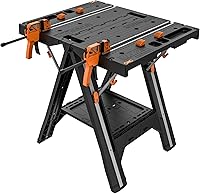
For a built-in measuring reference, the WORX Portable Folding Workbench has a 31 in by 25 in surface and a 32 in working height. It is made from molded ABS plastic with steel supports and fittings.
The WORX model changes between a workbench and a sawhorse. Its workbench load capacity is 300 lb, while its sawhorse capacity is 1,000 lb, so use the correct mode for the load.
It includes 2 24 in quick clamps, 4 clamp dogs, and 2 table links. The links can connect another compatible WORX support table, such as another Pegasus, Sidekick, or Clamping Sawhorse.
How do you add clamping points?
Add clamping points where they hold the material without blocking the tool path. Place them close enough to stop movement, but keep clamps away from the blade, bit, sanding pad, and electrical cord.
Clamp long boards near the cut and support the overhanging section. For round or uneven pieces, use clamp dogs or shaped supports that keep the material from rolling.
A portable bench with included clamps can save setup time, but the clamps still need correct placement. Tighten them until the material stays fixed, not until the workpiece bends or the surface is damaged.
If your projects need a built-in holding tool, compare best portable workbenches with a vise. A vise can suit repeated hand-tool work, while quick clamps are often easier to move between different material shapes.
How do you make the bench easy to move?
Make the bench easy to move by reducing setup parts, folding the supports, and keeping the packed size within your storage limits. Measure the folded bench before choosing a location under a shelf, beside a vehicle, or in a narrow garage.
Wheels can help on smooth floors, but they should not allow movement during cutting. For wheels that tuck away during use, compare retractable workbench casters.
If you need a rolling setup, review best portable workbenches on wheels and check how the wheels lock.
A folding bench can be better for stairs, outdoor work, and vehicle transport. The Keter weighs 27 lb, the WORX model weighs 13.5 kg, and the BORA unit weighs 12.5 lb, so transport effort differs between these options.
Can you use a portable workbench for saw work?
You can use a portable workbench for saw work when the base is stable, the saw is secure, and the material has enough support on both sides. Keep the cutting path clear and do not let a long board tip the bench.
For a dedicated saw setup, read How To Build A Miter Saw Workbench? before building a permanent station. A portable table may work for occasional cuts, but repeated work can benefit from fixed support and marked stops.
For a compact mobile saw surface, see How To Build A Portable Miter Saw Table?. Check the saw base, fasteners, fence alignment, and board support before making a cut.
How do you use and care for a portable workbench?
Use a portable workbench on a firm, level surface and open every support fully. Check hinges, clamps, brackets, links, and fasteners before each session, especially after transport.
Keep the load below the stated capacity and center heavy tools over the supports. Do not use a workbench as a step, seat, or lifting point unless its instructions specifically allow that use.
Brush away dust and chips before folding the bench. Keep clamps and moving joints free from packed debris, and store the folded unit where moisture and impact will not damage it.
Which portable workbench should you choose?
Choose the Keter Heavy-Duty Folding Workbench when you want a 29.75 in folding surface, 12 in adjustable clamps, no assembly, and a stated 1,000 lb capacity.
Choose the WORX Portable Folding Workbench when a 2-in-1 workbench and sawhorse, included clamps and clamp dogs, a 31 in by 25 in top, and a 32 in height fit your projects.
Choose the BORA Centipede Folding Work Table 2x4 ft when you need a 2 ft x 4 ft support format, 30 in height, 2x4 brackets, and a stated 2,500 lb capacity.
The best way to build a portable workbench is to match the frame, surface, clamps, and movement system to your real work. For woodworking projects that need more surface area and tool support, compare best portable workbenches for woodworking before finalizing the design.
Frequently asked questions
What is the best height for a portable workbench?
A portable workbench should place the work near a comfortable standing height without making the surface hard to reach. The right height depends on your body, tools, and task.
Measure your usual working position, then check that the folded bench, legs, and workpieces remain stable.
How do you make a portable workbench stable?
Make a portable workbench stable with a level base, locked supports, a flat top, and secure work-holding points. Place it on firm ground, spread the legs fully, keep heavy loads centered, and clamp the material before cutting, drilling, routing, or sanding.
Can a portable workbench hold a miter saw?
Yes, a portable workbench can hold a miter saw when its surface is large and stable enough for the saw and the workpiece. Check the saw's mounting needs, keep long boards supported, and use a dedicated setup when you need repeatable cuts or extended infeed and outfeed.
Should a portable workbench have wheels?
Wheels help when you move the bench across a smooth workshop floor, but they must not let the bench shift while cutting. Locking casters or a fixed-leg design can suit different spaces.
Compare the full setup with best portable workbenches on wheels before choosing.