How to Use Sawhorses
To use saw horses safely, place two sawhorses on firm, level ground, space them to support the material, and secure the work before cutting. Keep the load centered and leave enough room for the blade or tool.
On this page (9 sections)
- How do you set up saw horses correctly?
- How far apart should sawhorses be?
- How do you support boards and plywood?
- How do you keep material from moving?
- Can roller supports replace sawhorses?
- How do you choose metal sawhorses?
- What safety checks should you make before cutting?
- How do you store and maintain saw horses?
- What is the safest way to use saw horses?
To use saw horses safely, place two supports on firm, level ground, space them under the material, and secure the work before cutting or shaping it. Keep the material centered, check that all feet are stable, and leave a clear path for your saw.
Sawhorses can support boards, plywood, doors, and temporary work surfaces. The setup is only useful when the supports match the task, the load stays within their capacity, and the material cannot slide unexpectedly.
How do you set up saw horses correctly?
Set up saw horses with their legs fully open, locking parts engaged, and tops facing the same direction. Place them on a clean surface where every foot can make firm contact.
Start by clearing cords, offcuts, gravel, and other objects from the floor. A small object under one leg can make the whole work surface rock.
Space the sawhorses under the material rather than at the extreme ends. The supports should carry the load without placing the cut line directly over a top rail, clamp, or hidden object.
Check the height before loading the work. Both supports should be at a similar level unless the task specifically requires a slope.
For more ways to keep a temporary work area steady, see this guide to woodworking clamps.
How far apart should sawhorses be?
Place sawhorses near the material's support points while keeping the work balanced between them. Longer boards and flexible panels may need a third support to prevent bending.
A short board may sit securely on two sawhorses with modest spacing. A long board can sag in the middle if the supports are too far apart, especially during planing, sanding, or drilling.
Before cutting, mark the cut line and confirm that the part being removed will not fall onto your feet or pull the supported section sideways. Reposition the sawhorses if the material shifts when you apply light hand pressure.
Adjustable models can help match the work height. The best adjustable height sawhorses can be useful when you switch between standing tasks, cutting, and assembly.
How do you support boards and plywood?
Support boards near both ends and add middle support when the material bends under its own weight. Plywood needs broad, stable support because a sheet can flex or tip even when it is light enough for the sawhorses.
For a long board, place the supports so the board remains level and the work area stays reachable. Do not put a support directly beneath a planned blade path.
For plywood, use two sawhorses with a clean sacrificial surface if you need to cut through the panel. Check underneath before cutting so the blade will not strike a metal rail, clamp, or other object.
Small pieces are harder to control than long ones. Keep them fully supported, use a clamp where appropriate, and avoid holding a short offcut close to a moving blade.
Do 2x4 supports make a better work surface?
A pair of sawhorses with 2x4 support arms can create a temporary workbench for boards and sheet goods. The support arms should be seated correctly, and the top should remain level before you load it.
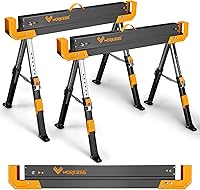
The WORKESS Saw Horses 2 Pack Folding has support arms for combining two sawhorses with 2x4s. Its adjustable height runs from 24.3 to 32.3 in, and swivel feet are designed to adapt to uneven ground.
Use straight, sound 2x4s and check that they sit evenly across both supports. Do not exceed the stated capacity, and do not assume a pair is stable if one leg is not fully opened or locked.
How do you keep material from moving?
Use clamps when the work can slide, twist, or lift during the task. Clamping is especially helpful for routing, drilling, sanding, and cuts that require both hands on the tool.
Place clamps where they hold the material against the support without blocking the tool path. Tighten them enough to stop movement, but avoid crushing soft wood or bending thin panels.
For a crosscut, support the board on both sides of the cut when possible. Keep the falling section controlled, and stop the saw before reaching for an offcut.
The best folding sawhorse brackets can help readers who want to build a folding support system around their own lumber. Measure the finished height and storage space before choosing brackets.
Can roller supports replace sawhorses?
A roller support can help move long stock, but it does not replace a stable base for every task. Use rollers for controlled feeding and outfeed support, then keep the main work secured on the saw or workbench.
The WORKESS 4 in 1 Roller Stand combines a workbench, sawhorses, ball support, directional rollers, and V-support. It has 10 height settings from 33 to 50 in and a stated 440 lb workbench capacity.
Set the height so the roller does not lift the material away from the saw table. A roller that sits too high can change the feed angle and make the work harder to control.
Use the V-support for round stock only when the material is centered and the setup is stable. Do not rely on a roller to stop a board from twisting during a cut.
How do you choose metal sawhorses?
Choose metal sawhorses when you need folding storage, adjustable height, and a support frame suited to heavier work. Confirm the capacity, height range, locking parts, and surface supports before loading them.
The WORKESS Metal Saw Horses 2 pack Folding uses square tube steel, has 7 height levels from 31.5 to 51.2 in, and has a stated 880 lb pair capacity. Its triangular leg structure, safety bolts, and fold-out locking hooks support stable placement.
Raise or lower both sawhorses to matching settings before placing a board across them. Check each locking point after adjustment, especially when changing from a low cutting position to a standing work height.
The best saw horses for woodworking can help compare support features for planing, assembly, sanding, and cutting. Pick a setup that fits your material size and the tools you use most.
What safety checks should you make before cutting?
Before using a saw, check stability, support, blade clearance, and your body position. The work should not rock when you apply light pressure, and the blade should have a clear path through the material.
Keep your hands away from the cut line and support the material without reaching across the tool. Wear the protective equipment required for your saw and work in a clear, well-lit area.
For miter saw work, keep the saw on a stable surface and support long stock on both sides. If you are deciding whether that tool fits your projects, read Do I Need A Miter Saw?.
Readers who need a lower-strain setup can also review Best Miter Saw For Seniors.
Never place a saw on an unstable board spanning two small supports. A temporary platform must be level, secured, and strong enough for the tool and material together.
How do you store and maintain saw horses?
Fold sawhorses only after removing the work and checking that no locks, hinges, or feet are damaged. Store them where the legs will not be bent and where moisture will not collect on metal parts.
Clean sawdust from hinges, locking levers, and support surfaces. Inspect bolts, hooks, feet, and crossbars before the next use.
The best folding metal saw horses may suit a portable setup when storage space and transport matter. Keep folded units secured so they cannot fall or open in a walkway.
What is the safest way to use saw horses?
The safest way to use saw horses is to match the supports to the material, level the setup, secure movement, and check tool clearance before every cut. Use two supports for ordinary boards, add support for flexible or long stock, and keep the work centered.
Choose the WORKESS Saw Horses 2 Pack Folding for a temporary 2x4 workbench, the WORKESS 4 in 1 Roller Stand for adjustable feeding and support, or the WORKESS Metal Saw Horses 2 pack Folding for a taller adjustable metal setup.
When learning how to use saw horses, start with a light, stable project and verify every lock before adding heavier material. For a broader comparison, see the guide to best saw horses for woodworking.
Frequently asked questions
How far apart should sawhorses be?
Place sawhorses far enough apart to support the material near both ends without letting it sag. The correct spacing depends on the board length, weight, and cut location.
Keep the work centered over the supports, and add another support for long or flexible boards.
Can you use sawhorses on uneven ground?
Use firm, stable ground whenever possible. Adjustable legs or swivel feet can help level the support, but they do not make loose soil, clutter, or a steep slope safe.
Check that every foot is planted before placing material on the sawhorses.
Do you need clamps with sawhorses?
Clamps are useful when the material can shift, twist, or lift during the task. They are especially helpful for routing, sanding, drilling, and cutting smaller pieces.
Clamp without blocking the tool path, and make sure the clamp does not contact the blade.
Can sawhorses hold a sheet of plywood?
Yes, two properly spaced sawhorses can support plywood, but the sheet must remain stable and the supports must match its size and weight. Add a center support when the panel flexes, and keep the cutting area clear of hidden supports or clamps.