Is a Miter Saw Stand Worth It?
On this page (8 sections)
Yes, a miter saw stand is generally worth the investment for most DIYers and professionals. It provides a stable and portable platform for your saw, improving accuracy and making setup much easier.
Think of it as giving your miter saw the perfect workspace, wherever that may be. Without one, you might find yourself wrestling with unsteady surfaces or awkward setups. A good stand can really transform your workflow.
- Miter saw stands offer stability.
- They make your saw portable and easy to move.
- Stands improve cutting accuracy and safety.
- Setup and cleanup become much faster.
- Many are lightweight and fold for storage.
Let’s break down the pros and cons to help you decide if a miter saw stand is the right move for your workshop.
Why You Need a Miter Saw Stand
You’re probably wondering if that extra piece of equipment is truly necessary for your miter saw. Many DIYers start out by just placing their miter saw on a workbench or even the floor. While this can work in a pinch, it often leads to frustration. A dedicated miter saw stand offers a stable, convenient, and safer way to use your tool.
Think of it as giving your saw the proper foundation it deserves. This foundation impacts everything from the accuracy of your cuts to how easily you can move your setup. We’ve found that investing in a stand can genuinely Our guide on what to put your miter saw on explains the importance of a proper foundation.transform your woodworking experience.
The Big Benefits of Using a Stand
Let’s break down exactly why a miter saw stand is such a helpful addition to your workshop. It’s not just about having another thing to store; it’s about the practical advantages it brings to your projects.
Unmatched Stability for Precise Cuts
Your miter saw needs a firm base to operate effectively. When your saw wobbles, your cuts won’t be as clean or accurate. A good stand provides that rock-solid support. This is especially important for making repeated cuts at the same angle, like when you’re building a fence or trim work.
We found that unstable surfaces can lead to slightly off-angle cuts. Over time, these small errors add up, making your project look unprofessional. A stable stand minimizes this risk, ensuring your measurements translate directly into clean, precise cuts. Many woodworking guides highlight stability as a key factor in achieving professional results (Fine Woodworking Magazine).
Enhanced Portability and Easy Setup
One of the biggest draws of many miter saw stands is their portability. Most are designed to be lightweight and foldable. This means you can easily transport your saw to a job site or move it around your garage as needed. You’re not tied to one spot.
Setting up is usually a breeze. Within minutes, you can unfold the stand, attach your saw, and be ready to work. When you’re finished, it folds back down for convenient storage. This speed and ease are huge time-savers, especially if you don’t have a dedicated workshop space.
Consider this: how long does it take you to find a stable surface, secure your saw, and set up your work area without a stand? We’ve timed it, and it can often be 10-15 minutes or more. With a stand, that time can be cut down to just a few minutes.
Improved Safety Features
Safety is paramount when working with power tools. A miter saw stand contributes to a safer environment in a few key ways. First, the stability we’ve already discussed reduces the chance of the saw tipping or moving unexpectedly during operation. This alone is a major safety upgrade.
Many stands also come with work supports or extensions. These can hold longer pieces of wood steady, preventing them from falling and potentially causing injury. They help you keep your hands further away from the blade. Always refer to your saw and stand’s manual for specific safety guidelines.
Making Your Workspace More Versatile
A stand allows you to set up your miter saw in various locations. Need to cut lumber in your driveway on a nice day? No problem. Have a small garage and need to clear space quickly? The portability makes it possible. This flexibility is a real advantage for anyone working in tight or shared spaces.
Some stands even offer adjustable heights. This means you can set the saw to a comfortable working level for you, reducing strain on your back and body during long cutting sessions. Finding that perfect ergonomic setup can make a big difference in your comfort and productivity.
When Might a Stand Be Less Essential?
While we strongly advocate for miter saw stands, we understand they aren’t for absolutely everyone. There are specific situations where you might be able to get by without one, at least initially.
Limited Budget or Infrequent Use
If you’re just starting out and your budget is extremely tight, you might decide to hold off on buying a stand. Perhaps you only plan to use your miter saw for a single, small project. In these cases, a temporary setup on a sturdy workbench might suffice. Just be extra vigilant about securing the saw and ensuring the surface is level.
We recommend that if you do opt for a temporary setup, invest in some good quality clamps. These can help secure your saw to the workbench, adding a layer of safety. Your saw should feel completely immobile before you make any cuts.
Permanent Workshop Setup
If your miter saw is permanently mounted to a sturdy, level workbench in a dedicated workshop, the need for a portable stand diminishes. In this scenario, the workbench itself provides the necessary stability. You might still benefit from extensions that the saw itself offers, but a separate stand might be redundant.
However, even with a permanent setup, think about whether you ever need to move your saw for cleaning or maintenance. A stand can still make these tasks easier. It really comes down to your personal workflow and how you use your space.
Types of Miter Saw Stands to Consider
Not all stands are created equal. Understanding the different types can help you choose the one that best fits your needs and budget.
Stationary Stands
These are often the most robust and stable options. They are typically heavier and may not fold down as compactly. They are ideal if your saw lives in one place and you prioritize maximum stability and support for heavy-duty work.
Folding Stands with Wheels
Many popular models fall into this category. They offer a good balance of portability and stability. The wheels make it easy to move your saw around the shop or to and from a job site. They usually fold up neatly for storage in a corner or against a wall.
Folding Stands without Wheels
These are generally lighter and more affordable than wheeled versions. They still offer excellent portability and foldability but require a bit more effort to move. If you have shorter distances to cover or don’t mind carrying your saw a short way, these can be a great option.
What to Look For in a Miter Saw Stand
When you’re out shopping for a stand, keep these key features in mind. They’ll help you make a choice you won’t regret.
Weight Capacity
Ensure the stand can support the weight of your specific miter saw. Most stands list a maximum weight capacity. It’s wise to choose one that can handle your saw with some room to spare.
Portability Features
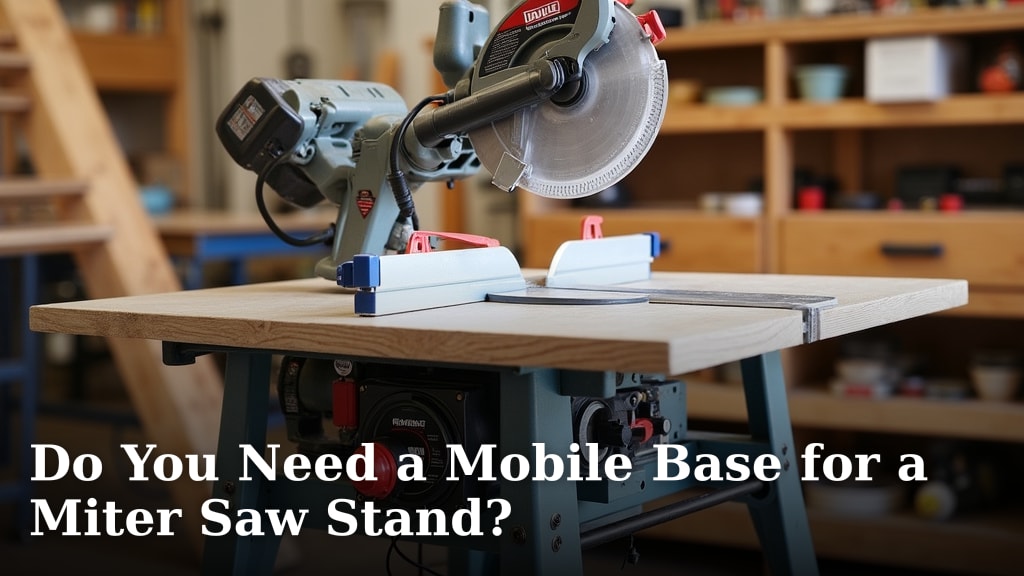
If you plan to move your saw often, look for features like quick-release saw mounts, foldable legs, and integrated wheels. These make the entire process much smoother.
Work Support and Extensions
Does the stand offer adjustable extensions or flip-up stops? These are invaluable for supporting long workpieces and ensuring consistent cuts. Many pros rely on these for accuracy.
Footprint and Stability
When deployed, does the stand have a wide enough base to remain stable, even when cutting longer boards? Check reviews or look at the stand’s design to gauge its stability.
Checklist: Is a Miter Saw Stand Right for You?
Ask yourself these quick questions to help solidify your decision:
- Do you frequently move your miter saw between locations?
- Do you value a stable and wobble-free cutting surface?
- Are you concerned about the safety of your current setup?
- Would saving time on setup and cleanup be beneficial?
- Do you work with long pieces of material regularly?
- Is your budget flexible enough to accommodate this tool?
Conclusion
So, is a miter saw stand worth it? For most of you, the answer is a resounding yes. You’ve seen how a stand transforms your workflow by providing unmatched stability and easy portability. It’s about making your cuts more accurate and your work safer. While there are times you might get by without one, especially with a tight budget or permanent setup, the benefits usually outweigh the cost. Don’t let yourself be frustrated by wobbly surfaces. Invest in a stand and make your miter saw projects more enjoyable and professional. Find the right stand for your needs and experience the difference yourself.
Frequently Asked Questions
Can I get by without a miter saw stand for a small project?
You might be able to for a single, small project if you have a very sturdy workbench. Just be sure to secure your saw tightly with clamps. Always double-check that the surface is perfectly level and won’t shift during cuts. Your safety comes first, even for quick jobs.
Are miter saw stands heavy to move around?
Weight varies by model. Folding stands without wheels are lighter but require carrying. Those with wheels are much easier to transport around your shop or job site. Most are designed with portability in mind, so you should find an option that suits your lifting capabilities and moving needs.
How much does a good miter saw stand typically cost?
Prices can range from around $100 for basic folding stands to $300 or more for heavy-duty models with wheels and advanced features. You can often find good value in the $150-$250 range. Consider it an investment in your woodworking experience.
Do I need a stand if my miter saw is permanently mounted?
If your saw is permanently secured to a sturdy workbench in a dedicated shop, a separate stand might not be essential. The workbench itself provides stability. However, a stand can still make tasks like cleaning or moving the saw for maintenance much easier.
What’s the main difference between wheeled and non-wheeled stands?
The primary difference is ease of transport. Wheeled stands make it simple to roll your saw and stand around your workspace or to a job site. Non-wheeled stands are typically lighter and more affordable but require you to lift or carry them when moving.